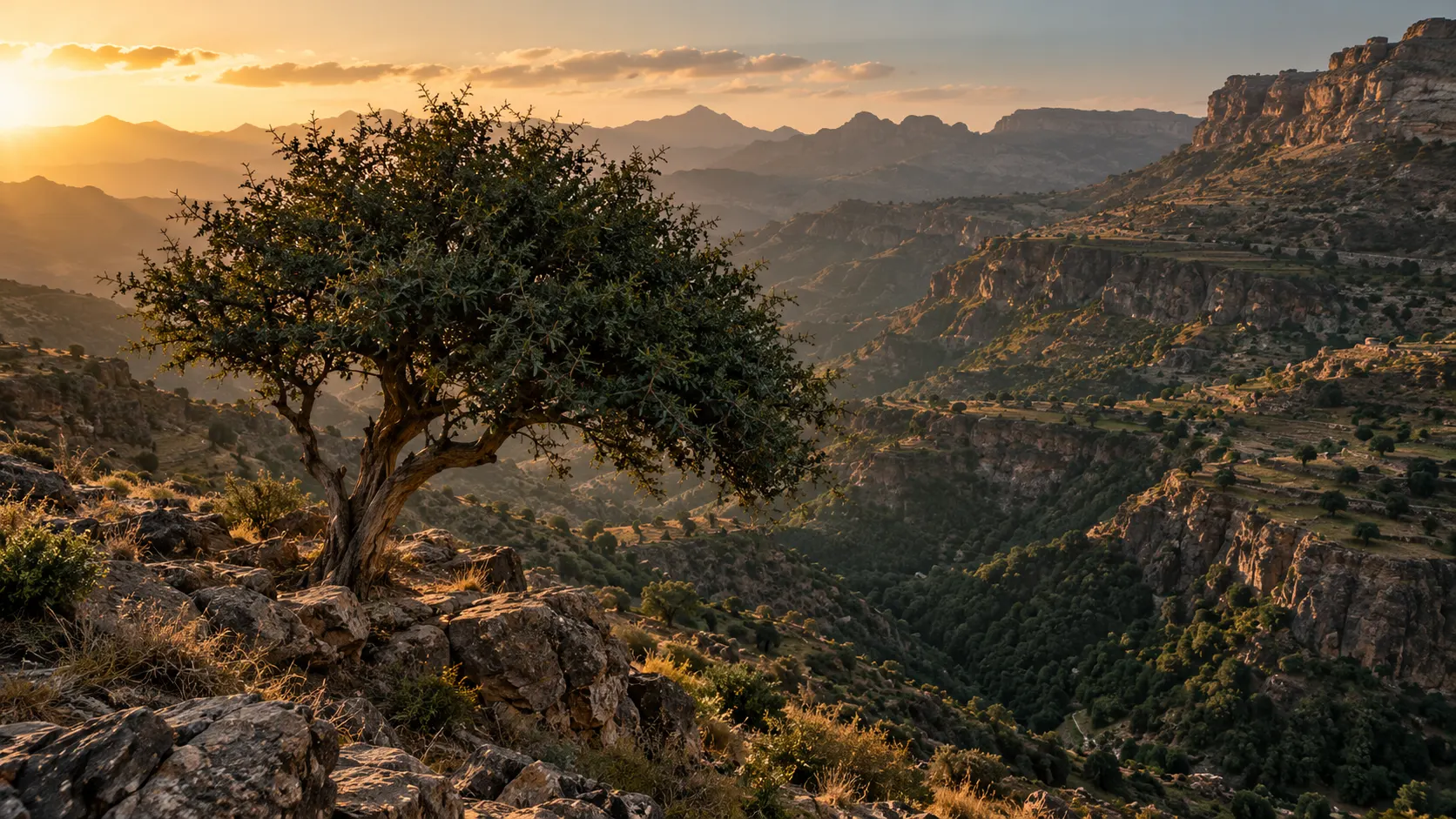
Yemen · Amran Highlands · Al-Osaimat
Al-Osaimi Sidr
Honey
عسل السدر العصيمي
A northern Yemeni Sidr whose altitude, isolation and autumn harvest give it a personality distinct from Do’an.
Harvested in the highlands of Amran, north of Sana’a, this Sidr honey comes from Wadi Usimat and its surrounding uplands — a cooler, higher and more rugged terroir than Yemen’s better-known Hadrami valleys.
Terroir
A highland Sidr from the north of Sana’a
Al-Osaimat lies in the governorate of Amran, on the northern highlands of Yemen. The terrain is elevated, dry and broken by isolated valleys, with a cooler night pattern than Yemen’s lower eastern wadis.
Here the jujube tree still grows in arid, uncrowded country. Bees work a short Sidr bloom in relative isolation, giving a honey that remains recognisably Yemeni yet clearly different from the more famous Do’ani profile.
| Location | Wadi Usimat (Al-Osaimat), Amran Highlands, Yemen |
| Landscape | Arid northern highlands, elevated valleys and escarpments |
| Floral source | Wild Sidr / jujube blossom (Ziziphus spina-christi) |
| Harvest | Late October to November |
| Volume | Limited seasonal harvest from scattered highland apiaries |
“Same tree, different mountain: Osaimi is what Sidr becomes when the north keeps the bees to itself.“
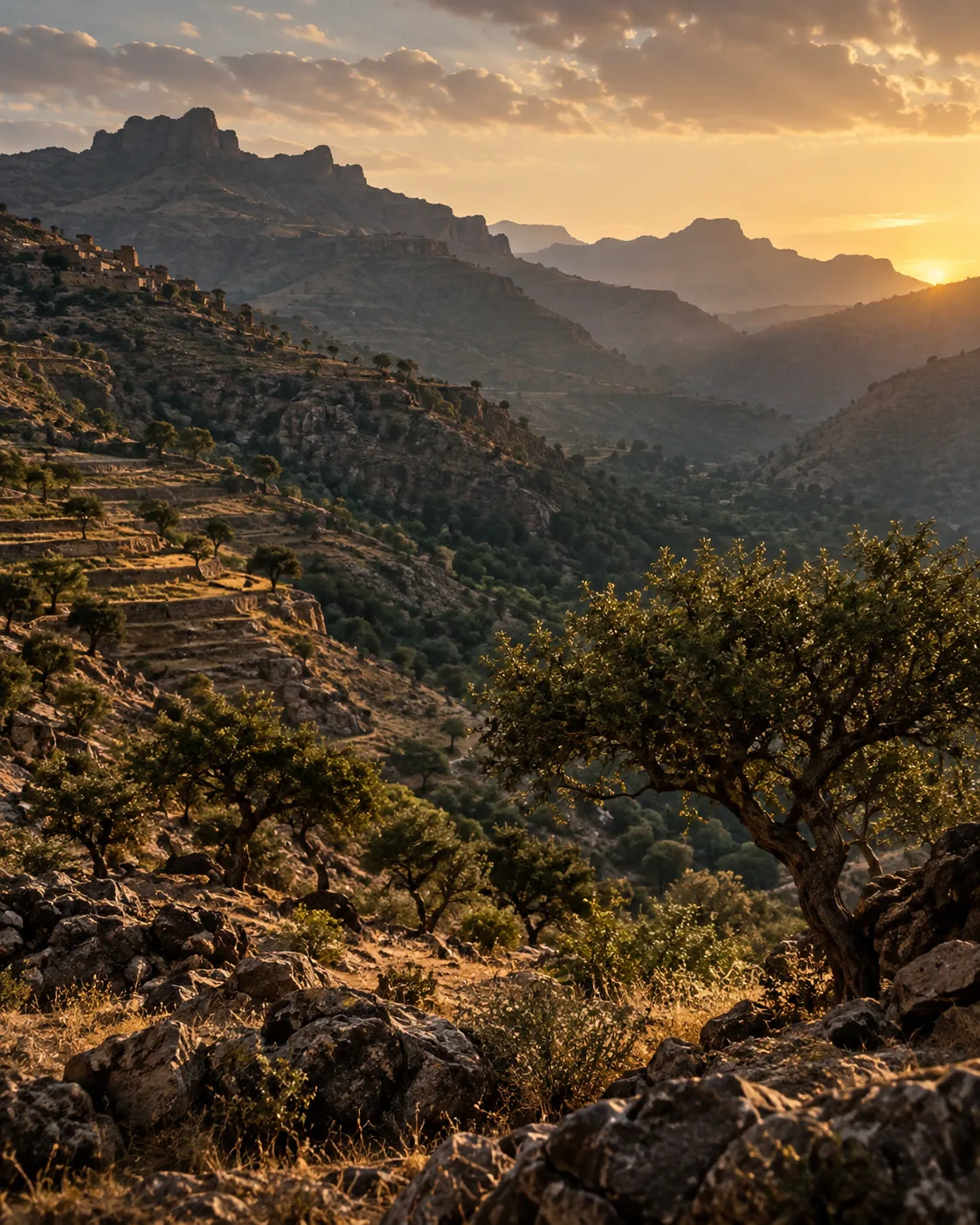 Amran Highlands · Al-Osaimat
A useful distinction
Not Do’an, and that matters
Many consumers treat Yemeni Sidr as a single taste. Osaimi proves otherwise: it comes from a different northern terroir, a different altitude and a different landscape, which is why it deserves to be read as its own origin.
Tradition
A royal style of Sidr, tied to place rather than myth
Across the Arabian market, Osaimi Sidr is spoken of with a prestige vocabulary — royal, maliki, select. Yet what gives it substance is not the language around it but the geography beneath it: Al-Osaimat in the north, not Wadi Do’an in the east.
That distinction matters in a market crowded with generic “Yemeni Sidr”. The House reads Osaimi as a named northern appellation: a honey whose reputation rests on altitude, remoteness and a short autumn harvest.
Highland ecology
Highland ecology
A dry elevated zone where Sidr survives in scattered valleys and escarpments.
Local prestige
Local prestige
Osaimi becomes known in Gulf markets as a distinguished northern Yemeni Sidr.
Autumn harvest
Autumn harvest
The crop is gathered at the end of October and through November.
Modern reading
Modern reading
Its value lies in keeping the origin distinct rather than folding it into generic Sidr.
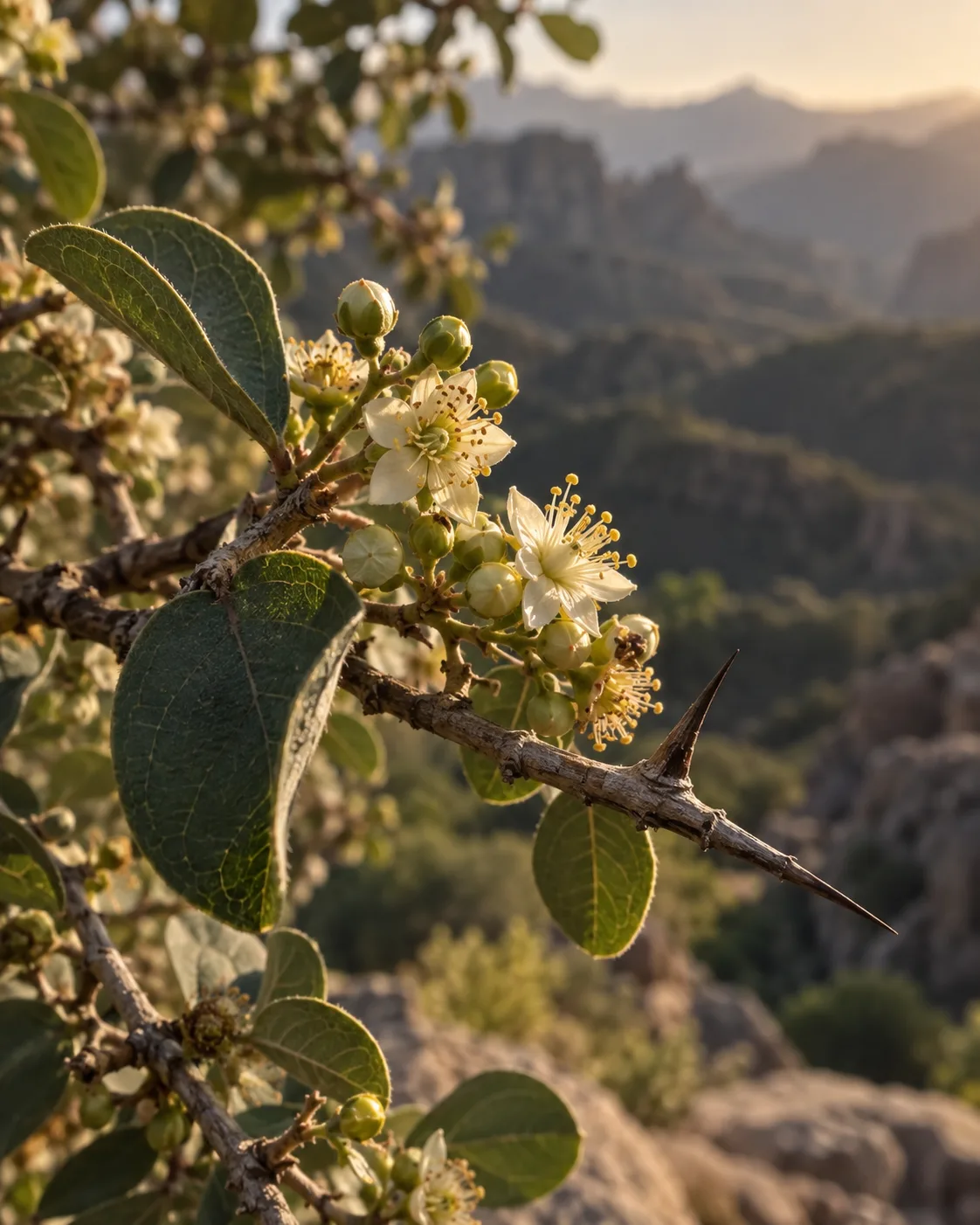 Botanical detail · Yemen
“Every Sidr speaks of its tree. Osaimi also speaks of altitude.”
— The House of Meski
Rarity
Rare because Sidr highlands never produce in abundance
Highland apiculture is constrained by terrain, sparse bloom zones and the brevity of the flowering window. Quantities are small, and much of the honey’s reputation comes from precisely that limited reach.
Why it matters
The name gains value when the geography remains precise.
Beekeeping
Traditional hives, modern caution
Like much of Yemeni honey, Osaimi Sidr depends on small-scale beekeeping, hand harvest and a close reading of seasonal bloom. The best lots are valued for restraint rather than scale.
The practice
For the Atlas, the essential point is continuity: bloom, place, harvest season and lot identity must all stay linked if the origin is to mean anything.
Sensory reading
A northern reading of Sidr
Texture
Dense and silky, with a heavy ribbon that still feels polished rather than sticky.
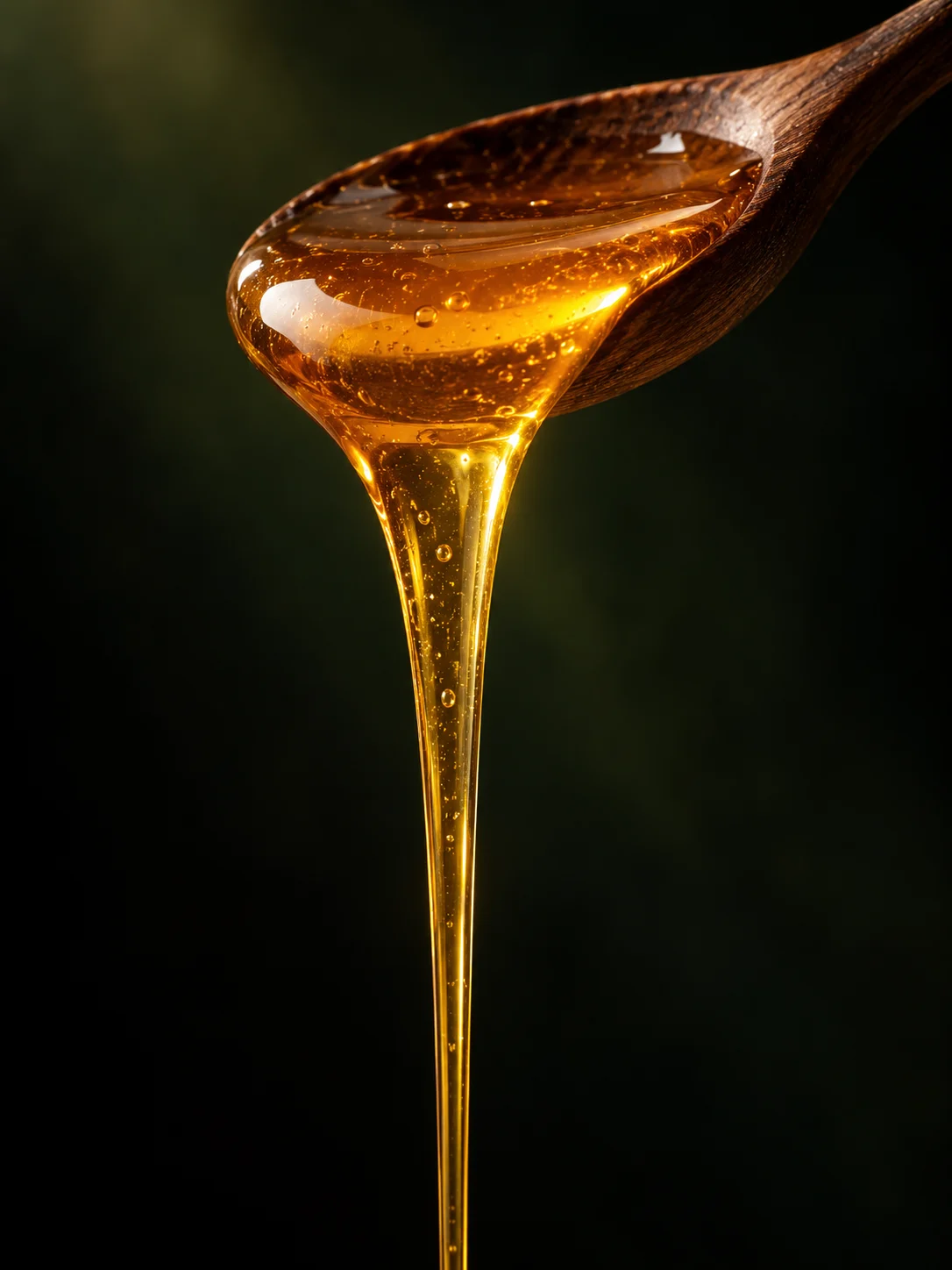
Notebook
Tasting notebook
Osaimi Sidr sits between grandeur and precision. It has the generosity expected of Yemeni Sidr, but the highland setting gives it a slightly cooler, more restrained line than the broader warmth often associated with Do’ani lots.
Pairings
Ways to serve it
Meski rating
An editorial reading, not a certification
Six criteria of the House, judged in tasting. This rating describes the appellation, is revised for each lot presented, and replaces no analysis or certificate.
Provenance
The Meski Confidence Chain
Rare honey is one of the most counterfeited foods in the world, and named origins are no exception. Confidence does not come from a single certificate — it comes from a chain that stays continuous, from bloom to jar.
Read: How to read a rare honeyAnalysis describes the sample received by the laboratory. It does not automatically prove that every jar sold under the same name comes from that sample. A continuous chain does.
Continue the Atlas
An origin is never alone
Compare not to name a winner, but to understand what place, season and craft shift in the cup.