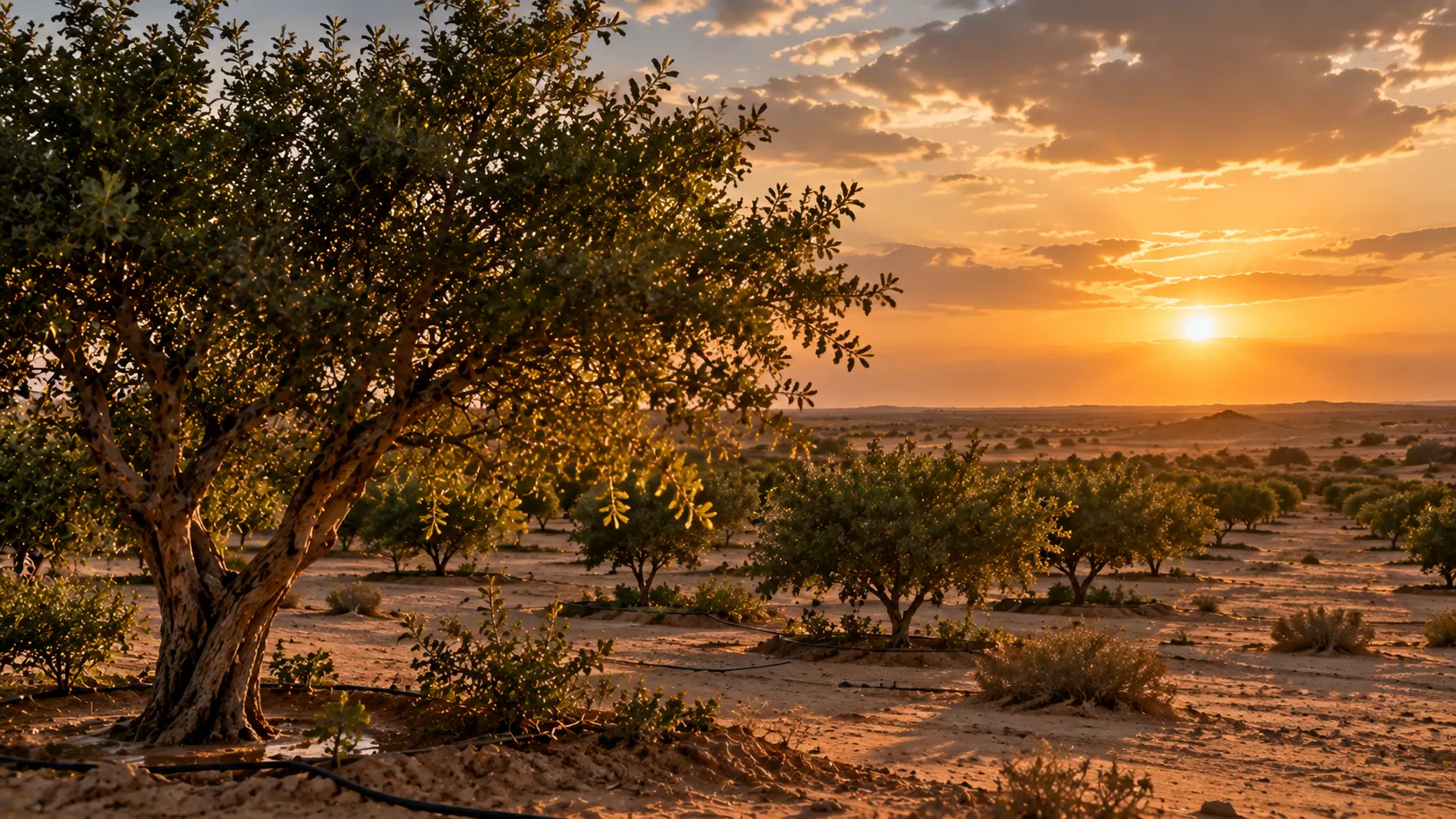
Kuwait · Abdili & Wafra · Desert Agriculture
Kuwaiti Sidr
Honey
عسل السدر الكويتي
A small-country Sidr shaped by extreme heat, irrigated green pockets and a surprisingly serious local beekeeping culture.
Kuwait’s honey production is limited by geography and climate, yet Sidr has become its defining local honey. Research on authentic samples from Abdili in the north and Wafra in the south confirms Ziziphus spina-christi as the dominant seasonal nectar source.
Terroir
Sidr in a country with almost no room to waste
Kuwait is small, hot and largely arid, so productive bee forage is concentrated around farms, gardens and managed green zones rather than endless natural forest.
That limitation makes local Sidr especially interesting. Authentic samples have been georeferenced from Abdili and Wafra, showing that a recognisable monofloral Sidr crop can emerge even under the country’s severe desert conditions.
| Location | Abdili (north) and Wafra (south), Kuwait |
| Landscape | Agricultural pockets within an extreme desert climate |
| Floral source | Sidr — Ziziphus spina-christi |
| Harvest | Late autumn to winter, roughly November to February |
| Character | Concentrated local Sidr from limited forage zones |
“Kuwait has very little floral margin for error — which is exactly why its Sidr is interesting.“
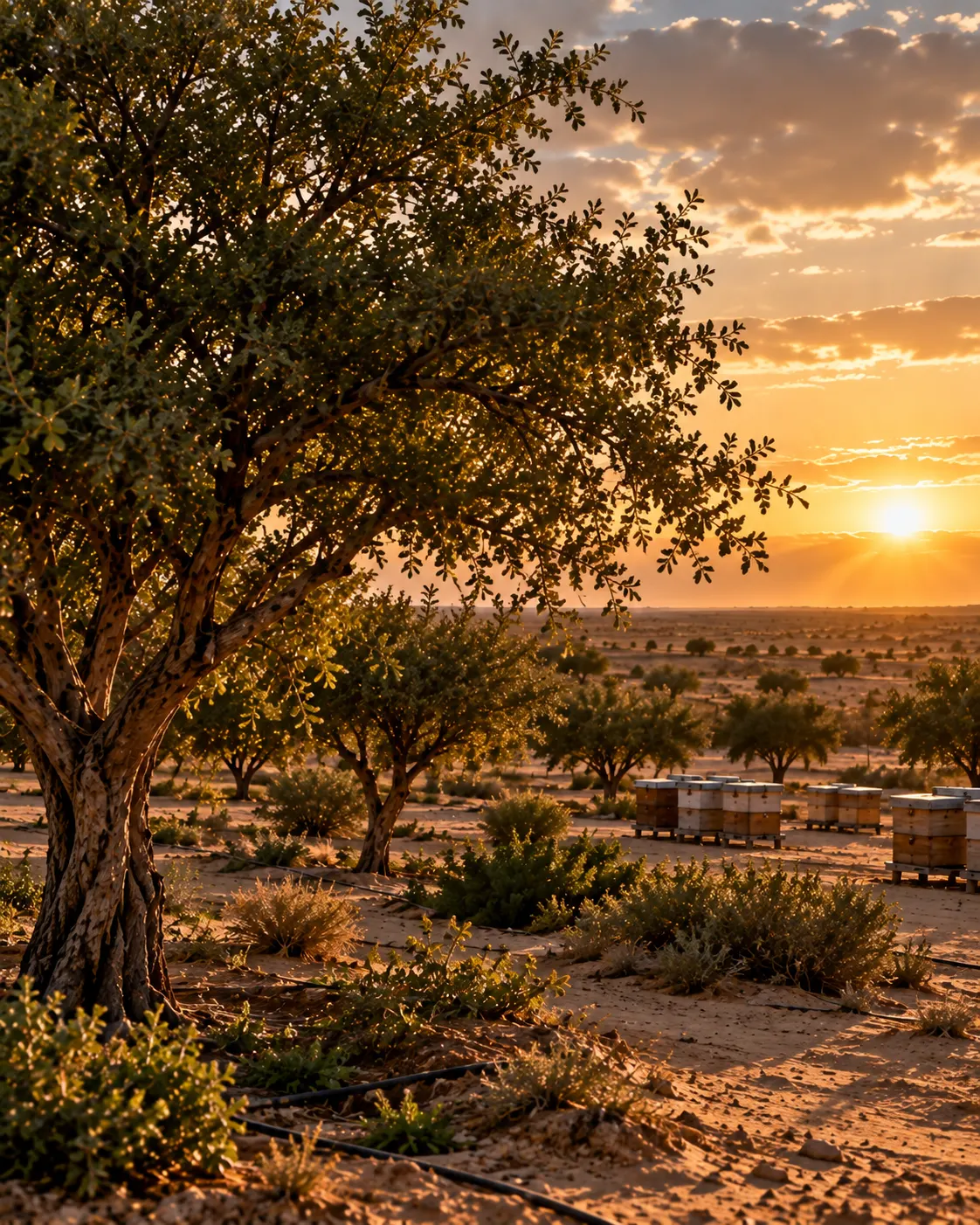 Abdili & Wafra · Kuwait
Scale
Local production is real — and constrained
Kuwait does produce Sidr honey, but the country’s restricted floral landscape and harsh climate keep the sector comparatively small. That makes named apiary regions and season especially important.
Tradition
A modern desert beekeeping culture
Kuwaiti beekeeping relies on careful timing, imported bee stocks and strategic access to flowering trees. Sidr, eucalyptus and willow are among the country’s recognised honey sources.
The Sidr season belongs to the cooler part of the year, when forage conditions are more workable and Ziziphus spina-christi can dominate nectar collection in key agricultural zones.
Desert constraint
Desert constraint
Extreme heat limits forage and colony survival.
Managed green zones
Managed green zones
Apiaries concentrate near farms and flowering trees.
Late autumn–winter
Late autumn–winter
Sidr becomes the principal monofloral honey flow.
Research era
Research era
Authentic Kuwaiti Sidr is characterised to help distinguish it from adulterated honey.
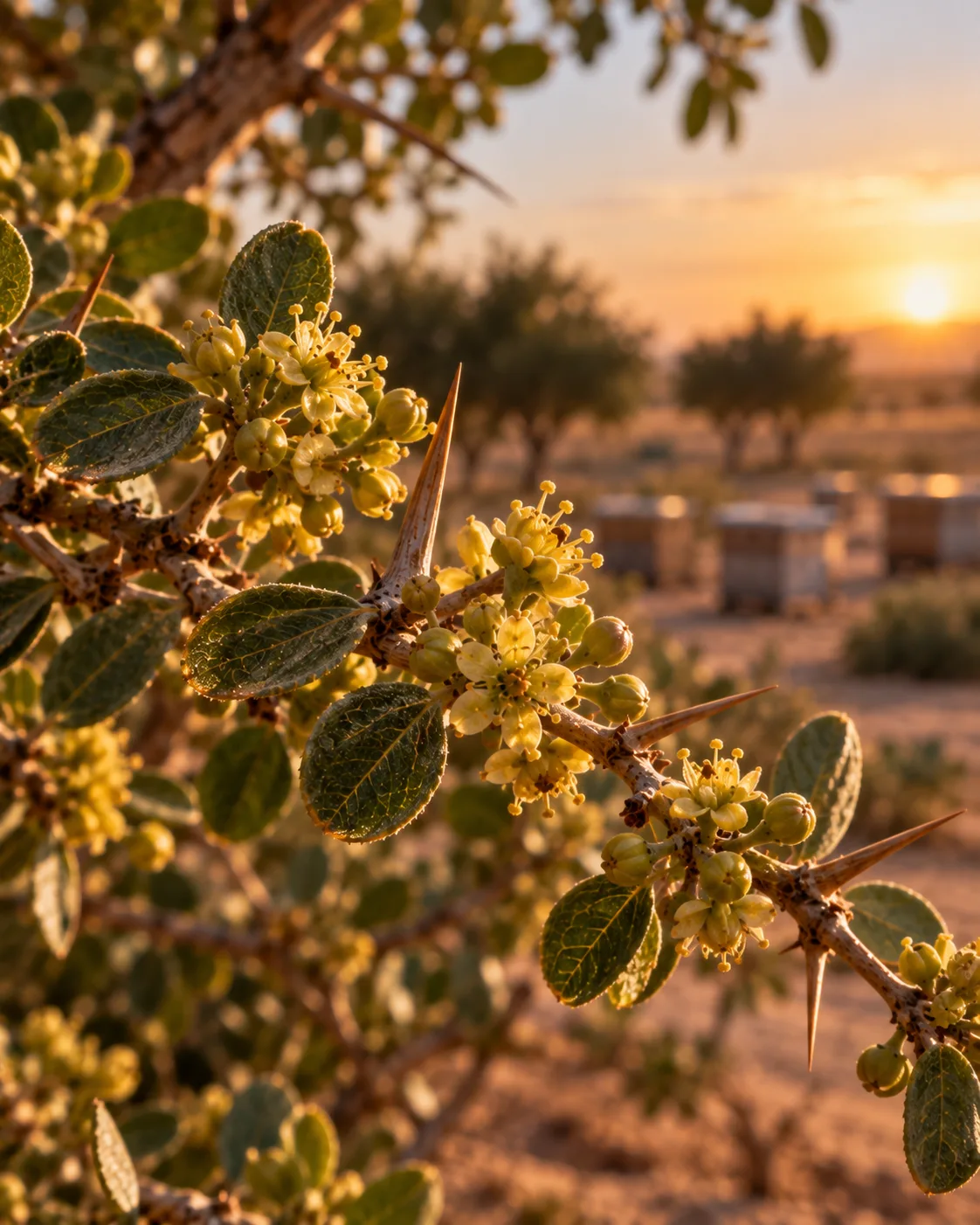 Botanical detail · Kuwait
“When flowers are scarce, knowing exactly where the nectar came from matters more.”
— The House of Meski
Rarity
Limited by geography before it is limited by fashion
Kuwait’s size, heat and restricted floral diversity naturally cap honey production. Good Sidr is therefore a product of precise seasonal management rather than abundance.
Why traceability matters
With small domestic production, authenticity is inseparable from named place and harvest season.
Beekeeping
Beekeeping under climatic pressure
Kuwaiti beekeepers work in a climate where summer losses can be severe and nectar sources are limited. Colony placement and seasonal timing therefore carry unusual weight.
The practice
Research into authentic local honey now adds another layer: physicochemical and sugar-profile data that can help distinguish genuine Kuwaiti Sidr from adulterated products.
Sensory reading
A concentrated Gulf Sidr
Texture
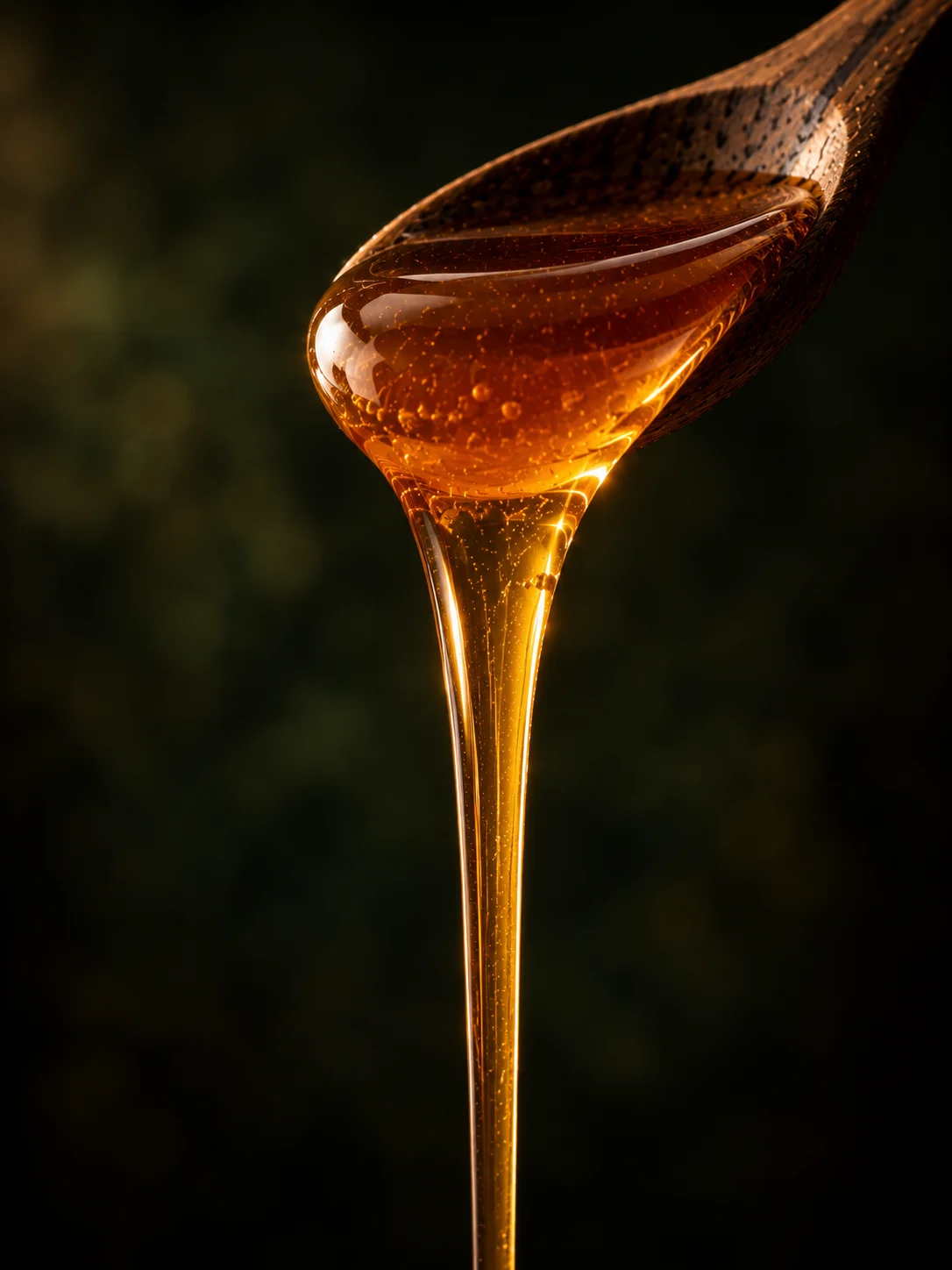
Dense and concentrated, consistent with honey produced under low-moisture desert conditions.
Harvest notebook
Small origin, serious case
Kuwaiti Sidr is valuable to the Atlas because it is easy to overlook. It shows how a small, intensely managed beekeeping sector can still produce a recognisable local honey with scientific authentication work behind it.
Pairings
How to serve it
Bittersweet and full-bodied — treat it as a rare thing to taste alone before adding anything else.
Meski rating
An editorial reading, not a certification
Six criteria of the House, judged in tasting. This rating describes the appellation, is revised for each lot presented, and replaces no analysis or certificate.
Provenance
The Meski Confidence Chain
Rare honey is one of the most counterfeited foods in the world, and Sidr is no exception. Confidence does not come from a single certificate — it comes from a chain that stays continuous, from bloom to jar.
Read: How to read a rare honeyAnalysis describes the sample received by the laboratory. It does not automatically prove that every jar sold under the same name comes from that sample. A continuous chain does.
Continue the Atlas
An origin is never an island
Compare not to name a winner, but to understand what place, season and craft shift in the cup.