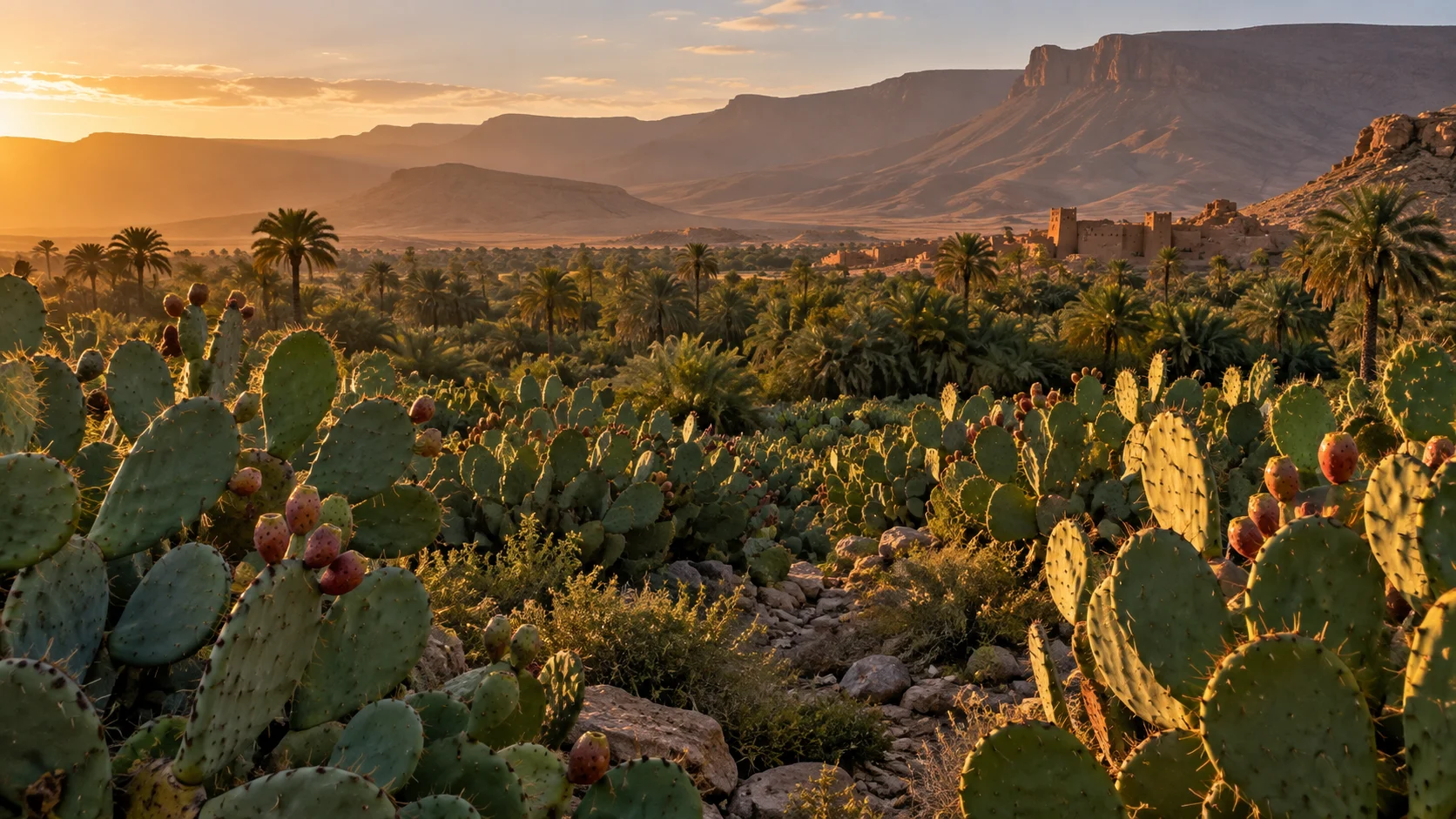
Morocco · Tafilalet · Prickly pear belt
Moroccan Cactus
Honey
عسل الصبار المغربي
A rarer Moroccan honey drawn here from prickly pear blossom — drier, brighter and more surprising than its name suggests.
In the oasis margins and dry southern landscapes of Morocco, prickly pear has become more than a fruit crop. When bees work its blossom, the resulting honey carries a subtle fruit-edged identity that feels distinctly different from the resinous honeys of the Anti-Atlas.
Terroir
Where oasis agriculture meets arid resilience
This reading of Moroccan cactus honey is tied to prickly pear — the figuier de Barbarie that has spread across dry Moroccan agriculture and oasis-edge landscapes.
Unlike heavier spurge honeys, prickly pear blossom gives a honey whose identity comes from a cultivated-yet-hardy plant: one foot in farming, one in drought resilience.
| Location | Tafilalet and arid southern Moroccan cactus-growing zones |
| Landscape | Dry oasis margins and prickly pear plots |
| Floral source | Prickly pear cactus blossom (Opuntia ficus-indica) |
| Harvest | Late spring to early summer |
| Volume | Limited and seasonally dependent |
“The best cactus honey tastes less exotic than expected, and more precise.“
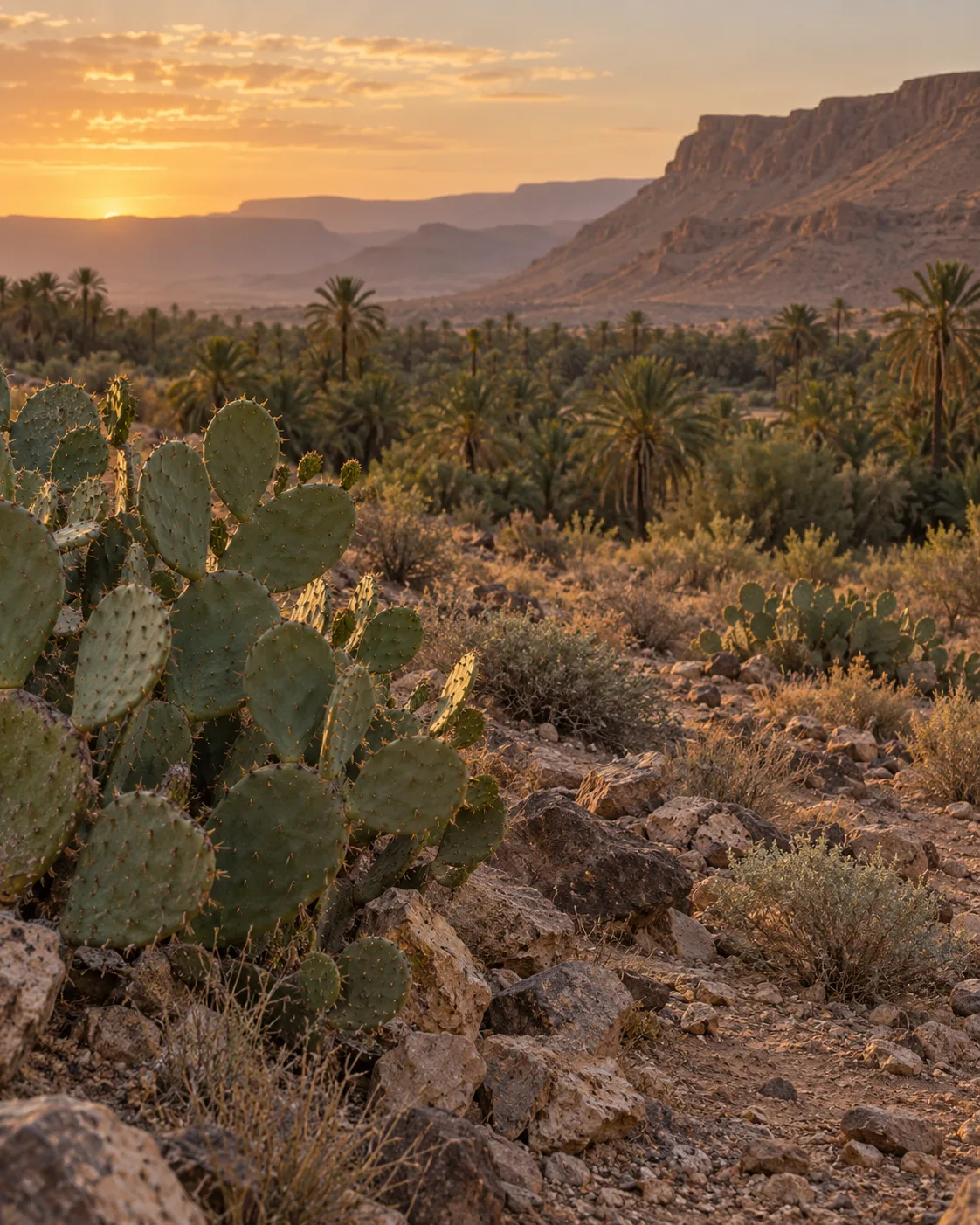 Tafilalet · Prickly pear belt
Important distinction
Cactus is not euphorbia here
Moroccan trade language can blur “cactus” and “daghmous”. For this Atlas entry, cactus honey is treated as prickly pear blossom honey, while euphorbia keeps its own separate fiche.
Tradition
A contemporary Moroccan rarity
Cactus honey is less canonical than thyme or euphorbia, which is precisely why it is interesting. It belongs to a modern Moroccan landscape where drought adaptation, orchard edges and local bee forage overlap.
The result is not a folkloric honey but a regional one — rooted in a plant that has become visually inseparable from many southern Moroccan terrains.
Adapted crop
Adapted crop
Prickly pear settles into dry Moroccan agricultural belts.
Seasonal blossom
Seasonal blossom
A short floral moment creates a narrow window for bees.
Small harvests
Small harvests
Blossom-led lots remain limited and not widely standardised.
Atlas reading
Atlas reading
The honey is best understood as a distinct floral niche, not a generic “desert honey”.
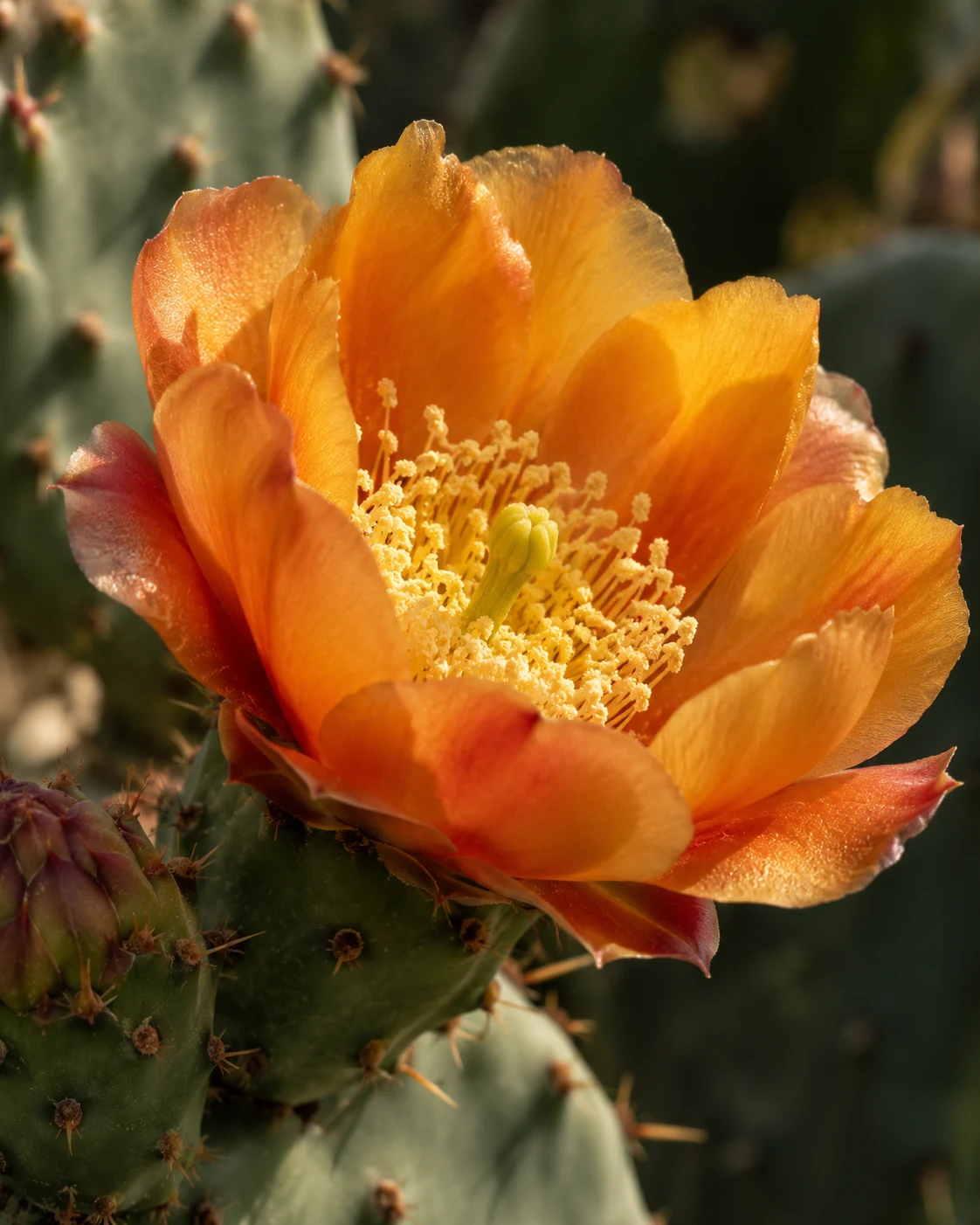 Botanical detail · Morocco
“Before the fruit, the cactus offers a flower. The bees notice first.”
— The House of Meski
Rarity
Rare because the blossom window is narrow
Prickly pear honey depends on a brief flowering period and a forage pattern that can easily be diluted by surrounding plants. Clear cactus-led lots are therefore less common than the name suggests.
Why it matters
Its rarity lies in precision rather than mythology.
Beekeeping
Working at the edge of field and wildland
Beekeepers in cactus zones operate in transitional terrain: cultivated plots, stone, dust, hedges and dry air. The floral signal is subtle and must be protected from overblending.
The practice
Handled well, the honey keeps a clean identity — one that feels lighter and more discreet than stronger southern Moroccan honeys.
Sensory reading
A quieter desert honey
Texture
Smooth and medium-thick, flowing more easily than heavy mountain honeys.
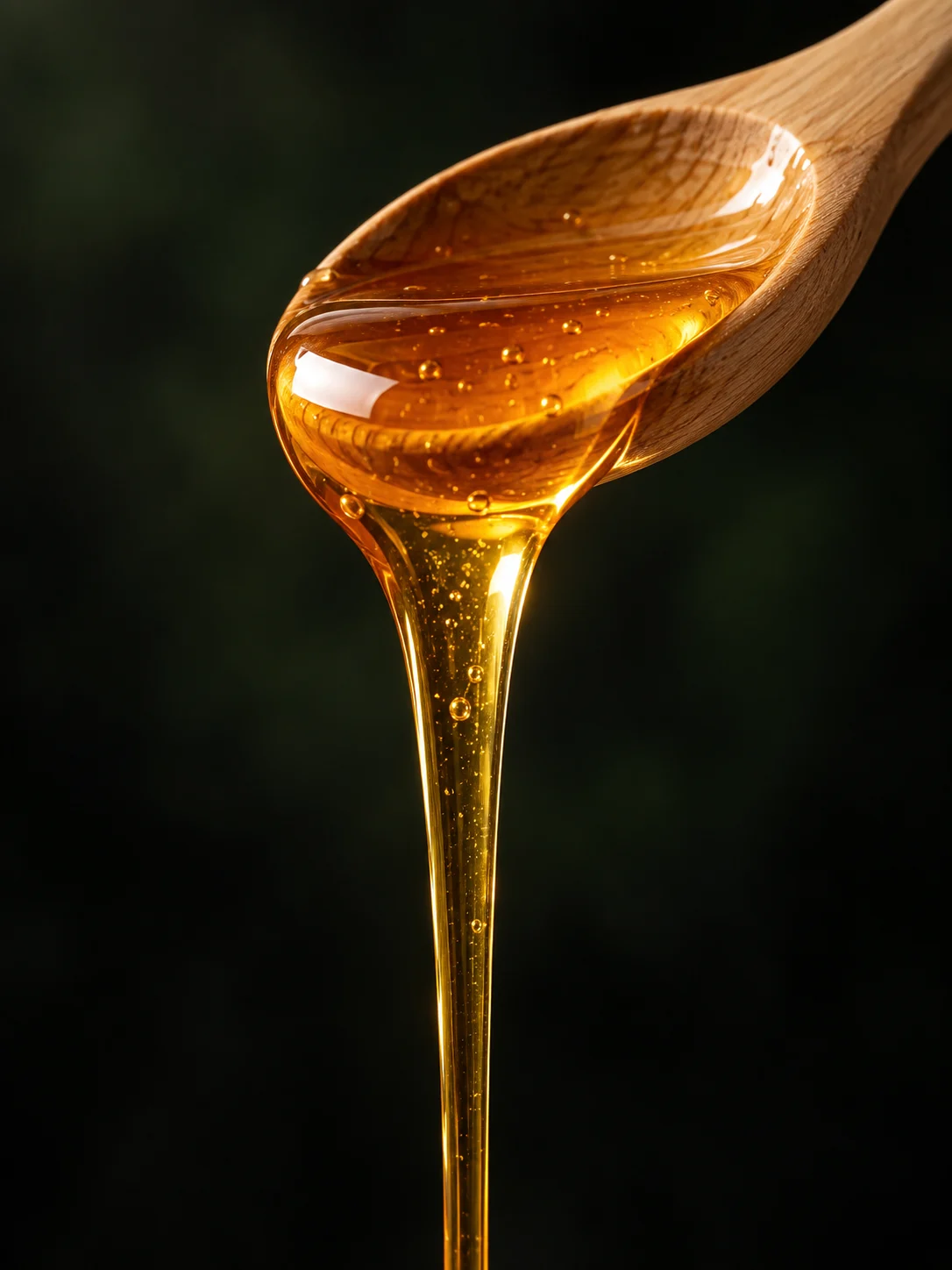
Notebook
Tasting notebook
Cactus honey rewards a patient palate. It is not trying to overpower. Instead, it offers a dry-land elegance — subtle fruit, quiet floral lift and a less obvious sweetness than the name might imply.
Pairings
Ways to serve it
Meski rating
An editorial reading, not a certification
Six criteria of the House, judged in tasting. This rating describes the appellation, is revised for each lot presented, and replaces no analysis or certificate.
Provenance
The Meski Confidence Chain
Rare honey is one of the most counterfeited foods in the world, and named origins are no exception. Confidence does not come from a single certificate — it comes from a chain that stays continuous, from bloom to jar.
Read: How to read a rare honeyAnalysis describes the sample received by the laboratory. It does not automatically prove that every jar sold under the same name comes from that sample. A continuous chain does.
Continue the Atlas
An origin is never alone
Compare not to name a winner, but to understand what place, season and craft shift in the cup.