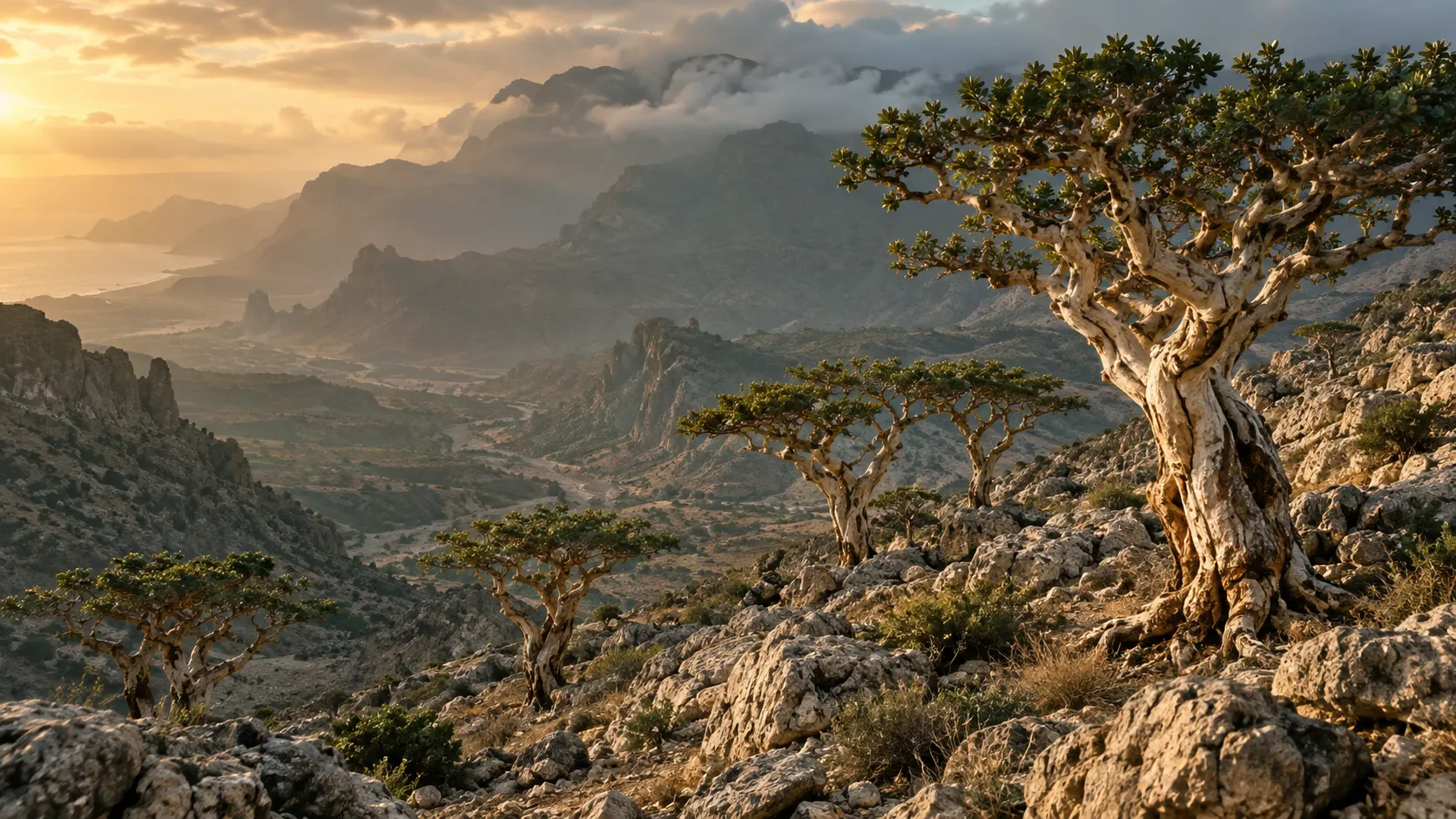
Oman · Dhofar · Frankincense Country
Omani Frankincense
Honey
عسل اللبان العُماني
Honey from the flowers of Boswellia sacra — not resin-infused honey, but a rare bloom gathered in the landscape that made frankincense famous.
Dhofar is known worldwide for frankincense resin. Less familiar is what happens before resin enters the story: Boswellia sacra flowers, bees visit them, and in a good bloom the trees can yield a genuinely floral frankincense honey.
Terroir
Dhofar before the incense burner
Boswellia sacra grows on the arid slopes and wadis of Dhofar, often beyond the full reach of the khareef rains but within the influence of cooling monsoon winds.
Frankincense is usually discussed through resin. Honey shifts attention to the flower itself — a brief biological stage that bees can turn into one of Oman’s least familiar honey origins.
| Location | Dhofar Governorate, southern Oman |
| Landscape | Arid rocky slopes and wadis behind the monsoon mountains |
| Floral source | Frankincense — Boswellia sacra |
| Flowering | Mainly late winter through spring, roughly February–May |
| Character | Rare floral honey; batch identity should be traceable to bloom |
“The tree was famous for resin long before anyone asked what its flowers tasted like.“
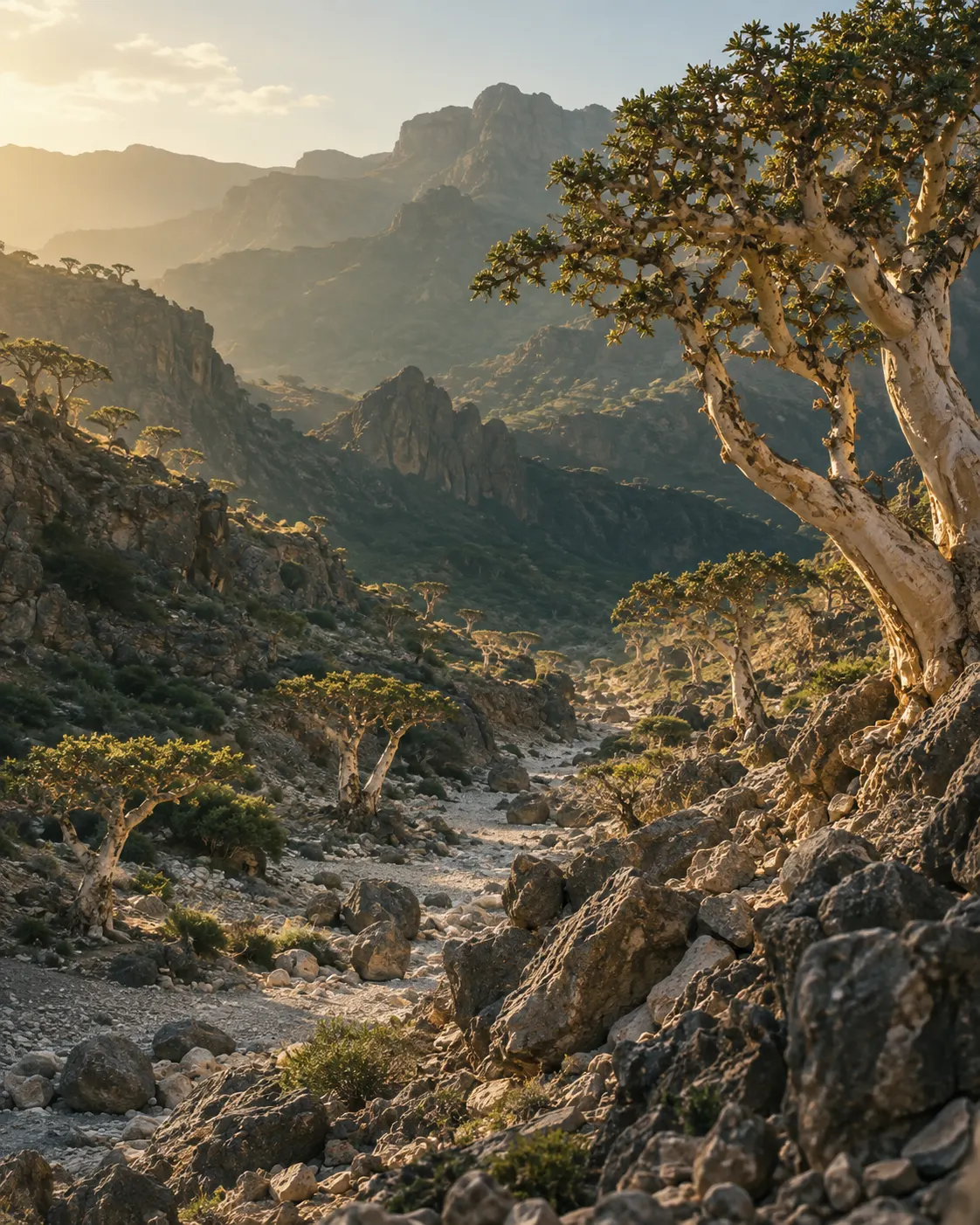 Dhofar · Frankincense country
Essential distinction
Flower honey, not honey flavoured with incense
A true frankincense honey comes from bees foraging Boswellia flowers. Adding resin, oil or flavour to ordinary honey creates a different product entirely and should never be presented as the same origin.
Tradition
The flower behind one of Arabia’s oldest trades
For centuries, Dhofar’s fame travelled with lumps of aromatic resin. Ports, caravan routes and old settlements made frankincense a global commodity long before modern branding existed.
Frankincense honey is therefore a small side story inside a much larger one — but an unusually intimate one, because it asks the bee to interpret the same tree through nectar instead of resin.
Ancient trade
Ancient trade
Dhofar frankincense travels through Arabian trade routes.
Boswellia bloom
Boswellia bloom
The tree flowers in late winter and spring.
Bee forage
Bee forage
Honeybees work the flowers when bloom is sufficiently abundant.
Modern rediscovery
Modern rediscovery
Frankincense honey emerges as a rare Omani specialty.
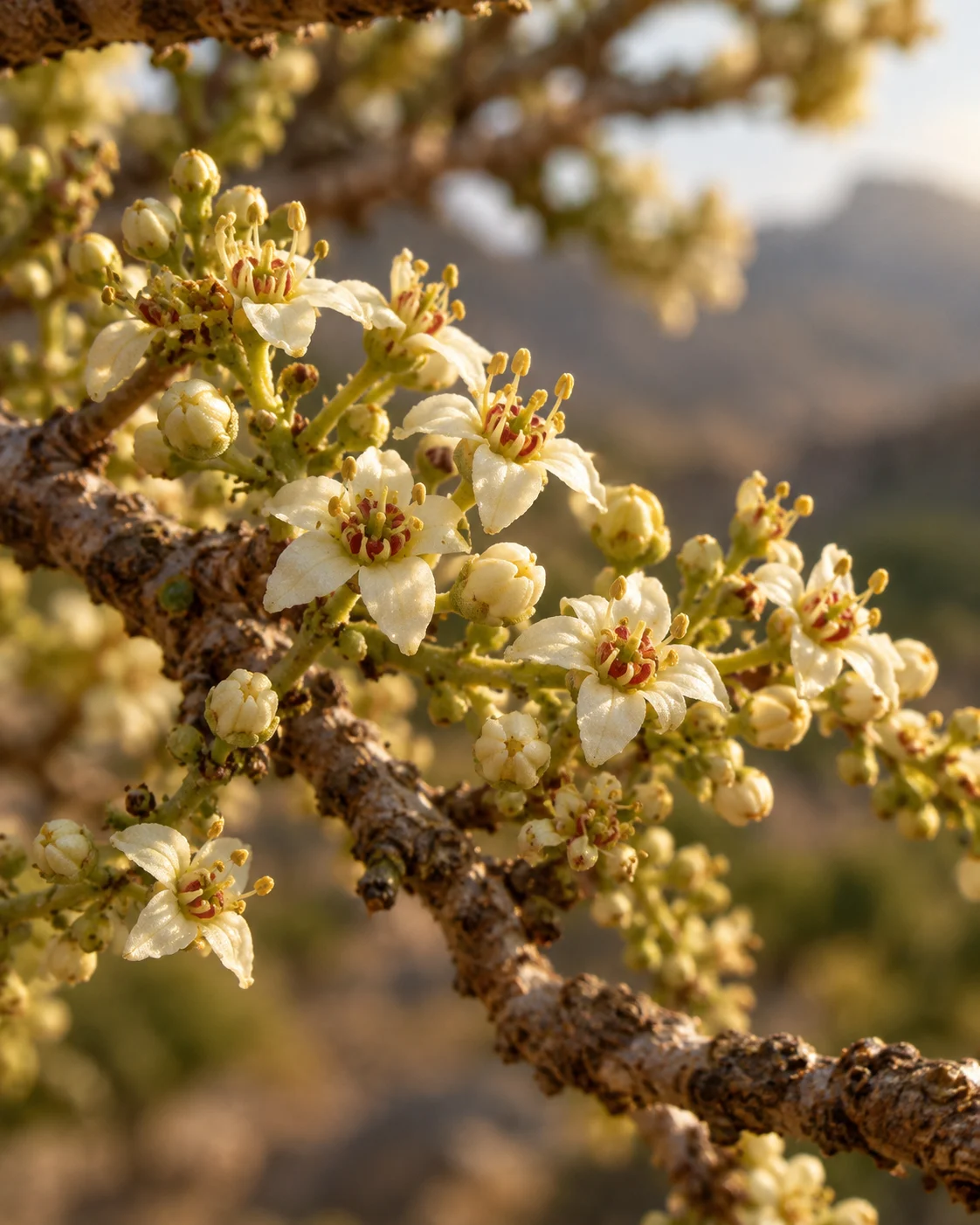 Botanical detail · Oman
“Before the smoke, there was a flower.”
— The House of Meski
Rarity
Rare because the bloom must be strong enough to speak clearly
Frankincense trees do not exist to make honey. A convincing lot depends on flowering intensity, apiary placement, competing bloom and weather — conditions that cannot be guaranteed every year.
Why the claim needs traceability
The romance is strongest when the floral story can actually be proven.
Beekeeping
A harvest that starts with a question
Frankincense honey requires the beekeeper to know exactly where colonies were placed and what else was flowering at the same time. The name alone is not enough.
The practice
For the Atlas, a good lot should be tied to an apiary, a season and ideally floral or laboratory evidence when the claim is strongly monofloral.
Sensory reading
Not incense in a spoon
Texture
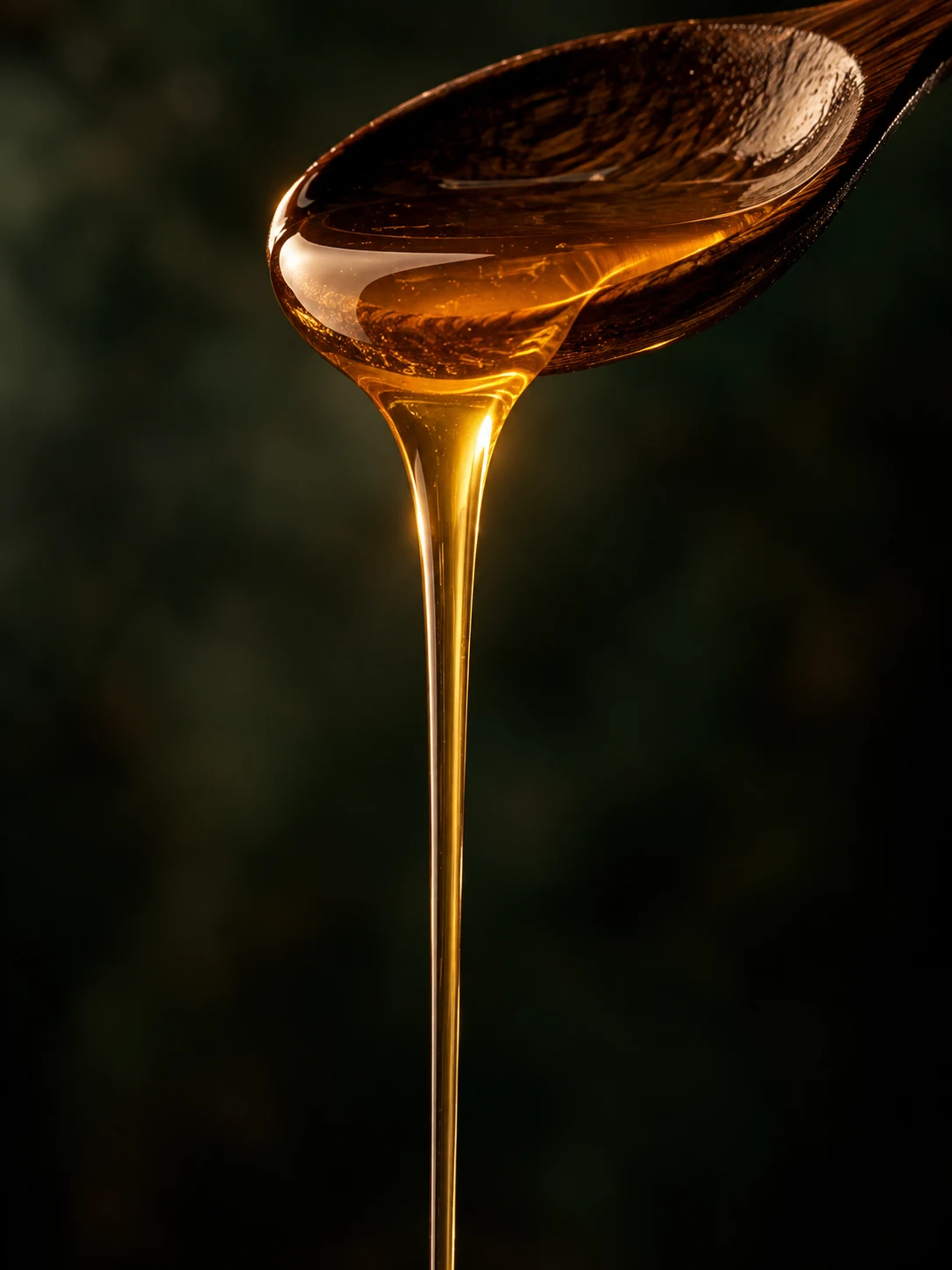
Typically fluid to medium-bodied; exact texture should be read lot by lot.
Harvest notebook
The expectation is the trap
The most useful way to taste frankincense honey is to forget incense smoke. The fascination lies in discovering the tree through blossom rather than resin.
Pairings
How to serve it
Bittersweet and full-bodied — treat it as a rare thing to taste alone before adding anything else.
Meski rating
An editorial reading, not a certification
Six criteria of the House, judged in tasting. This rating describes the appellation, is revised for each lot presented, and replaces no analysis or certificate.
Provenance
The Meski Confidence Chain
Rare honey is one of the most counterfeited foods in the world, and Sidr is no exception. Confidence does not come from a single certificate — it comes from a chain that stays continuous, from bloom to jar.
Read: How to read a rare honeyAnalysis describes the sample received by the laboratory. It does not automatically prove that every jar sold under the same name comes from that sample. A continuous chain does.
Continue the Atlas
An origin is never an island
Compare not to name a winner, but to understand what place, season and craft shift in the cup.