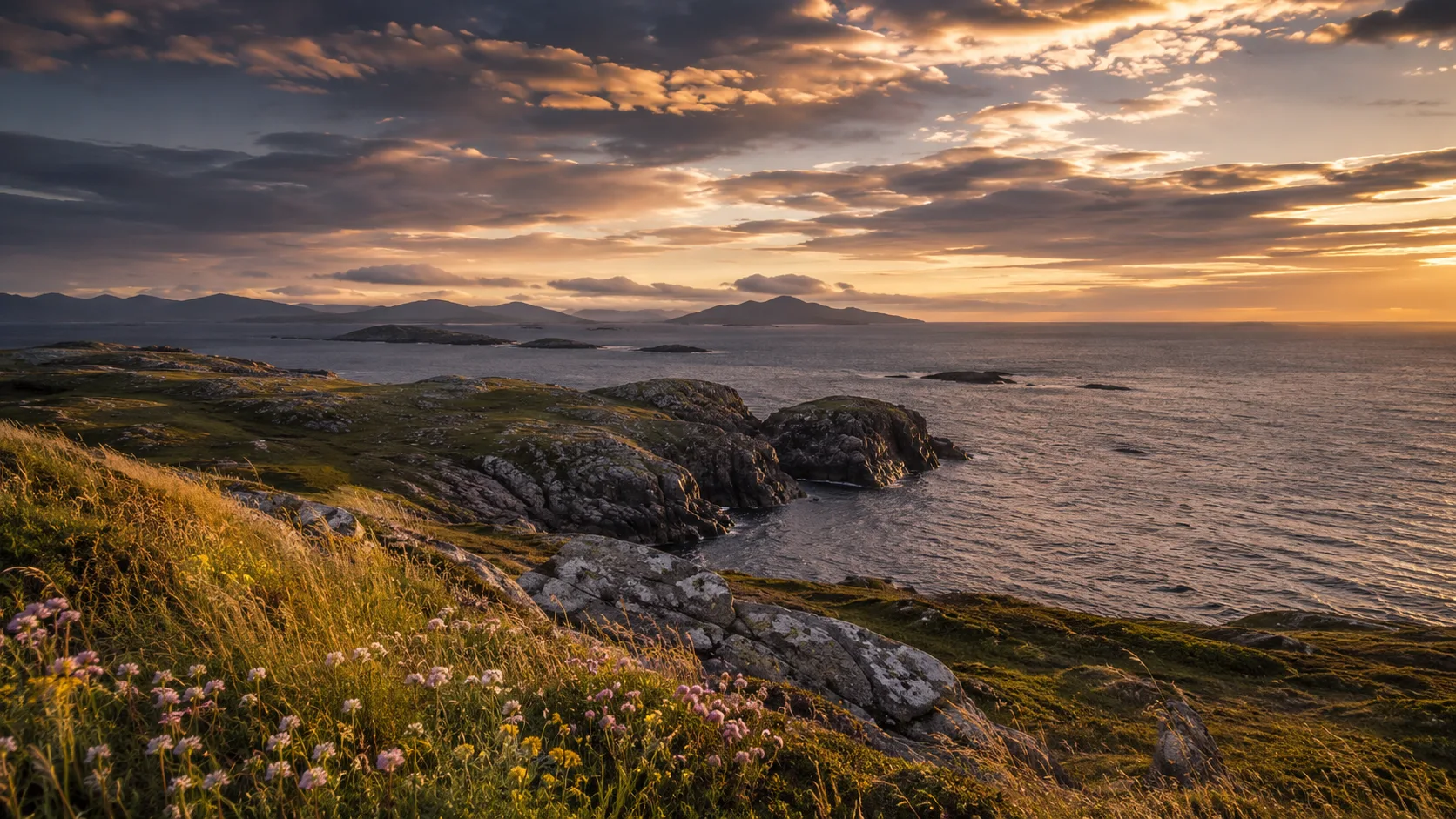
Scotland · Isle of Colonsay · Inner Hebrides
Colonsay
Wildflower Honey
عسل الزهور البرية من كولونساي
The only honey in this Atlas defined by its bee before its blossom.
Every other honey in this collection is named for a flower. This one is named for an island that passed a law to protect the bee that makes it — Britain’s last significant population of its own native honeybee.
Terroir
Colonsay, isolated enough to matter
The Isle of Colonsay, in Scotland’s Inner Hebrides, receives close to 100 inches of rain a year under a cool Atlantic climate — hardly ideal beekeeping weather, but exactly the isolation that let a genetically pure population of native bees survive here undisturbed.
Most of Britain’s native honeybees were wiped out by disease in the early 20th century. Colonsay’s isolation meant its bees never caught what devastated the mainland.
| Location | Isle of Colonsay, Inner Hebrides, Scotland |
| Climate | Atlantic, roughly 100 inches of rain annually |
| Bee | Apis mellifera mellifera — Scotland’s native black bee |
| Floral source | Wildflower and heather, foraged across the island |
| Legal status | Protected since 2013; no other bee subspecies permitted on the island |
“Every honey in this Atlas has a flower behind it. This one has an Act of the Scottish Parliament.“
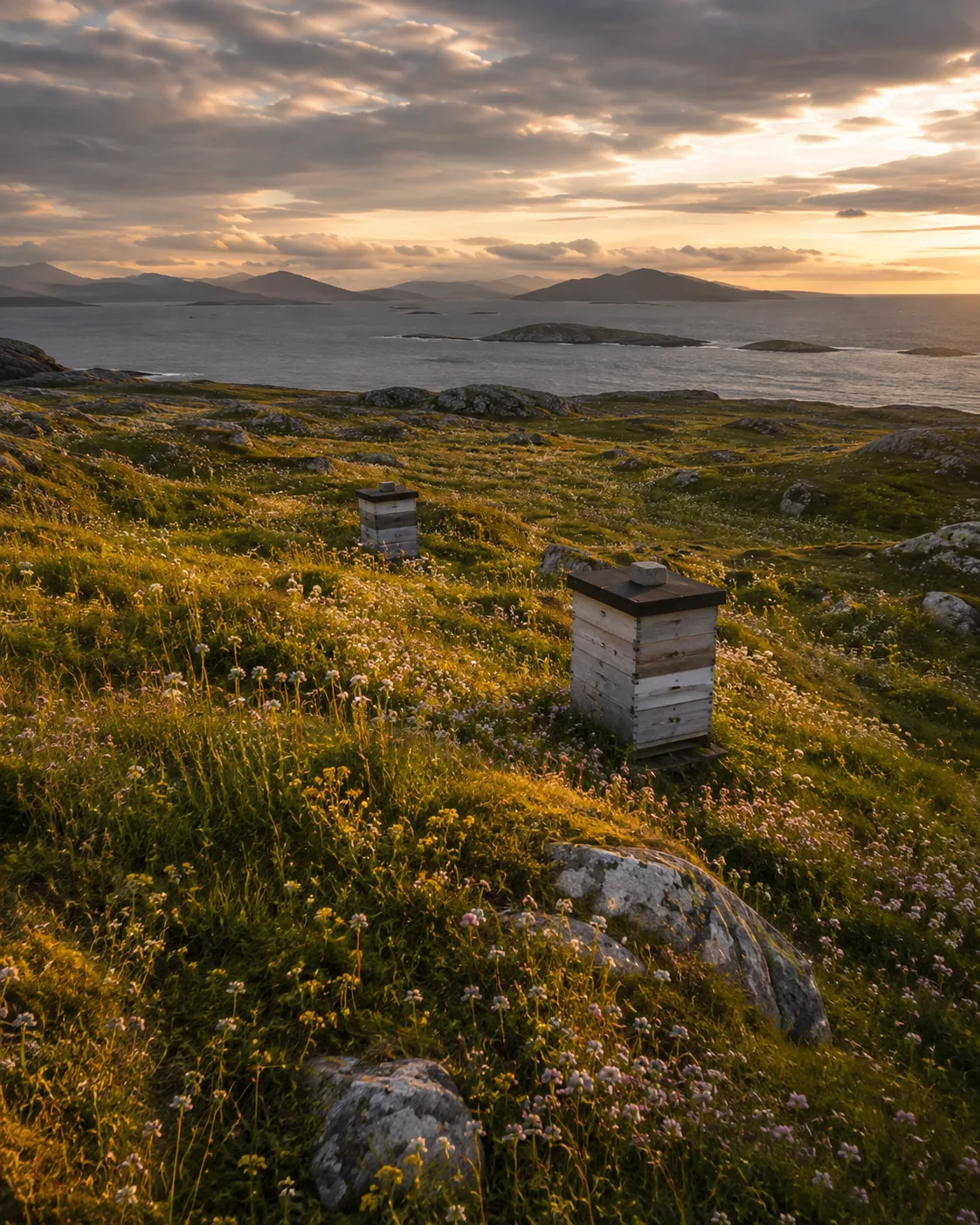 Isle of Colonsay · Inner Hebrides
A bee protected by law, not just by isolation
The only honey here backed by its own legislation
Since 2013, the Bee Keeping (Colonsay and Oronsay) Order has made it illegal to bring any honeybee other than Scotland’s native black bee, Apis mellifera mellifera, onto the island. Nowhere else in this Atlas is a honey’s very existence protected by dedicated government legislation.
Tradition
A bee that outlived what wiped out its cousins
In the early 20th century, a disease swept through Britain’s honeybee population, all but eliminating the native black bee everywhere except a handful of isolated pockets.
From the late 1970s, a beekeeper began gathering surviving native stock from remote corners of Scotland and Ireland, building the closed population that lives on Colonsay today — work that eventually persuaded the Scottish Government to make its protection law.
Early 20th century
A disease nearly ends the story
A disease swept Britain’s honeybee population, wiping out the native black bee almost everywhere except a few isolated pockets.
Late 1970s–80s
A closed population, built by hand
Surviving native stock, gathered from remote parts of Scotland and Ireland, formed the foundation of Colonsay’s isolated bee population.
2013
The law catches up
The Scottish Government passed the Bee Keeping (Colonsay and Oronsay) Order, making it illegal to bring any other honeybee subspecies onto the island.
Today
Still genetically almost pure
Geneticists studying Colonsay’s roughly 60 colonies continue to find them among the purest surviving populations of native British honeybee.
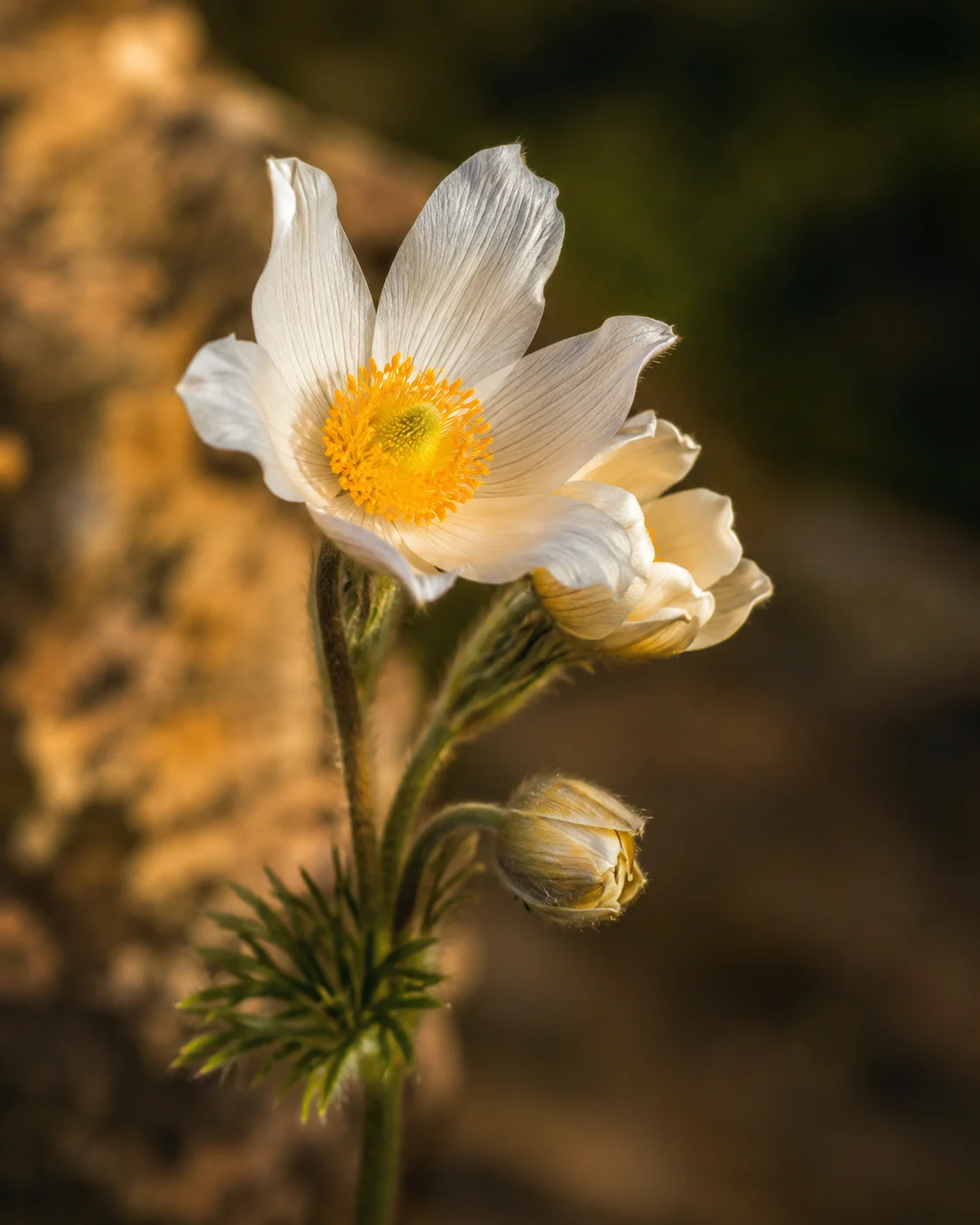 Heather in bloom · Colonsay
“Everywhere else in Britain, this bee is a memory. On Colonsay, it just never got the memo.”
— The House of Meski
Rarity
Rare because the bee itself nearly wasn’t
This isn’t a honey made scarce by a brief bloom or a harsh climate alone — it’s scarce because the bee that makes it came within a generation or two of disappearing from Britain entirely.
Why it cannot scale
Protecting this bee’s genetics means keeping the population small and closed on purpose — scaling up would undo the very thing that makes it worth protecting.
Beekeeping
A bee kept for conservation as much as honey
Colonsay’s beekeeping has always balanced two goals at once — producing honey, and preserving a genetically distinct, disease-free population that researchers now draw on to study honeybee health more broadly.
The practice
Extraction follows standard modern practice — smoker, uncapping knife, extractor — nothing about the process differs from any other apiary; the distinction here lies entirely in the bee.
Sensory reading
Straightforward, honest wildflower character
Texture
Smooth and easy to spread, without the unusual weight or darkness of some rarer honeys in this Atlas — its distinction lies elsewhere.
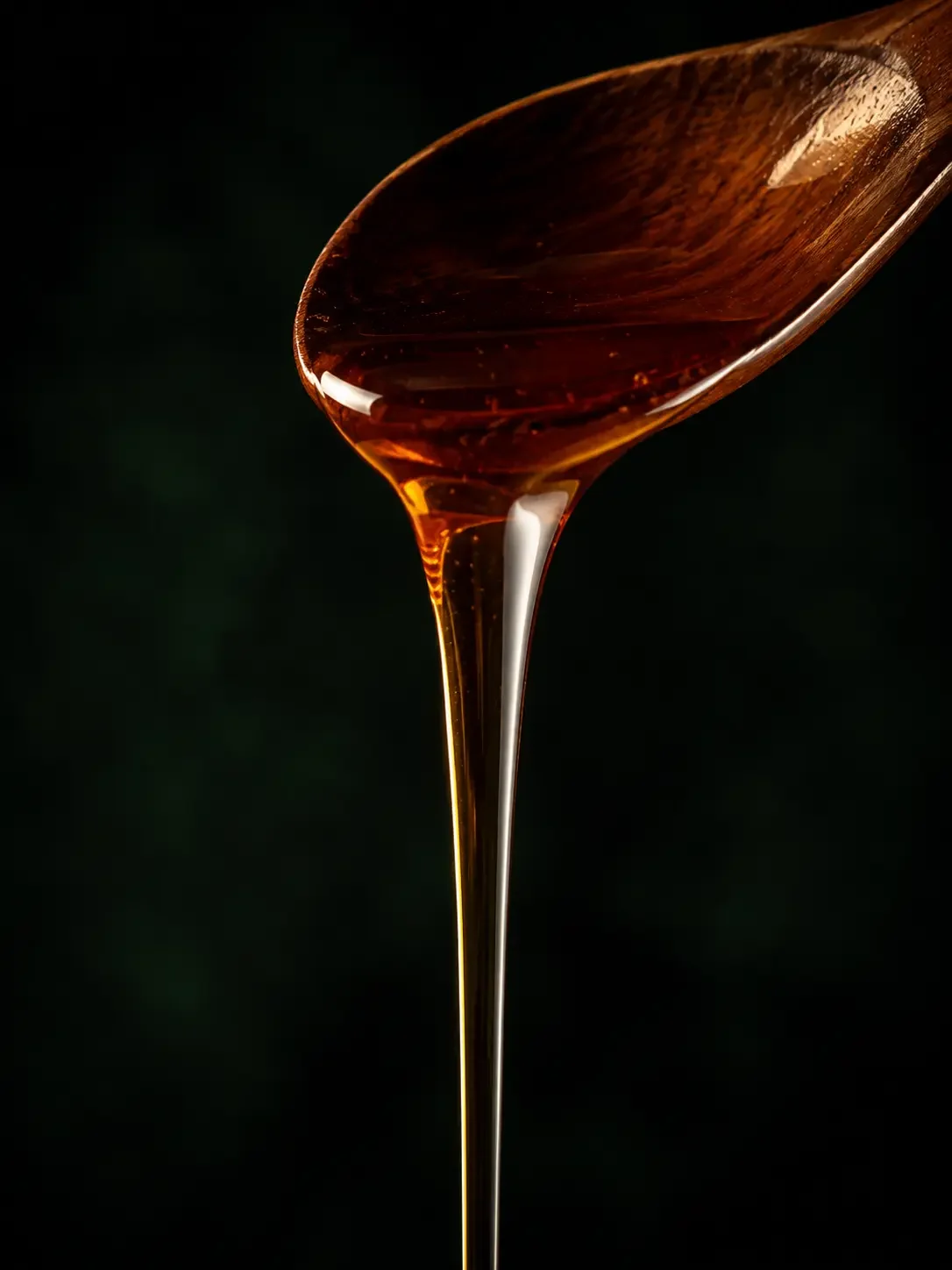
Harvest notebook
From the field — an island that made the bee the point
Most honeys in this Atlas ask you to picture a flower, a valley, a season. This one asks something different: picture a subspecies of bee that very nearly went extinct across an entire country.
On Colonsay, that bee still forages exactly as it always did — heather, wildflower, whatever the island’s mixed terrain offers that week.
The honey itself is, by design, unremarkable in the best sense: honest, clean, wildflower-sweet. What is remarkable is that it exists at all.
Pairings
How to serve it
Clean and classic — pair it the way Scottish households always have.
Meski rating
An editorial reading, not a certification
Six criteria of the House, judged in tasting. This rating describes the appellation, is revised for each lot presented, and replaces no analysis or certificate.
Provenance
The Meski Confidence Chain
Rare honey is one of the most counterfeited foods in the world, and Sidr is no exception. Confidence does not come from a single certificate — it comes from a chain that stays continuous, from bloom to jar.
Read: How to read a rare honeyAnalysis describes the sample received by the laboratory. It does not automatically prove that every jar sold under the same name comes from that sample. A continuous chain does.
Continue the Atlas
An origin is never an island
Compare not to name a winner, but to understand what place, season and craft shift in the cup.