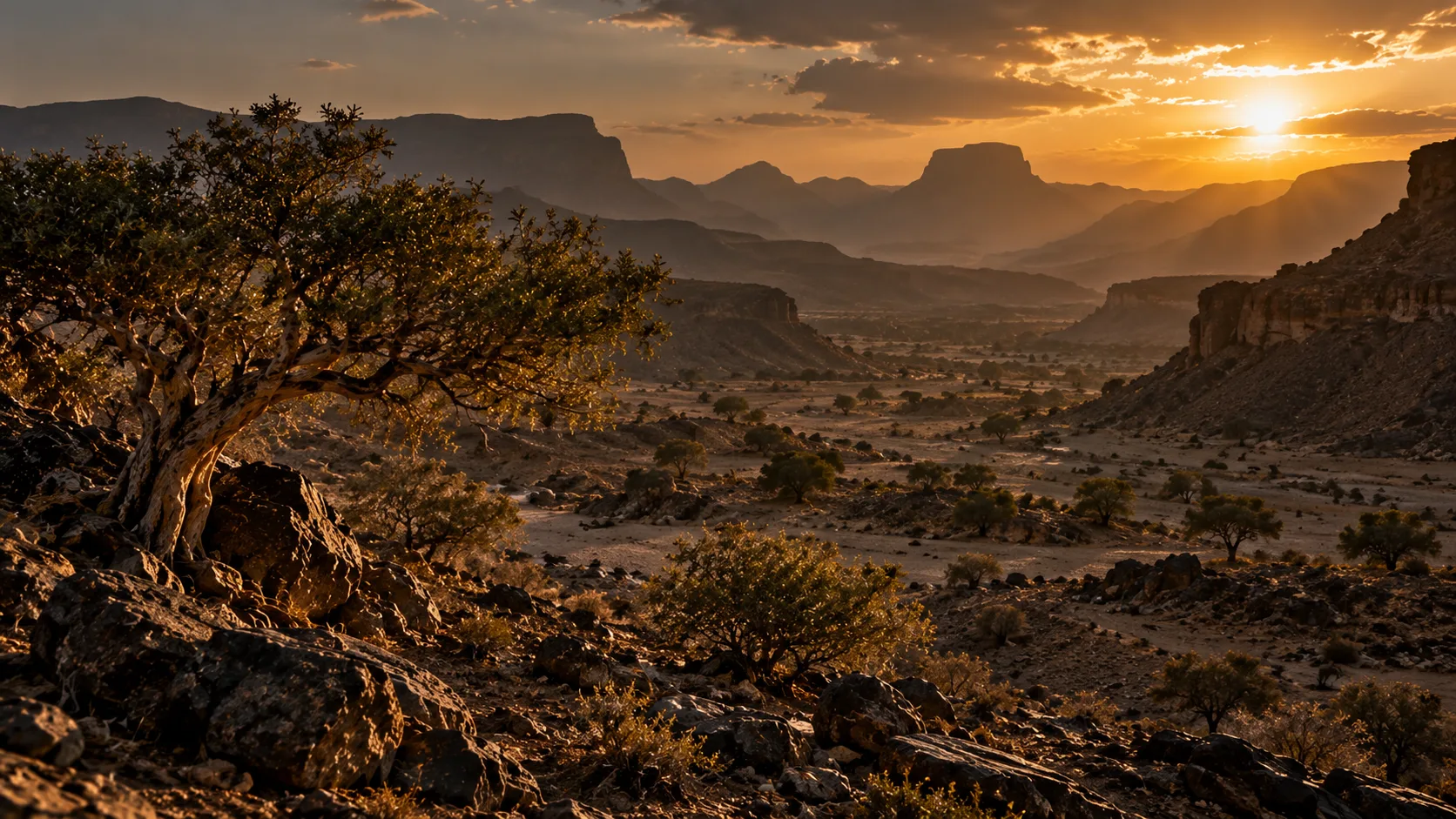
Yemen · Shabwah · Arid Plateau
Shabwah Sidr
Honey
عسل السدر الشبواني
A darker Yemeni Sidr from the arid plateau west of Hadramout — resinous, faintly bitter and built for people who already know Sidr.
Shabwah sits west of Hadramout in a drier, more open landscape. Sidr trees grow across the plateau and valleys, giving a honey that current regional harvest descriptions place at the darker, more resinous end of Yemen’s Sidr spectrum.
Terroir
A Sidr from open plateau rather than deep wadi
Shabwah is drier and more open than Wadi Do’an, with low- to mid-altitude plateau country and wide arid valleys. That difference in landscape is exactly why the Atlas treats Shabwani Sidr as its own origin.
The tree may be the same species associated with other Yemeni Sidr honeys, but climate and terrain shift the result toward a darker and more resinous profile.
| Location | Shabwah Governorate, Yemen |
| Landscape | Dry open plateau and arid valleys west of Hadramout |
| Floral source | Sidr — Ziziphus spina-christi |
| Harvest | Autumn |
| Character | Dark, resinous, with a faintly bitter finish |
“Same Sidr tree, different plateau — and the honey notices.“
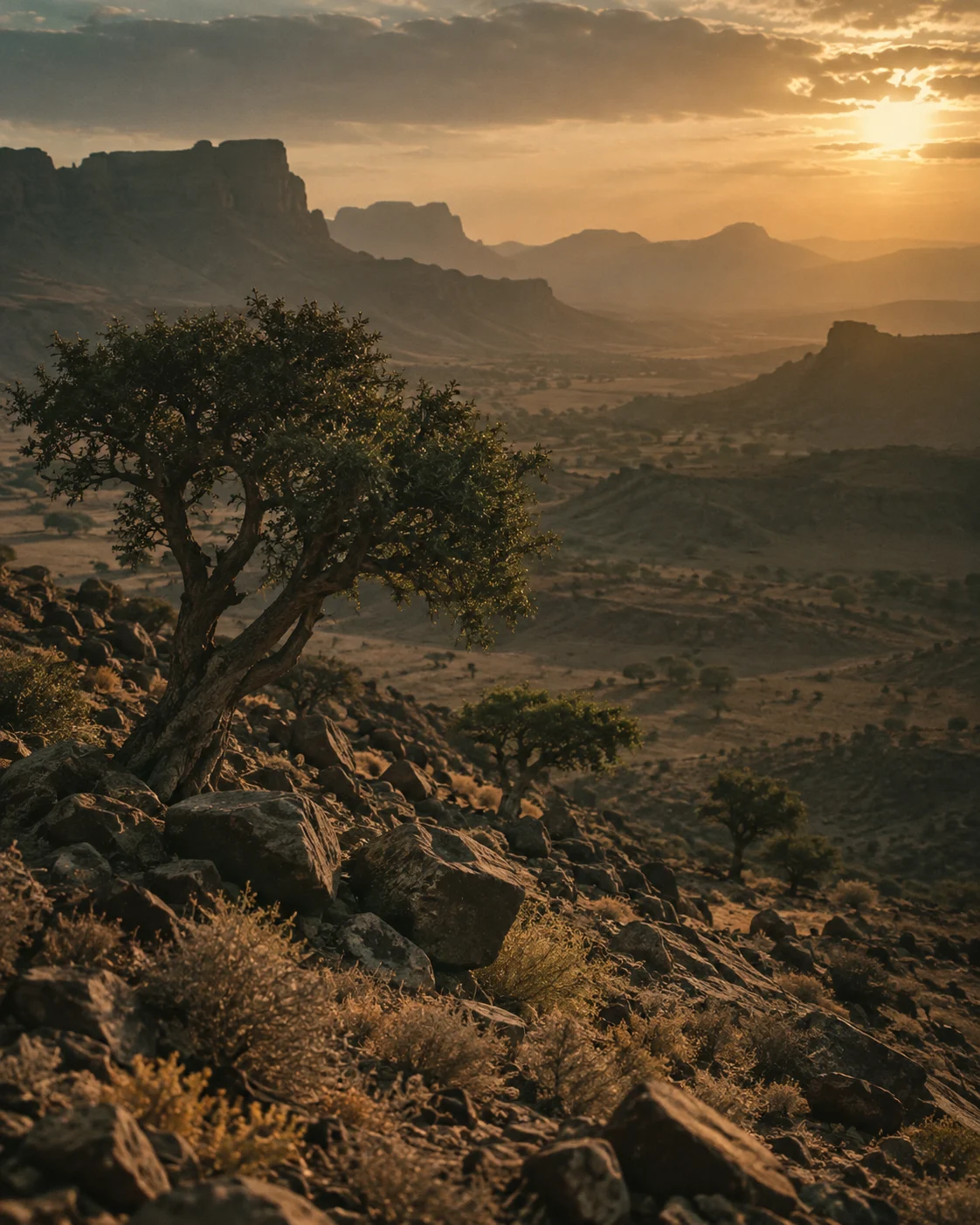 Shabwah · Arid plateau
Regional comparison
Not all Yemeni Sidr is Do’ani
Shabwah gives the Atlas a third clear Yemeni Sidr voice: darker and more resinous than the classic Do’an profile, and more austere than the lighter highland expression of Usimate.
Tradition
A Sidr region on the old incense road
Shabwah has long sat on routes linking southern Arabia’s interior with the wider incense trade. Today its Sidr honey offers another reason to read the plateau as more than empty desert.
Nomadic and small-scale beekeeping follows the autumn bloom, with regional identity becoming increasingly important as buyers learn to ask which Yemeni Sidr they are actually tasting.
Ancient crossroads
Ancient crossroads
Shabwah sits within the historical landscape of southern Arabian trade.
Wild Sidr
Wild Sidr
Trees persist across dry plateau and valley terrain.
Autumn
Autumn
Beekeepers follow the seasonal Sidr flowering.
Today
Today
Shabwani emerges as a named origin beside Hadrami and Usimi.
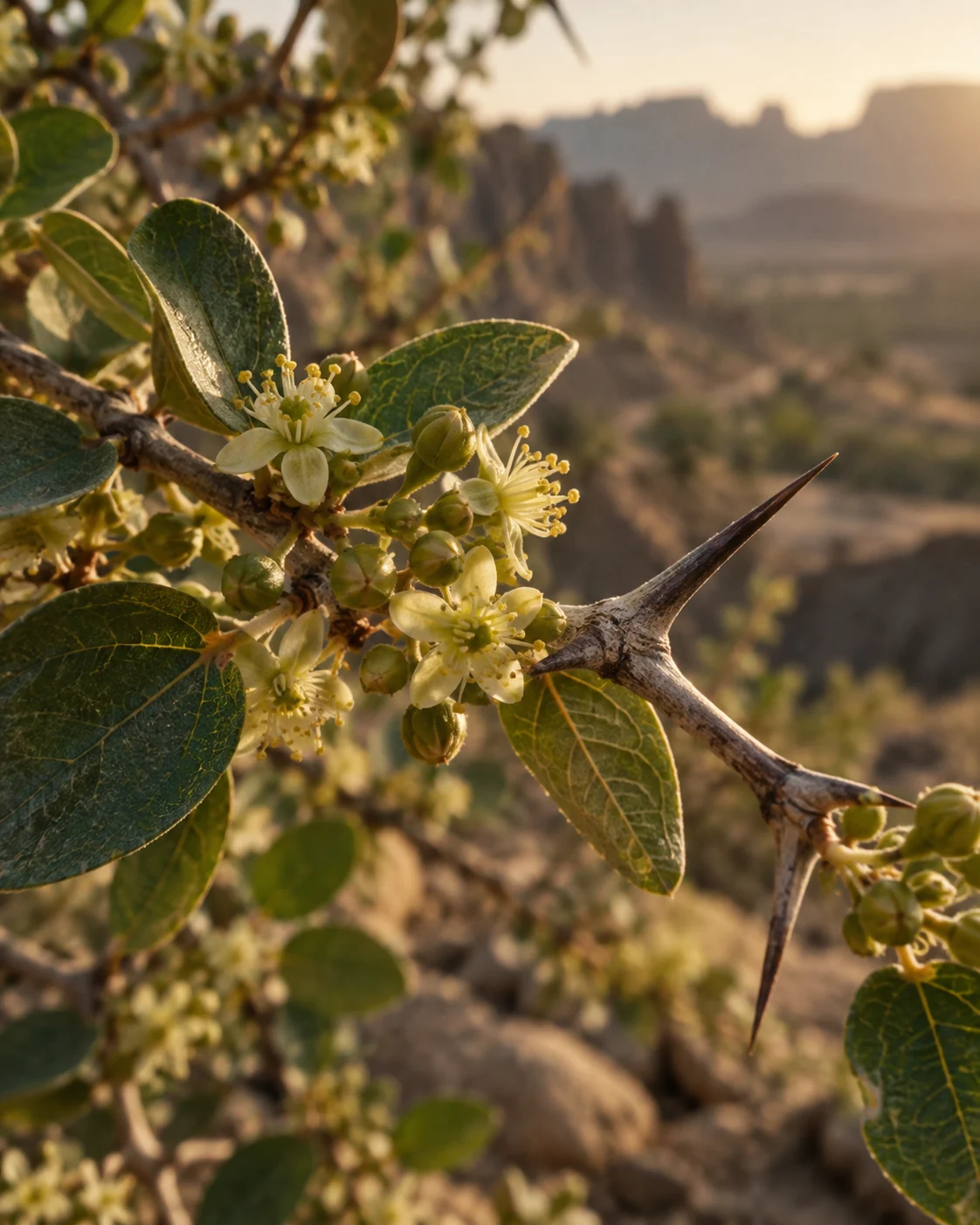 Botanical detail · Yemen
“The tree is Sidr. Shabwah gives it a darker shadow.”
— The House of Meski
Rarity
A collector’s Sidr because the profile is less forgiving
Shabwani is not necessarily rarer than every other Yemeni Sidr, but its more resinous, faintly bitter profile makes it less generic and more compelling for people already familiar with the category.
Why connoisseurs return
It offers contrast inside the Sidr family rather than merely another prestige label.
Beekeeping
Following Sidr across harder ground
Beekeepers move hives with the bloom, as elsewhere in Yemen, but Shabwah’s open dry plateau creates a different set of forage and transport conditions from the steep Hadrami wadis.
The practice
Good provenance therefore starts with the governorate and harvest season, not simply the word “Yemeni”.
Sensory reading
The darker side of Yemeni Sidr
Texture
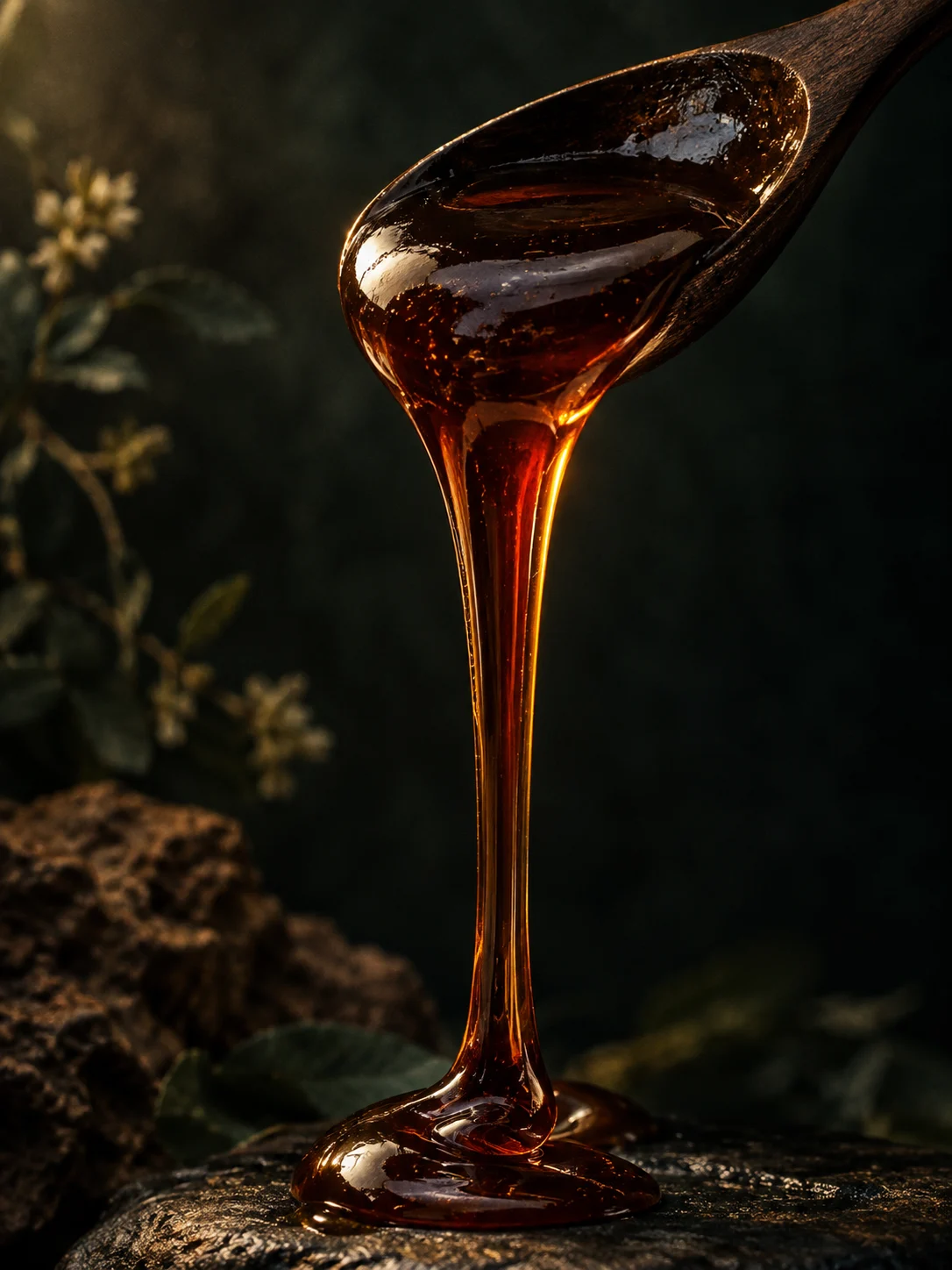
Dense and slow-moving, with a weight that matches its darker flavour.
Harvest notebook
Sidr for people who want more than sweetness
Shabwani is useful because it breaks the idea that premium Sidr must always be caramel-soft and universally easy. This one has edges, and those edges are the point.
Pairings
How to serve it
Bittersweet and full-bodied — treat it as a rare thing to taste alone before adding anything else.
Meski rating
An editorial reading, not a certification
Six criteria of the House, judged in tasting. This rating describes the appellation, is revised for each lot presented, and replaces no analysis or certificate.
Provenance
The Meski Confidence Chain
Rare honey is one of the most counterfeited foods in the world, and Sidr is no exception. Confidence does not come from a single certificate — it comes from a chain that stays continuous, from bloom to jar.
Read: How to read a rare honeyAnalysis describes the sample received by the laboratory. It does not automatically prove that every jar sold under the same name comes from that sample. A continuous chain does.
Continue the Atlas
An origin is never an island
Compare not to name a winner, but to understand what place, season and craft shift in the cup.