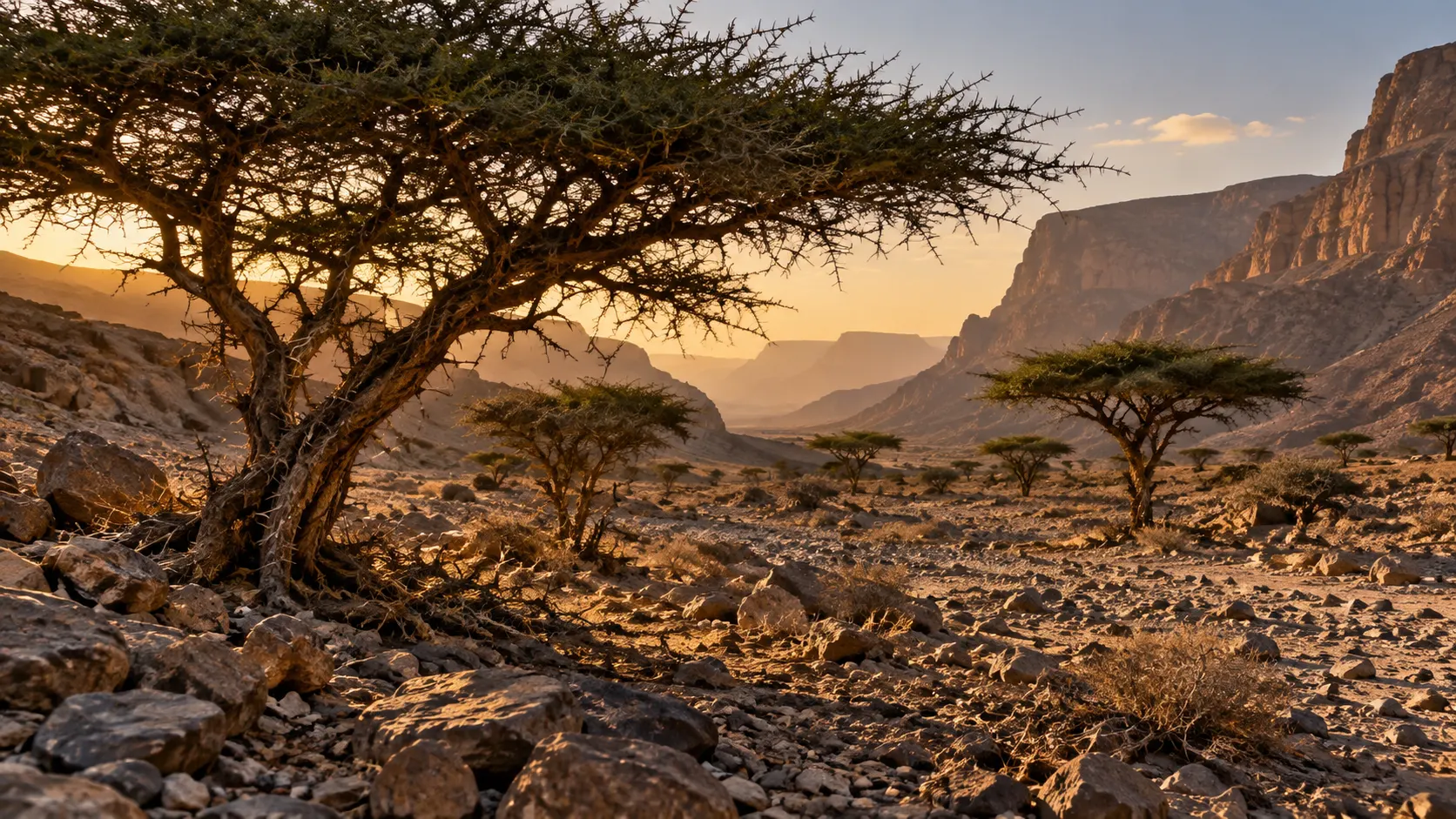
Yemen · Hadramaut · Desert acacia belt
Yemeni Somour
Honey
عسل السمر اليمني
A darker acacia honey whose warmth, smoke and earthiness make it one of Yemen’s more serious table honeys.
Known across Arabia as Samar or Somour, this honey comes from the nectar of thorned desert acacias. In Yemen it belongs to the harsher landscapes — hot, dry, exposed country where bees turn a sparse blossom into a notably powerful honey.
Terroir
Acacia country under hard light
Somour belongs to the dry acacia zones of Yemen, especially the hotter and barer landscapes associated with Hadrami and interior desert ecologies.
The blossom is less lush than Sidr and the tree more openly defensive — thorned, sparse and heat-tested. The resulting honey is therefore less about delicacy than about structure and depth.
| Location | Interior Yemen, associated here with Hadramaut desert acacia zones |
| Landscape | Hot, dry wadis and open thorn-tree country |
| Floral source | Samar / Somour acacia blossom (commonly linked to Acacia tortilis) |
| Harvest | Late spring to early summer |
| Volume | Limited, depending on acacia bloom and heat |
“Somour tastes as if the tree had learned to survive heat by becoming flavour.“
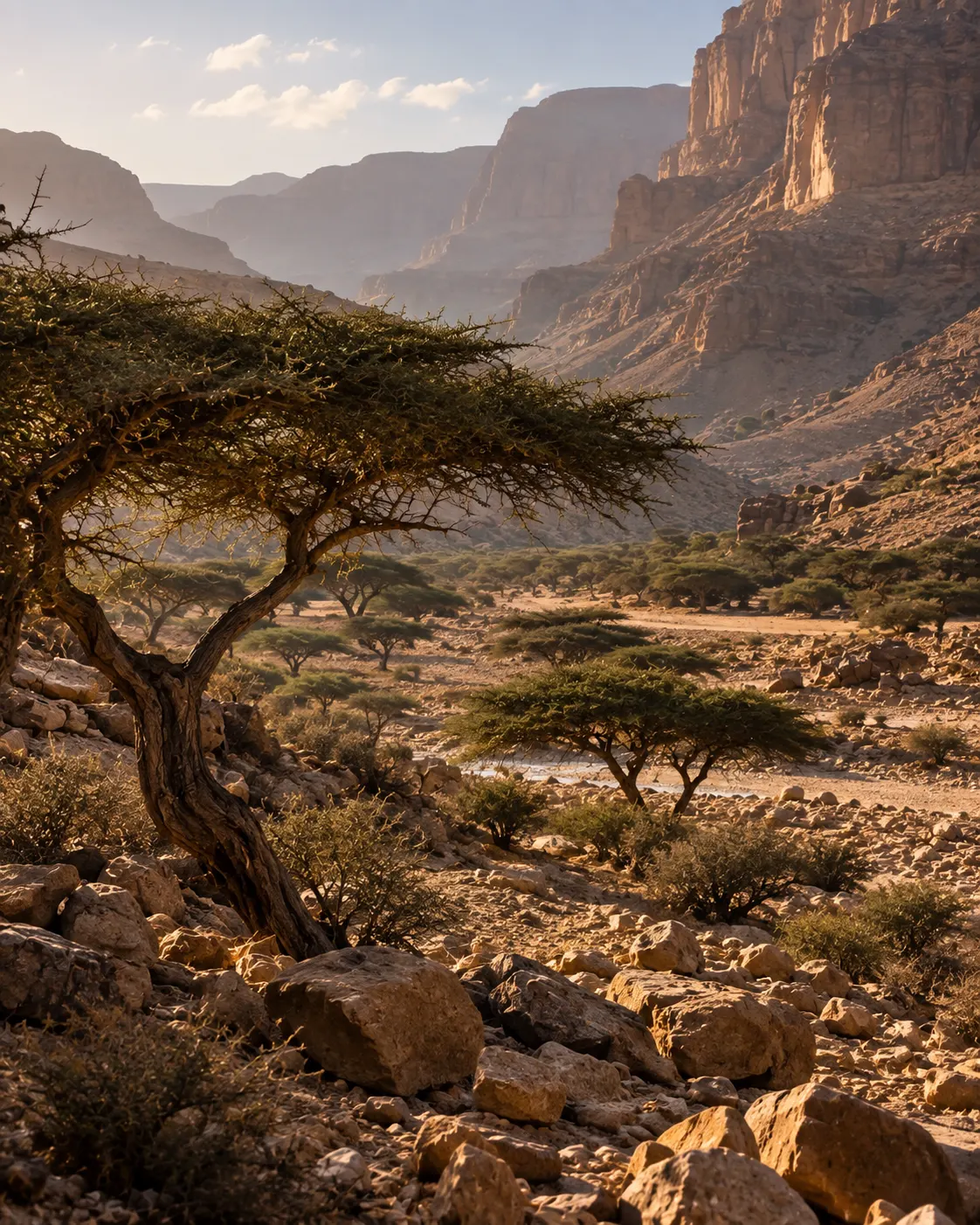 Hadramaut · Desert acacia belt
Style note
Not a sweet crowd-pleaser
Somour is often admired by people who want less prettiness and more force. Its register is smoky, woody and warm, with sweetness present but never childish.
Tradition
One of the desert acacia classics
Across the Gulf and Yemen, Samar-type honeys have long been valued as the darker counterpart to golden floral honeys. They are part of a broader desert-honey tradition in which acacia can taste almost savoury next to Sidr.
Yemeni Somour fits that lineage well: a honey that feels old-fashioned in the best way, not because it is rustic, but because it does not flatter the palate at first glance.
Acacia ecologies
Acacia ecologies
The Samar tree thrives where heat, drought and sparse soils rule.
Desert honey culture
Desert honey culture
Dark acacia honeys earn a loyal following across Arabia.
Seasonal bloom
Seasonal bloom
A relatively narrow floral window determines each year’s character.
Modern table
Modern table
Somour remains a honey for people who like assertive flavour.
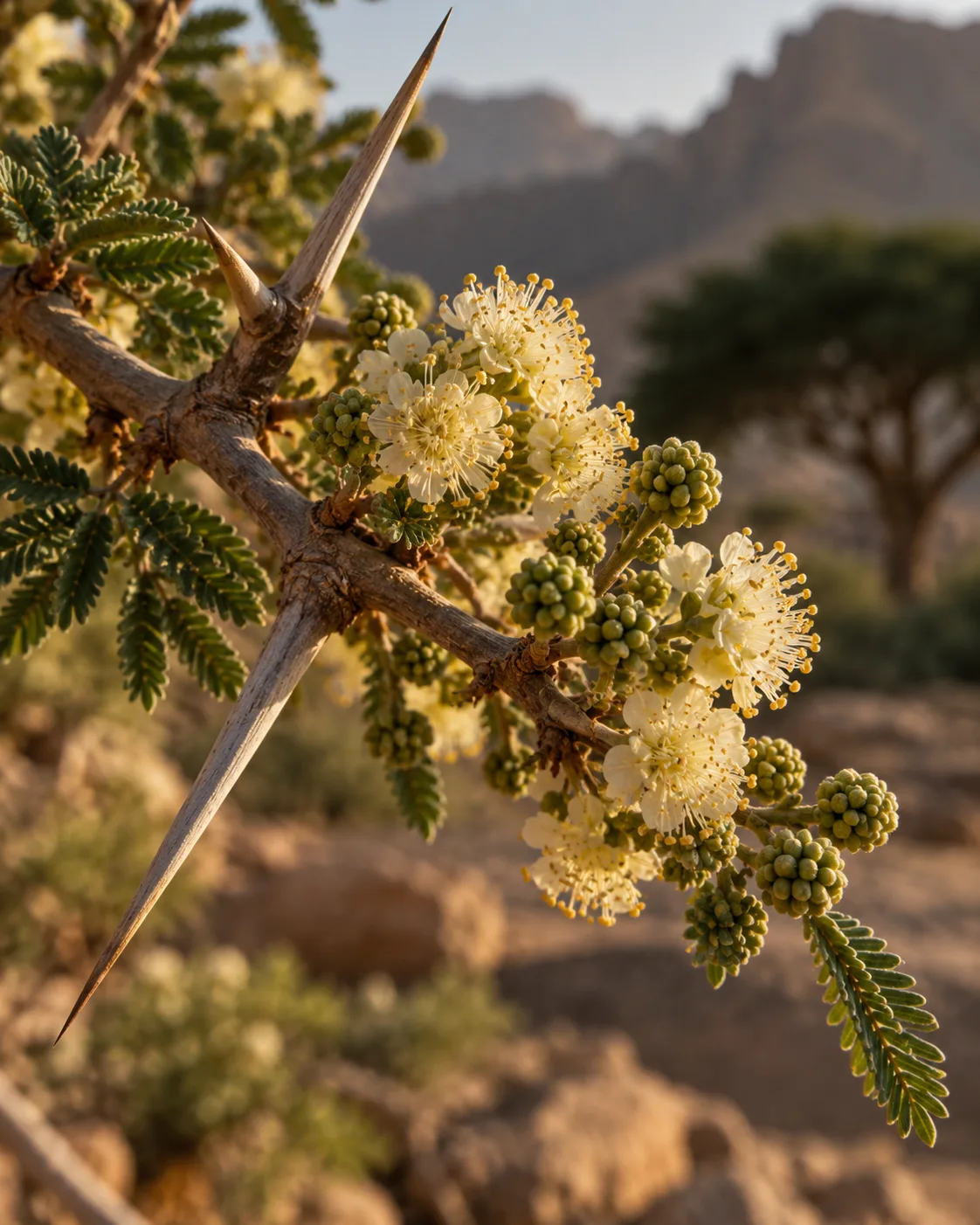 Botanical detail · Yemen
“Somour is not easy honey. That is why it earns respect.”
— The House of Meski
Rarity
Rare enough to stay characterful
Somour is not the rarest honey in the Atlas, but it remains limited by hard landscapes and a brief bloom. Its real distinction is not scarcity alone but a flavour profile that resists standardisation.
Why it matters
Its strength is the point, not a side effect.
Beekeeping
Watching the thorn bloom
Acacia honeys depend on close seasonal reading: when the thorn trees flush, where bloom is strongest and how much heat the colonies can bear. Timing is decisive.
The practice
The best Somour lots are harvested with restraint, preserving their darker aromatic line instead of blending them into a generic sweetness.
Sensory reading
Dark acacia, Yemeni edition
Texture
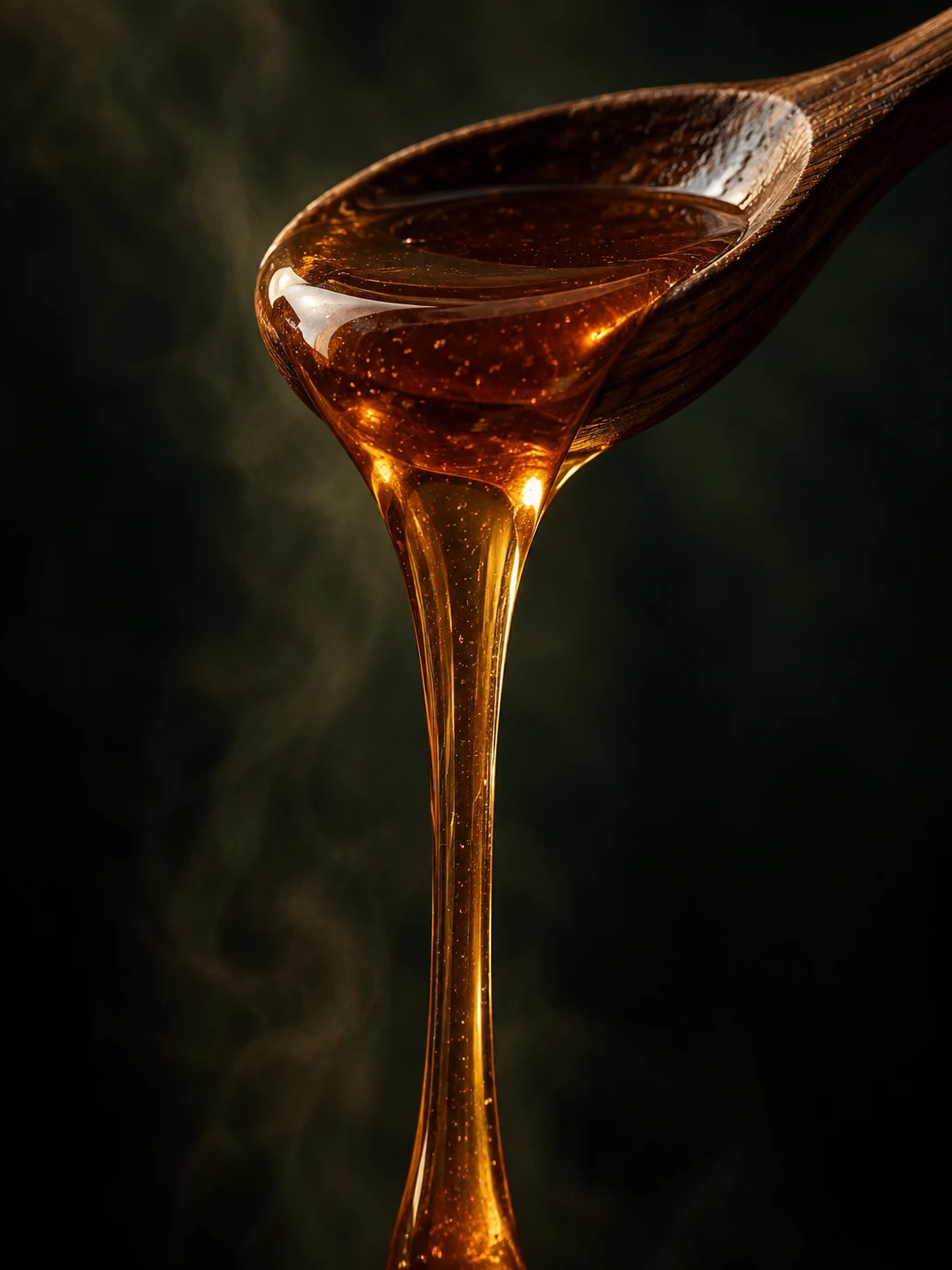
Thick and coating, with enough grip to leave a real impression on the palate.
Notebook
Tasting notebook
Somour is the sort of honey that pairs better with silence than with adjectives. It tastes mature — less perfumed than Sidr, less bright than wildflower honey, and more grounded in heat, wood and shadow.
Pairings
Ways to serve it
Meski rating
An editorial reading, not a certification
Six criteria of the House, judged in tasting. This rating describes the appellation, is revised for each lot presented, and replaces no analysis or certificate.
Provenance
The Meski Confidence Chain
Rare honey is one of the most counterfeited foods in the world, and named origins are no exception. Confidence does not come from a single certificate — it comes from a chain that stays continuous, from bloom to jar.
Read: How to read a rare honeyAnalysis describes the sample received by the laboratory. It does not automatically prove that every jar sold under the same name comes from that sample. A continuous chain does.
Continue the Atlas
An origin is never alone
Compare not to name a winner, but to understand what place, season and craft shift in the cup.