
The same great jujube heritage crosses modern borders. What changes is the valley, the altitude, the water, the surrounding flora — and the human care behind every harvest.
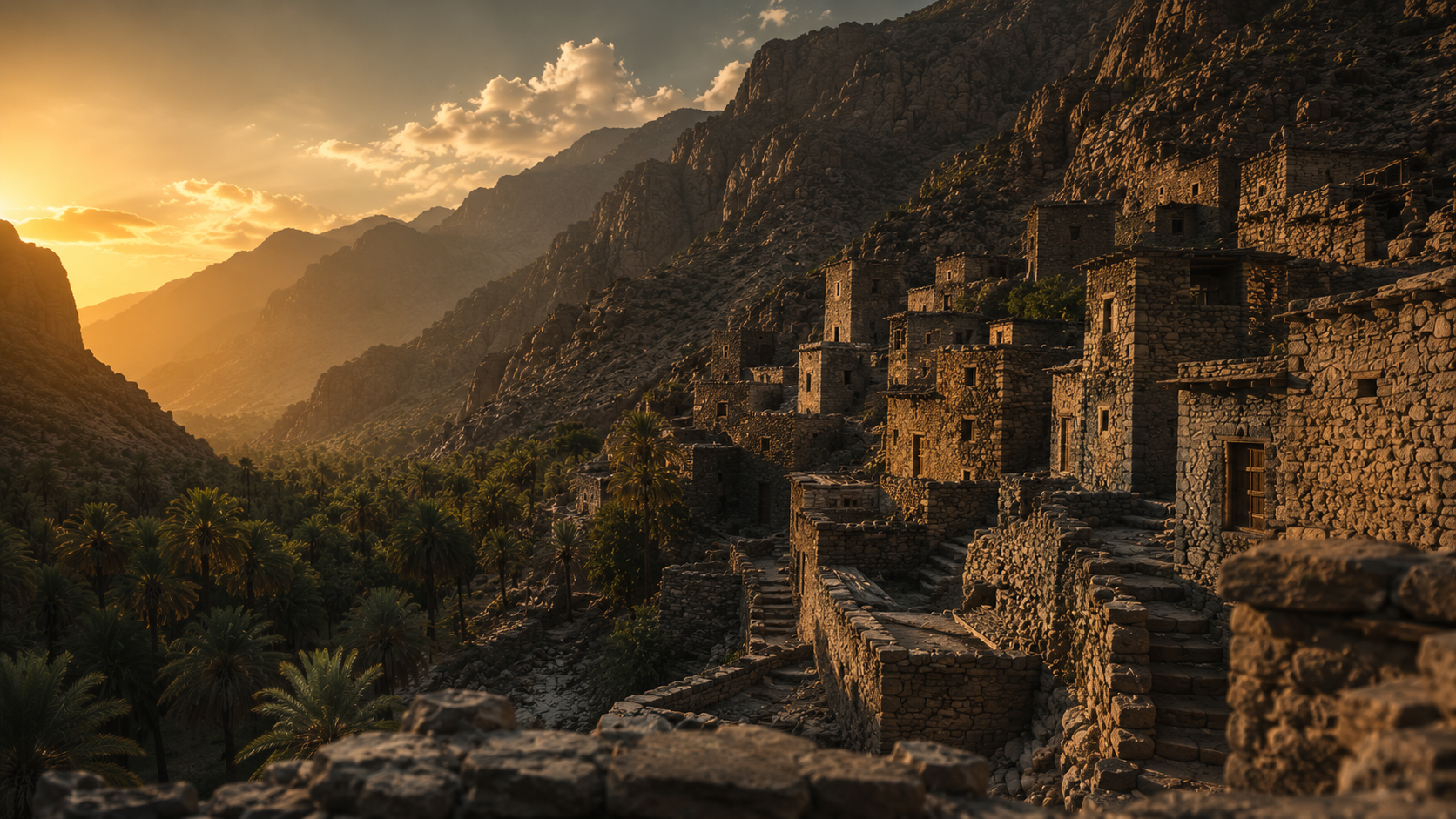
From Yemen to Oman, from Saudi Arabia to the United Arab Emirates, the Sidr tree belongs to one great natural cradle. Political borders divide countries, but they do not abruptly divide flora. Where botanical identification confirms the same species, the plant remains the same. Yet the honey can still change — because no two valleys offer precisely the same soil, water, altitude, climate, surrounding flowers or harvest conditions.
Before Part 2: The Story Began in Wild Morocco
In Part 1 of this series, we explored the diversity of the jujube tree from Morocco’s ancient wild shrubs to Pakistan, Nepal, India and China. We saw how one plant family can include dense desert bushes, mountain shrubs and carefully selected fruit trees.
Part 2 now turns to the Arabian Peninsula — not to rank countries, but to understand continuity. Yemen, Oman, Saudi Arabia and the UAE share connected dryland environments and a long relationship with the jujube known across much of the region as Sidr.
One Great Natural Cradle, Not Four Isolated Worlds
The Arabian Peninsula is often described through national identities: Yemeni mountains, Omani wadis, Saudi valleys and Emirati desert landscapes. Each of these identities is real. Yet nature existed long before modern frontiers.
Kew Science records Ziziphus spina-christi as a native shrub or tree across an immense range extending from Mauritania to Pakistan. Its accepted distribution includes Yemen, Oman, Saudi Arabia and the Gulf States. It grows primarily in desert and dry shrubland biomes.
This means that in many regions, the Sidr tree on one side of a political border belongs to the same botanical species as the Sidr tree on the other. The plant does not become inherently superior because people have given the land a different national name.
At the same time, “the Arabian environment” is not perfectly uniform. The peninsula contains high mountains, gravel plains, deep wadis, monsoon-influenced zones, hyper-arid desert, irrigated farms and old settlements. The botanical continuity is real, but so are the local differences.
The Same Plant Can Produce Different Honey
This is where the distinction between botanical identity and honey character becomes essential.
If Sidr trees in Yemen and Oman are botanically the same species, their nectar still develops under different local conditions. Bees also forage within real landscapes rather than botanical labels. A colony near a high mountain valley may encounter different water availability, temperatures, companion flowers and flowering density from a colony in a lower, hotter wadi.
The honey is therefore shaped by several layers:
The dominant flowering source
The proportion of Sidr nectar available to the bees and the presence of other flowering plants influence the final floral profile.
The precise microterroir
Altitude, soil, heat, humidity, seasonal rain and water moving through a wadi affect the conditions in which flowering occurs.
The season and maturity of the harvest
Flowering intensity, weather during nectar flow and the point at which honey is collected can influence moisture and sensory character.
The beekeeper’s work
Hive placement, harvest timing, handling, storage and protection from unnecessary heat all contribute to the quality reaching the jar.
Country of origin is not a quality grade
“Yemeni,” “Omani,” “Saudi” or “Emirati” tells us where a honey comes from. It does not prove purity, maturity, floral dominance or careful handling. A traceable and well-harvested Sidr honey from Oman or the UAE can be superior to a poorly handled or falsely labelled honey sold under a more famous origin.
Yemen: Mountain Valleys and a Powerful Sidr Reputation
Yemen holds one of the strongest reputations in the world of Sidr honey. Regions such as Hadramout and the valleys associated with Do’an have become internationally recognised, creating a powerful link between the country’s name and premium honey.
This reputation has a real cultural and commercial history, but it should not be converted into a biological myth. The Sidr tree found in Yemen is not valuable because a border makes the species unique. Its character comes from the meeting of plant, valley, season, bees, harvest tradition and market knowledge.
Yemen also contains substantial environmental diversity. Mountain systems, dry valleys and areas influenced by different rainfall patterns cannot be treated as one uniform terroir. Even within the same country, two Sidr harvests may differ in colour, aroma, intensity and texture.
The best Yemeni honey should therefore be respected for what can be demonstrated: precise provenance, trusted beekeeping, mature harvest, sensory quality and credible analysis — not merely the word “Yemen” on a label.
A Celebrated Valley Tradition
Yemeni Sidr is renowned for deep aromatic profiles and a long heritage of trade. Its prestige is strongest when supported by exact valley provenance and genuine traceability.
Reputation Must Be Verified
High demand can encourage vague origin claims and imitation. The more prestigious a name becomes, the more important laboratory analysis and supply-chain trust become.
Oman: Wadis, Mountain Systems and the Same Arabian Heritage
Oman shares a long land and ecological continuity with Yemen and the wider Arabian Peninsula. Its landscapes include the Al Hajar Mountains in the north, dry interior regions, wadis that receive seasonal water and the monsoon-influenced south around Dhofar.
When the same Sidr species grows in Yemen and Oman, the plant remains botanically the same. What changes is the exact place in which it flowers. An Omani tree rooted beside a mountain watercourse may experience a different sequence of heat, moisture and companion flora from a Yemeni tree in another valley.
These differences can create nuance without establishing a permanent hierarchy. An Omani Sidr honey may be bold, dark and persistent; another may be softer or more fluid. The same is true within Yemen. Nationality alone cannot predict the complete sensory profile.
Oman’s value lies not in imitating Yemeni prestige but in presenting its own valleys, harvests and beekeepers honestly. A named Omani terroir with strong traceability is more meaningful than a famous national claim without evidence.
Saudi Arabia: A Vast Country of Many Sidr Terroirs
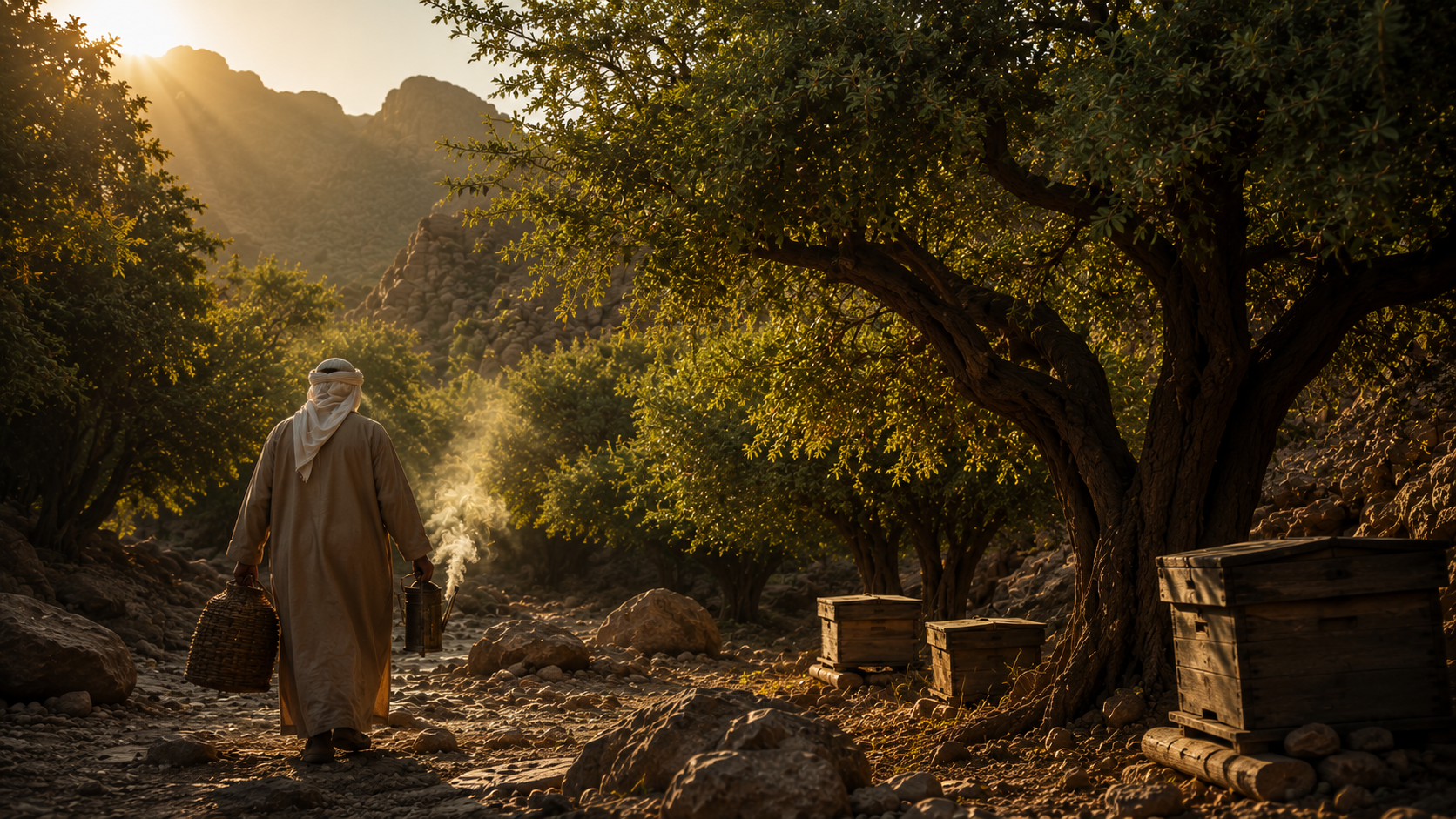
Saudi Arabia is too large and environmentally varied to speak of one single “Saudi Sidr.” The country includes western mountain systems, highlands, wadis, dry plains, oases and extensive desert zones.
Southwestern regions near Yemen share mountain and climatic continuities with the southern Arabian highlands. Elsewhere, Sidr may grow in valleys or settlements where water availability and human care differ. The plant’s accepted native distribution across Saudi Arabia confirms that it belongs naturally to this wider Arabian dryland system.
For honey, this scale makes regional precision especially important. A named valley, province or mountain area communicates far more than a national label alone. Harvest year and beekeeper identity further strengthen the story.
The United Arab Emirates: Native Heritage and Modern Cultivation
In the UAE, Sidr is deeply associated with wadis, foothills, mountain landscapes and traditional planting. The northern and eastern Emirates connect naturally to the Al Hajar system extending into Oman. Here again, the border does not create a sudden botanical rupture.
At the same time, the modern UAE includes irrigated landscapes, farms, managed trees and newly planted areas alongside older wild or long-established specimens. It is therefore essential not to describe every Emirati Sidr tree as untouched wilderness.
This does not diminish Emirati honey. It makes accurate provenance more valuable. Honey from carefully selected hives near naturally established Sidr flowering can possess a distinctive regional identity. The key is to describe the reality honestly: location, harvest, floral conditions and analysis.
Hatta and the wider mountain zone are especially meaningful in this story because they connect Emirati identity with the same geological and ecological system that continues into Oman.
The Al Hajar Continuity
Mountain and foothill landscapes extend across the international border. The flora follows terrain, water and climate rather than passports.
The Southwestern Highland Continuity
Southern Saudi highlands and Yemen belong to connected mountain systems with related dryland flora, although rainfall and elevation vary locally.
Why Some Sidr Honey Is Thick and Some Is More Fluid
Consumers often associate thickness with purity or superiority. Scientifically, honey texture is more complicated.
Viscosity is strongly affected by moisture content and temperature. Honey generally flows more easily as temperature rises, and honeys containing more water tend to be less viscous. Sugar composition and crystallisation behaviour also contribute. This means that the same jar can appear noticeably thicker in a cool room and more fluid in summer heat.
Harvest conditions matter as well. Honey collected after the bees have sufficiently reduced its moisture may be denser than honey harvested earlier. Storage temperature, age and natural crystallisation can further change texture.
Botanical and geographical origin can influence composition, but thick does not automatically mean authentic, and fluid does not automatically mean weak. A trustworthy evaluation must consider moisture, pollen profile where appropriate, physicochemical testing, sensory quality and traceability together.
| Factor | Possible Influence on Honey | What It Does Not Prove Alone |
|---|---|---|
| Moisture content | Lower moisture generally contributes to greater viscosity | Country of origin or floral purity |
| Temperature | Warm honey flows more easily; cool honey becomes thicker | That the product has been diluted |
| Sugar profile | Influences flow and crystallisation behaviour | Overall quality without wider testing |
| Harvest maturity | Can affect moisture and stability | Botanical origin by itself |
| National reputation | Shapes consumer expectations and market value | Purity, authenticity or superior benefits |
Why Sidr Honey Can Taste More or Less Powerful
Aroma and taste are created by the honey’s complete natural composition, including volatile compounds connected to floral sources and local conditions. The density of Sidr flowering, surrounding plants, soil and climate can all contribute to a harvest’s sensory identity.
One honey may express dark caramel, malt, dried fruit, wood or warm spice. Another may be brighter, softer or more floral. The aftertaste may be long and intense or clean and restrained.
These differences should be described as character, not automatic rank. A powerful honey is not necessarily better for every consumer. Some people seek depth and persistence; others prefer balance and delicacy.
This is why comparing Yemeni, Omani and Emirati Sidr only by asking “which is best?” is too simplistic. The better question is: which harvest is authentic, well handled, traceable and suited to the flavour experience I value?
A personal conviction — clearly separated from scientific proof
At Meski, we are personally drawn to honey from ancient, wild jujube trees rooted in preserved and highly arid land. Our personal belief is that the older and more naturally established the tree, and the harsher the untouched environment, the more meaningful the honey may be from a wellness perspective — not necessarily the better it will taste. This remains a personal conviction, not a proven scientific rule. Tree age and aridity alone cannot establish greater benefits without comparative botanical, chemical and biological analysis.
Wild, Ancient and Arid: Why This Ideal Is So Powerful
The attraction of an ancient wild tree is understandable. It has survived without intensive cultivation, adapted to limited water and become part of a living ecosystem. Its roots may reach into layers of soil untouched by modern farming, while its flowering remains tied to natural weather cycles.
Such a tree represents rarity and continuity. Honey collected from its environment can carry a profound story of place. But storytelling must not become false certainty. A seller cannot prove exceptional wellness value simply by using words such as “wild,” “mountain” or “ancient.”
Responsible appreciation requires evidence at two levels:
Evidence of origin
Clear location, beekeeper knowledge, harvest records and realistic information about whether trees are wild, old, maintained or cultivated.
Evidence in the honey
Laboratory parameters, authenticity controls and sensory evaluation that support quality without inventing medical guarantees.
How to Compare Yemeni, Omani, Saudi and Emirati Sidr Fairly
A fair comparison begins by abandoning the idea that one nationality permanently outranks another. Instead, compare each individual harvest.
| Question to Ask | Why It Matters | Better Than Asking |
|---|---|---|
| What is the precise harvest area? | Identifies the real microterroir | “Which country is famous?” |
| Who harvested or supplied it? | Creates accountability in the chain | “Does the jar look luxurious?” |
| Was the honey mature at harvest? | Influences moisture and stability | “Is it extremely thick?” |
| Are analyses available? | Supports physicochemical quality and authenticity assessment | “Is it expensive?” |
| Does the sensory profile match the claim? | Connects description with the actual product | “Is Yemeni always best?” |
The Plant Crosses Borders
Where the same Sidr species is confirmed, Yemen, Oman, Saudi Arabia and the UAE share one botanical heritage.
The Terroir Creates Nuance
Valley, altitude, water, surrounding flora, season and harvest decisions shape each honey’s character.
Quality Must Be Demonstrated
Origin is meaningful, but traceability, maturity, handling and analysis determine whether prestige is deserved.
Conclusion: Borders Name the Honey, but the Land Shapes It
From Yemen to Oman, from Saudi Arabia to the Emirates, the jujube belongs to the same great Arabian natural cradle. In many areas, the plant remains the same accepted species. The border changes the country; it does not rewrite the biology of the tree.
Yet every harvest remains individual. The valley may be higher. The soil may hold water differently. The flowering season may be shorter. Companion plants may alter the bees’ foraging landscape. One beekeeper may wait for greater maturity, while another harvests earlier. Temperature and moisture may make one honey appear dense and another more fluid.
For this reason, the finest Sidr honey should never be chosen by flag alone. It should be chosen through precise origin, honest storytelling, sensory excellence, careful handling, traceability and analysis.
The jujube tree teaches a lesson larger than honey: nature is continuous, while borders are recent. Each country brings its culture and expertise, but none owns the plant’s entire story.
Explore the Sidr Terroirs of Arabia
Discover distinctive harvests from neighbouring lands — selected for their individual quality rather than ranked by nationality alone.
Research Notes and Sources
Botanical distribution is based primarily on Kew Science’s accepted record for Ziziphus spina-christi. Regional context is informed by research on biogeography and conservation in the Arabian Peninsula. Honey texture explanations draw on the scientific review Analytical Rheology of Honey. Comparative Sidr composition is discussed in peer-reviewed research including Characterization of Sidr Honey from Different Geographical Origins and Sidr Honeys: Physical and Chemical Characterization.
Frequently Asked Questions About Sidr Trees and Honey Across Arabia
In many areas, yes: the accepted species Ziziphus spina-christi is native in both Yemen and Oman and across much of the Arabian Peninsula. Individual trees should still be identified carefully because the genus includes other regional species and cultivated introductions.
No. Political borders do not change a plant’s botanical identity. The same species can grow across neighbouring countries. What may change are altitude, soil, rainfall, water access, surrounding vegetation and human management.
Honey reflects the complete foraging and harvest environment. Local soil, climate, altitude, seasonal water, companion flowers, nectar flow, hive location, harvest maturity and storage can all influence aroma, flavour, colour and aftertaste.
No. Yemen has a celebrated Sidr tradition, but national origin alone does not guarantee quality. A mature, traceable and carefully handled Omani or Emirati harvest can be superior to a poorly handled, blended or falsely labelled honey sold under a famous Yemeni name.
Honey viscosity depends strongly on moisture and temperature, as well as sugar composition and crystallisation. Warm honey flows more easily, while lower-moisture honey is generally thicker. Texture alone cannot prove purity, botanical origin or superiority.
Not necessarily. Strong flavour reflects sensory compounds and the character of a particular harvest. It does not by itself prove stronger biological effects. Potential properties require appropriate laboratory comparison rather than taste intensity alone.
No general scientific rule proves that tree age, wild growth or greater aridity automatically produces more beneficial honey. These factors may make a harvest rare and environmentally meaningful, but comparative analysis is required before claiming superior composition or activity.
Look for a precise harvest area, a trustworthy producer or supplier, realistic sensory information, appropriate laboratory analysis, good storage and transparent handling. Do not rely only on thickness, price, packaging or the reputation of a country.