
Honey in Arab Culture:
A Bond That Spans 40,000 Years
Long before it became a luxury ingredient, honey was a sacred offering, a healing substance, and a language of generosity across the Arab world.
The oldest evidence of honey consumption dates back over 40,000 years. But in the Arab world specifically, honey never stayed merely at the table. It moved into mosques, into pharmacies, into poetry, into the Quran itself — carried by a culture that understood, long before modern biochemistry, that some things in nature deserved more than casual use.
Today, when you place a jar of Sidr honey on a table in Dubai or Sharjah, you are participating in something that is simultaneously ancient and immediate. Understanding that history changes how you taste, how you give, and how you value what is in the jar.
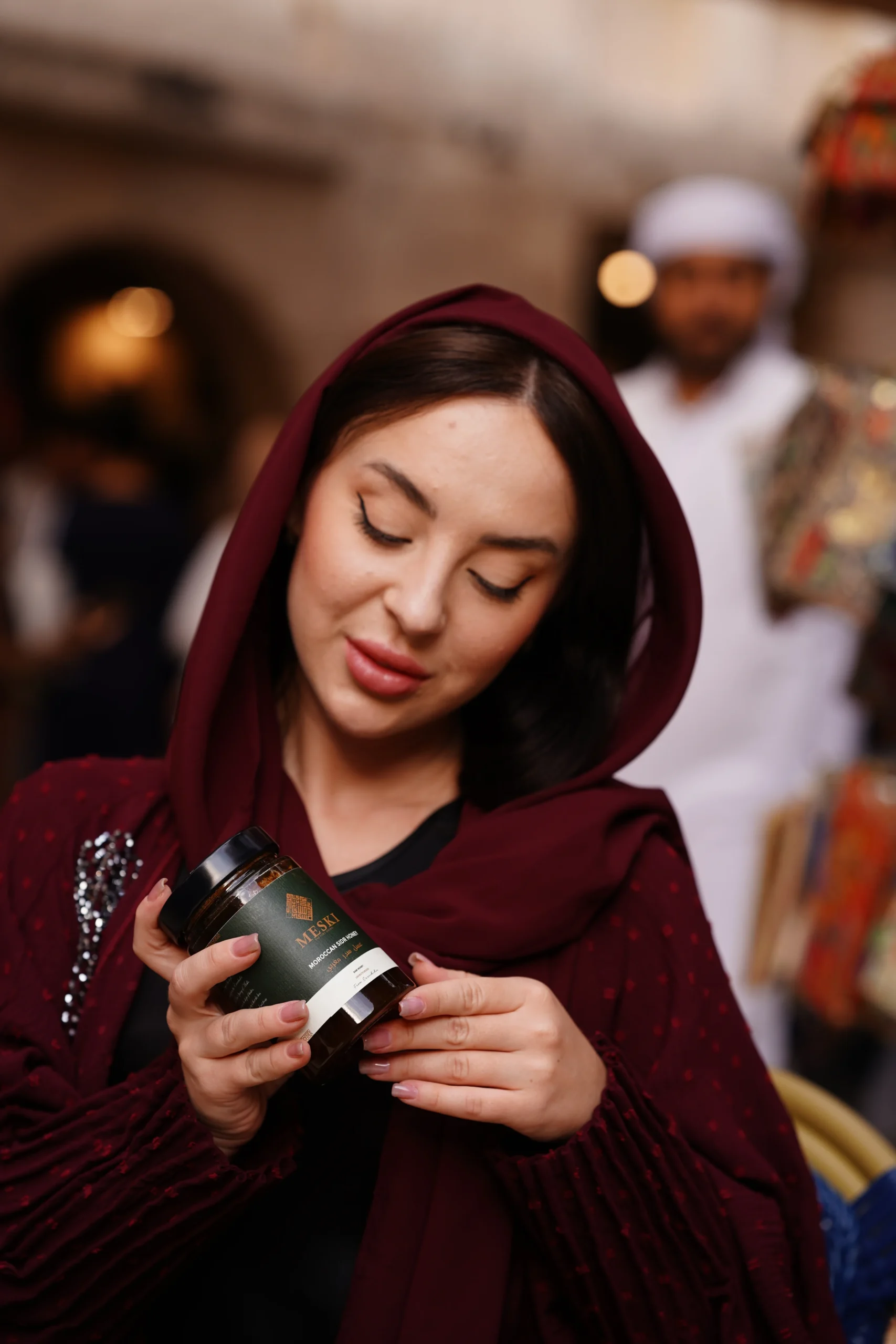
Honey in Arabic Culture
From Ancient Civilisations to the Arabian Peninsula
A timeline of honey across the cultures that shaped the Arab world.
The Oldest Record
Rock paintings in Valencia, Spain, depict humans harvesting honey from wild hives — the earliest documented evidence of human-honey interaction. Archaeological finds across North Africa suggest honey collection was already part of life in regions that would later become the Arab world.
Ancient Egypt and Arabia
Egyptian hieroglyphics document honey’s use in medicine, food, and religious offerings. Honey was found sealed in Egyptian tombs — still edible, preserved by its own chemistry. Trade routes between Arabia and Egypt meant the most prized honeys from mountain regions travelled early and carried premium value.
Mentioned in the Quran
Honey receives explicit mention in Surah An-Nahl (The Bee), one of the longest chapters of the Quran, describing it as containing “healing for people.” This Quranic reference elevated honey from a regional staple to a theologically significant food — a position it has never lost in the Arab and Muslim world.
Ibn Sina and Arab Medicine
The physician Ibn Sina (Avicenna) — whose Canon of Medicine shaped medical practice for five centuries — documented honey extensively as a preservative, a wound treatment, and a digestive aid. Arab physicians were among the most sophisticated honey practitioners in the ancient world.
The Gulf as the World’s Most Discerning Honey Market
The UAE, Saudi Arabia, and Qatar collectively represent some of the highest per-capita honey consumption globally, with a particular concentration on premium monofloral varieties — especially Sidr honey — that command prices reflecting both quality and cultural significance.
Honey in the Quran: The Sacred Reference
Why one verse changed the relationship between honey and a civilisation.
Surah An-Nahl — “The Bee” — is the 16th chapter of the Quran, named entirely after the bee and its gifts. Verses 68 and 69 describe the bee’s creation and its product in terms that have resonated with Muslims for fourteen centuries:
“And your Lord inspired the bee: make your home in the mountains, the trees, and what they build. Then feed from every kind of fruit and follow the ways your Lord has made easy for you — from their bellies comes a drink of varying colours in which there is healing for people.”
Surah An-Nahl (16:68–69), The Quran
The phrase “فِيهِ شِفَاءٌ لِلنَّاسِ” — healing for people — has been interpreted by Islamic scholars across centuries. What matters culturally is the weight that verse placed on honey in Muslim consciousness: not merely a food, but a substance dignified by divine mention.
It is why, even today, the gift of a premium honey jar carries a layer of meaning in a Muslim household that no other food quite replicates. The Quran’s acknowledgement of the bee’s work is woven into the cultural memory of every person who received that verse in childhood.
This article references the Quran in a historical and cultural context, as it has been documented across centuries of scholarship. No theological interpretation or fatwa is implied or intended. The references here reflect the documented role of these verses in shaping Arab cultural attitudes toward honey — a fact acknowledged by historians, food scholars, and anthropologists independently of religious affiliation.
Honey and Ramadan: The Season of Return
How a month of fasting became the year’s most honey-rich celebration.
During Ramadan, the relationship between food and meaning is heightened in a way that has no real parallel in other calendars. Every meal carries weight. The iftar table — the meal that breaks the fast at sunset — is not assembled casually. What appears on it is chosen, and what is sweet is sacred in a particular way during this month.
Honey is threaded through the Ramadan food calendar in ways that go beyond any single dessert. Across the Arab world:
- Moroccan chebakia — sesame and anise pastries deep-fried and coated in warmed honey — are prepared by families days before Ramadan begins and consumed throughout the month.
- Baklava and maamoul across the Levant and Gulf are finished with honey syrups that give them their characteristic gloss and weight.
- Warm honey water — sometimes with lemon and ginger — is a common suhoor drink (the pre-dawn meal) across the Gulf, valued for sustained energy through the fasting hours.
- Lqaimat, the Emirati fried dough balls finished with date syrup and honey, appear at virtually every Ramadan gathering table in the UAE and are considered an expression of generosity and welcome.
Beyond specific dishes, honey holds a Ramadan significance related to breaking a long fast gently. The combination of glucose (fast energy) and fructose (sustained energy) in raw honey makes it one of the most practically suited first foods after a long fast — a fact that traditional wisdom understood long before nutritional science confirmed it.
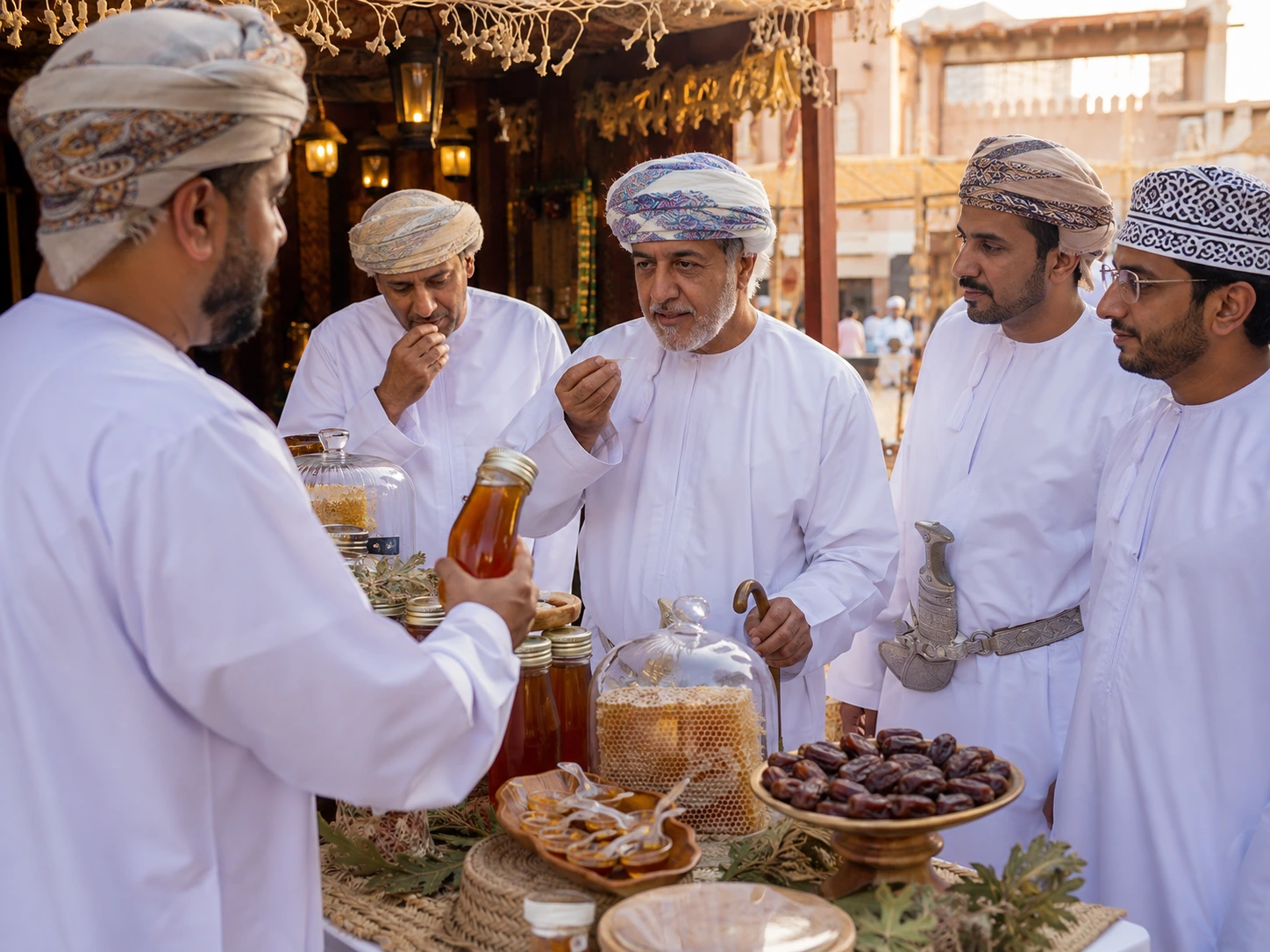
Arabic honey Sidr
The Gulf Today: Where Heritage Meets Premium Taste
Why the UAE has become the world’s most discerning honey market.
The UAE’s relationship with honey reflects something broader about the country’s identity: a deep pride in regional heritage combined with a sophisticated appetite for quality that spans the world. The same buyer who knows their Hadhramaut Sidr from their Omani Samar is often equally comfortable discussing Corsican AOP honey or New Zealand Manuka — because connoisseurship, not simply tradition, drives the Gulf’s premium honey market today.
Several factors make the UAE specifically significant in this landscape. The country’s cultural heritage framework actively promotes indigenous traditions, including the preservation of Emirati beekeeping in mountain regions like Hatta. The Sidr tree — which gives its name to the most culturally resonant honey in the region — is a native UAE species, giving local Emirati honey a provenance story unique in the global premium market.
What “Authentic” Means in the Gulf Market
In a market this sophisticated, authenticity carries specific weight. Buyers in the UAE increasingly look beyond the label — asking for geographic specificity, monofloral confirmation, and traceability that commodity honey simply cannot provide. This is why our country-by-country Sidr guide has resonated with so many readers: it treats the buyer as the expert they often already are.
The raw honeys we source at Meski are chosen with this specific buyer in mind — someone who understands the difference between a jar with an impressive label and a jar with an honest one, and who values the latter more. That is, we would argue, the most authentically Gulf attitude toward honey that exists: not one that dresses average product up in gold packaging, but one that demands the product itself be worth the reverence the region has always extended to it.
Frequently Asked Questions
On honey, Arab culture, and what makes Gulf honey different.