
Some people still speak about Dubai as if it were a country made of towers, malls and noise. The UAE is seven emirates. And after more than ten years of coming here, I still discover places that make me feel I have only seen the beginning.
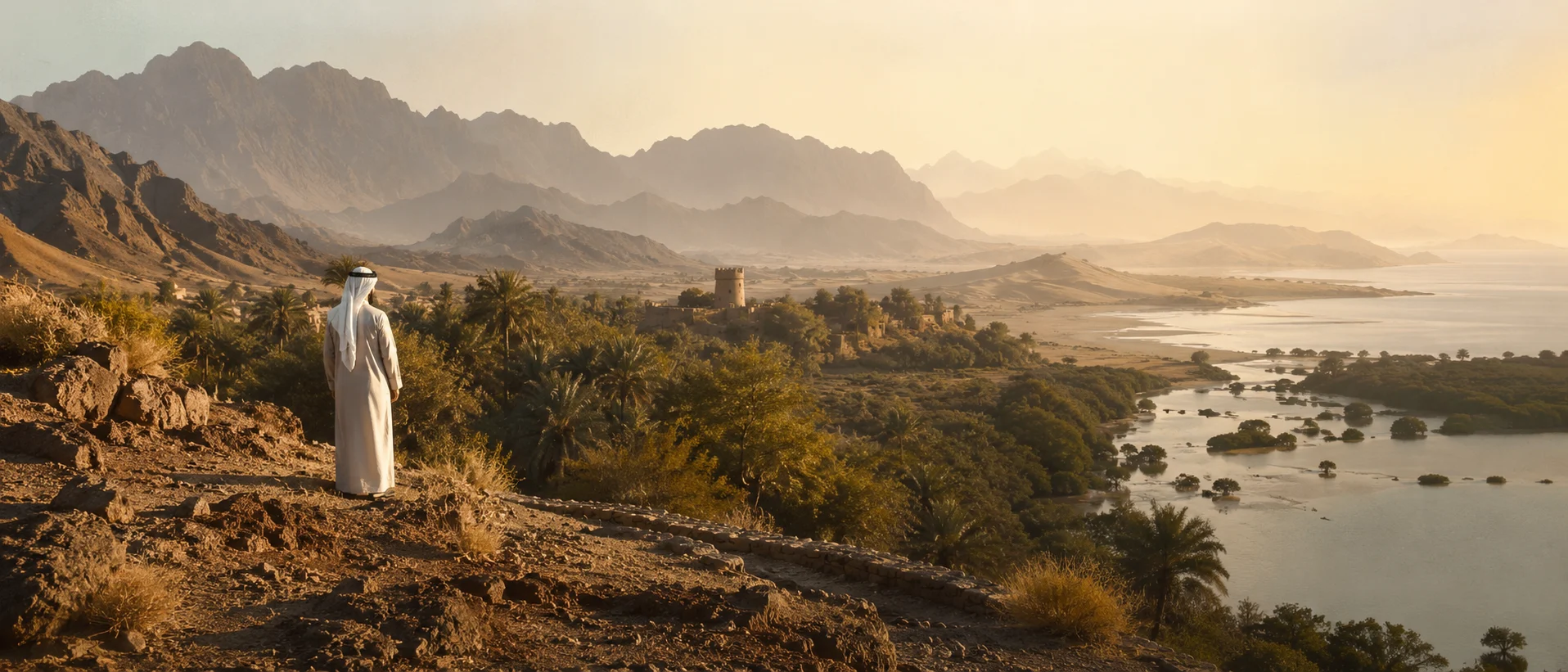
Dubai is one emirate. Abu Dhabi, Sharjah, Ajman, Umm Al Quwain, Ras Al Khaimah and Fujairah complete the federation. That sounds elementary, yet it changes the way you travel here. If you come only for the skyline, you may leave having seen one remarkable face of the country and missed almost everything that taught me to love it.
First, Dubai Is Not a Country
I say that with a smile because I still hear it.
“I went to Dubai.”
Then the conversation becomes a judgment on the whole UAE.
Too superficial.
Too many buildings.
Too much luxury.
Sometimes from people who have never put a foot here.
Dubai is real. The towers are real. The malls are real. The speed is real too.
But reducing the United Arab Emirates to that image is a little like standing at the entrance of a house and deciding you have already understood every room.
The UAE is a constitutional federation of seven emirates: Abu Dhabi, Dubai, Sharjah, Ajman, Umm Al Quwain, Ras Al Khaimah and Fujairah.
Seven political territories.
Seven local histories.
And many more than seven landscapes.
I have been coming here for more than ten years. I still discover places that surprise me. Often they are not far from a motorway I had already driven many times.
A mountain road.
A wadi.
A mangrove creek.
An old oasis.
A farm behind a line of palms.
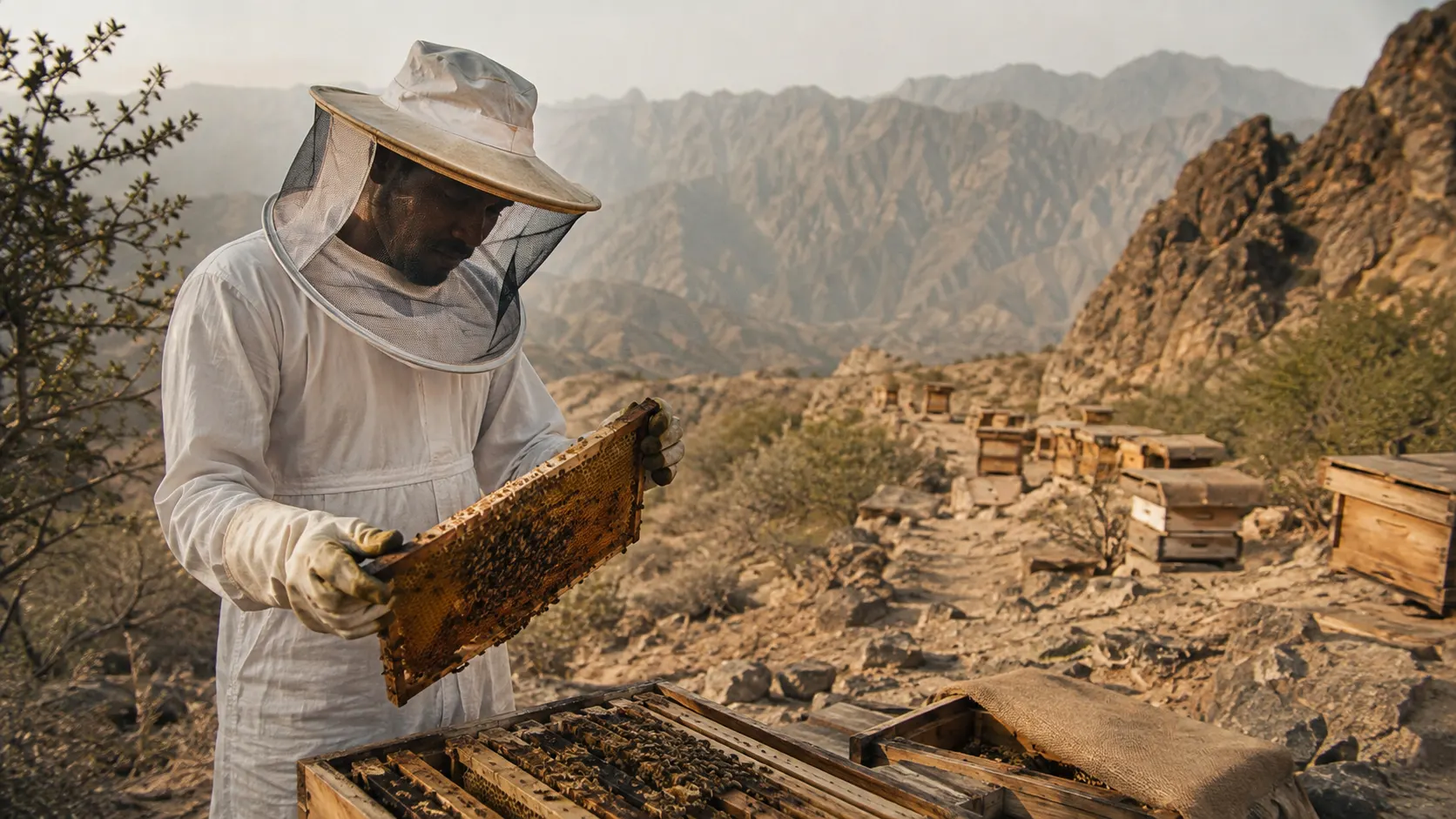
A beekeeper I return to in Hatta.
That is the side of UAE nature I want to talk about here.
Not against Dubai.
Beyond it.
“A place does not become superficial because we chose to look only at its surface.”
If You Come to Dubai, Leave Dubai Too
Enjoy the city.
You should.
Walk along the Creek. See what has changed. Look at what people managed to build in a few generations. Eat in a city where half the world seems able to find something familiar on a plate.
Then take the road out.
For me, that road often leads toward Hatta.
The visual language changes before you need anyone to explain it. The flat horizon begins to rise. Rock replaces glass. The Hajar Mountains enter the landscape. Wadis cut between slopes. Sidr and Samar trees begin to make more sense when you see the conditions they live in.
Hatta is part of the Emirate of Dubai, but it feels far from the version of Dubai most visitors photograph.
That difference is precisely the point.
The official tourism material for Hatta speaks about hiking, mountain trails, kayaking, heritage and the Hajar range. Dubai Municipality also includes Hatta Mountain Reserve inside the emirate’s protected-area network.
So when someone searches for nature near Dubai, Hatta mountains or Hajar Mountains UAE, they are not leaving the country or even necessarily leaving the Emirate of Dubai.
They are simply leaving the easiest image of it.
Hatta Is Where I Hear the Bees
I have another reason to return there.
My beekeeper.
This changes the landscape for me because I do not look at the mountain only as a visitor anymore. I look at what is flowering.
I listen for the bees.
I look at the Sidr.
I ask how the season is going.
Some years the mountain gives more. Some years the climate decides otherwise. Our own Honey Atlas entry for Emirati Sidr follows that reality. The hives we tend can be in Hatta or on a farm near Abu Dhabi depending on the season. The harvest follows the land, not a fixed marketing calendar.
That is why Hatta honey means more to me than a label.
Hatta Sidr honey begins with Ziziphus spina-christi, the Sidr tree, but then the year begins to interfere. Heat. Rain. Flowering. Colony strength. The exact location of the hives.
The same is true of Samar honey in the UAE. Samar is a different tree, associated with Vachellia tortilis, and it belongs to another floral season.
Then there is Ghaf.
The three names often appear together because they are deeply adapted to arid environments, but they are not three marketing grades of the same honey.
They are three trees.
Three flowering stories.
Three ways for a bee to read dry land.
The Ghaf Made Me Think About Protection Differently
Ghaf is not simply another source for Ghaf honey UAE.
It is the national tree of the United Arab Emirates.
The Environment Agency Abu Dhabi notes that Ghaf was declared the national tree in 2008 because of its cultural and traditional significance. The agency also includes Ghaf, Samar and Sidr in programmes designed to identify and conserve native trees.
I like that connection.
The same tree can appear in a honey conversation, an environmental conversation and a cultural one. It is one small example of how UAE biodiversity becomes easier to understand when the plant has a name, a use and a place in local memory.
That is exactly what I mean by natural wealth.
Not only what can be harvested.
What can be kept alive.
Official beekeeping programmes in Abu Dhabi now recognise local honey varieties including Sidr, Samar, Ghaf, Mangrove and wildflower. In 2026, Emirati beekeepers even presented these different categories internationally, with Sidr, Samar and Ghaf receiving awards.
But the part that interests me most is not the medal.
It is the fact that a country many people imagine as ecologically simple can produce honey linked to a desert tree, a mountain tree community, mixed flowers and a coastal mangrove ecosystem.
The jar is beginning to look like a map.
Even Dubai’s Desert Is Not Empty
Leave the mountains for a moment and go back toward the desert.
There is another cliché waiting there.
Sand equals emptiness.
Dubai Municipality’s own protected-area data makes that difficult to maintain. Al Marmoom Desert Conservation Reserve covers almost 23 percent of the Emirate of Dubai and supports Arabian oryx, gazelles, birds, reptiles, invertebrates and desert flora.
It is not a green landscape.
It does not need to be.
UAE desert biodiversity is about organisms adapted to scarcity, not about making the desert resemble somewhere wetter.
This is a lesson honey keeps teaching me too.
A Sidr tree has value partly because it can flower in a landscape that does not offer abundance all year.
A Samar tree matters because it survives conditions that would destroy many cultivated plants.
A beekeeper in a hot, arid environment has to think about shade, water and colony temperature long before the consumer thinks about flavour. Beekeeping in the UAE begins with adaptation before it becomes a question of harvest.
The Abu Dhabi Agriculture and Food Safety Authority has spent years developing an Emirati honeybee strain better adapted to local conditions. The authority also researches cooling shelters for colonies during extreme summer heat.
Even the bee has to learn the country.
Al Ain Brought Me Back to Meski for a Moment
Then there is Al Ain.
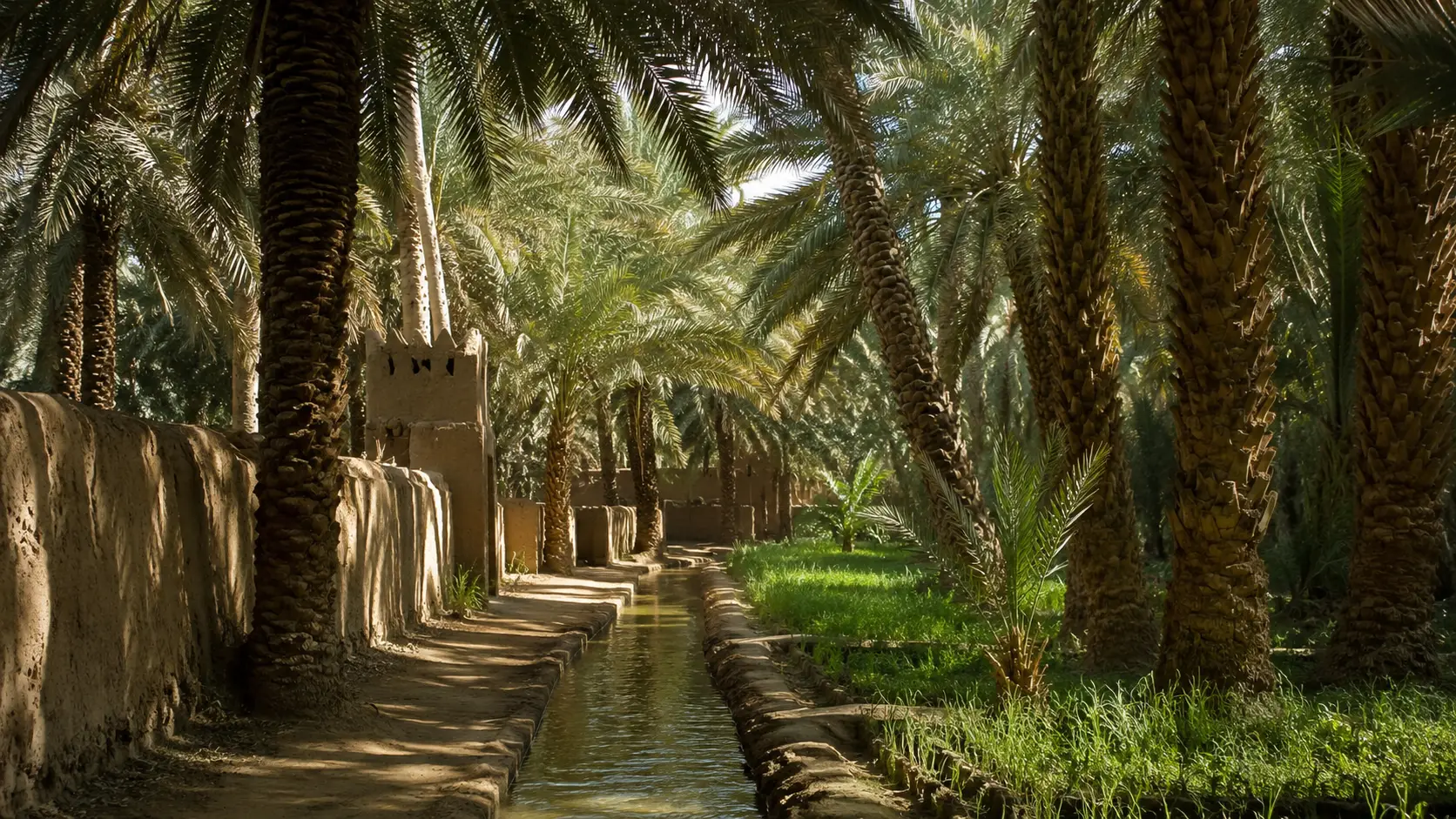
Palms above you.
Shade.
Water moving through a falaj.
Fruit trees inside an oasis that sits in one of the driest regions of the world.
I know this feeling.
Not this place.
The feeling.
It takes me back to Meski.
I do not mean that the hydraulic history of Al Ain is the same as the oasis systems I know from south-eastern Morocco. It is not. Different countries, different histories, different techniques and different communities.
But there is something familiar in the transition.
Dry ground.
Then palms.
Then cooler air under the canopy.
Then cultivated life.
Al Ain Oasis covers around 1,200 hectares. Experience Abu Dhabi describes approximately 147,000 date palms, more than 100 varieties of vegetation and a functioning traditional falaj irrigation system.
That is not a decorative garden pretending to be an oasis.
It is an agricultural cultural landscape.
And once again, the bee sees more than the palm.
Dates and Honey Belong to the Same Conversation
The House of Meski began with a name carried from an oasis.
Maybe that is why date palms always make me stop.
In the UAE, the date palm is more than a crop. UNESCO recognises the knowledge, skills, traditions and practices surrounding the date palm as intangible cultural heritage shared across the Arab region, including the Emirates.
Dates are also part of hospitality here.
Coffee and dates.
A guest arriving.
A majlis.
A small gesture repeated so often that people stop thinking of it as heritage because it still belongs to ordinary life.
Honey sits close to that world.
Not because every Emirati table must contain a jar, and not because I want to force honey into every tradition.
But because beekeeping and date cultivation share something deeper.
They both depend on seasons.
They both teach patience.
They both turn plants that survive heat into food that carries identity.
And both can be ruined if we care more about luxury packaging than about where the product came from.
This is why I find the phrase Emirati honey interesting only when someone can tell me more.
Which emirate?
Which tree?
Which season?
Who kept the bees?
Then the Honey Reaches the Sea
This is the part many people do not expect.
Mangrove honey in the UAE is not an invented boutique story.
Abu Dhabi’s agricultural authority explicitly documents Mangrove honey, also described as Qurm honey in Emirati contexts, alongside Sidr, Samar, Ghaf and wildflower honey.
That changes the geography of the article completely.
We began in Hatta with rocky Hajar valleys.
Now the bees have reached coastal mangroves.
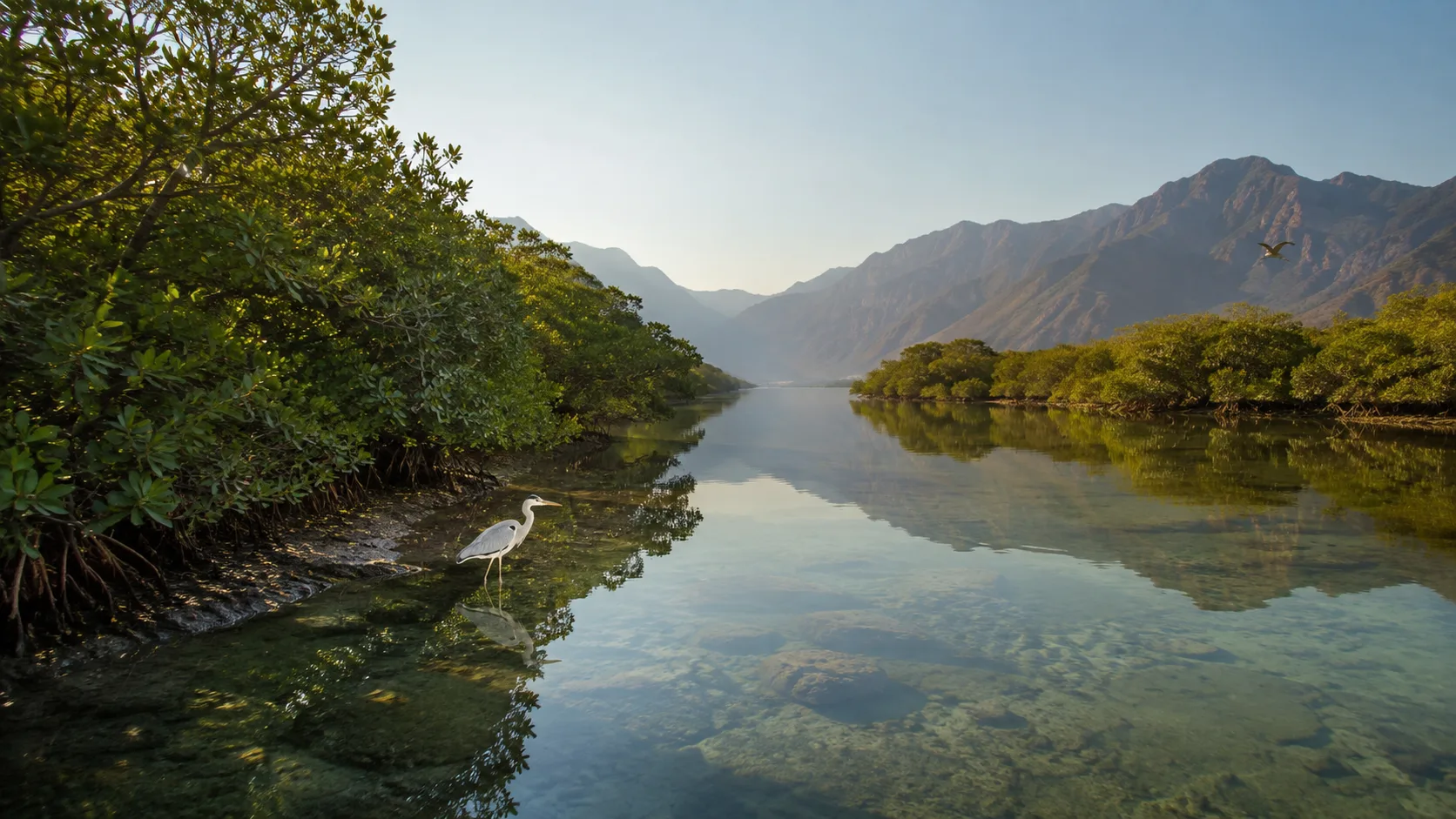
Abu Dhabi’s Mangrove National Park is a natural protected ecosystem close to the city, supporting fish, birds and other wildlife while helping protect the coastline. It is one of the clearest places to understand why UAE mangroves belong in the same national landscape as dunes and mountains. The mangroves are not only a green background for kayaking photographs. They are living coastal infrastructure.
And when mangrove flowers become part of the forage, the local honey story reaches the sea.
I love that contrast.
Ghaf honey from a desert-adapted national tree.
Sidr honey from mountain and wadi landscapes.
Samar honey from another arid flowering season.
UAE wildflower honey from mixed floral resources.
Then Qurm honey from a mangrove coast.
If you put all of that under one label called “local honey UAE”, you lose almost the entire story.
Sharjah Opens Another Door to the Coast
The mangrove story does not stop in Abu Dhabi.
Drive toward the east coast of Sharjah and Kalba changes the scenery again.
The official Sharjah tourism authority describes the Kalba mangroves at Khor Kalba as the oldest mangrove forest in the UAE, with trees reaching up to eight metres and habitats supporting the Arabian Collared Kingfisher, green turtles, crabs, fish and other marine life.
Nearby, the Hajar Mountains remain close.
That proximity between mountain and mangrove is one of the things I find beautiful about the Emirates.
You can move from dry rock to coast without travelling across half a continent.
Khorfakkan gives another version of the east.
Mountains behind you.
The Gulf of Oman in front.
Fishing history.
Beaches.
Wadis entering the Hajar range.
When I think about Khorfakkan nature, I do not think of one landmark. I think of the way the coast and mountains seem to occupy the same frame.
And that makes the UAE feel larger than its size.
Fujairah Is What Happens When the Mountains Reach the Sea
Fujairah deserves its own pause.
It is the only emirate located completely on the UAE’s eastern coast along the Gulf of Oman, and official UAE material describes it as mostly mountainous rather than desert.
That alone should make anyone who thinks “UAE equals dunes” curious.
Fujairah Tourism describes wadis with natural springs, fertile valleys and working farms. The Fujairah mountains and Fujairah wadis make the east coast feel like another environmental chapter. Around Masafi, underground water from the Hajar Mountains supports agriculture and greener pockets between the rock.
There are mountain villages.
Farms.
Mineral springs.
Coral reefs offshore.
Wadis inland.
It does not look like downtown Dubai.
It does not need to.
This is why I want people who visit the UAE to move.
A country becomes more honest when you stop asking every region to resemble its most famous city.
Ras Al Khaimah Makes the Mountains Higher
Go north and the Hajar Mountains continue into Ras Al Khaimah.
Jebel Jais rises to 1,934 metres, the highest peak in the UAE. The temperature at elevation can be significantly cooler than the plains below.
That change matters ecologically.
Mountain wadis receive and hold water differently from open desert. Vegetation gathers in gullies. Farms can exist at lower elevations. Birds and mountain fauna find habitats the city never shows you.
I mention Ras Al Khaimah because Hatta should not become another simplification.
Hatta is where my personal honey story is anchored.
The Hajar range is bigger than Hatta.
Ras Al Khaimah mountains, Jebel Jais, Wadi Shawka and other northern landscapes remind us that the UAE’s mountain ecology crosses emirate borders just as plants and bees do.
A bee does not know when it has left one administrative territory and entered another.
We do.
Nature rarely cares.
The Smaller Emirates Have Their Own Quiet Nature Too
Ajman and Umm Al Quwain are easy to overlook when people build a UAE itinerary around the largest cities.
That would be another mistake.
Ajman’s Al Zorah Nature Reserve contains around one million square metres of natural mangrove forest, lagoons and bird habitat. Nearly sixty bird species are recorded there by the local tourism authority.
Umm Al Quwain has rich coastal mangroves and islands along the Arabian Gulf. Its Mangrove Beach opens onto Al Yafra Creek, another reminder that some of the country’s most peaceful landscapes sit far from the places that dominate social media.
There is something I like about that.
Not every richness needs a tower beside it.
Not every place needs to be famous before it is worth seeing.
Sometimes a small creek full of birds tells you more about a country than another photograph you have already seen a thousand times.
Seven Emirates Does Not Mean Seven Versions of the Same Place
That is the idea I keep coming back to.
Dubai can give you urban ambition and Hatta in the same emirate.
Abu Dhabi can give you Empty Quarter dunes, Al Ain’s oasis agriculture and natural mangrove forests.
Sharjah can move from desert archaeology to Khorfakkan’s mountain coast and Kalba’s mangroves.
Fujairah turns almost completely toward mountains and the Gulf of Oman.
Ras Al Khaimah takes the Hajar range to the country’s highest point.
Ajman hides mangroves near its urban coast and mountain enclaves farther inland.
Umm Al Quwain keeps a quieter world of creeks, islands and coastal vegetation.
That is why I prefer UAE landscapes in the plural.
And it is why the honey becomes so useful.
Not because honey is the most important thing in every emirate.
It is not.
But it gives us a thread.
Follow Sidr and you enter wadis and farms.
Follow Samar and you look at desert flowering differently.
Follow Ghaf and you arrive at a national tree and conservation.
Follow Mangrove honey and suddenly the honey map reaches the coast.
Follow wildflower honey and you are forced to ask what else was blooming around the hive.
The jar keeps sending us back outside.
“After more than ten years, I still discover places here that make me feel I have only just arrived.”
The Wealth I Found Here Was Never Only Financial
The Emirates are good at talking about ambition.
That part of the country is visible.
What interests me increasingly is everything quieter underneath it.
A Ghaf tree that people decided was worth protecting.
A beekeeper waiting for Sidr bloom.
A falaj still carrying water through an oasis.
A date palm culture old enough to have become part of UNESCO’s intangible heritage.
A mangrove root holding mud while juvenile fish hide below it.
A mountain village between Hajar slopes.
A family still serving coffee and dates without needing anyone to call the gesture heritage.
These things are not opposed to modernity.
They are part of what gives modernity somewhere to stand.
This country became important to me gradually.
Not in one trip.
Not because of one honey.
Not because of Dubai alone.
I came back.
I drove farther.
I met people.
I asked questions.
I found a beekeeper in the mountains.
I discovered that the desert was not empty, that the coast could become mangrove forest, that an oasis could make me think of Meski, and that after ten years I was still missing things.
I hope that continues.
If You Want the Local UAE, Ask. And If You Know It, Share It.
So if one day you come to Dubai, enjoy Dubai.
Look up at the towers.
Walk the city.
Eat well.
See what people built.
But do not fly home believing you have seen the United Arab Emirates.
Drive toward Hatta.
Walk through Al Ain Oasis.
See the mountains meet the sea around Fujairah and Khorfakkan.
Find the mangroves in Abu Dhabi, Kalba, Ajman or Umm Al Quwain.
Go north toward Ras Al Khaimah.
Talk to a farmer.
Talk to a beekeeper.
Ask what the tree is called before you ask what souvenir to buy.
If you want to discover a more local or traditional side of the UAE and something in these pages helps you, perhaps think of Meskaoui. I am always happy to share what I have learned, the places people showed me and the questions that helped me look differently.
But the invitation works both ways.
If you are Emirati, or you grew up here, and there is a honey I should taste, a plant I should know, a village I have missed, an old way of doing something that deserves to be remembered, or a family tradition that almost nobody talks about anymore, tell me.
Do not keep everything to yourself.
Traditions disappear much faster when nobody shares them.
And if I have misunderstood something, correct me.
I still have a lot to learn.
That is not a problem.
It is probably one of the reasons I keep coming back.
Meskaoui
Frequently Asked Questions About UAE Nature, Honey and the Seven Emirates
Dubai is one of the seven emirates that form the United Arab Emirates. The other six are Abu Dhabi, Sharjah, Ajman, Umm Al Quwain, Ras Al Khaimah and Fujairah. Treating Dubai as the whole UAE hides major differences in geography, heritage and natural environments between the emirates.
Hatta offers Hajar mountain scenery within the Emirate of Dubai. Beyond it, Al Ain has oasis landscapes, Ras Al Khaimah has Jebel Jais and mountain wadis, Fujairah and Khorfakkan combine mountains with the Gulf of Oman, while Abu Dhabi, Kalba, Ajman and Umm Al Quwain all offer mangrove or coastal nature. The best choice depends on whether you want mountains, desert, oasis, coast or wildlife.
UAE authorities document Sidr, Samar, Ghaf, Mangrove or Qurm, and wildflower honey among local Emirati varieties. These names refer to different floral environments. A commercial jar should still provide credible origin and batch information because the existence of a honey category does not authenticate every product sold under that name.
Hatta lies in the Hajar Mountains and contains rocky wadis where native Sidr grows. Meskaoui’s own connection to Emirati Sidr is personal: he returns to a beekeeper in Hatta and The House of Meski maintains hives in Hatta or near Abu Dhabi depending on seasonal conditions. More broadly, Hatta’s mountain environment gives the UAE honey story a very different setting from the low desert or mangrove coast.
Yes. Abu Dhabi’s agricultural authority includes Mangrove honey among recognised local varieties and has showcased Emirati Qurm or Mangrove honey at national and international beekeeping events. The UAE also has extensive natural mangrove habitats in Abu Dhabi, Sharjah, Ajman and Umm Al Quwain. As with any floral claim, a specific jar still benefits from traceability and botanical verification.
Ghaf, Prosopis cineraria, was declared the national tree of the UAE in 2008 because of its cultural and traditional significance. It is adapted to arid conditions and is actively included in native-tree conservation programmes. Ghaf honey is also a documented Emirati honey category.
The date palm has shaped oasis agriculture, food, crafts and hospitality across the UAE and the wider Arab region. Bees operate inside many of these same agricultural landscapes, visiting native and cultivated flowering plants. Dates and honey should not be presented as identical traditions, but both connect food to season, land, hospitality and knowledge passed between generations.
Go Beyond the First Image
Explore Hatta’s Sidr terroir through the Honey Atlas, then return to the Journal for more places, traditions and stories that deserve more than a quick photograph.
Sources & Further Reading
- The Official Platform of the UAE Government: The Seven Emirates
- The Official Platform of the UAE Government: Topography and Ecosystems
- Visit Dubai: Nature and Adventures in Hatta
- Dubai Municipality: Al Marmoom and Dubai Protected Areas
- Abu Dhabi Media Office / ADAFSA: Sidr, Samar, Ghaf, Mangrove and Wildflower Honey
- ADAFSA at Apimondia: Emirati Sidr, Samar, Ghaf and Qurm Honey
- Environment Agency Abu Dhabi: Ghaf Tree
- Environment Agency Abu Dhabi: Native Tree Tagging for Ghaf, Samar and Sidr
- Experience Abu Dhabi: Al Ain Oasis
- Experience Abu Dhabi: Mangrove National Park
- UNESCO: Date Palm, Knowledge, Skills, Traditions and Practices
- Visit Sharjah: Khor Kalba Mangrove Centre
- Visit Sharjah: Khorfakkan and the Hajar Coast
- Fujairah Tourism: Wadi Al Wurayah
- Visit Ras Al Khaimah: Jebel Jais and the Hajar Mountains
- Visit Ajman: Al Zorah Nature Reserve
- The Official Platform of the UAE Government: Umm Al Quwain and its Mangroves
Editorial note: Meskaoui’s repeated visits to the UAE over more than ten years, his relationship with a beekeeper in Hatta, his impressions of the mountains and oases, and the emotional parallel he draws between Al Ain and Meski are personal experiences. The article does not present those memories as scientific evidence. Honey varieties, native trees, protected landscapes, oasis figures and biodiversity claims are supported separately by the sources above.