
The Wild Emirates: Beyond the Yachts
Forget the marina for a weekend. This is the Emirates most visitors never see — and the one we quietly prefer.
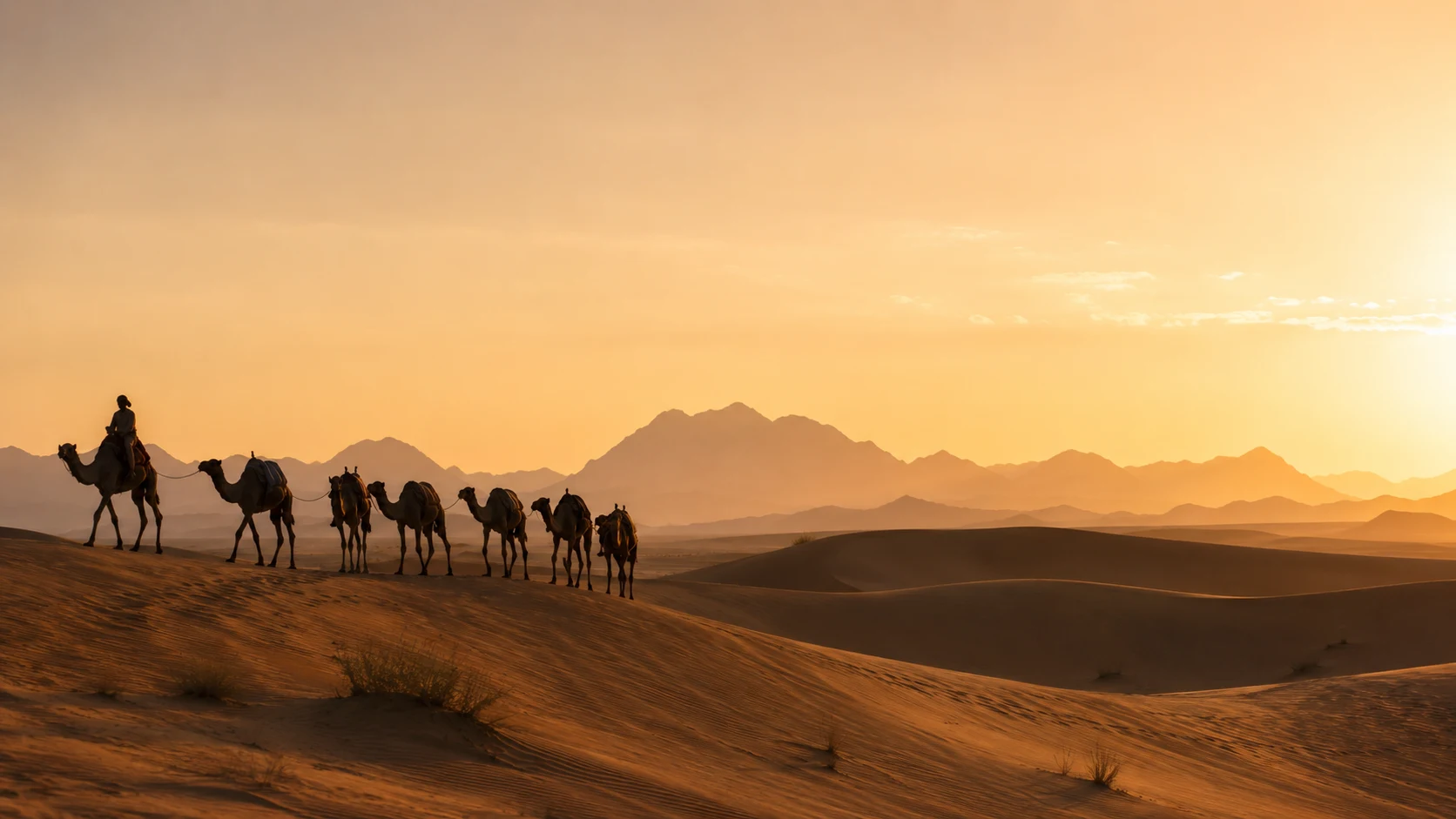
We’ve said it before on this Journal, and we’ll say it again because we believe it completely: not all Emirati luxury is made of glass and gold. Some of it is standing barefoot in cold sand before sunrise, or hearing nothing but wind for the first time in months. This is not a list of attractions. It’s an invitation to the Emirates we actually love.
Walking Into Silence
There is a specific kind of quiet that only exists past the last dune you can see from the road. No traffic. No notifications. Just wind moving sand in slow lines across the surface, and the sky doing something spectacular that no one in the city will see this evening.
A camel trek at dawn or dusk isn’t really about the camel, if we’re honest — it’s about what walking that slowly, for that long, with nothing to look at but horizon, does to a mind that spends the rest of its year moving too fast. Somewhere in the first hour, the noise of the week starts to fall away. By the second, most people stop reaching for their phone entirely, not because they decided to, but because they simply forgot it was there. Pollution, deadlines, the low hum of city stress — all of it stays behind at the trailhead. What’s left is unusually simple: sand, sky, and you, moving at the pace this land was always meant to be crossed at.
The Horses That Were Bred for This Exact Land
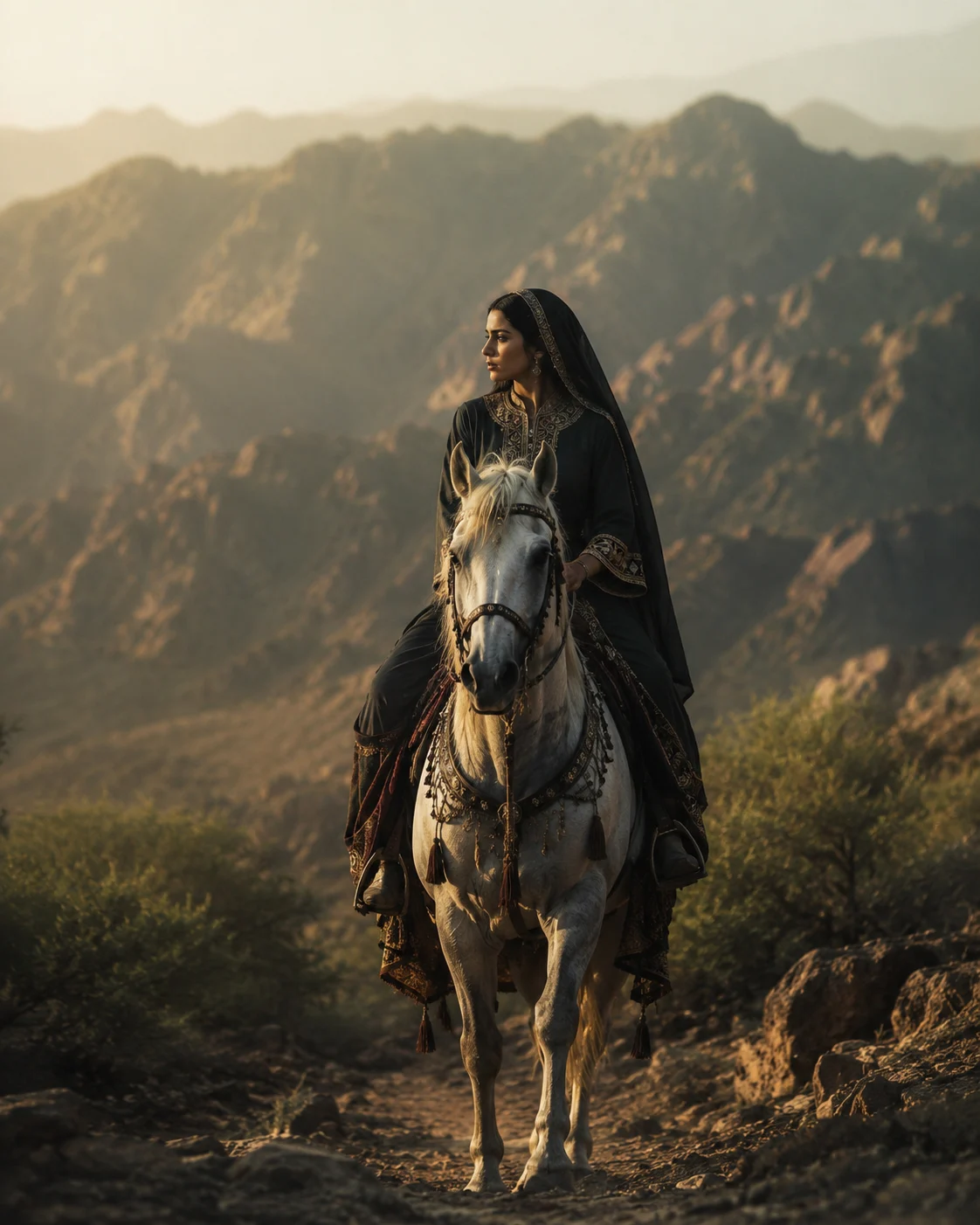
Arabian horses were shaped by this desert long before anyone thought to race them for sport — bred for endurance over exactly this terrain, exactly this heat, exactly this kind of open distance. Riding one here feels different from riding anywhere else, and it’s not sentiment; it’s fit. The stride, the stamina, the way they read uneven ground — this is the animal this landscape produced, and you can feel that lineage the moment you’re moving.
Stables around Al Ain and the Hatta foothills offer rides at the hours worth choosing for — early morning, when the light is still soft and the heat hasn’t arrived, or the last hour before sunset, when the dunes turn the colour of the gold we put in our jars. Even a short ride, an hour, maybe two, is enough to understand why this animal and this desert are spoken about together in every story this region tells about itself.
Have You Tried Raw Camel Milk?
Genuinely — have you? If not, it’s worth doing once, with no expectations either way. It doesn’t taste like cow’s milk with a twist; it tastes like its own thing entirely — thinner, slightly saltier, with an aftertaste some people love from the first sip and others need a second try to appreciate. You may love it. You may not. But it’s different enough that you’ll know within seconds, and that alone makes it worth the visit.
Beyond the taste, it has genuinely earned its place at Bedouin tables for centuries, not by accident: it’s naturally lower in fat than cow’s milk, doesn’t curdle the same way, and carries more vitamin C than most dairy alternatives. Some people who react to cow’s milk find they tolerate it comfortably. A handful of working farms across the Emirates let you taste it straight from the source — nothing like the pasteurised, packaged version sold in supermarkets.
The Mountains Most Visitors Skip Entirely
Hatta gets photographed for its dam and its impossibly turquoise lake, and rightly so — it is, without argument, our favourite corner of this whole country. But the valleys behind that lake, the quiet wadis and half-abandoned stone villages that most day-trippers never walk to, are where the Hajar Mountains actually reveal what they are. This is the same range our own hives sit in, right at the edge where the UAE meets Oman.
Further north, Fujairah’s stretch of the same mountain range offers something different again — a wilder, less-visited coastline backed by peaks that drop almost straight into the sea, old watchtowers still standing on ridgelines, fishing villages that have barely changed their rhythm in decades. And inland, along the borders shared with Oman and Saudi Arabia, there are pockets of mountain and desert most residents of Dubai or Abu Dhabi will never think to visit — genuine havens of quiet, if you have the time to go looking for them.
And if you happen to pass through the Sidr groves above Hatta while you’re there — say hello to the bees for us. Yes, we know. We do talk about honey rather a lot here.
Where the Desert Turns Green
The UAE’s oases are its least-discussed luxury — palm groves fed by falaj irrigation channels some of which are centuries old, engineering so quiet and so effective you barely notice it’s there until you feel the air change the moment you step under the treeline. Al Ain’s oasis, walkable and free to enter, is the easiest place to understand this: ten degrees cooler in the shade, the sound of moving water somewhere beneath the palms, a stillness that has nothing to do with luxury and everything to do with age.
Al Ain doesn’t stop at the oasis walls, either. This is genuinely the country’s agricultural heart — working date palm farms stretching well beyond the historic groves, and smaller family-run vegetable farms scattered across the region’s outskirts, some open to visitors, some selling produce straight from the field. It’s the one place in the Emirates where you can watch this land actually grow something, rather than simply admire how it was shaped.
What All of This Has in Common
None of it requires a yacht, a supercar, or a reservation made months in advance. It asks for an early start, comfortable shoes, and a willingness to trade one version of this country for another — the one that was here long before the skyline was, and will still be here after it.
Every bee from our own hives leaves the hive each morning for exactly this landscape — the same dunes, the same mountains, the same quiet — because it has to, to do the work only this wild land lets it do. Perhaps there’s something worth learning from that. Escape, alone, with family, or with friends, isn’t a luxury we grant ourselves for no reason. Even when we don’t notice it happening, our mind does. Our health does too.
Questions About Escaping to the Wild Emirates
Distance from noise and screens genuinely helps — even half a day. A desert walk, a mountain trail, or simply sitting somewhere without notifications resets something that a spa afternoon in the city often can’t quite reach.
Hatta is roughly a 90-minute drive from Dubai and is the easiest genuine escape — mountains, a lake, and near-total quiet, all in a single day trip.
Dawn or the hour before sunset — both avoid the heat and give you the light that makes the dunes genuinely spectacular.
From an established, reputable farm, yes, for most people. As with any raw dairy, choose a trusted source rather than an informal one.
No — most stables around Al Ain and Hatta offer guided rides suited to complete beginners, at an easy, unhurried pace.
About 130 kilometres, roughly 90 minutes by car — close enough for a single day, though it deserves a full one.
Al Ain Oasis is the most accessible — free to enter, well shaded, and an easy add-on if you’re already visiting Al Ain’s farms or the city itself.
Where Our Honey Comes From
Every jar we sell begins in the landscape described above — the Hajar Mountains at Hatta, not as a marketing image, but as where our hives genuinely stand.
Shop now →