
What to Eat During a Gulf Summer
A complete, culturally grounded guide to eating well when temperatures across the UAE, Qatar and the wider Gulf push past 45°C — from water-rich fruits and traditional cooling foods to smart daily habits that keep you nourished, hydrated and energised all season long.
Step outside between June and September anywhere across the UAE, Qatar, Kuwait or Oman, and the air greets you like an open oven. Temperatures regularly exceed 45°C, humidity along the coast can make the felt heat considerably higher, and even a short walk from the car to the building can leave the body quietly parched. In conditions like these, what you eat matters — not just for comfort, but for genuine well-being. The right foods replenish what the heat takes away; the wrong ones accelerate the drain.
This guide is an honest, practical companion to eating well during a Gulf summer — drawing on both modern nutrition and the time-tested wisdom of a region that has always known how to live gracefully under a fierce sun.
Why Nutrition Matters During Gulf Summers
The human body is approximately 60% water, and in extreme heat it loses fluid rapidly — through perspiration, respiration and daily activity. The Gulf’s combination of high temperatures and high humidity makes this loss less visible (sweat evaporates more slowly) but no less real. Electrolytes — sodium, potassium, magnesium — leave the body alongside water, and if they are not replenished, the result is fatigue, difficulty concentrating, and in serious cases, heat-related illness.
Food plays a supporting role to water. Eating meals rich in fluid content, natural minerals and easily digestible energy helps the body maintain balance throughout the day — without placing undue strain on digestion at a time when the body is already working hard to regulate its temperature.
The golden rule for Gulf summers
Lighter, fresher, and more frequent is better than heavy and infrequent. Adapt your plate to the season — the region’s own culinary traditions already show you how.
Stay Hydrated Through Water-Rich Foods
Drinking adequate water — a minimum of 2.5 to 3 litres daily in summer conditions, more for those who spend time outdoors — remains the foundation. But food-sourced hydration adds a meaningful contribution. Water-rich foods deliver fluid alongside vitamins, minerals and fibre, making them a far more intelligent choice than processed snacks or sweetened beverages.
Among the most effective hydrating foods available in the Gulf market:
| Food | Water Content | Key Nutrients |
|---|---|---|
| Cucumber | ~96% | Potassium, Magnesium |
| Watermelon | ~92% | Lycopene, Vitamins A & C |
| Tomatoes | ~94% | Vitamin C, Antioxidants |
| Lettuce & leafy greens | ~95% | Folate, Iron |
| Citrus fruits | ~88% | Vitamin C, Electrolytes |
The Best Fruits to Eat in Hot Weather
Beyond watermelon and citrus, the Gulf summer table benefits greatly from mangoes — abundant and beloved across the region — which are naturally hydrating and rich in beta-carotene. Strawberries and grapes also rank among the most hydrating options. Peaches and apricots, widely available in markets from late spring, offer a gentle natural sweetness alongside meaningful fluid content.
For those who find plain fruit repetitive, a simple fruit bowl dressed with a light drizzle of raw Omani Sidr honey and a squeeze of lime becomes something far more refined — a small ritual of summer pleasure. A high-quality raw honey from Yemen or Oman brings a depth of flavour and natural complexity that no refined sweetener can replicate.
Light Meals That Keep You Energised
Heavy, protein-dense or fat-rich meals demand significant digestive effort — effort the body would rather redirect toward keeping cool. During the summer months, the most sensible approach is to move toward lighter, more frequent meals: smaller portions spaced through the day, combining fresh vegetables, quality protein and complex carbohydrates in balanced proportions.
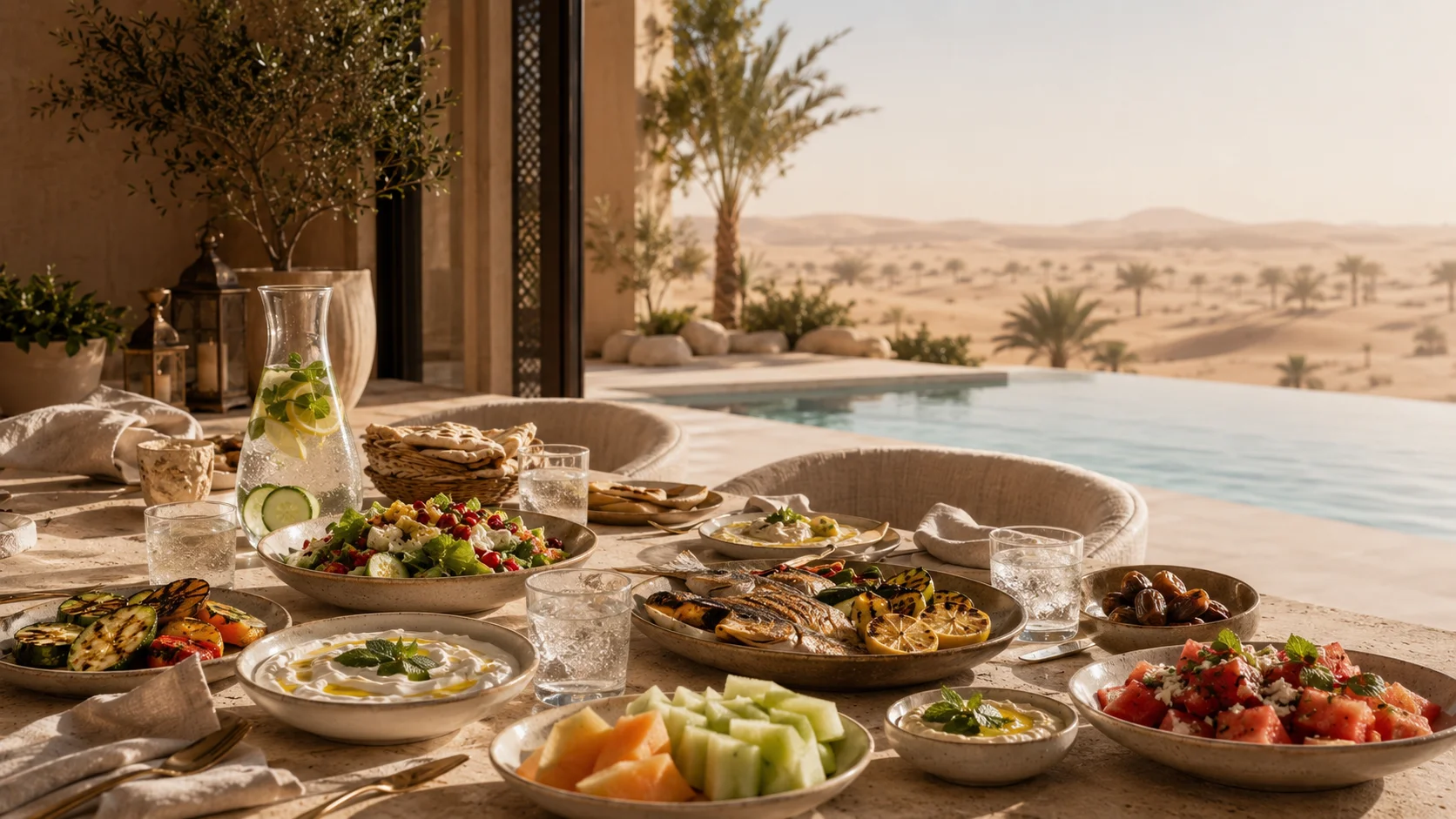
Grilled fish — a cornerstone of Gulf coastal cuisine — is an excellent choice: relatively light to digest, rich in protein and omega-3 fatty acids, and endlessly versatile when seasoned with the spices the region has used for centuries: turmeric, cumin, a whisper of saffron. Lean chicken, simply cooked, serves the same purpose. Legumes — lentils, chickpeas — provide plant-based protein and fibre without the heaviness of red meat.
Cold dishes deserve particular attention in summer. A tabbouleh of fine bulgur, parsley, tomato and mint, dressed with lemon and a generous pour of extra-virgin olive oil, is both a feast of hydration and a genuinely satisfying meal. Fattoush — the Levantine bread salad that has become ubiquitous across Gulf dining tables — offers similar virtues. These are not compromise meals; they are the intelligent choices of people who have lived well in this climate for generations.
Healthy Breakfast Ideas for Summer
Breakfast in summer should be early, cool and nourishing. The morning hours before 9 a.m. are the most comfortable for eating a proper meal; once the heat intensifies, appetite often retreats.
Greek yogurt or labneh with fresh fruit and raw honey
Providing probiotics, protein and natural energy in a single bowl — a perfect start that sustains without heaviness.
A smoothie built on banana, frozen mango and coconut water
Quick, cooling and genuinely filling — add a spoonful of natural yogurt for extra protein.
Eggs with sliced cucumber and wholegrain bread
A protein-forward start that sustains energy without heaviness — lightly scrambled or poached works best.
Overnight oats with chia seeds and a spoonful of honey
Prepared the evening before — ready the moment you open the refrigerator. No kitchen heat required.
Smart Snacks for Busy Days
Between meals, the temptation is to reach for whatever is at hand — often something processed, salty or sweet in the wrong way. A more considered approach makes a tangible difference to energy levels throughout the day.
The region’s most ancient natural energy source
Rich in potassium and natural sugars that release steadily rather than in a spike. Two to four dates as a mid-morning or afternoon snack is a culturally resonant choice.
Refreshing and almost effortlessly hydrating
Sliced with a pinch of sea salt and lemon — one of the simplest, most effective summer snacks available.
A combination with centuries of heritage
A small bowl of yogurt with a drizzle of raw honey has sustained travellers across the Arabian Peninsula for generations and remains as relevant today as it ever was.
Healthy fats and sustained energy
Almonds and walnuts in modest quantities provide the kind of slow-release energy that keeps focus sharp through the afternoon hours.
Foods to Avoid During Extreme Heat
Understanding what not to eat is as valuable as knowing what to reach for. Certain foods place additional strain on the body precisely when it can least afford it.
| Food Category | Why to Limit | Better Alternative |
|---|---|---|
| Heavily fried & oily foods | Slow to digest, generate internal heat | Grilled fish or lean chicken |
| Excessive red meat | High metabolic effort, causes sluggishness | Legumes, chickpeas, lentils |
| Very spicy dishes | Induces perspiration, tips toward dehydration | Mildly spiced grilled dishes |
| Multiple coffees daily | Mild diuretic effect, counterproductive in heat | Cool water, laban, mint lemonade |
| Sugary soft drinks | Fast sugar spike then fatigue, dehydrating | Fresh fruit, coconut water |
| High-sodium packaged snacks | Accelerate fluid loss under pressure | Chilled cucumber with sea salt |
Traditional Gulf Foods That Support Hydration
Before refrigerators, before imported produce, the people of the Arabian Peninsula understood how to eat for the heat. Their traditions encode nutritional intelligence that continues to serve well today — a living heritage that Meski Dates Factory draws on in its own commitment to the finest products of this region.
Laban
The chilled, lightly salted cultured buttermilk consumed across the Gulf for generations — perhaps the most underestimated summer drink in the region. It replenishes electrolytes, supports digestive balance through its naturally occurring cultures, and cools the body far more effectively than most commercial beverages. Gulf hosts have long known to offer it to guests arriving from the heat outside.
Dates
Whether fresh Barhi dates in their honey-soft peak-season state or the dried varieties available year-round, dates remain the region’s most complete natural snack. Rich in potassium, magnesium and natural sugars — precisely the combination a body depleted by heat most needs. The tradition of welcoming guests with dates and water or coffee is not merely ceremonial; it is physiologically sound.
Mint Lemonade
A staple across Lebanese, Emirati and Gulf restaurant menus throughout summer — as much a functional drink as a pleasurable one. The combination of citrus electrolytes, fresh mint and cold water makes it one of the most refreshing and genuinely hydrating drinks available outside a glass of plain water.
Raw Honey
Long revered across the Gulf and the wider Arab world, raw honey has its quiet place in a summer routine — not as a dramatic centrepiece, but as a finishing touch. A small spoonful of high-quality Yemeni Do’ani Sidr honey or Emirati Sidr honey in warm (not boiling) water in the morning, or drizzled over yogurt and fruit, offers a natural, gentle energy that integrates beautifully into a summer diet. It is sweetness with substance — the antithesis of the empty calories that so often tempt during the warmer months. The Sidr honeys of Yemen, Oman and the UAE have been part of this landscape’s food culture for centuries.
Daily Hydration Tips for the Gulf Summer
A few habits, practised consistently, make the difference between merely surviving a Gulf summer and genuinely thriving through it.
Begin the day with water
Before coffee, before food — a large glass of water at room temperature rehydrates the body after sleep and sets the right tone for the hours ahead.
Carry water everywhere
In the Gulf’s indoor culture, where air conditioning is ever-present, it is easy to forget to drink between locations. A personal water bottle kept visible is a simple but effective reminder.
Eat earlier in the evening
As Iftar culture has long demonstrated, breaking a long period without eating with water and dates before a fuller meal allows the body to rehydrate gently before processing food — a rhythm that translates well into summer dining habits beyond Ramadan.
Limit very cold drinks during meals
Very cold beverages can slow digestion. Cool — not icy — water is easier on the digestive system when eating.
Check your hydration colour
The simplest, most reliable indicator: pale straw yellow is the target; deep yellow or amber is a clear signal to drink more water immediately.
Eat cooling foods at midday
The hottest hours — typically between noon and 4 p.m. — are best met with the lightest meals: a salad, chilled yogurt, fresh fruit, or a simple laban.
Discover the Raw Honeys of Yemen, Oman & the UAE
A spoonful of authentic Sidr honey over summer yogurt or fruit is one of the Gulf’s oldest and most satisfying rituals. Meski Dates Factory sources only raw, unprocessed honeys — traceable, genuine, from the heritage valleys and mountains of the region.
Frequently Asked Questions About Eating Well in Gulf Summer Heat
For adults living and working in air-conditioned environments in the UAE or Qatar, a general guideline is 2.5 to 3 litres of water per day. Those who spend time outdoors, exercise, or work in non-air-conditioned settings should increase this to 3.5 litres or more. Water-rich foods contribute meaningfully to total fluid intake but do not replace direct water consumption.
For most people going about their daily routine in the Gulf, plain water and a diet rich in natural electrolyte sources — fruits, vegetables, laban, dates — is sufficient. Sports drinks may be relevant for those exercising intensely or working in exposed outdoor environments for extended periods, but their sugar content makes them unsuitable as a casual hydration replacement.
Yes. Dates provide natural sugars alongside potassium and magnesium — an electrolyte profile well suited to the demands of summer heat. Two to four dates as a mid-morning or afternoon snack is a balanced, culturally resonant choice that the region has relied on for good reason. Moderation, as always, is the operative principle.
Honey is a natural source of quick-release energy and contains trace minerals. In modest quantities — a small spoonful in warm water, yogurt or over fruit — it is a sensible and nourishing choice. Choose raw, unprocessed honey rather than commercial blended varieties to retain its full character. The Sidr honeys of Yemen, Oman and the UAE have been part of this landscape’s food culture for centuries precisely because they offer so much in so small a measure.
Nutritionally, a combination of protein and fresh fruit works best: Greek yogurt or labneh with seasonal fruit and a light drizzle of raw honey, or eggs with sliced vegetables. Light, cool, and prepared ahead where possible — the goal is to begin the day nourished without beginning it heavy.
Living well through a Gulf summer is not about deprivation — it is about intelligence. The region has always produced the ingredients needed to thrive in its climate: dates, laban, fresh herbs, citrus, honey from the mountains of Oman and Yemen. The seasonal table, when approached with care, is not a compromise. It is one of the quiet pleasures of knowing how to live beautifully in this part of the world.