
Arabian Lifestyle · Food & Discovery
Yemeni Mangoes:
The Fruit That Can Taste Sweeter Than Honey
I did not travel to Yemen to discover its mangoes. I did not even know Yemen grew them. I found them by accident in a local market in the Emirates.
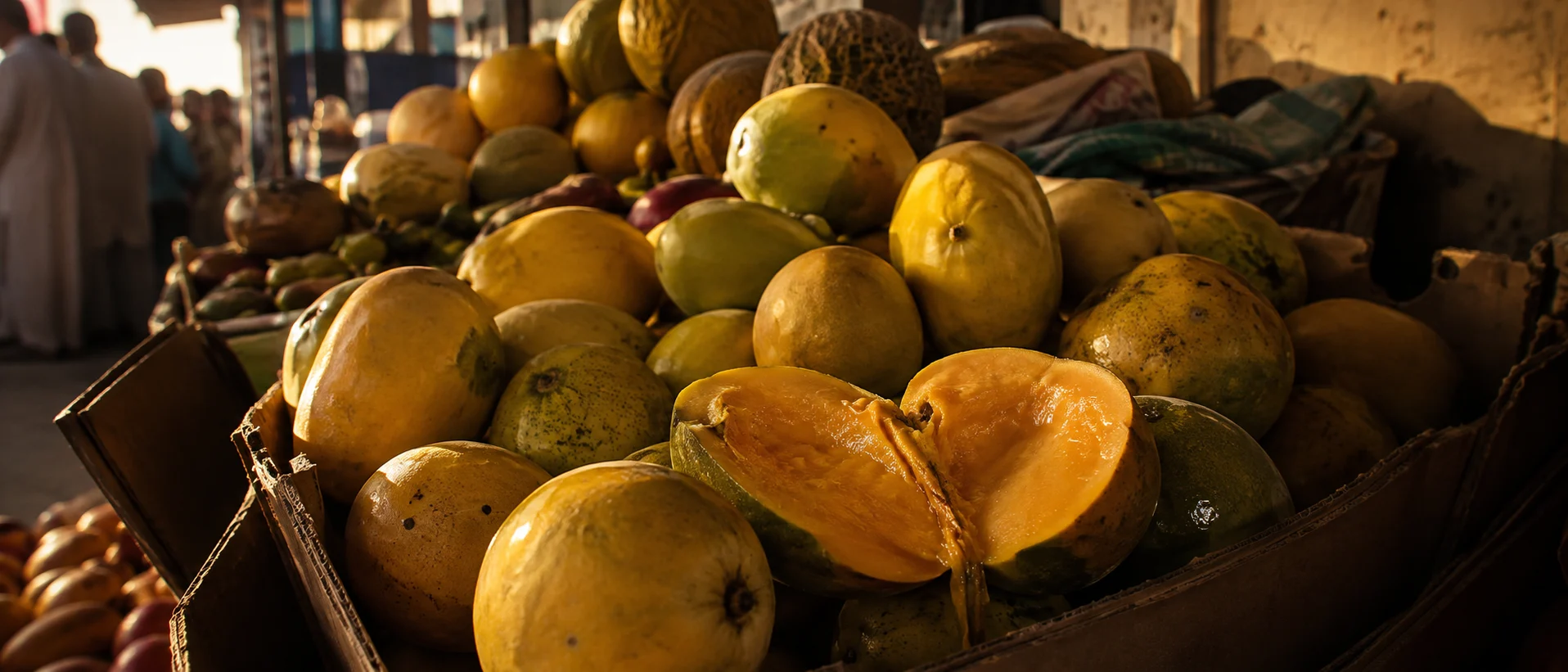
I had no idea.
If someone had asked me a few years ago to name fruits from Yemen, mango would probably not have entered my mind.
Then one day, in a local market in the UAE, I saw boxes of mangoes from Yemen.
Not in a luxury mall. Not in a hotel buffet. Not in a place designed to teach tourists about regional culture.
Just a market.
I bought some. I tasted one.
And I honestly could not believe how good it was.
“I went to the market without looking for Yemen. Somehow, Yemen found me there.”
Meskaoui
I Did Not Know This Yemen Existed
That first surprise is important to me.
We often think we know a country because we know the images most often shown about it. Yemen is usually presented through history, conflict, old architecture, coffee, honey, mountains or the Queen of Sheba.
Mangoes rarely enter the picture.
Yet mango farming is real and important in parts of the country. The United Nations Development Programme describes Wadi Al-Barakani in Taiz as being known locally and across Yemen for its mangoes. FAO reporting has also long identified mango among fruit crops grown in Yemen, particularly in warmer agricultural zones such as the Tihama plain.
That information came after my first bite.
The market came first.
The First One Was Enough
I like mangoes already, so I was not approaching them as someone difficult to convince.
But this was different.
The flesh was rich, perfumed and deeply sweet. The kind of sweetness that makes you slow down because you are trying to understand whether the next bite is really as good as the first.
For me, the comparison with honey came naturally.
Not because mango and honey taste the same. They do not.
It was the intensity. A ripe fruit can reach a point where sweetness stops feeling like an ingredient and begins to feel like its entire character.
Then I Started Buying Boxes
I went back.
Then I went back again.
And again.
Eventually I was not buying a few mangoes. I was buying cartons.
I must have returned dozens of times during the periods when I could find them.
That still makes me laugh because the discovery had begun with complete ignorance. A fruit I did not even know existed in Yemen became something I actively searched for.
My Favourite Mangoes Are Not Always the Most Famous Ones
If I speak only from taste, Yemeni mangoes now sit very high for me, alongside the mangoes I have eaten in Thailand.
I also love Pakistani mangoes, especially some I have tasted locally rather than the fruit selected for long export journeys.
That distinction matters with fruit.
A mango picked for a nearby market can be allowed to mature differently from one that has to survive transport, storage, customs and supermarket shelves thousands of kilometres away.
So when I say “Yemeni mangoes” or “Pakistani mangoes”, I am not pretending every fruit from a country tastes identical.
I am remembering particular fruits, at particular ripeness, found in particular places.
A Market Can Teach You What a Guidebook Misses
This is the real reason I wanted to write the article.
The mango was delicious. But the discovery behind it was even better.
Local markets in the Gulf can be extraordinary cultural classrooms if you walk through them with curiosity.
You find produce from countries you may never have associated with that fruit. You find spices labelled with regional names. You meet traders who know which harvest has arrived, which village produced something, which box is sweeter, which honey is stronger, which dates are softer.
None of this necessarily appears in the polished tourist version of a city.
And that is exactly why I keep returning to these places.
The Emirates as a Place of Discovery
People often describe the UAE as international because you can find food from almost everywhere.
That is true.
But what interests me is not only international restaurants.
It is the regional circulation that happens quietly around them. Yemeni fruit. Omani honey. Saudi dates. Pakistani mangoes. Indian spices. Iranian saffron. Products crossing short and long distances and ending up beside one another in ordinary markets.
Living in that environment has taught me things I might never have gone looking for on my own.
Yemen Is Also Agricultural
Yemen’s geography is much more varied than the word “arid” suggests.
Highlands, valleys, coastal plains and irrigation systems create different agricultural zones. FAO has documented mango, banana, papaya, dates, grapes, pomegranate and other fruits in the country, while modern UN projects continue to work with Yemeni farmers facing floods, water scarcity, conflict and damaged agricultural infrastructure.
That does not mean agriculture is easy there.
Quite the opposite.
It means every box of fruit belongs to a much larger story of land, water, work and resilience.
Now I Look More Carefully
Since that first discovery, I pay more attention.
If I see a fruit from somewhere unexpected, I ask about it.
If a seller tells me one harvest is special, I want to understand why.
Sometimes it leads nowhere.
Sometimes it leads to a carton of mangoes.
And sometimes a carton of mangoes changes the picture you carry of an entire country.
Yemeni Mangoes
Yes. Mango is grown in Yemen. UNDP documents mango farms in Taiz, and FAO sources identify mango as one of the fruit crops cultivated in warmer agricultural areas including the Tihama plain.
“Sweeter than honey” is Meskaoui’s personal description of mangoes he tasted, not a scientific claim about every Yemeni mango. Sweetness varies by variety, ripeness, farm, season and handling.
In a local market in the United Arab Emirates. The discovery was accidental and became the starting point for learning more about Yemeni agriculture.