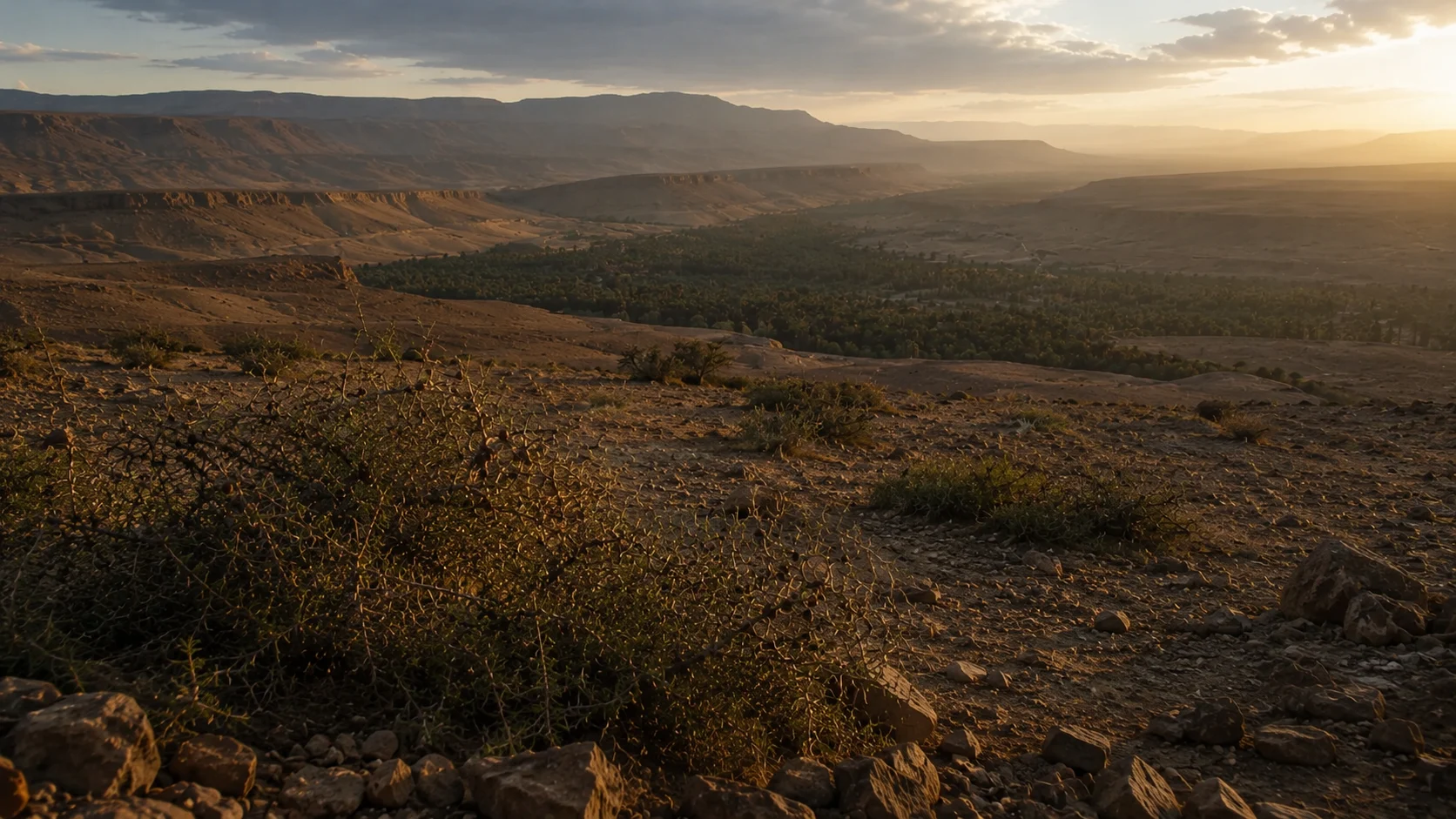
Morocco · Errachidia · Wadi Ziz
Moroccan
Sidr Honey
عسل السدر المغربي
A lighter jujube honey from where the Atlas leans toward the Sahara — never mistaken for its Arabian cousin.
Between the High Atlas and the desert’s edge, a different jujube flowers each early summer — Ziziphus lotus, wild and thorned, sharing a name but not a species with Yemen’s Sidr.
Terroir
Wadi Ziz, where the Atlas meets the desert
In the Drâa-Tafilalet region, Wadi Ziz crosses the province of Errachidia — a valley where the High Atlas foothills fall toward the Sahara through rocky plateaus and palm-lined oases, long shaped by Amazigh and Arab communities.
The honey comes from Ziziphus lotus, known locally as Sedra (the shrub) and Nbeg (its dried fruit) — a low, thorny member of the Rhamnaceae family, entirely distinct in species from the tall Ziziphus spina-christi of Yemen and Arabia, though both share the name Sidr in Arabic.
| Location | Wadi Ziz, Errachidia Province, Drâa-Tafilalet, Morocco |
| Landscape | High Atlas foothills opening onto the Sahara; oasis palm groves and rocky plateau |
| Tree | Ziziphus lotus — wild jujube, “Sedra” in Moroccan Arabic |
| Bloom | A brief flowering window, typically May to June |
| Harvest | June, following the short spring bloom |
“Call it Sidr in Arabic, Sedra in the valley, or nothing at all in the language of the shrub itself — the jujube answers only to the rain.“
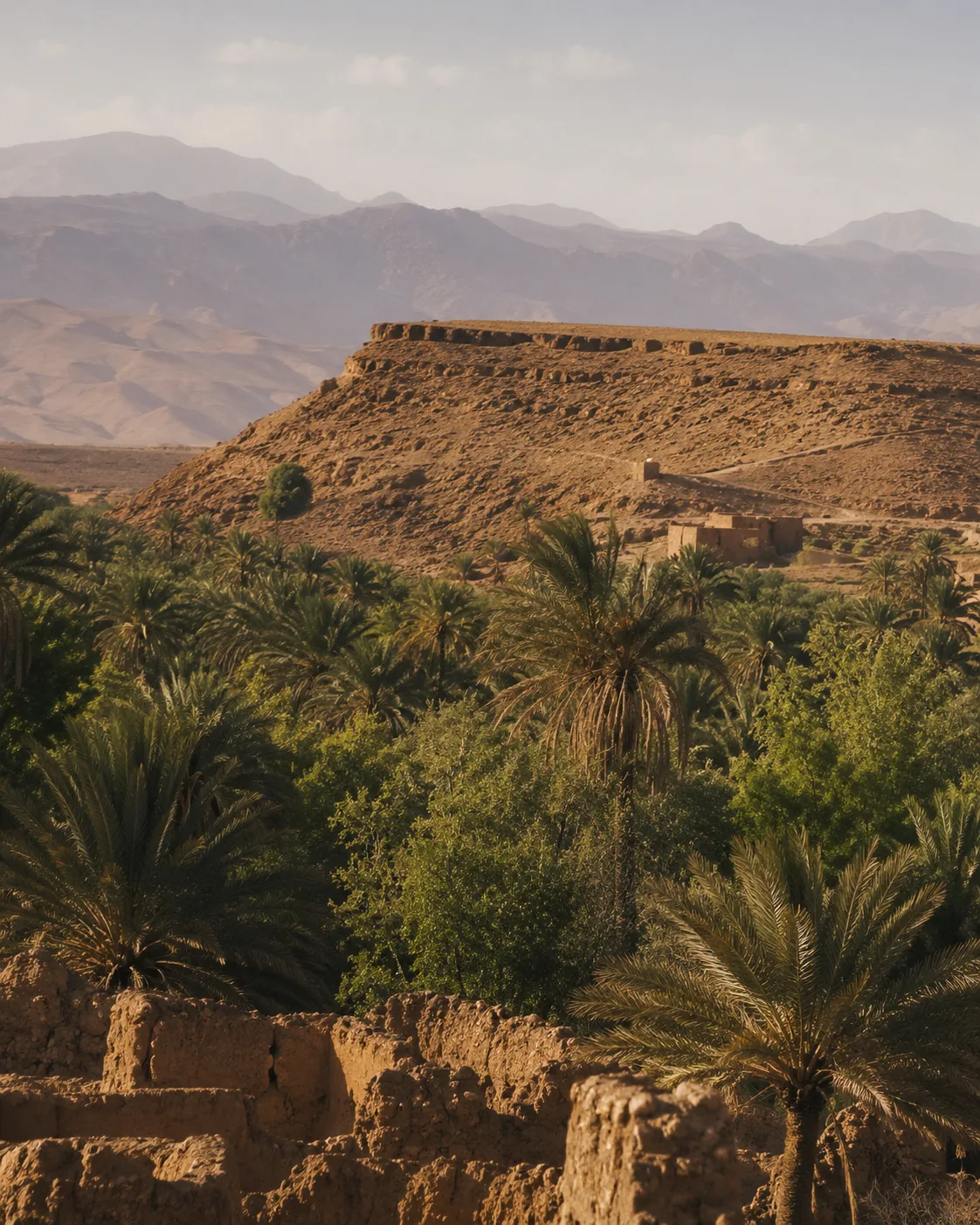 Wadi Ziz · Errachidia
Tradition
Two names, one shrub
In Morocco, the jujube carries two names for two things: Nbeg for the fruit sold at the souk, Sedra for the tree that gives it — its bark, leaves and fruit long used in Amazigh and Arab household remedies.
The honey itself is a newer chapter: a terroir product only formally catalogued in the last two decades, as national programmes for regional specialities brought it wider attention.
Sedra, in every language it grows
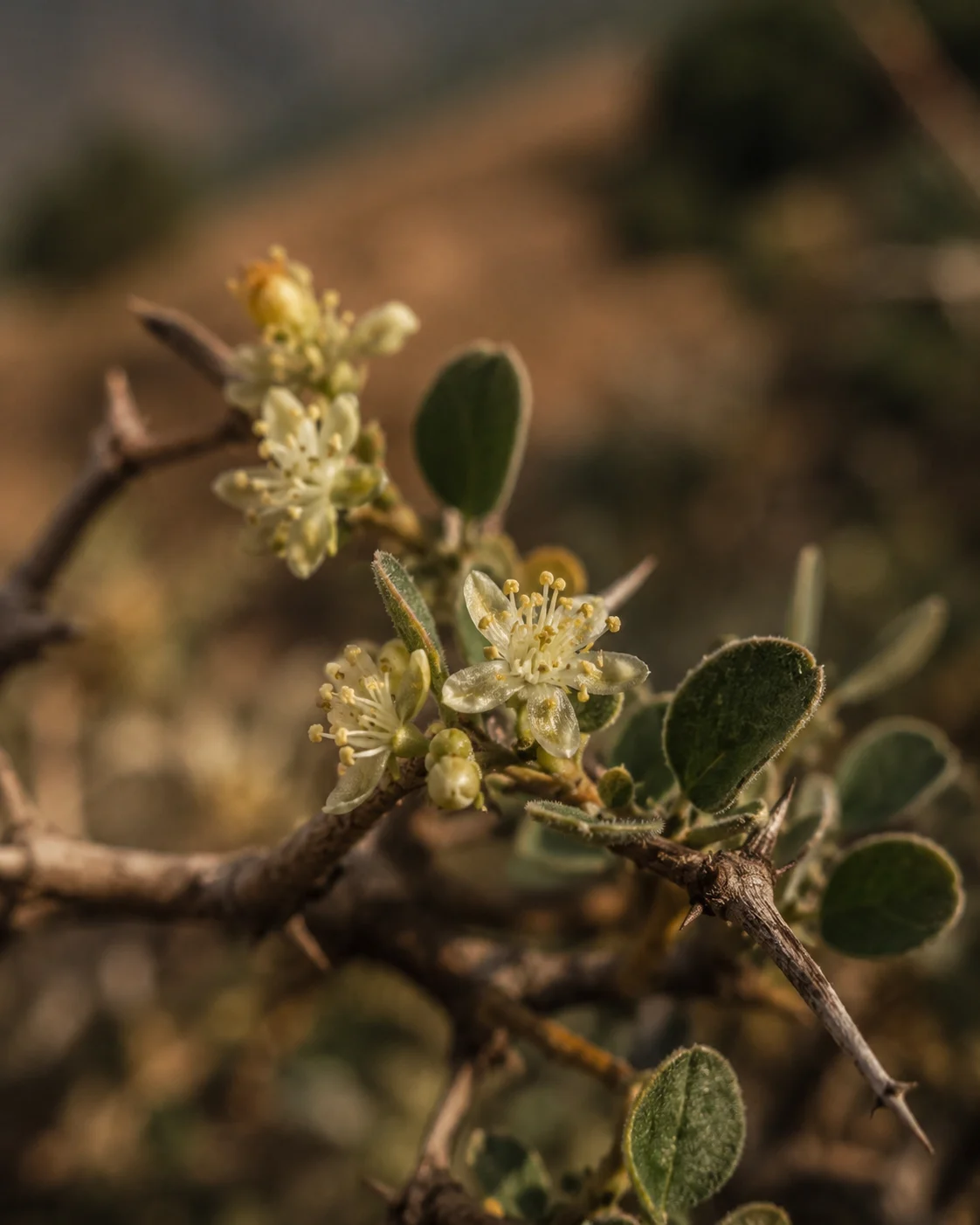 Sedra in bloom · Errachidia
“Where the Atlas leans toward the desert, even the thorns learn to flower.”
— The House of Meski
Rarity
A shrub that flowers on its own terms
Ziziphus lotus flowers for only a few weeks each year, and only where enough moisture lingers in an otherwise arid landscape. What that single season allows is the entire harvest.
Why it cannot scale
The shrub is wild and thorned, not cultivated in orchards. Its range and its flowering are set by the land, not by demand.
Beekeeping
Wild ground, and some hives of our own
Around Errachidia, the honey is gathered where wild Sedra grows along the wadi and the rocky plateau — sometimes by local beekeepers working the same valleys for generations, and in favourable years, from Meski’s own hives placed in the surrounding mountains.
The practice
Extraction uses the same standard equipment as anywhere else — smoker, uncapping knife, extractor — nothing more romantic than that. What sets the honey apart is timing, not tools: harvested only once the brief bloom has passed, with no forcing and no artificial feeding.
Sensory reading
Lighter than its Arabian namesake
Texture
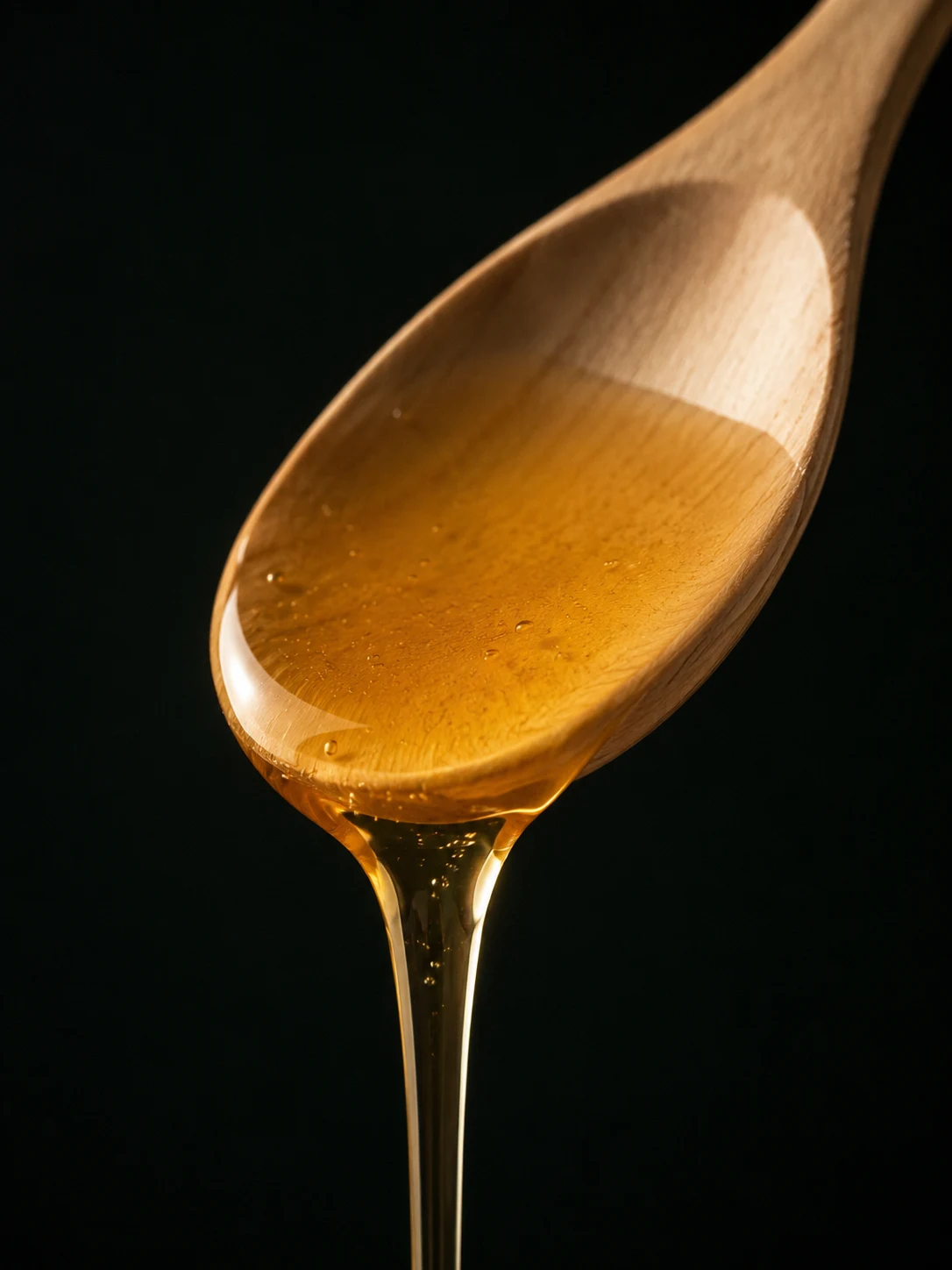
Naturally liquid and easy to pour — close to Yemen and Emirati Sidr in family name only.
Harvest notebook
From the field — Errachidia’s brief bloom
The bloom does not wait. Somewhere between the last cool nights of spring and the first heat of summer, the thorned Sedra opens its small yellow flowers across the wadi — and closes them again within weeks.
Hives are set where the shrub holds moisture longest: a rocky slope, the edge of a palm grove, a fold in the plateau. When the flowering ends, so does the harvest; there is no second pass through the season.
What comes back is a lighter honey than its Arabian namesake — proof, if any were needed, that “Sidr” in Arabic covers more than one tree.
Pairings
How to serve it
Light and floral, best kept away from anything that would overpower it.
Meski rating
An editorial reading, not a certification
Six criteria of the House, judged in tasting. This rating describes the appellation, is revised for each lot presented, and replaces no analysis or certificate.
Provenance
The Meski Confidence Chain
Rare honey is one of the most counterfeited foods in the world, and Sidr is no exception. Confidence does not come from a single certificate — it comes from a chain that stays continuous, from bloom to jar.
Read: How to read a rare honeyAnalysis describes the sample received by the laboratory. It does not automatically prove that every jar sold under the same name comes from that sample. A continuous chain does.
Continue the Atlas
An origin is never an island
Compare not to name a winner, but to understand what place, season and craft shift in the cup.