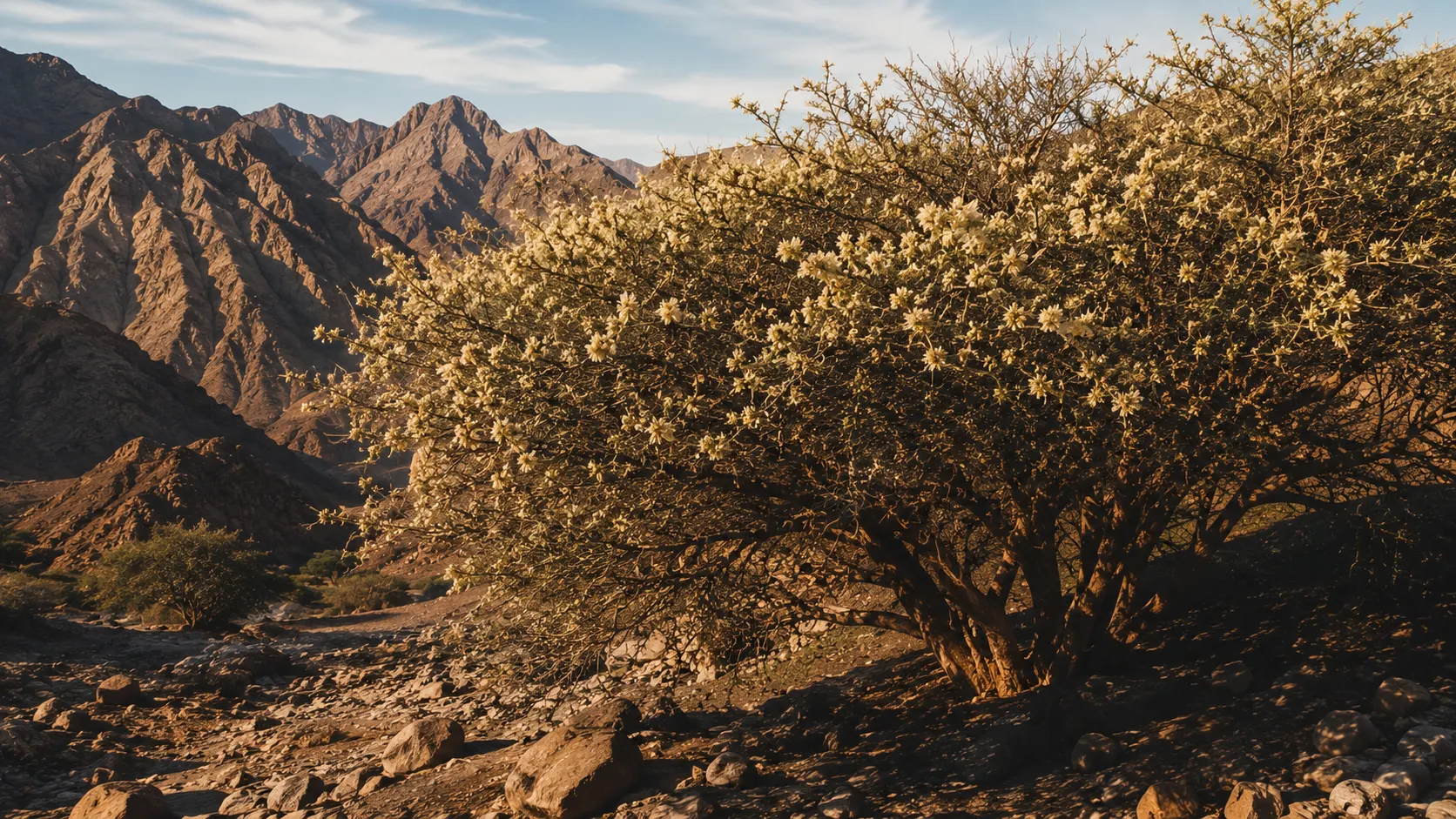
United Arab Emirates · Hatta · Hajar Mountains
Emirati
Samar Honey
عسل السمر الإماراتي
Where Sidr seduces through smoothness, Samar answers with intensity.
In the same mountain valleys that give Hatta its Sidr, a thornier tree waits for its own season — flowering only once the spring heat arrives, and giving a far darker honey entirely its own.
Terroir
A harsher tree, the same mountains
Samar — Acacia tortilis — grows through the same arid Hajar landscape as Sidr, but answers to a different season and a harsher constitution: rough bark, long thorns, and pale blossoms that appear once the spring heat sets in.
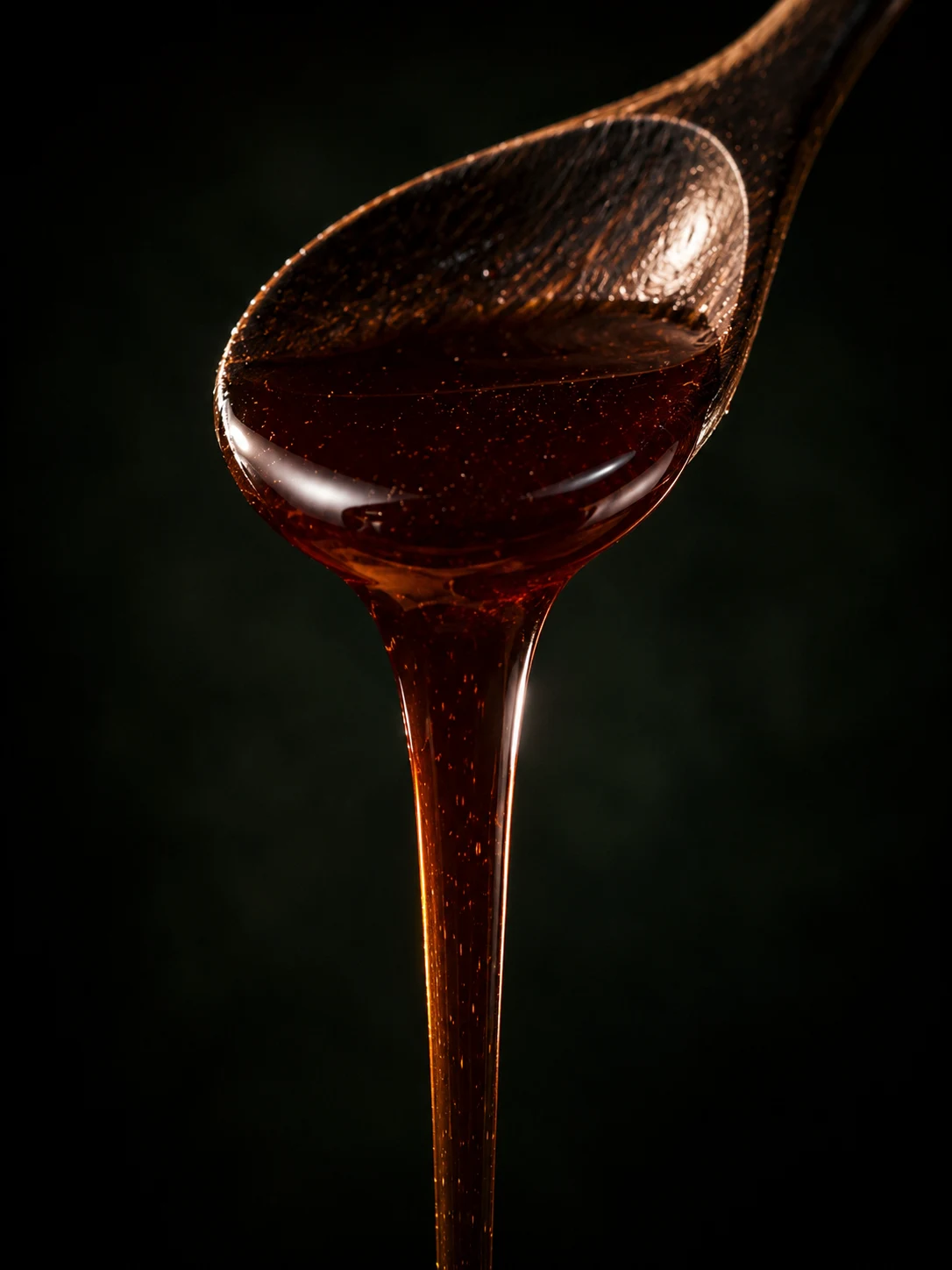
The honey it gives is correspondingly different: deep brown rather than golden, built for depth rather than delicacy.
| Location | Hatta and the surrounding Hajar Mountains, UAE |
| Landscape | Arid mountain terrain, rocky and mineral |
| Tree | Samar — Acacia tortilis (also called Soumour, Arabian Acacia) |
| Bloom | Spring, beginning around April |
| Harvest | Spring, typically April to May |
“Sidr seduces through smoothness. Samar reveals itself through intensity.“
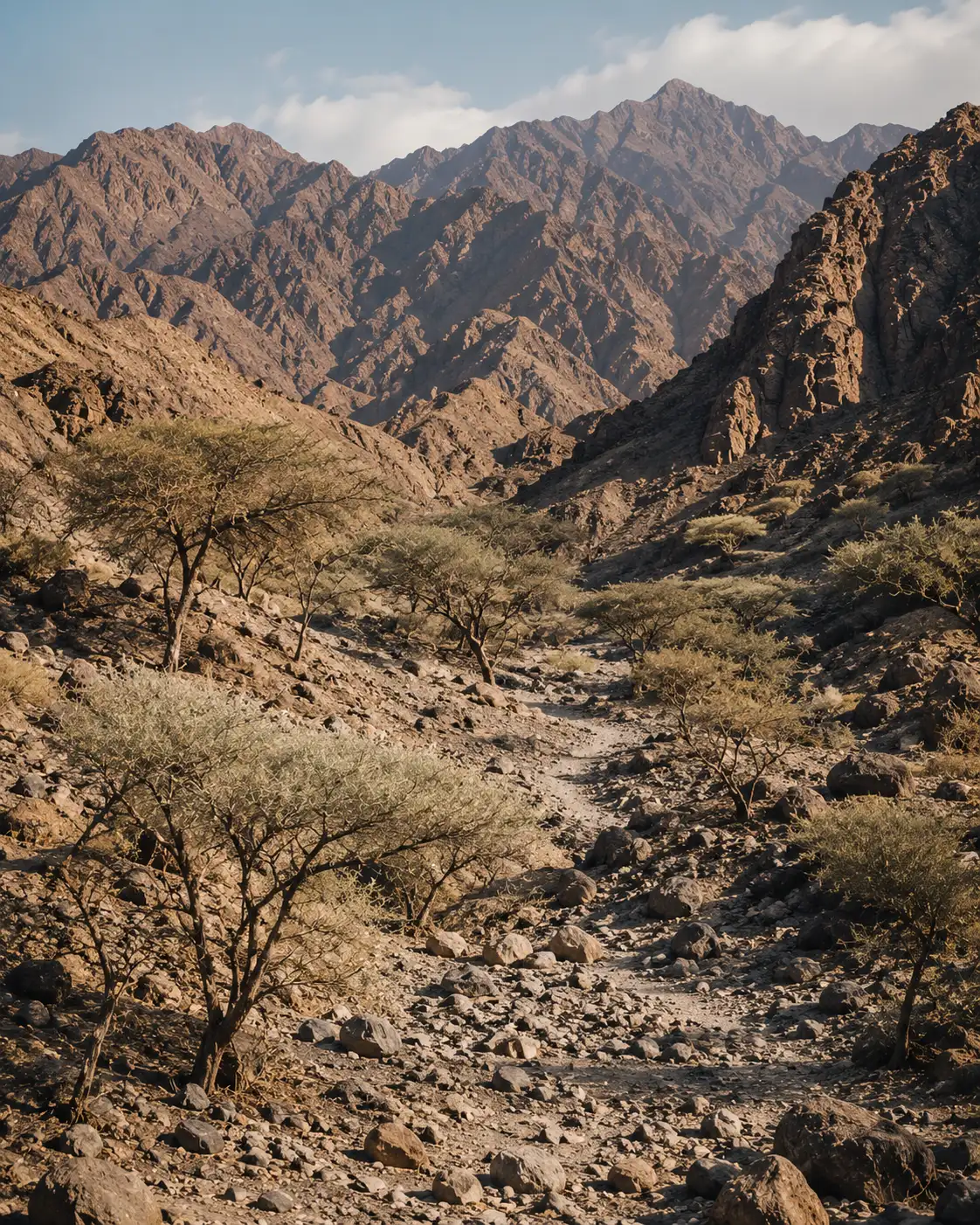 Hajar Mountains · Samar terrain
Tradition
Prestige for one tree, resilience for the other
In Hatta, Sidr gets the reputation and the awards. Samar gets the terrain nothing else wants — and turns it into the darkest honey the mountain makes.
Its honey has followed a quieter path to recognition than Sidr’s, prized locally long before it drew wider attention.
Generations
A tree of scarcity
Samar’s thorned, drought-built structure let it hold the Hajar Mountains’ harshest ground for generations — its honey only found a market once beekeepers realised how much character that hardship had concentrated.
Local tradition
A quiet staple
Long valued by mountain communities for its depth of flavour, Samar honey circulated quietly beside Sidr, often gathered by the same beekeepers.
Recent years
A strain of its own
As the UAE’s beekeeping programmes developed resilient local bee strains, Samar honey gained a clearer place in the country’s growing domestic honey sector.
Today
Still the darker season
The same mountain valleys, the same brief spring window — a honey that still trades on intensity rather than delicacy.
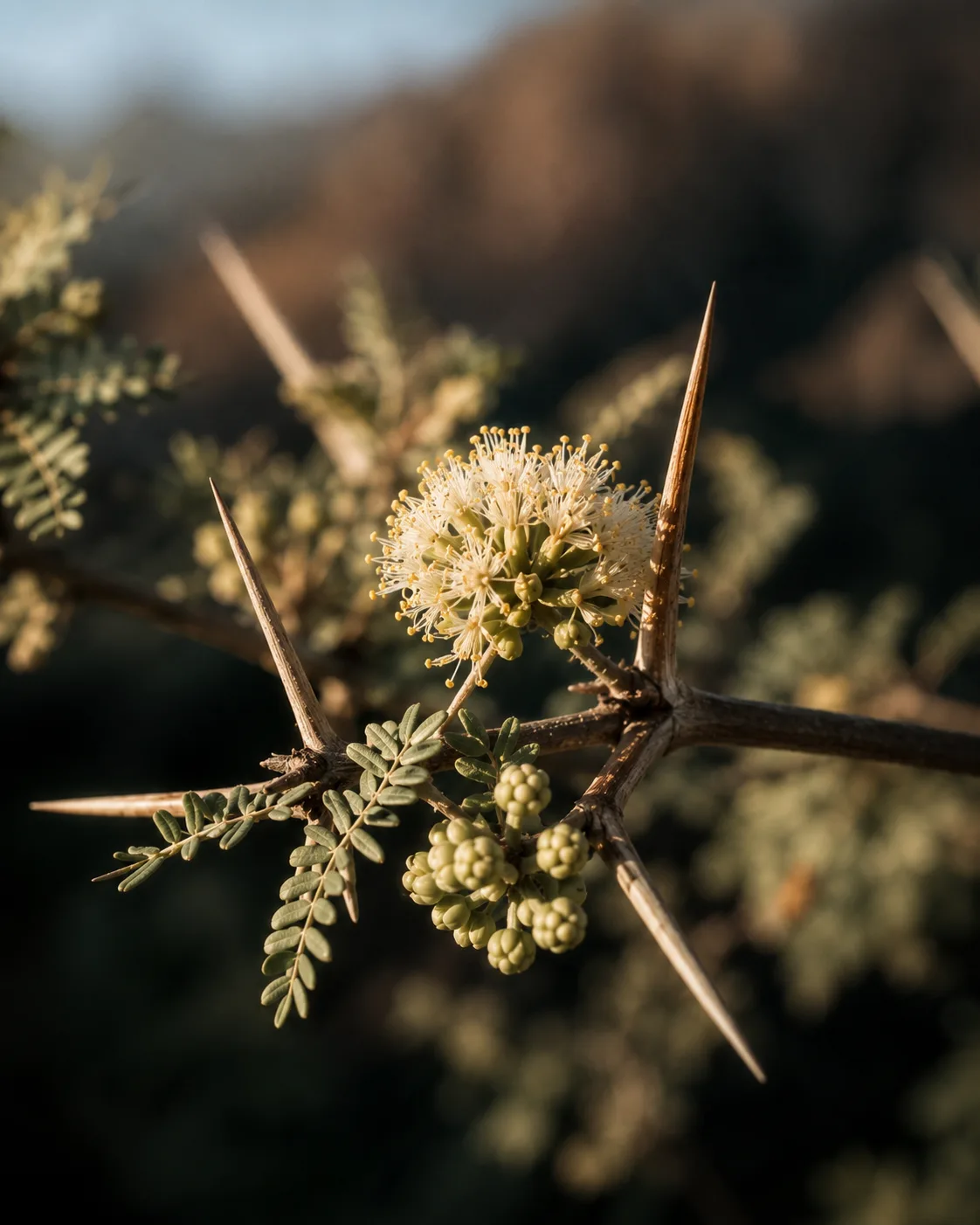 Samar blossom · Hajar Mountains
“What grows in scarcity keeps nothing weak about it.”
— The House of Meski
Rarity
A window Sidr never shares
Samar flowers once the Hajar spring heat sets in — a brief window that opens only after Sidr’s own season has closed, on slopes too dry and too late in the year for anything gentler.
Why it cannot scale
Samar grows where little else can — that resilience is also a limit. The tree sets its own pace, regardless of demand.
Beekeeping
The same mountains, a different calendar
Samar is gathered from the same Hajar Mountain apiaries that give Hatta its Sidr, with the same modern equipment and none of the mystique — the difference is entirely in the tree and its spring calendar, timed to catch the acacia’s brief flowering before the summer heat closes it.
The practice
As with the Sidr from the same range, nothing here passes near heat before it reaches the jar.
Sensory reading
Intensity where Sidr offers ease
Texture
Fluid and smooth despite its intensity — the darkness is in the flavour, not the body.
Harvest notebook
From the field — a spring most honeys miss
By the time Samar flowers, Sidr’s season is long over. The Hajar Mountains turn from winter’s Sidr rhythm to a shorter, hotter window built around a thornier tree.
The pale blossoms open fast and close faster once the heat sets in fully — beekeepers who miss the window wait until next spring.
What comes back owes nothing to Sidr’s gentleness: darker, bolder, and built to be noticed rather than to disappear into a dish.
Pairings
How to serve it
Dark and assertive — pair it with flavours that can meet it, not disappear beneath it.
Meski rating
An editorial reading, not a certification
Six criteria of the House, judged in tasting. This rating describes the appellation, is revised for each lot presented, and replaces no analysis or certificate.
Provenance
The Meski Confidence Chain
Rare honey is one of the most counterfeited foods in the world, and Sidr is no exception. Confidence does not come from a single certificate — it comes from a chain that stays continuous, from bloom to jar.
Read: How to read a rare honeyAnalysis describes the sample received by the laboratory. It does not automatically prove that every jar sold under the same name comes from that sample. A continuous chain does.
Continue the Atlas
An origin is never an island
Compare not to name a winner, but to understand what place, season and craft shift in the cup.