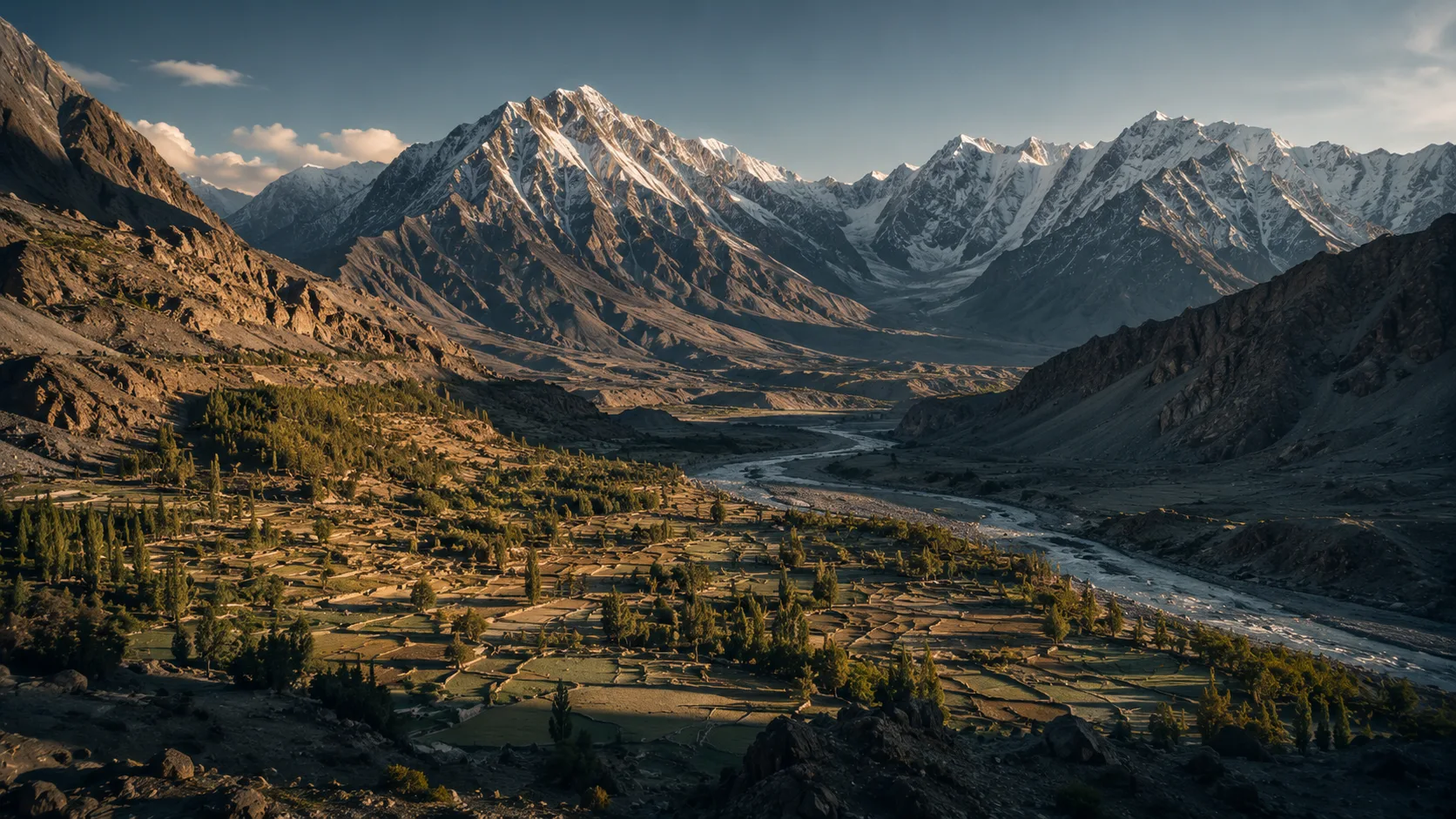
Pakistan · Skardu · Gilgit-Baltistan · Karakoram
Skardu
Sidr Honey
عسل السدر الباكستاني
The highest Sidr in the Atlas — a single valley in the shadow of the Karakoram.
Where the Karakoram range meets the upper Indus, wild jujube trees hold to valley floors most crops cannot reach — and give a Sidr honey unlike any other in this collection: not desert, but mountain.
Terroir
Skardu, where the desert tree learns altitude
Skardu lies in Gilgit-Baltistan, in Pakistan’s north, where the Karakoram range rises toward some of the highest peaks outside the Himalayas proper. The wild jujube here grows in valley pockets — Hoto among them — where the climate is closer to mountain than to Arabia’s plains.
It is the same genus that gives Yemen its Sidr, but a different expression entirely: cooler air, a shorter and later bloom, and a honey that carries none of the desert’s concentrated heat.
| Location | Hoto and surrounding valleys, Skardu, Gilgit-Baltistan, Pakistan |
| Altitude | Over 2,200 m — the highest origin in the Atlas |
| Landscape | Karakoram valley floors and terraced slopes |
| Tree | Wild jujube — Ziziphus, local varieties of the Skardu valleys |
| Harvest | Once a year, typically August to September |
“A desert tree that learned to live at altitude gives a honey that forgets the desert entirely.“
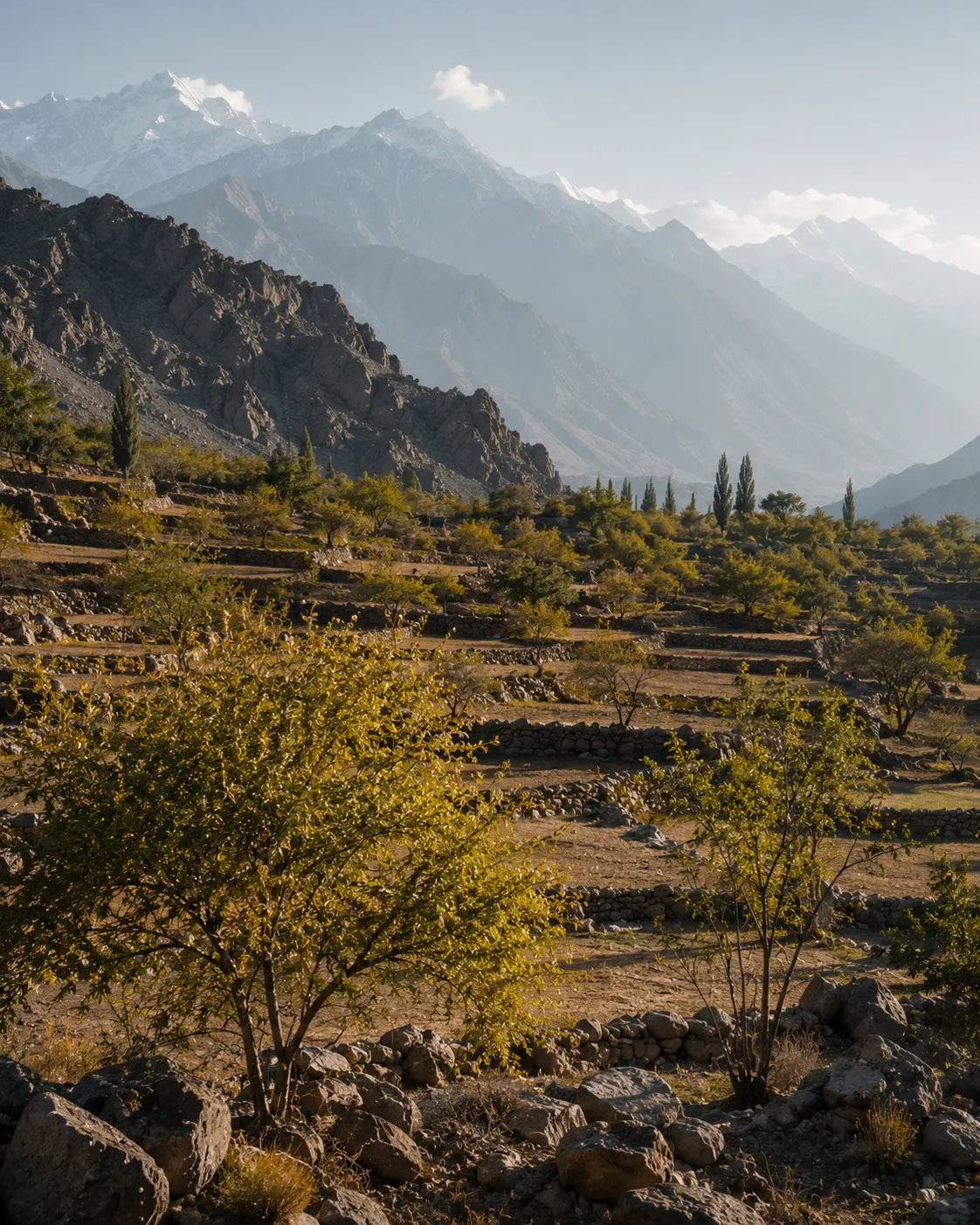 Skardu · Gilgit-Baltistan
What sets it apart
The highest Sidr honey in the Atlas
Every other Sidr in this collection comes from desert or semi-arid lowland — Yemen, the Emirates, Oman, Morocco. Skardu sits over 2,200 metres up, in the Karakoram, bordering some of the highest mountains on Earth. The altitude changes everything: cooler nights, a shorter season, a Sidr honey with none of the desert’s heat in it.
Tradition
A newer name on an old mountain route
Skardu has long sat on routes connecting the Indus valley to the high passes beyond — a waypoint for trade and travel between lowland Pakistan and the Karakoram long before honey was ever exported from it.
Wild jujube honey from these valleys has mostly stayed local, gathered by small-scale beekeepers for household and village use — it is a far younger export story than Yemen’s Sidr, without the same centuries of documented trade.
Long-standing
A route, not yet a honey
Skardu’s position between the Indus valley and the high Karakoram passes made it a waypoint for travellers and traders long before its honey ever left the valley.
Village practice
A local harvest
Wild jujube honey has long been gathered here for household and village use, at a scale far smaller than the desert Sidr trade of Arabia.
Recent decades
New attention
As Sidr honey grew in international reputation, buyers began looking beyond Arabia — and Karakoram valleys like Skardu’s started to draw interest of their own.
Today
An origin still being written
Skardu’s Sidr honey remains a small, little-exported harvest — young as a traded origin, however old the trees themselves may be.
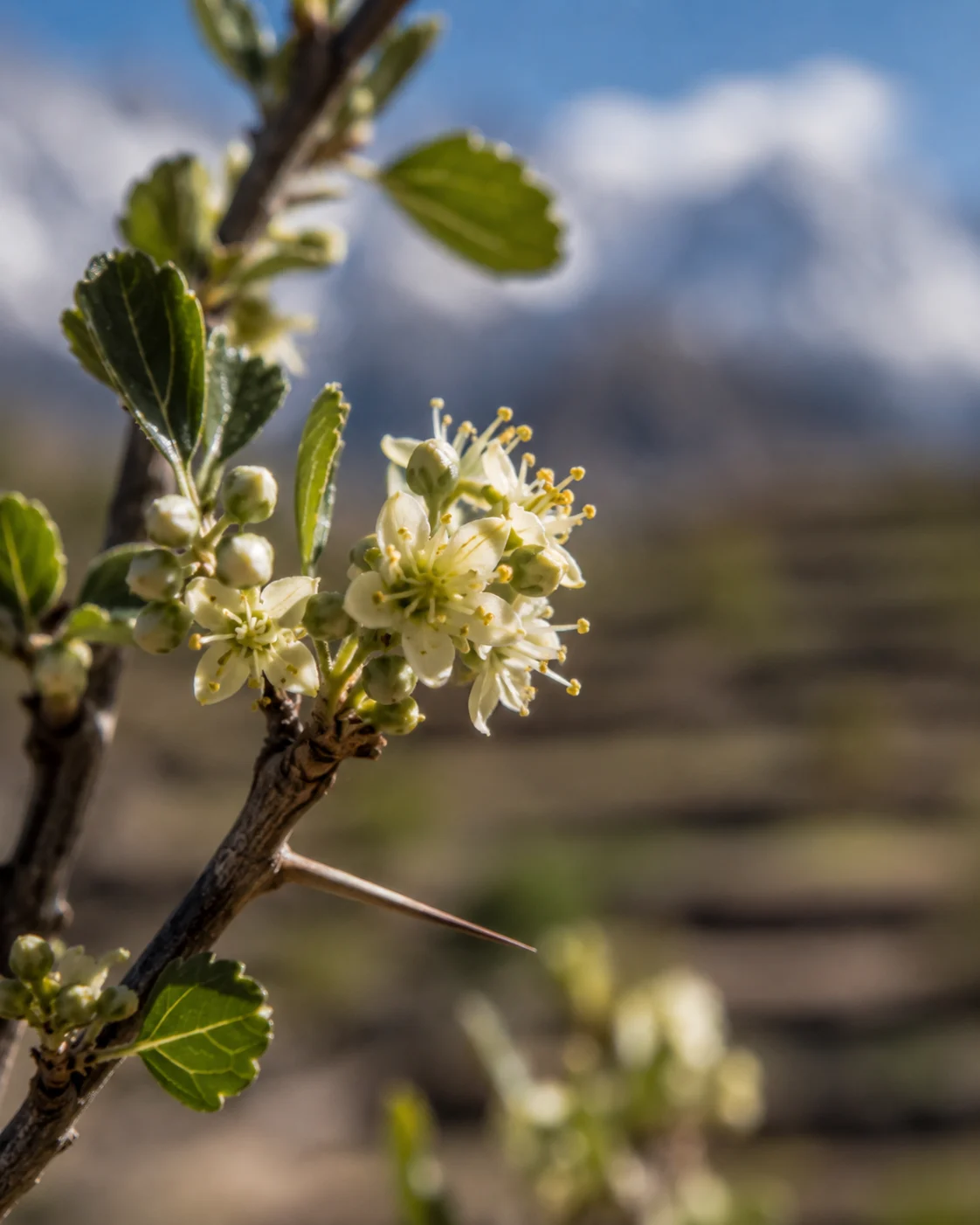 Jujube bloom · Karakoram valley
“Even a desert tree, given enough altitude, forgets what desert meant.”
— The House of Meski
Rarity
A short season, high above the desert
At this altitude the jujube blooms later and briefer than its lowland cousins, in a season shaped by mountain weather rather than desert heat — and closes just as fast once autumn reaches the valley.
Why it cannot scale
The valleys that hold wild jujube at this altitude are narrow and few. There is no lowland equivalent to expand into.
Beekeeping
Small-scale, valley by valley
Beekeeping around Skardu remains a village-scale practice, not an industrial one — hives kept close to home, moved little, tied to whichever valley pocket holds wild jujube at a workable elevation.
The practice
Extraction uses the same standard modern equipment found anywhere — smoker, uncapping knife, extractor — the difference here is scale, not tools.
Sensory reading
Sidr without the desert’s heat
Texture
Dense but not heavy — a Sidr honey that reads lighter than its Arabian relatives, true to its mountain origin.
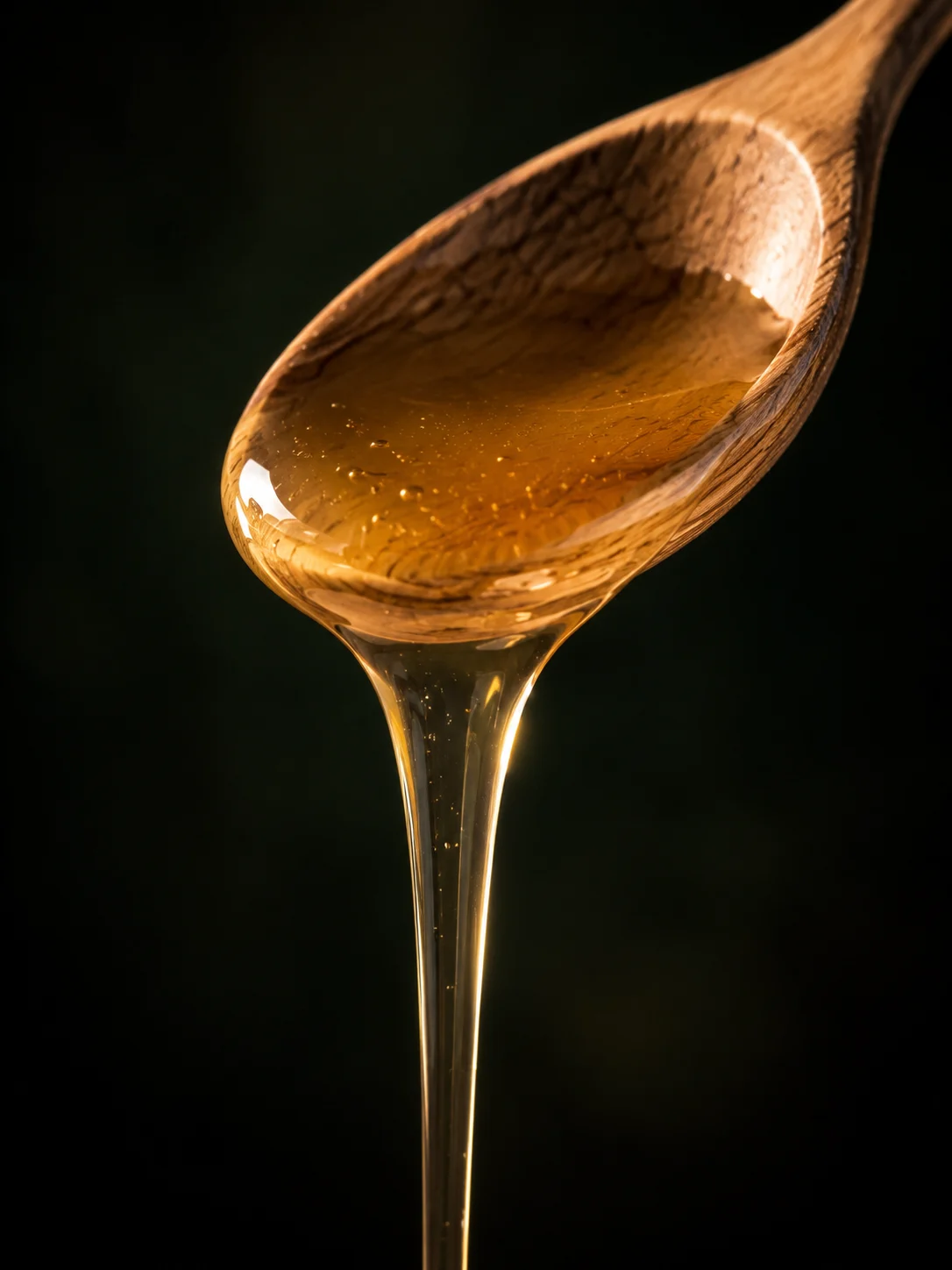
Harvest notebook
From the field — a mountain valley’s short window
By the time the jujube blooms in the valleys around Skardu, summer is already turning. The window is short, and altitude decides everything: too high, and the season barely opens before the cold returns; too low, and the trees flower more like their desert cousins.
Beekeepers here work small numbers of hives, close to the trees, without the scale or infrastructure of Arabia’s Sidr trade — this is still, mostly, a valley’s own honey.
What results is unmistakably Sidr in family, and unmistakably not Arabian in character — proof that altitude changes a honey as much as any desert ever could.
Pairings
How to serve it
Lighter than its Arabian relatives — let it lead quietly rather than dominate.
Meski rating
An editorial reading, not a certification
Six criteria of the House, judged in tasting. This rating describes the appellation, is revised for each lot presented, and replaces no analysis or certificate.
Provenance
The Meski Confidence Chain
Rare honey is one of the most counterfeited foods in the world, and Sidr is no exception. Confidence does not come from a single certificate — it comes from a chain that stays continuous, from bloom to jar.
Read: How to read a rare honeyAnalysis describes the sample received by the laboratory. It does not automatically prove that every jar sold under the same name comes from that sample. A continuous chain does.
Continue the Atlas
An origin is never an island
Compare not to name a winner, but to understand what place, season and craft shift in the cup.