
France · Brittany · Blé Noir Country
Breton
Buckwheat Honey
عسل الحنطة السوداء البريتوني
The honey of a crop that nearly disappeared, and the crêpe flour that outlasted it.
In Brittany, buckwheat — blé noir — once covered three-quarters of a million hectares. Today barely a tenth of that remains, and the honey it gives has become rarer than the galettes it’s famous for flavouring.
Terroir
Brittany, the historic home of blé noir
Buckwheat — locally blé noir, black wheat, though it isn’t wheat at all — has been grown in Brittany for centuries, its dark flour milled into the region’s famous savoury galettes.
The plant demands specific conditions to yield nectar bees can use: temperatures between 20 and 25°C, combined with humidity close to 100%. Get either wrong, and the flowers offer almost nothing.
| Location | Brittany, with smaller production in Pays de la Loire |
| Landscape | Farmland, small parcels increasingly rare |
| Plant | Buckwheat — Fagopyrum esculentum, ‘blé noir’ |
| Bloom | Mid-July to mid-September |
| Harvest | Late August to early September |
“Ask a Breton grandmother what blé noir smells like, and she’ll describe this honey before she describes the flour.“
 Brittany · blé noir country
A crop in visible decline
From 750,000 hectares to 30,000, in a century
In 1900, French farmers grew buckwheat across roughly 750,000 hectares, most of it in Brittany. By 2020, that figure had fallen to around 30,000 — France now imports over 70% of the buckwheat it consumes. Every jar of this honey is, in a small way, a vote for reversing that decline.
Tradition
The flour of the galette, and the honey beside it
Blé noir flour is inseparable from Breton identity — the region’s savoury galettes are made from nothing else. The honey followed the same fields, a byproduct of a crop grown first for its grain.
As buckwheat cultivation collapsed through the 20th century, so did the honey — from a Breton kitchen staple to something closer to a rediscovered rarity, as a handful of farmers now work to bring the crop back.
1900
Three-quarters of a million hectares
French buckwheat cultivation, concentrated in Brittany, covered roughly 750,000 hectares — a scale almost unimaginable today.
20th century
A long decline
Industrial agriculture favoured other crops, and buckwheat cultivation collapsed to a fraction of its former scale, taking its honey down with it.
2020
30,000 hectares, and imports filling the gap
France now grows buckwheat on around 30,000 hectares, importing more than 70% of what the country consumes.
Today
A crop worth bringing back
Renewed interest in buckwheat’s agronomic benefits — it needs no nitrogen fertiliser and suppresses weeds naturally — is slowly nudging Breton farmers back toward it.
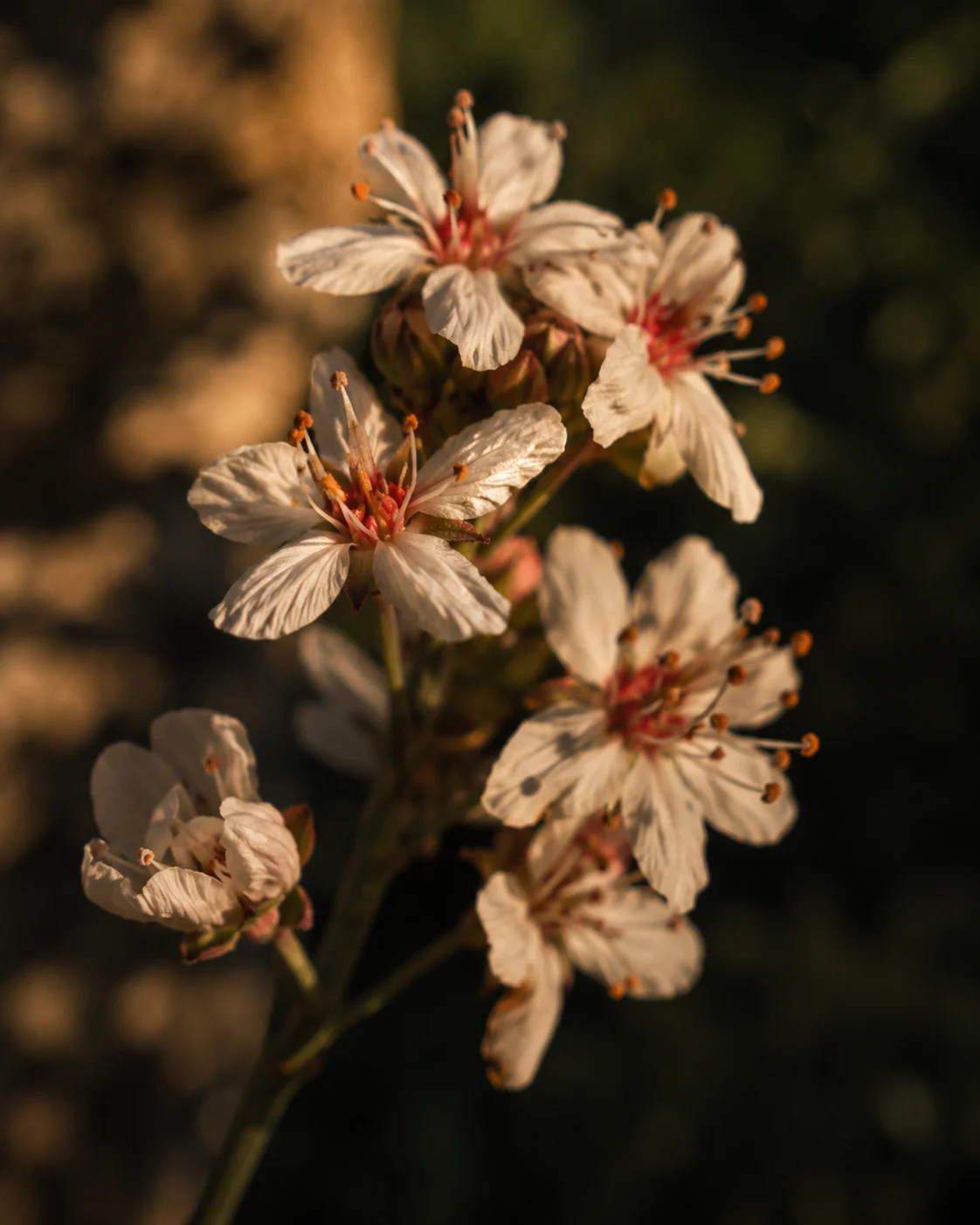 Blé noir blossom · Brittany
“Buckwheat forgives almost nothing about the weather — not the rain, not the drought, not even a wind from the wrong direction.”
— The House of Meski
Rarity
A flower that only works within a narrow window
Buckwheat nectar only becomes available to bees within a specific band of temperature and humidity — miss those conditions for even a few days during the bloom, and the harvest for that year is effectively decided.
Why it cannot scale
Even a healthy field can give almost no honey in a year when the humidity never quite lines up.
Beekeeping
Hives moved for a single late-summer bloom
Beekeepers transhume their hives into buckwheat parcels specifically for this late-summer flowering, then move them out again once the brief window closes.
The practice
Extraction follows standard modern equipment — smoker, uncapping knife, extractor — the honey never heated beyond what it would naturally reach inside the hive.
Sensory reading
Liquorice, smoke, and a long memory
Texture
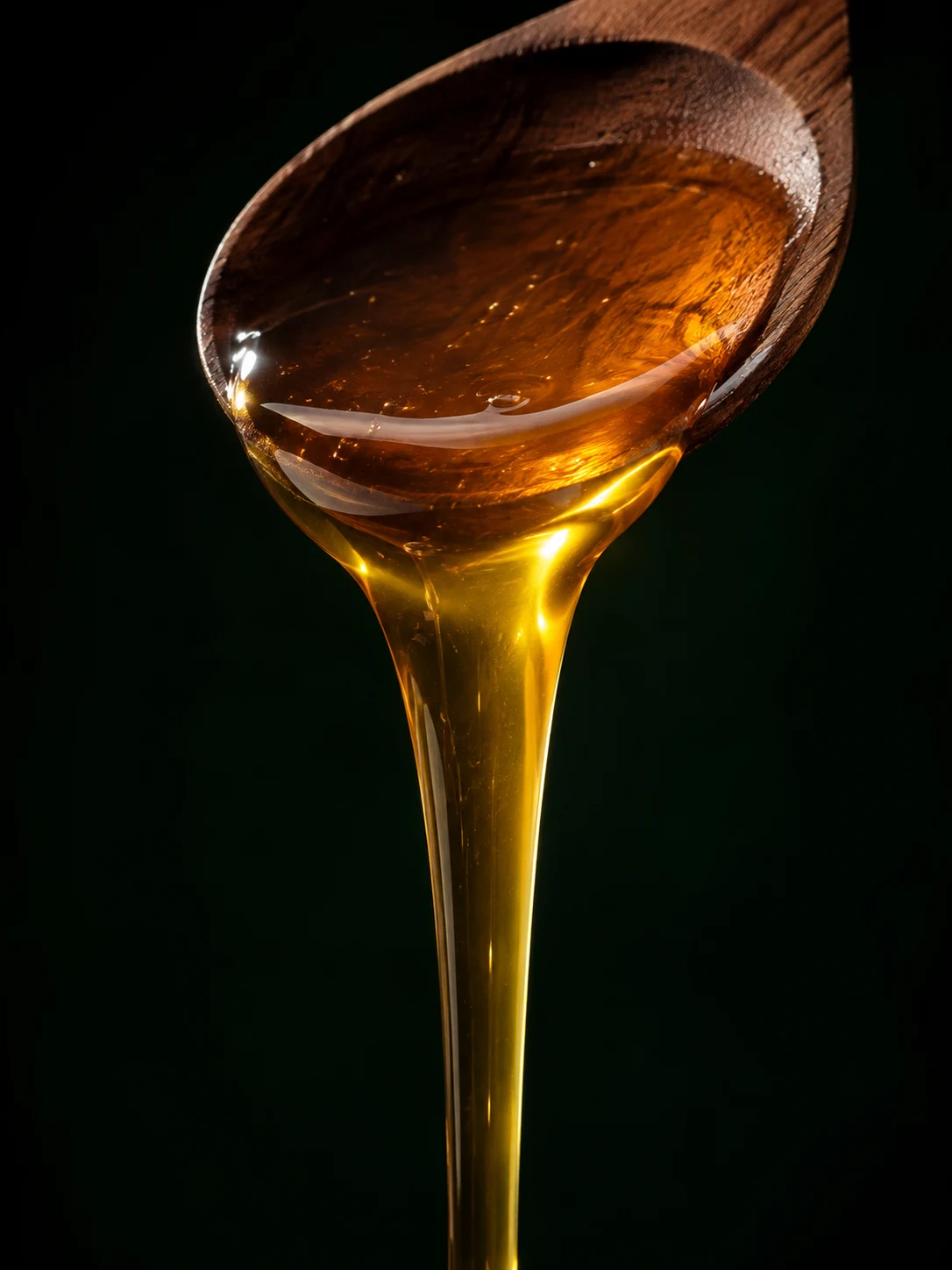
Thick and creamy, crystallising into a fine, slow-forming grain that keeps well at room temperature.
Harvest notebook
From the field — chasing a narrow weather window
Buckwheat’s flowering stretches from mid-July to mid-September, but the honey only comes on the days the air itself cooperates — warm, but not too warm, and thick with humidity.
Beekeepers who work this harvest watch the forecast as closely as the flowers, moving hives into position and hoping the narrow band of conditions holds for long enough to matter.
What survives that gamble is a honey that once nearly vanished with the crop itself — proof that reviving blé noir means reviving this alongside it.
Pairings
How to serve it
Strong and liquorice-toned — a honey for galettes as much as for the table.
Meski rating
An editorial reading, not a certification
Six criteria of the House, judged in tasting. This rating describes the appellation, is revised for each lot presented, and replaces no analysis or certificate.
Provenance
The Meski Confidence Chain
Rare honey is one of the most counterfeited foods in the world, and Sidr is no exception. Confidence does not come from a single certificate — it comes from a chain that stays continuous, from bloom to jar.
Read: How to read a rare honeyAnalysis describes the sample received by the laboratory. It does not automatically prove that every jar sold under the same name comes from that sample. A continuous chain does.
Continue the Atlas
An origin is never an island
Compare not to name a winner, but to understand what place, season and craft shift in the cup.