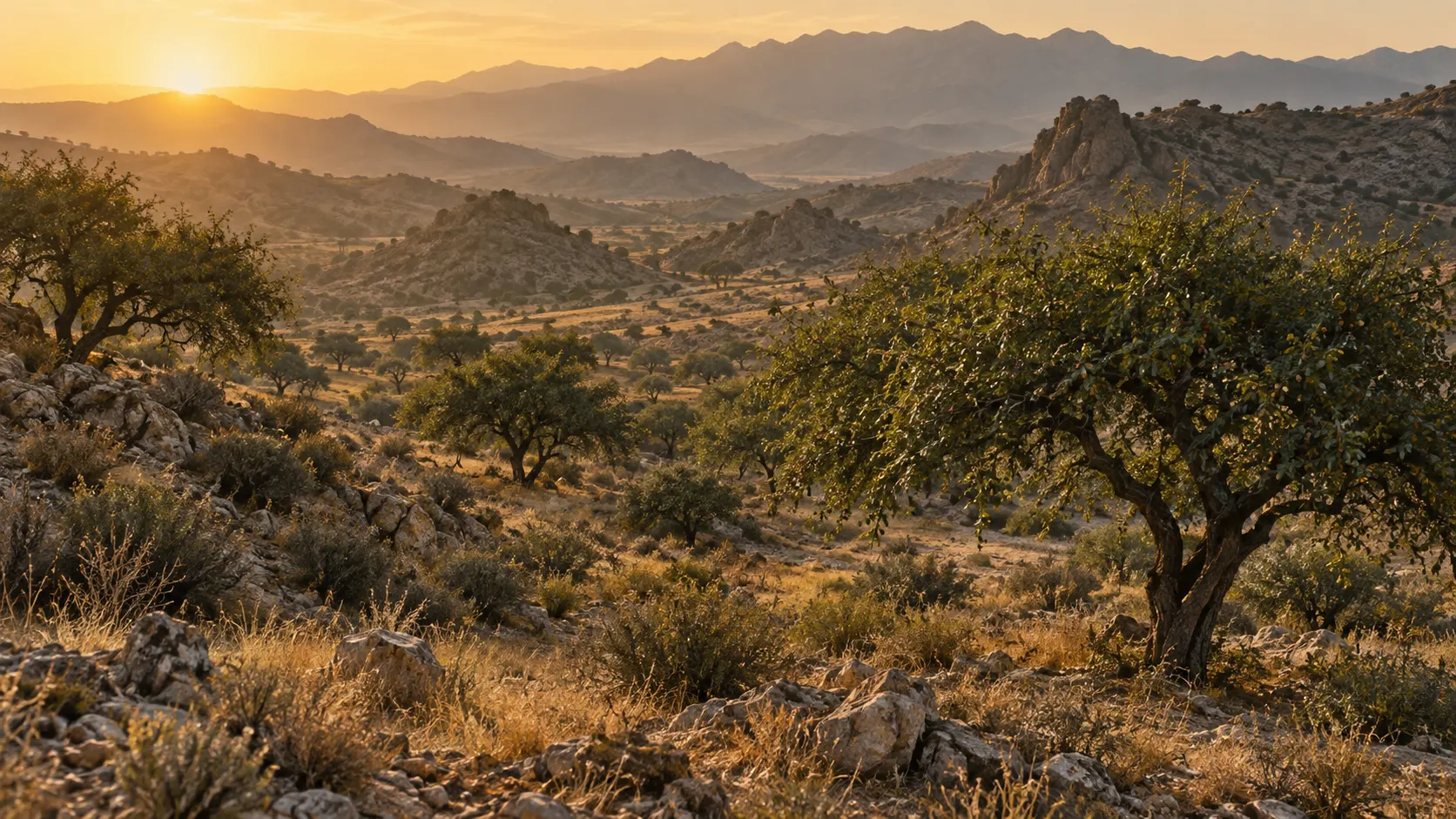
Pakistan · Khyber Pakhtunkhwa · Karak & Kohat
Karak & Kohat
Beri Honey
عسل البيري من كرك وكوهات
Pakistan’s dry southern Khyber Pakhtunkhwa gives a Beri honey far removed from the high-altitude Skardu Sidr already in the Atlas.
Karak and Kohat sit in dry, broken country south of Peshawar, where Ziziphus — locally Beri — survives heat, poor soils and long rainless spells. Its short autumn bloom gives one of Pakistan’s most prized honeys: dense, amber and built on warmth rather than altitude.
Terroir
Pakistan’s Sidr story, without the Karakoram
Karak and Kohat are neighbouring districts in southern Khyber Pakhtunkhwa. The land is arid and thinly wooded: low hills, scrub and rain-dependent farmland rather than the terraced high valleys around Skardu.
That distinction matters. The Atlas already holds a high-altitude Skardu Sidr; Karak and Kohat represent the other Pakistani tradition — low, dry Beri country where Ziziphus flowers once in autumn and gives a heavier, warmer honey.
| Location | Karak and Kohat, southern Khyber Pakhtunkhwa, Pakistan |
| Landscape | Dry low hills, scrub and rain-dependent farmland |
| Floral source | Ziziphus / Beri blossom; several local Ziziphus species occur in the region |
| Harvest | Autumn, with October a key harvest month |
| Character | Amber to deep amber, dense and long-finishing |
"The same country can give Sidr from a 2,200-metre valley and Beri from dry low hills. Geography is the difference."
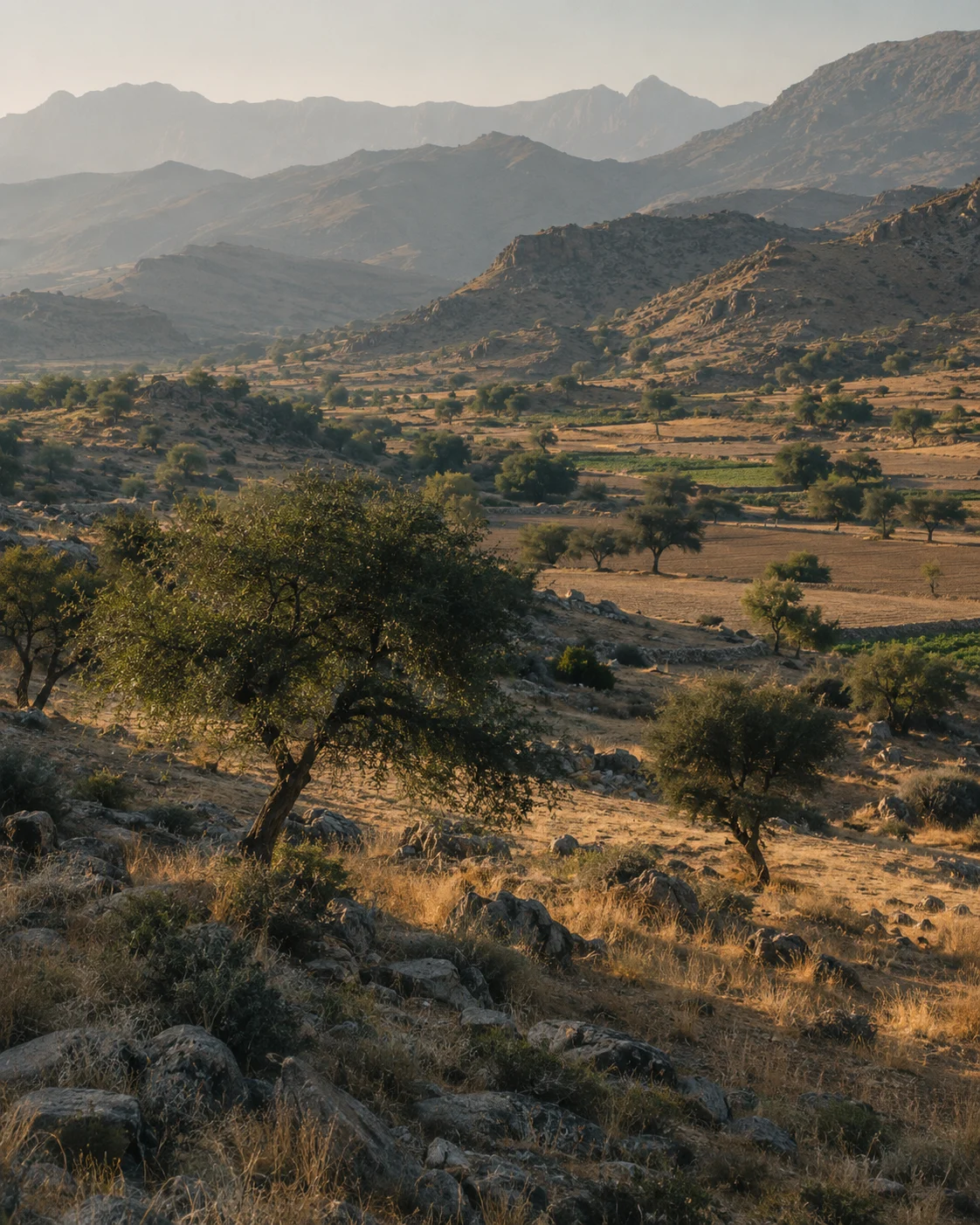 Karak & Kohat · Southern Khyber Pakhtunkhwa
Atlas distinction
This is not the Skardu fiche
Meski’s existing Pakistani Sidr comes from Skardu in Gilgit-Baltistan and is shaped by altitude. Karak & Kohat Beri comes from the dry south of Khyber Pakhtunkhwa. Keeping both makes sense precisely because they show how different two Pakistani Ziziphus honeys can be.
Tradition
A regional reputation built around one short bloom
Beri honey is among the names Pakistani buyers ask for directly. In Karak and Kohat, that reputation is tied to the autumn Ziziphus flow rather than to an estate or a single brand.
The useful window is short and seasonal. That is the honest source of scarcity: not a secret process, but a hardy tree flowering for only a few weeks in country where nectar abundance is never guaranteed.
Dry-country tree
Dry-country tree
Beri survives heat, poor soils and long dry spells.
Autumn bloom
Autumn bloom
A short flowering window concentrates the year’s main Ziziphus flow.
Regional trade
Regional trade
Karak and Kohat become shorthand for premium Pakistani Beri honey.
Today
Today
Better origin labelling is beginning to separate district, floral source and lot.
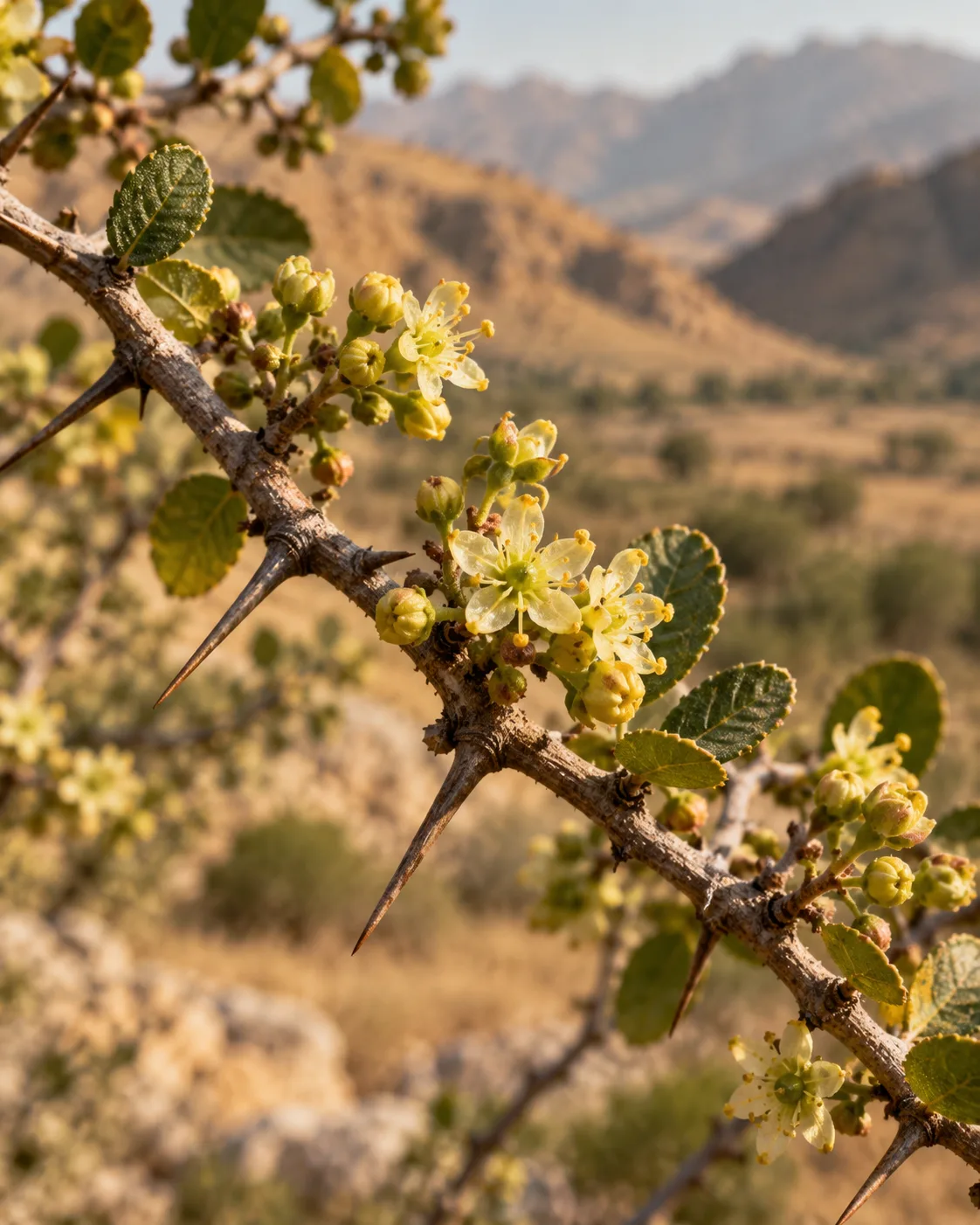 Floral source · Pakistan
"Not every Pakistani Sidr comes from the high mountains."
— The House of Meski
Rarity
Limited by weeks, not by marketing
The tree flowers once a year and the useful nectar window is short. Weather during those few weeks decides whether a season feels generous or disappointing.
Why it matters
The region’s value is strongest when “Beri” and “Karak/Kohat” remain attached to each other.
Beekeeping
Moving to where the Beri actually flowers
Pakistani commercial beekeeping is often migratory. Colonies are moved with major nectar flows, and the Beri season is valuable enough to justify the journey into the dry KPK belt.
The practice
For a premium lot, the key question is not whether the jar says “Sidr”, but whether the district, flowering window and batch remain traceable.
Sensory reading
Warm, dense and unmistakably lowland
Texture
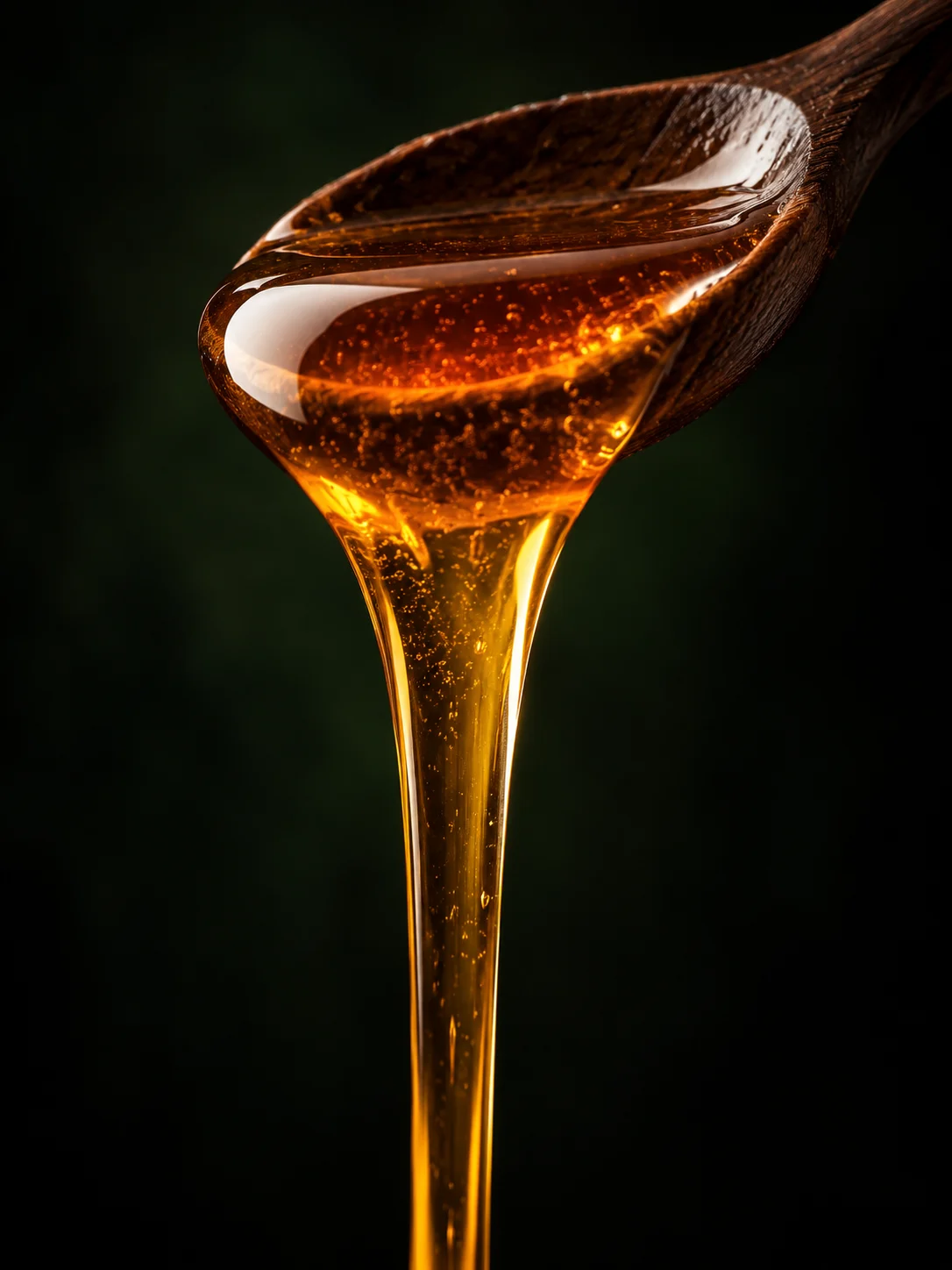
Dense and weighty, noticeably heavier than the pale Skardu profile.
Harvest notebook
From the field — Pakistan’s second Ziziphus landscape
The temptation would be to merge every Pakistani “Sidr” into one page. That would erase the point of an Atlas.
Skardu is a cold, high valley story. Karak and Kohat are a dry foothill story. Their only obvious common language is Ziziphus.
Placed side by side, the two pages make a stronger argument for terroir than either could make alone.
Pairings
How to serve it
Serve it where a dense, warm honey can remain visible rather than disappearing into sweetness.
Meski rating
An editorial reading, not a certification
Six criteria of the House, judged in tasting. This rating describes the appellation, is revised for each lot presented, and replaces no analysis or certificate.
Provenance
The Meski Confidence Chain
Rare honey is one of the most counterfeited foods in the world, and named floral origins are no exception. Confidence does not come from one adjective or one certificate — it comes from a chain that stays continuous, from bloom to jar.
Read: How to read a rare honeyAnalysis describes the sample received by the laboratory. It does not automatically prove that every jar sold under the same name comes from that sample. A continuous chain does.
Continue the Atlas
An origin is never an island
Compare not to name a winner, but to understand what place, season and craft shift in the cup.