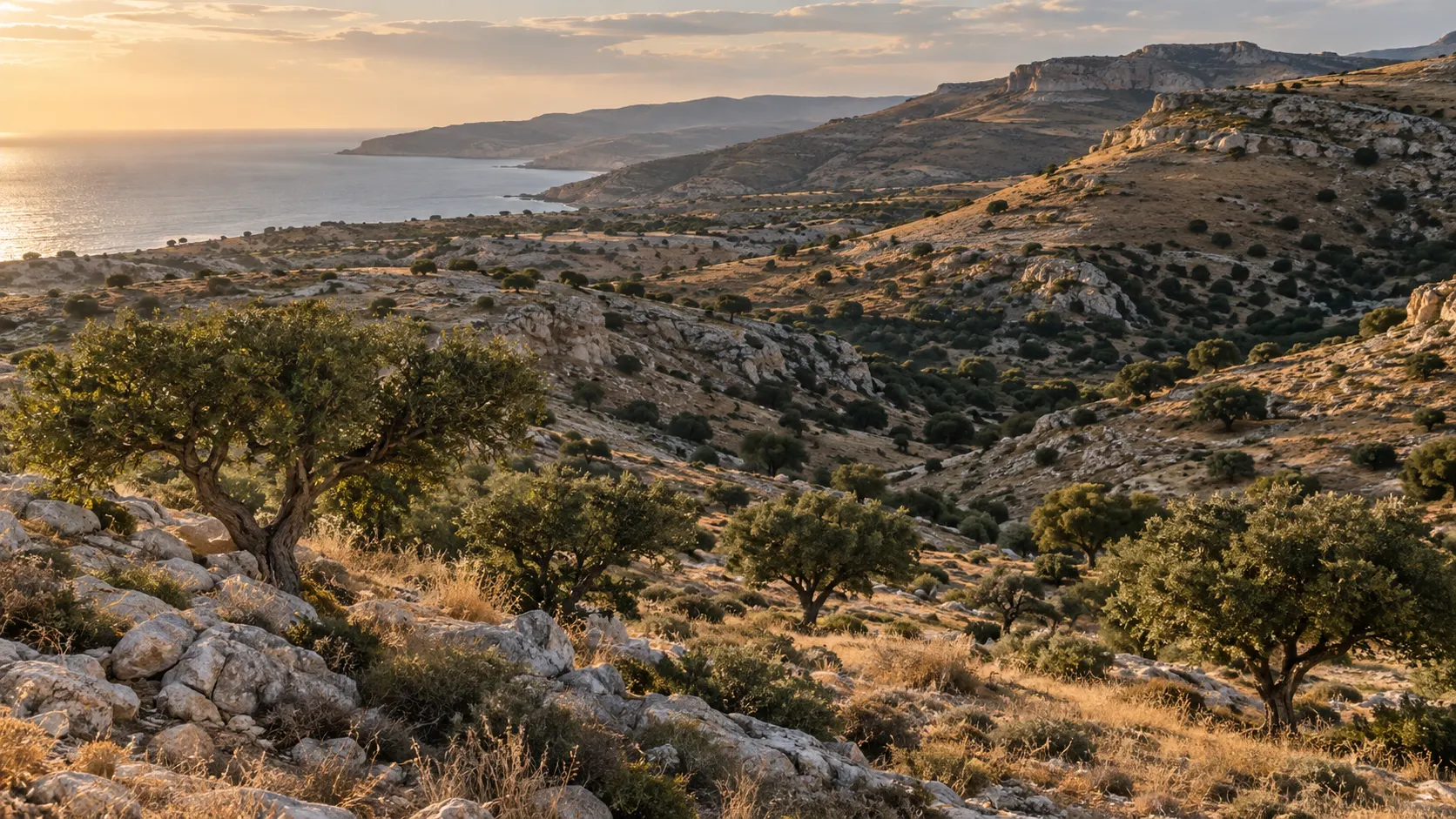
Libya · Western Region · Sidr Belt
Western Libyan
Sidr Honey
عسل السدر الليبي
A North African Ziziphus spina-christi honey now beginning to acquire the analytical map that its reputation has long lacked.
Western Libya has a genuine Sidr honey tradition, but until recently it was poorly characterised outside the country. A 2026 study sampled Zawia, Tarhuna, Sabratha and Qasr Khiar and found Ziziphus spina-christi pollen predominating at 60–67% — a useful scientific baseline for a honey already prized locally.
Terroir
The hills east and west of Tripoli, mapped through pollen
Western Libyan beekeepers work a sequence of honey flows through spring and early summer. Sidr becomes important from May into June, when colonies are moved toward hilly country and wild Ziziphus spina-christi comes into bloom.
Recent analysis confirms that this is not merely a trade name. Samples from four western regions showed Sidr pollen as the dominant botanical signal, while also revealing measurable differences between locations.
| Location | Zawia, Tarhuna, Sabratha and Qasr Khiar, Western Libya |
| Landscape | Mediterranean-edge hills and semi-arid interior |
| Floral source | Ziziphus spina-christi |
| Harvest | May to June in the western Sidr flow |
| Pollen | 60–67% Sidr pollen in the 2026 regional study |
"A honey can have an old reputation and still be waiting for its first good scientific map."
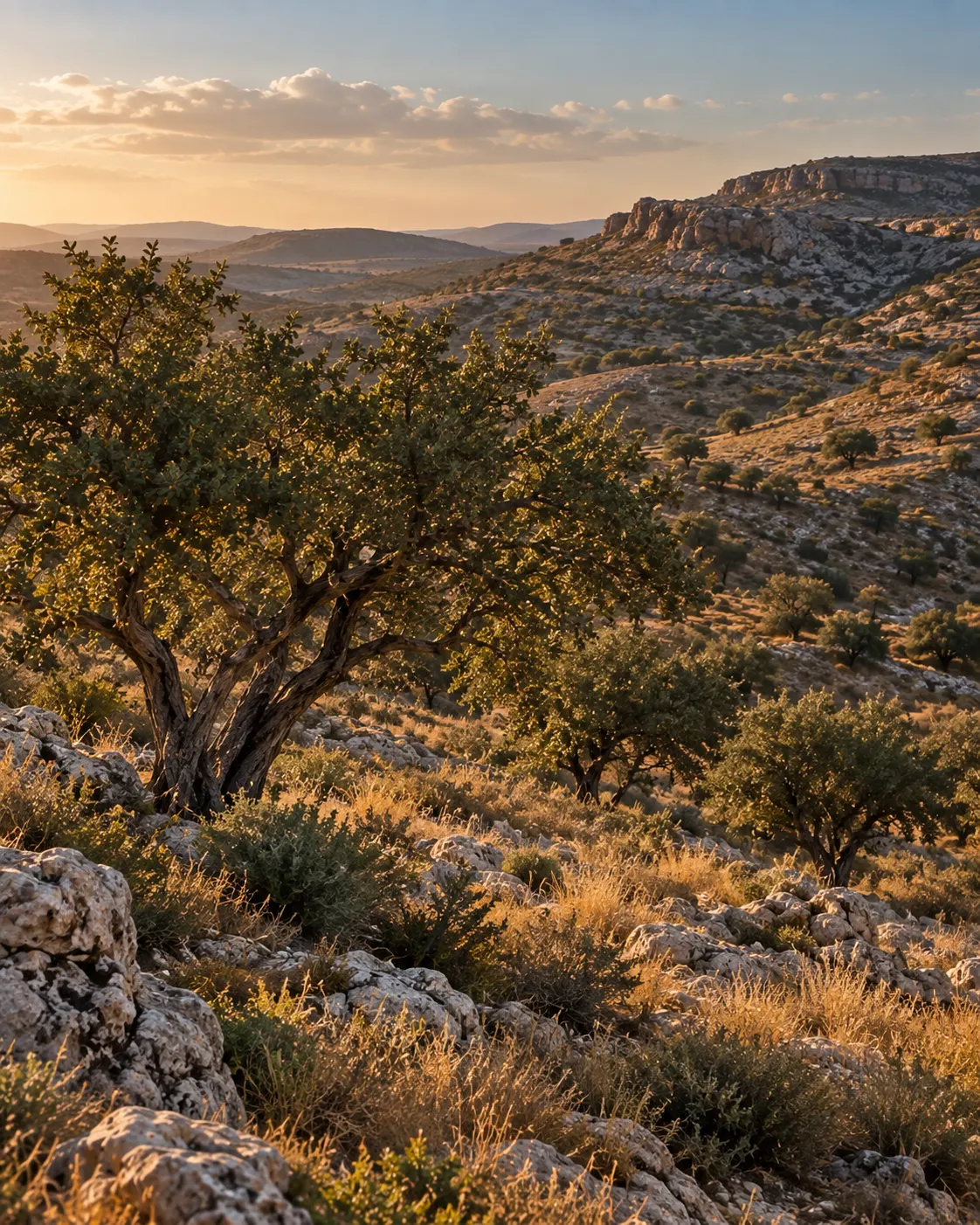 Western Libya · Zawia · Tarhuna · Sabratha · Qasr Khiar
What changed in 2026
Libyan Sidr became easier to describe honestly
The new regional study does not prove that every Libyan jar is authentic. It does something more useful: it establishes real reference data from named western production areas and shows that geography inside Libya matters too.
Tradition
A premium local honey that rarely needed export marketing
Libyan honey culture has historically been domestic and direct. Beekeepers often sell to customers without the branding infrastructure seen in Gulf luxury honey markets.
Sidr sits near the top of the western honey hierarchy. Its value comes from the wild bloom and seasonal migration of colonies, not from attempting to imitate Yemeni packaging or prices.
Spring
Spring
Western colonies build through early floral flows.
May–June
May–June
Beekeepers move toward Sidr-rich hills for the premium Ziziphus flow.
Local trade
Local trade
Sidr earns one of the highest prices among western Libyan honeys.
2026
2026
A four-region pollen and physicochemical study establishes a modern baseline.
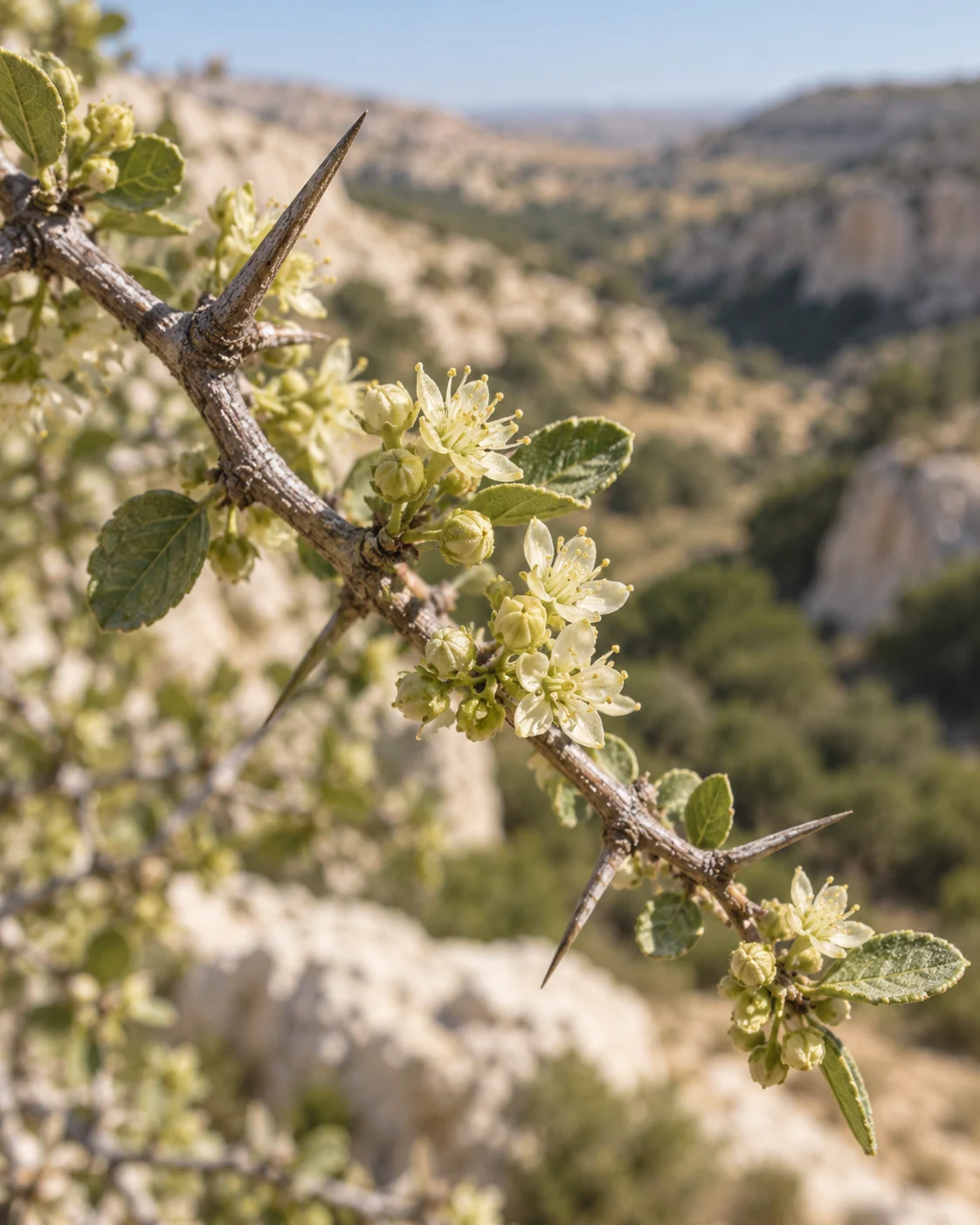 Floral source · Libya
"Libyan Sidr has terroirs inside the terroir."
— The House of Meski
Rarity
Not one Libyan profile, but several western expressions
Zawia, Tarhuna, Sabratha and Qasr Khiar did not produce identical analytical profiles. That variability is exactly what an Atlas should preserve rather than flatten.
Why it matters
The next step is not stronger adjectives — it is more seasons, more samples and better geographic traceability.
Beekeeping
A migratory rhythm across western Libya
Western Libyan beekeeping follows sequential floral flows. Colonies move when the Sidr starts, then move again as other plants such as thyme take over.
The practice
The practice makes timing central. A jar labelled Sidr needs to correspond to the weeks when Ziziphus truly dominated the forage around the apiary.
Sensory reading
Warm Sidr with a Mediterranean edge
Texture
Viscous and full, with enough regional variation that no single texture should be treated as universal.
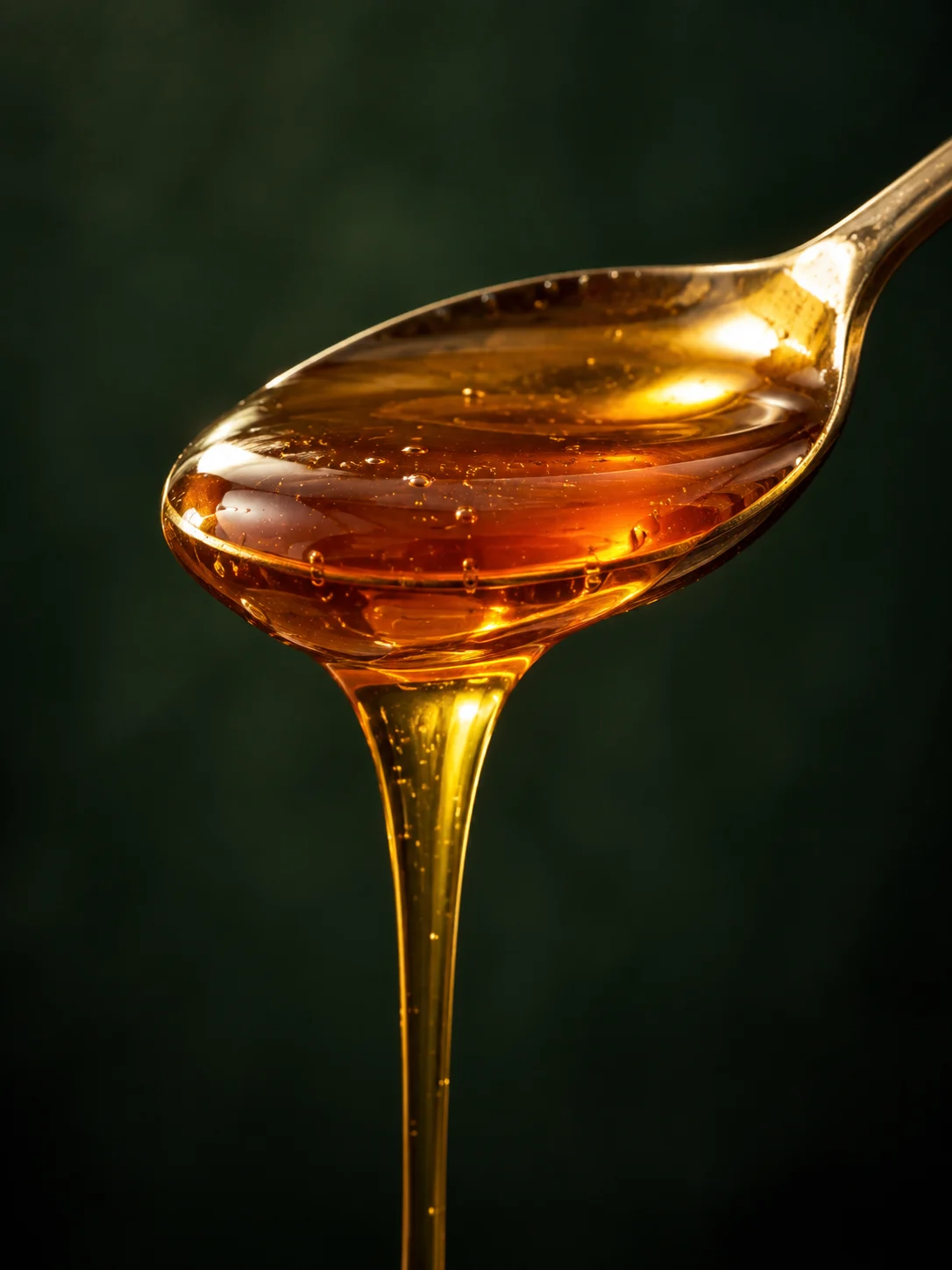
Harvest notebook
From the field — the value of a baseline
The 2026 study is preliminary by its own description. That is a strength, not a weakness, for responsible editorial work.
It confirms monofloral Sidr in the sampled regions and shows significant regional differences in several physicochemical measures.
The Atlas can therefore say something meaningful without pretending the scientific story is finished: Western Libya is a real Sidr origin, and its internal terroirs deserve more work.
Pairings
How to serve it
A warm, full Sidr that can handle both savoury and traditional sweet pairings.
Meski rating
An editorial reading, not a certification
Six criteria of the House, judged in tasting. This rating describes the appellation, is revised for each lot presented, and replaces no analysis or certificate.
Provenance
The Meski Confidence Chain
Rare honey is one of the most counterfeited foods in the world, and named floral origins are no exception. Confidence does not come from one adjective or one certificate — it comes from a chain that stays continuous, from bloom to jar.
Read: How to read a rare honeyAnalysis describes the sample received by the laboratory. It does not automatically prove that every jar sold under the same name comes from that sample. A continuous chain does.
Continue the Atlas
An origin is never an island
Compare not to name a winner, but to understand what place, season and craft shift in the cup.