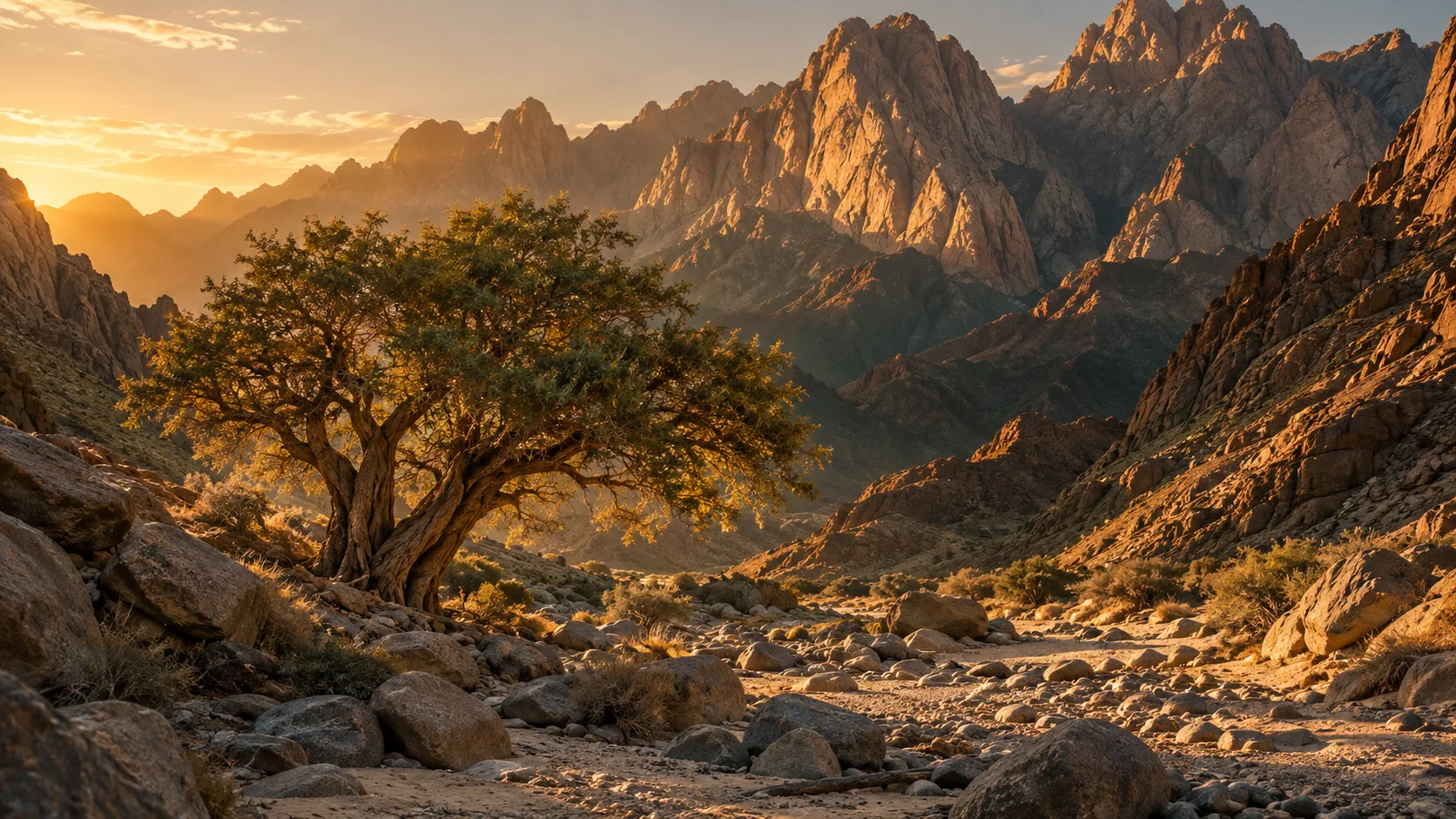
Egypt · Sinai Peninsula · Desert Mountains
Sinai
Sidr Honey
عسل السدر السيناوي
Egypt’s desert Sidr belongs to a landscape where the Arabian honey belt meets Sinai granite, Bedouin routes and an ancient tree with an Egyptian history.
Ziziphus spina-christi grows across Sinai and Egypt’s desert regions, and genuine Egyptian Sidr honey is produced from its blossom. Scientific work has confirmed monofloral Sidr honey sourced from Sinai, while South Sinai has also hosted dedicated Sidr apiary projects around Abu Rudeis.
Terroir
Where Egypt meets the Arabian Sidr belt
Sinai is a peninsula of severe contrasts: coastal desert, sandstone plateaus and granite mountains rising sharply from dry wadis. Sidr trees occupy the places where water, however briefly, allows them to persist.
For honey, this makes Sinai more useful than the generic label “Egyptian Sidr”. It gives the tree a specific desert geography and separates a premium regional honey from Egypt’s much larger clover-honey economy.
| Location | Sinai Peninsula, Egypt |
| Landscape | Desert wadis, mountain foothills and arid cultivated pockets |
| Floral source | Ziziphus spina-christi |
| Harvest | Autumn, commonly October–November |
| Evidence | Monofloral Egyptian Sidr from the Sinai area has been pollen-confirmed in research |
"Sinai turns Egyptian Sidr from a country name into a place you can actually picture."
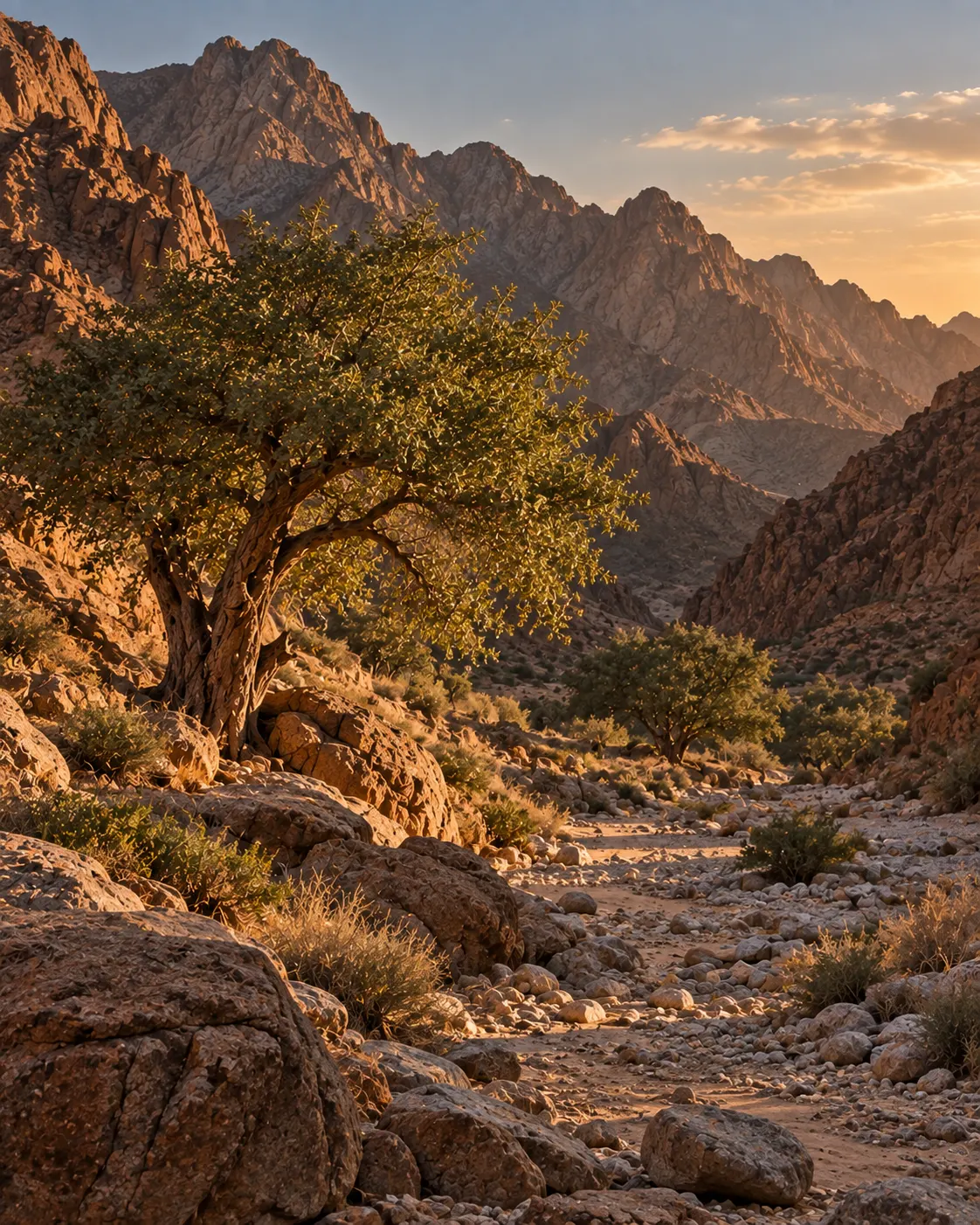 Sinai Peninsula · South Sinai desert mountains
A modern landmark
South Sinai has planted Sidr with honey in mind
At Abu Rudeis, an official South Sinai project opened with hundreds of hives and hundreds of Sidr trees. It is a contemporary example of how an old desert species can become part of planned regional apiculture without losing its geographic identity.
Tradition
An ancient Egyptian tree in a modern premium category
Ziziphus spina-christi has a long history in Egypt well beyond honey. The tree appears in ancient Egyptian medicinal traditions and remains familiar across desert and Nile landscapes.
The premium Sidr market is newer. What makes the Sinai version credible is not resemblance to Yemen, but the fact that the same species grows in a distinct Egyptian desert ecology with its own production story.
Ancient Egypt
Ancient Egypt
Ziziphus spina-christi appears in old Egyptian plant and medicinal traditions.
Bedouin landscape
Bedouin landscape
Sidr persists around desert wadis and settled water points.
Modern apiculture
Modern apiculture
Sinai producers develop named mountain and desert Sidr lots.
2021 onward
2021 onward
South Sinai projects formalise dedicated Sidr planting and apiary infrastructure.
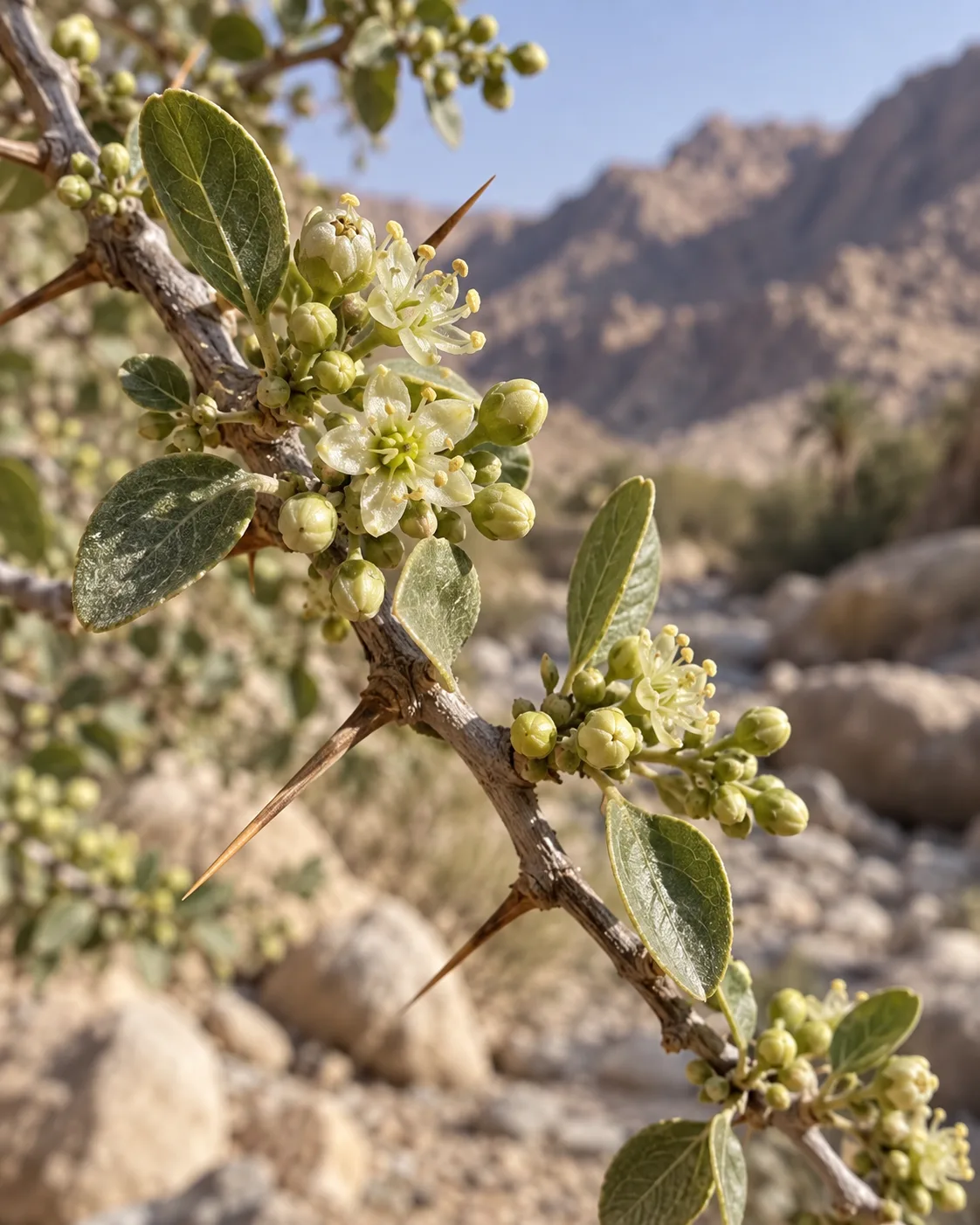 Floral source · Egypt
"In Sinai, Sidr is Egyptian before it is compared with anyone else."
— The House of Meski
Rarity
A premium honey inside a much larger honey country
Egypt produces honey at scale, but Sinai Sidr occupies a narrower category: desert-grown Ziziphus, seasonal flowering and smaller regional volumes than the clover honeys of the Nile Delta.
Why it matters
Its strongest identity is Sinai itself, not an attempt to imitate Yemeni Sidr.
Beekeeping
Desert forage with a planned future
Sinai beekeeping can combine older local knowledge with modern apiary projects. The tree remains drought-adapted, but hive placement and water access increasingly shape production.
The practice
The result is a honey whose authenticity should be judged by floral and geographic evidence, not by how closely its colour resembles another country’s Sidr.
Sensory reading
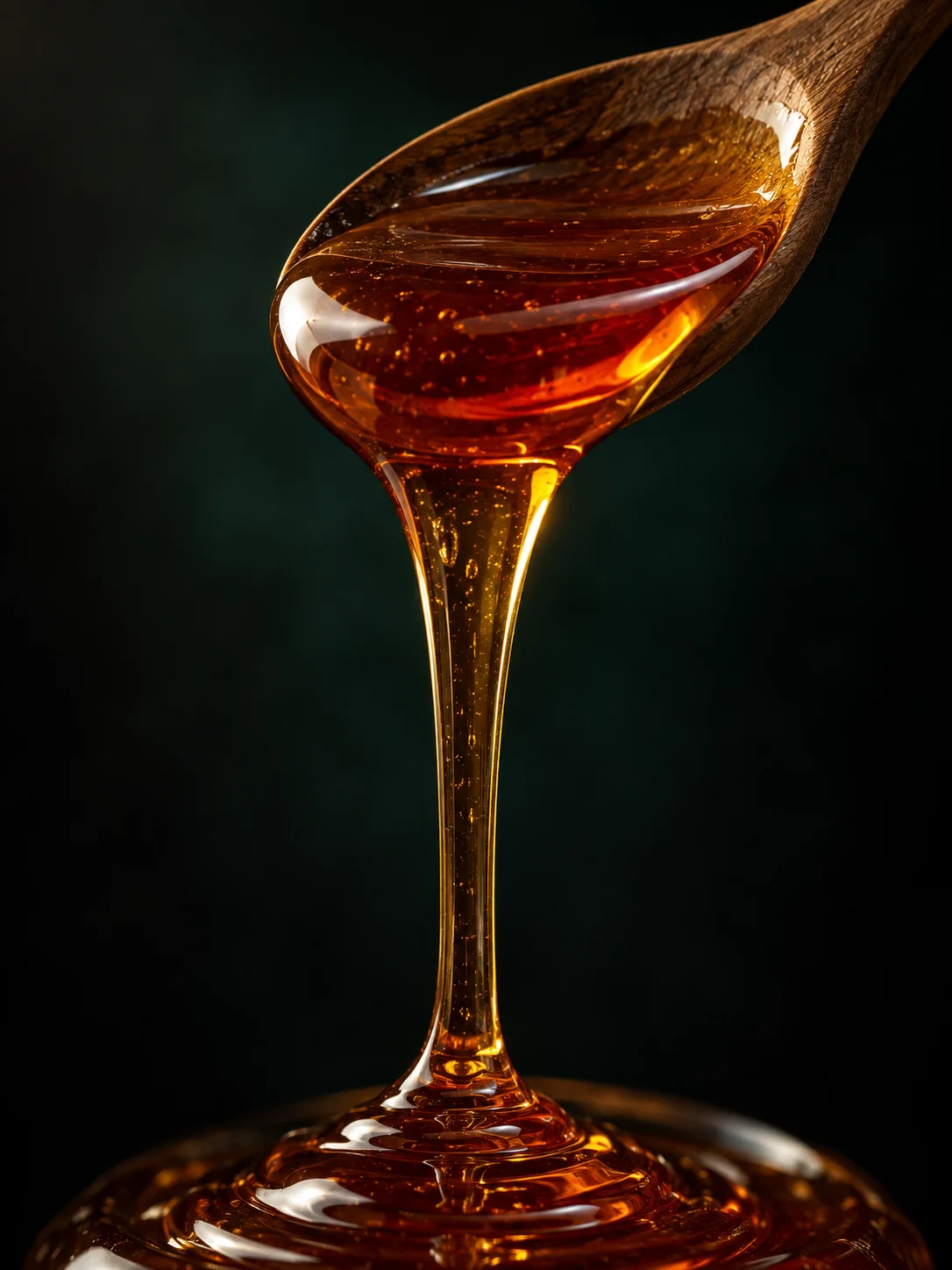
Dark amber, warm and distinctly Egyptian
Texture
Thick and smooth, with crystallisation behaviour that can vary materially from lot to lot.
Harvest notebook
From the field — do not make Egypt a substitute story
Egyptian Sidr is often marketed by comparison: cheaper than Yemen, darker than clover, closer to Gulf taste. That framing undersells it.
Sinai already provides everything a proper Atlas fiche needs — a named geography, the right tree, documented apiculture and monofloral evidence.
The more precisely the origin is described, the less the honey needs to borrow prestige from somewhere else.
Pairings
How to serve it
Its rounded warmth works with both Egyptian breakfast foods and simple tasting formats.
Meski rating
An editorial reading, not a certification
Six criteria of the House, judged in tasting. This rating describes the appellation, is revised for each lot presented, and replaces no analysis or certificate.
Provenance
The Meski Confidence Chain
Rare honey is one of the most counterfeited foods in the world, and named floral origins are no exception. Confidence does not come from one adjective or one certificate — it comes from a chain that stays continuous, from bloom to jar.
Read: How to read a rare honeyAnalysis describes the sample received by the laboratory. It does not automatically prove that every jar sold under the same name comes from that sample. A continuous chain does.
Continue the Atlas
An origin is never an island
Compare not to name a winner, but to understand what place, season and craft shift in the cup.