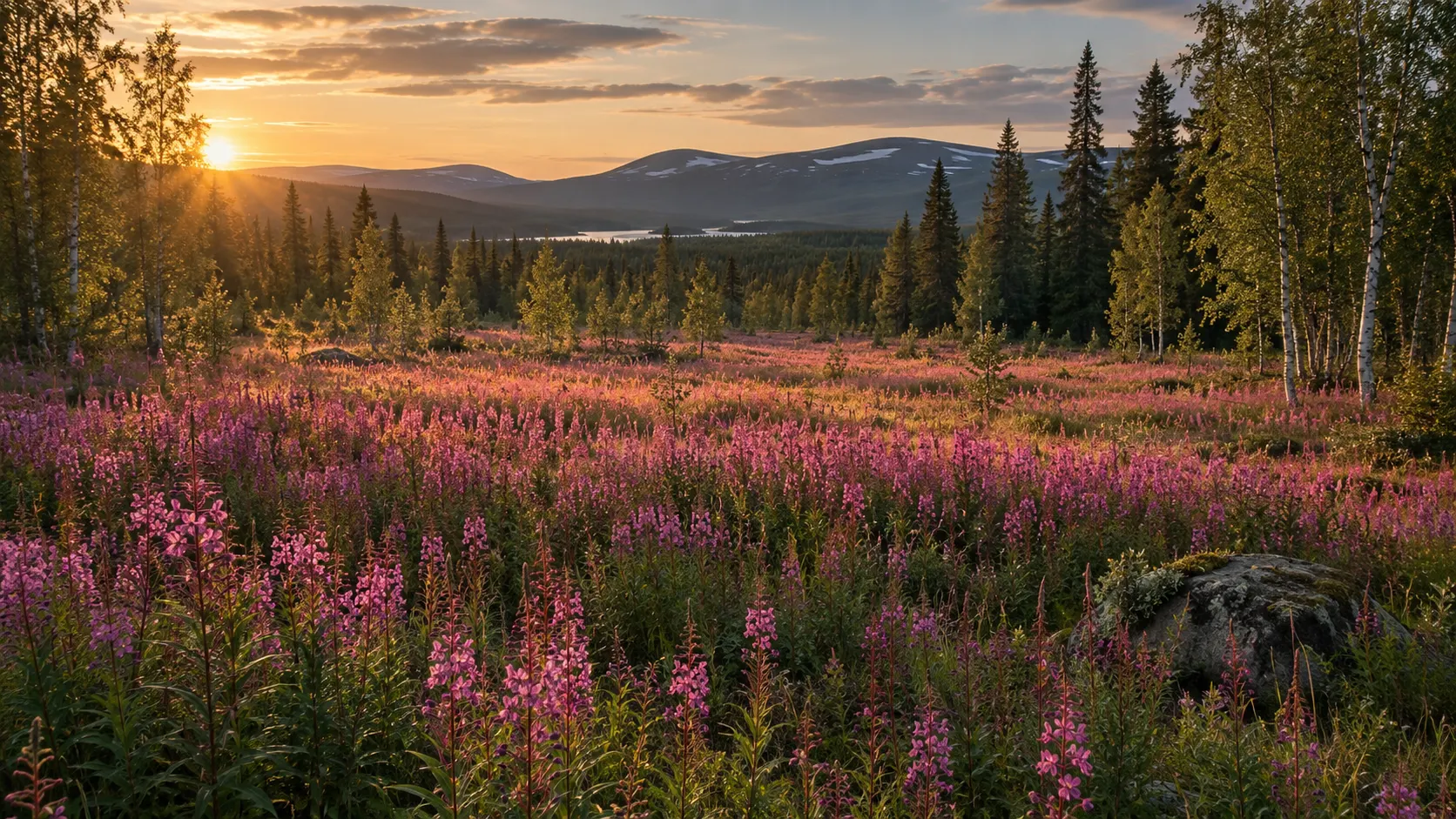
Finland · Lapland · Northern Forests
Lapland
Fireweed Honey
عسل الإبيلوب الفنلندي
Almost colourless, slow to crystallise and harvested under the long northern light — a honey that looks too delicate for the plant that follows fire.
Fireweed — Chamerion angustifolium — is a pioneer of open ground, clearings and disturbed forest. Across northern Finland it blooms through the compressed summer, and in the right year bees can turn its pink flower into a nearly colourless honey with hints of vanilla and lemon.
Terroir
A flower of disturbance under endless summer light
Fireweed is one of the first plants to colonise open ground after clearing or fire. In Lapland and northern Finland it can form large pink stands along forest edges and disturbed land during the short summer.
The northern paradox is that the season is brief but the days are long. When warmth and moisture align, bees can work the flower intensely; when weather turns, an entire year’s varietal crop may almost disappear.
| Location | Lapland and other northern Finnish forest areas |
| Landscape | Boreal clearings, open forest and pioneer vegetation |
| Floral source | Fireweed / willowherb — Chamerion angustifolium |
| Harvest | Short northern summer, chiefly July–August |
| Reliability | A varietal crop is not guaranteed every year |
"The summer is short enough to be precious, and long enough each day for the bees to use every hour."
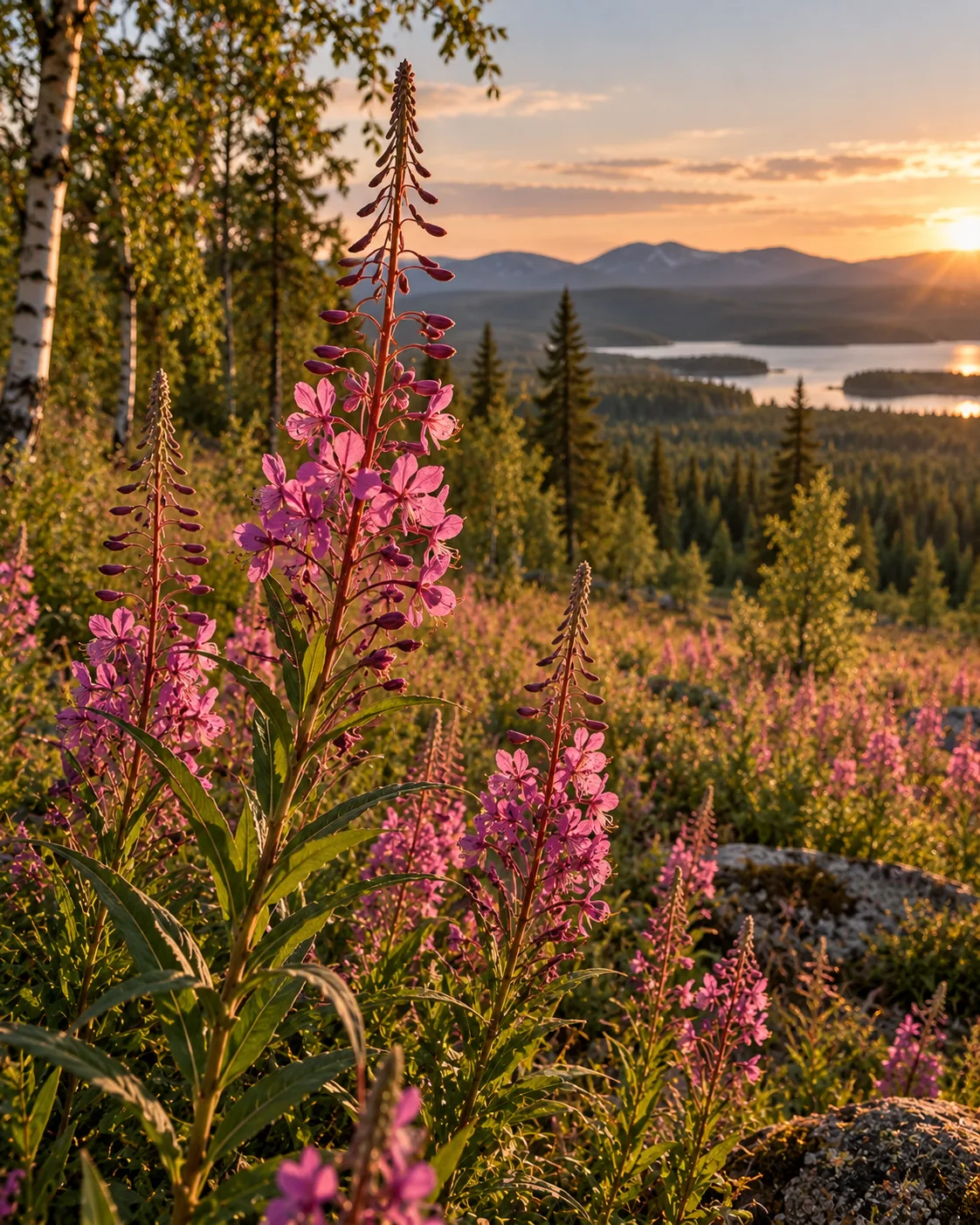 Lapland · Northern forest clearings
The northern trick
Pale honey that refuses to set quickly
Most Finnish honeys crystallise readily. Fireweed is the exception: its sugar balance is high enough in fructose that it can remain liquid for a long time. The visual delicacy is part of its botanical fingerprint.
Tradition
A speciality produced only when summer cooperates
Fireweed may be common as a plant, but pure Fireweed honey is not common as a jar. A strong stand of flowers does not guarantee nectar, and northern weather can close the crop before the bees have made enough to separate it.
That uncertainty gives the honey a very Finnish kind of rarity: seasonal, quiet and dependent on conditions rather than spectacle.
Spring
Spring
Snow retreats and boreal ground opens rapidly.
June
June
Fireweed shoots rise across clearings and disturbed forest.
July–August
July–August
Pink flower spikes become a major nectar opportunity.
Good years only
Good years only
Enough concentrated forage exists to bottle a distinct varietal honey.
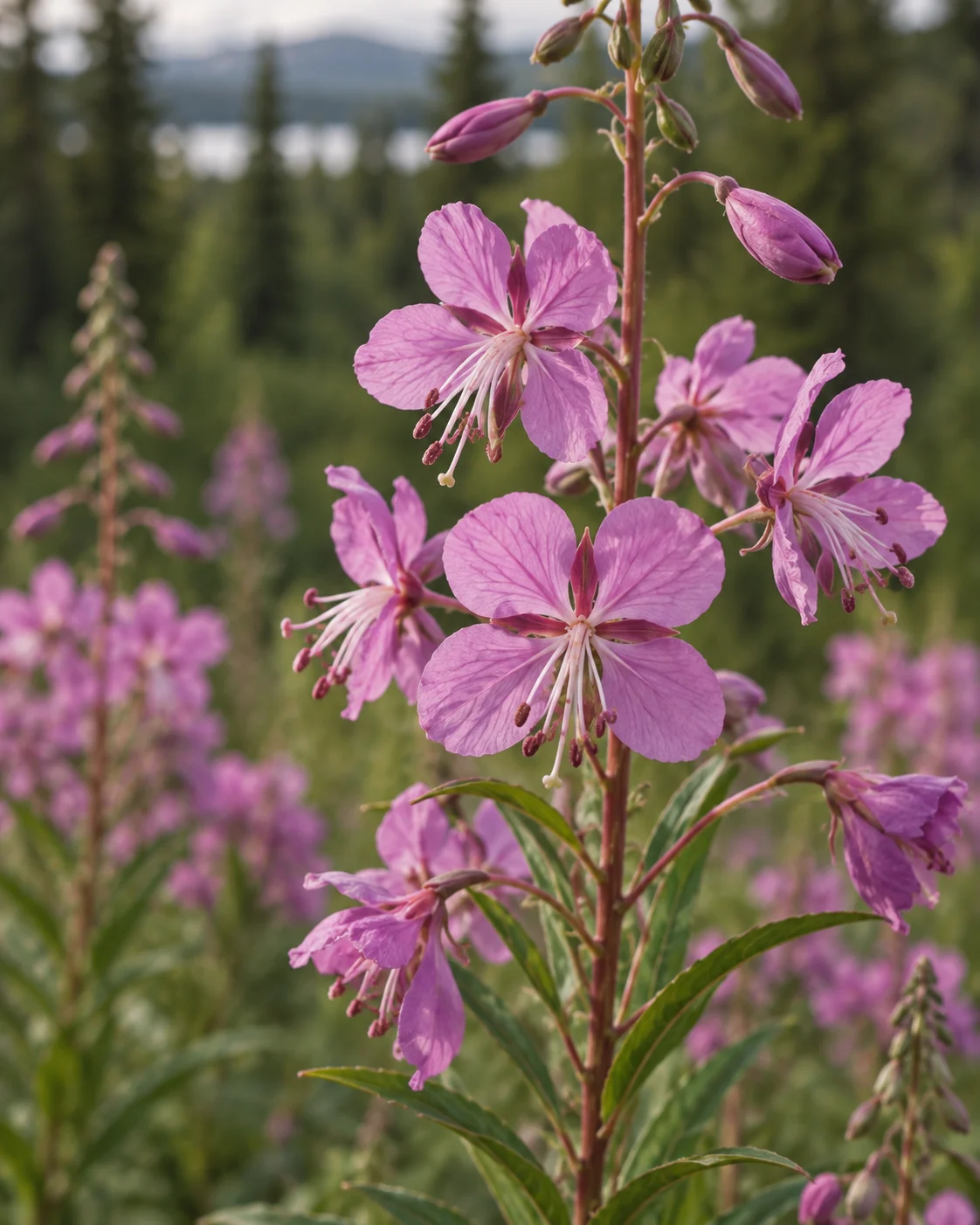 Floral source · Finland
"The northern summer is short, but its days are long enough for honey."
— The House of Meski
Rarity
Common flower, uncommon varietal honey
Fireweed can cover a clearing and still fail to give a separable honey if temperature, rain or competing bloom changes the bees’ choices. The rarity is in the convergence of flower, weather and timing.
Why it matters
In some years, the crop is barely there at all.
Beekeeping
Making use of every long day
Northern bees work within a compressed annual cycle. Once the fireweed flow opens, long daylight can support sustained foraging, but cool rain can interrupt it just as quickly.
The practice
The beekeeper’s challenge is to identify a strong enough stand and extract before later summer flora muddies the unusually pale profile.
Sensory reading
Vanilla, lemon and almost no colour
Texture
Fluid and silky, with a marked tendency to remain runny longer than most Finnish honeys.
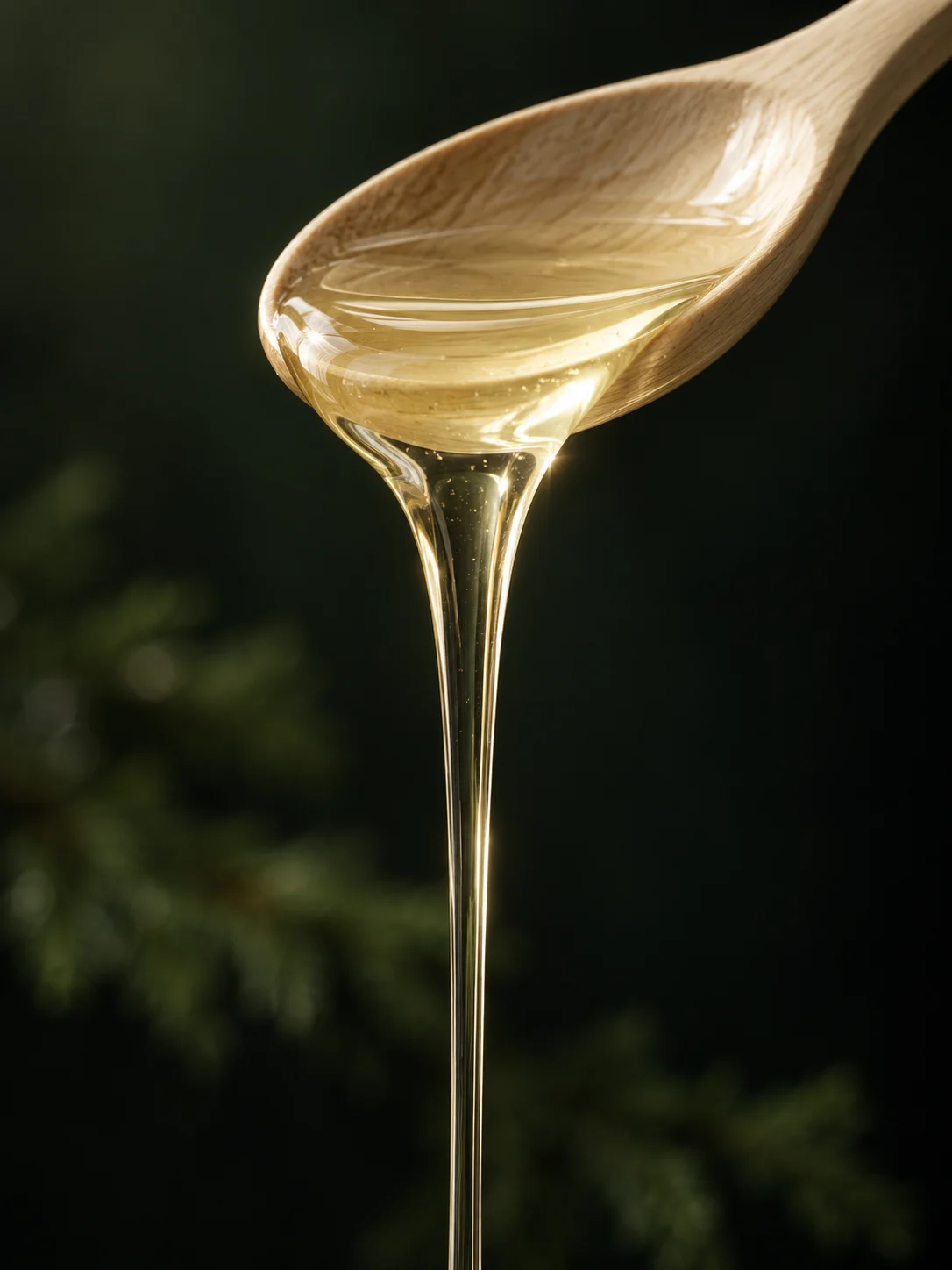
Harvest notebook
From the field — rarity without darkness
Rare honey is often imagined as thick, dark and intense. Fireweed breaks that visual rule.
Its scarcity can look almost transparent: a pale honey from a plant that grows abundantly, but only becomes varietal when a northern summer aligns closely enough.
That makes it a useful Atlas corrective. Rarity can come from delicacy and weather, not only from remoteness or price.
Pairings
How to serve it
Keep pairings pale and quiet so the honey’s vanilla-citrus line is not lost.
Meski rating
An editorial reading, not a certification
Six criteria of the House, judged in tasting. This rating describes the appellation, is revised for each lot presented, and replaces no analysis or certificate.
Provenance
The Meski Confidence Chain
Rare honey is one of the most counterfeited foods in the world, and named floral origins are no exception. Confidence does not come from one adjective or one certificate — it comes from a chain that stays continuous, from bloom to jar.
Read: How to read a rare honeyAnalysis describes the sample received by the laboratory. It does not automatically prove that every jar sold under the same name comes from that sample. A continuous chain does.
Continue the Atlas
An origin is never an island
Compare not to name a winner, but to understand what place, season and craft shift in the cup.