Finland · Northern Ostrobothnia · Muhos
Finnish
Lingonberry Honey
عسل عنب الثور الفنلندي
A red-toned forest honey from a plant better known for tart berries — with toffee, citrus and one of Finland’s most recognisable varietal signatures.
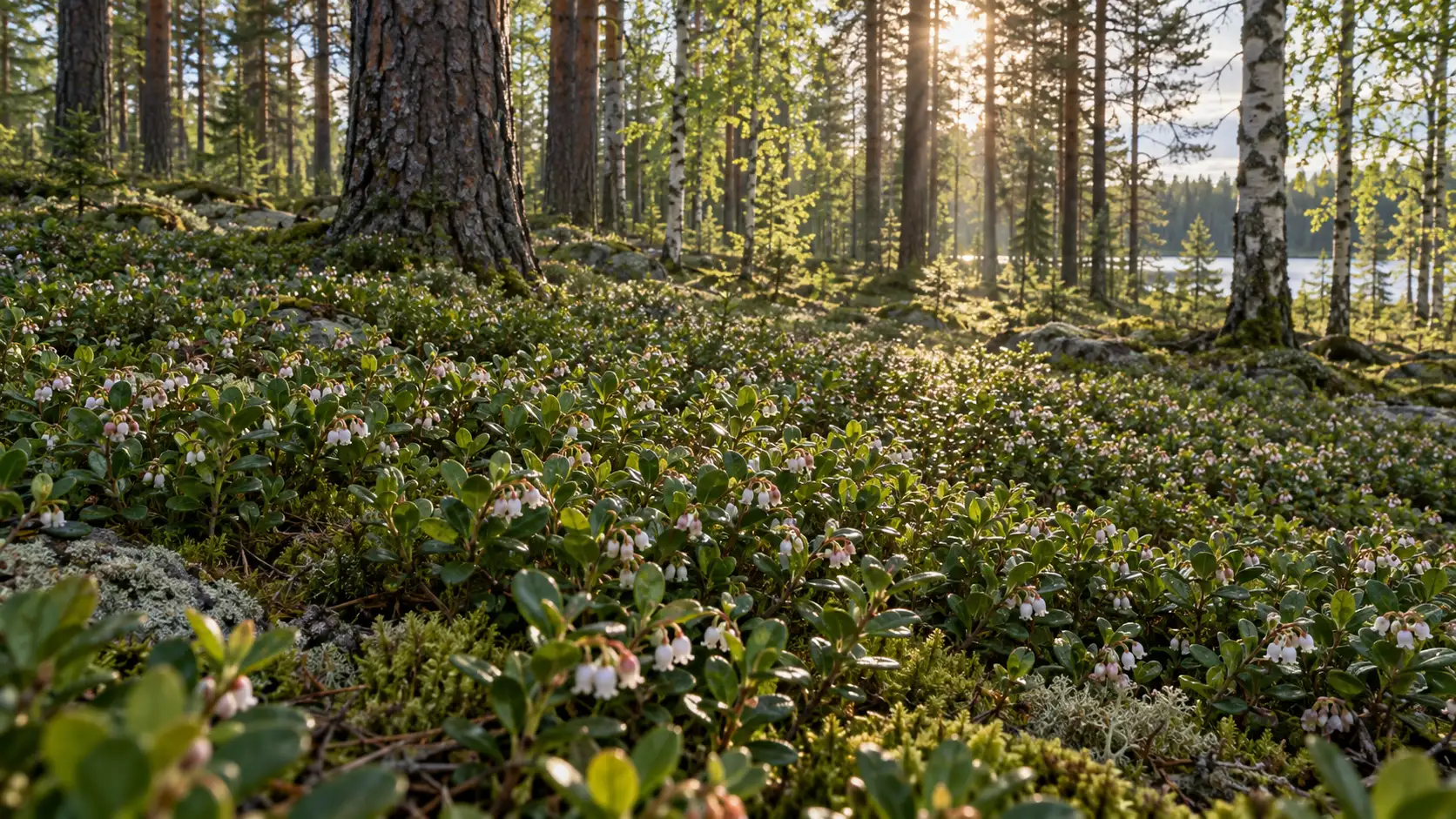
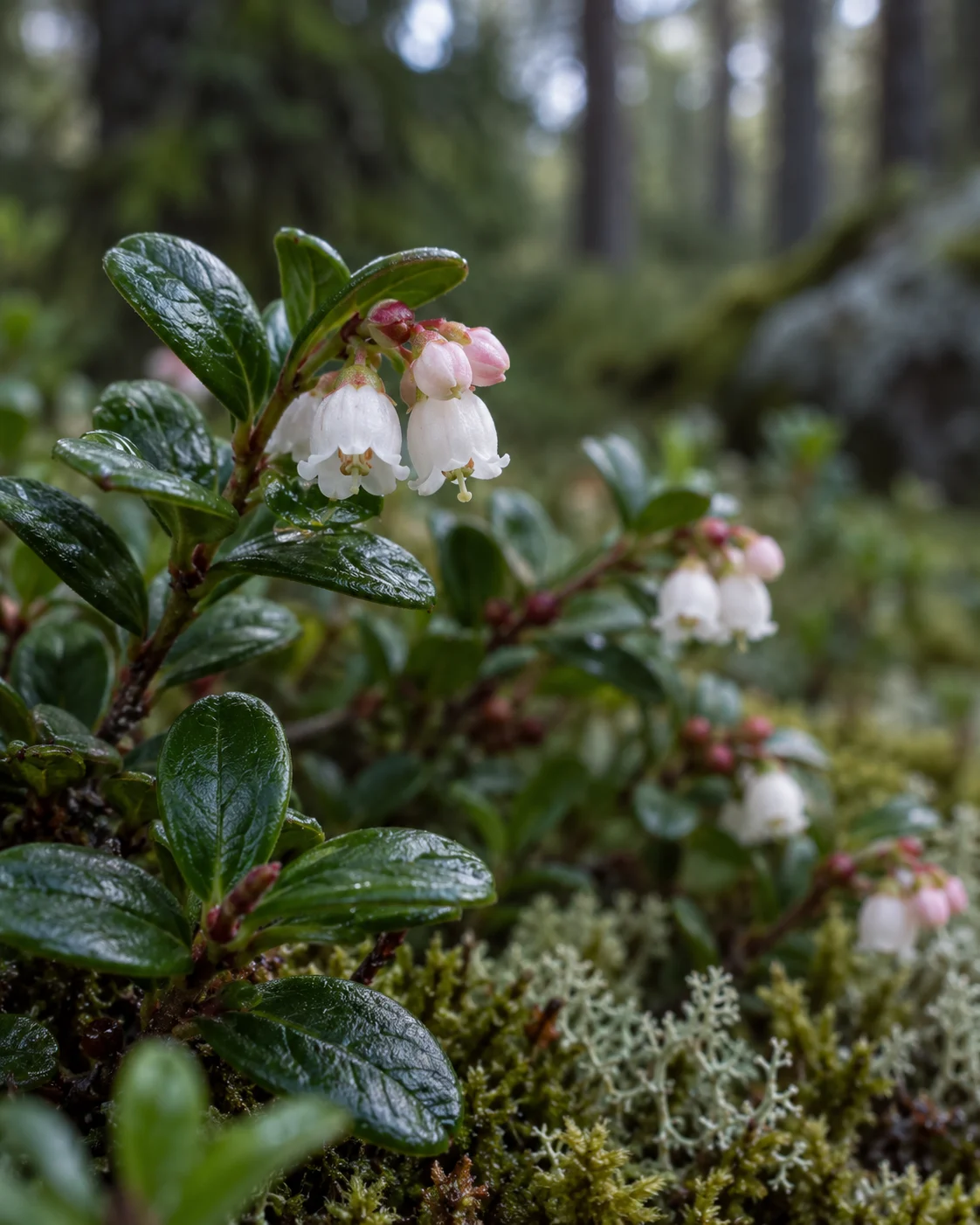
Lingonberry carpets Finnish forest floors as Vaccinium vitis-idaea. For a few weeks in June, before the famous red berries exist, its small bell-shaped flowers can give a distinctive honey: reddish in tone, toffee-scented, slowly granulating and difficult enough to produce that specialist beekeepers have built reputations around it.
Terroir
The forest floor becomes the floral source
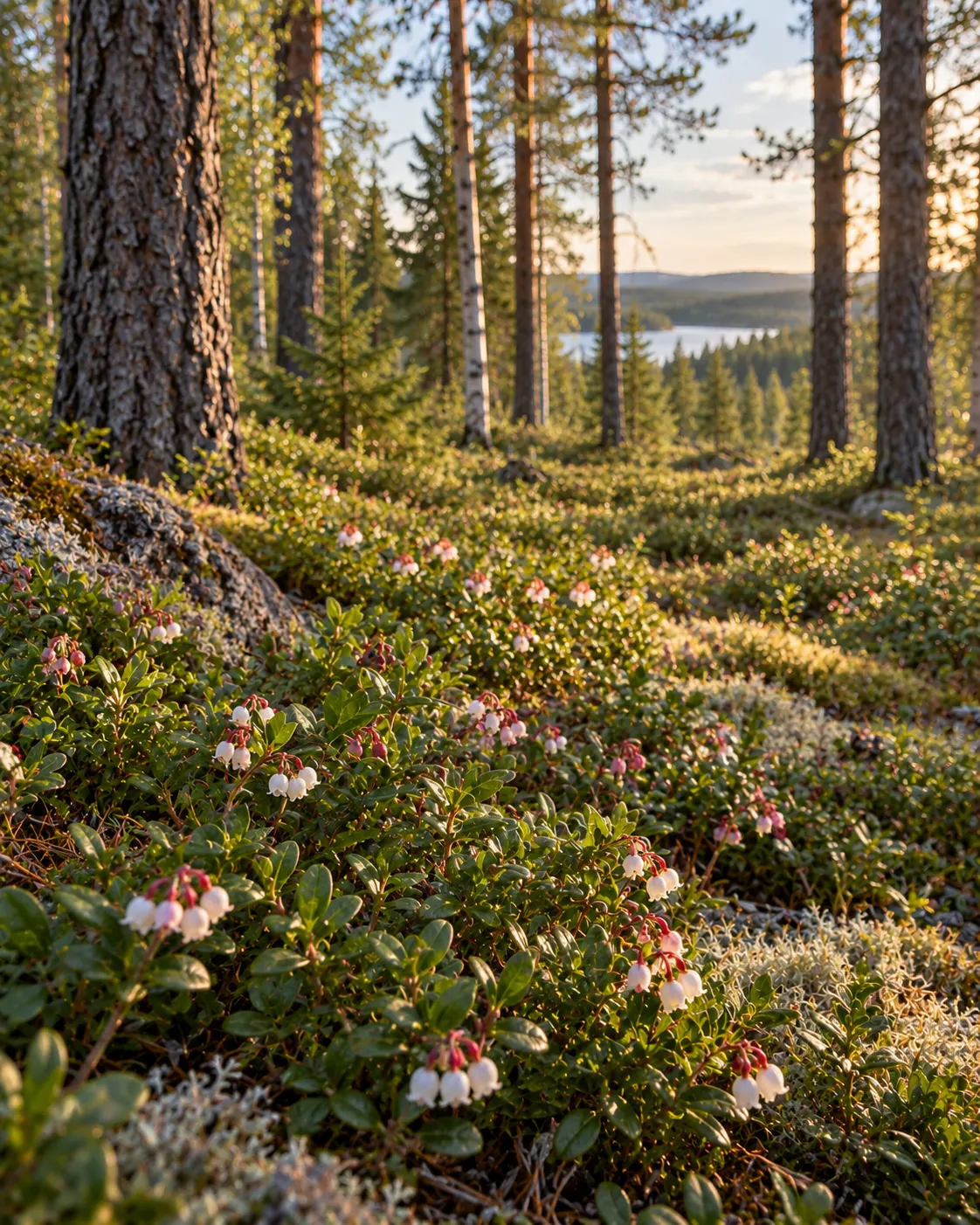
Unlike tree honeys or field crops, lingonberry honey begins close to the ground. The evergreen dwarf shrub forms broad carpets beneath Finnish pine and mixed boreal forest, flowering in early summer before setting its red fruit.
Scientific work on Finnish unifloral lingonberry honey shows a profile distinct enough to recognise sensorially and chemically. Around Muhos, specialist production has also turned the honey into an award-winning regional speciality.
| Location | Muhos / Northern Ostrobothnia, Finland |
| Landscape | Boreal forest floor and berry-rich woodland |
| Floral source | Lingonberry — Vaccinium vitis-idaea |
| Harvest | Mid-June to the end of June |
| Character | Reddish tone, toffee aroma, citrus and candied-fruit notes |
"Before the forest gives a red berry, it gives the bees a flower almost everyone else overlooks."
 Northern Ostrobothnia · Muhos
Why it belongs in the Atlas
One of the few honeys you can recognise from the comb
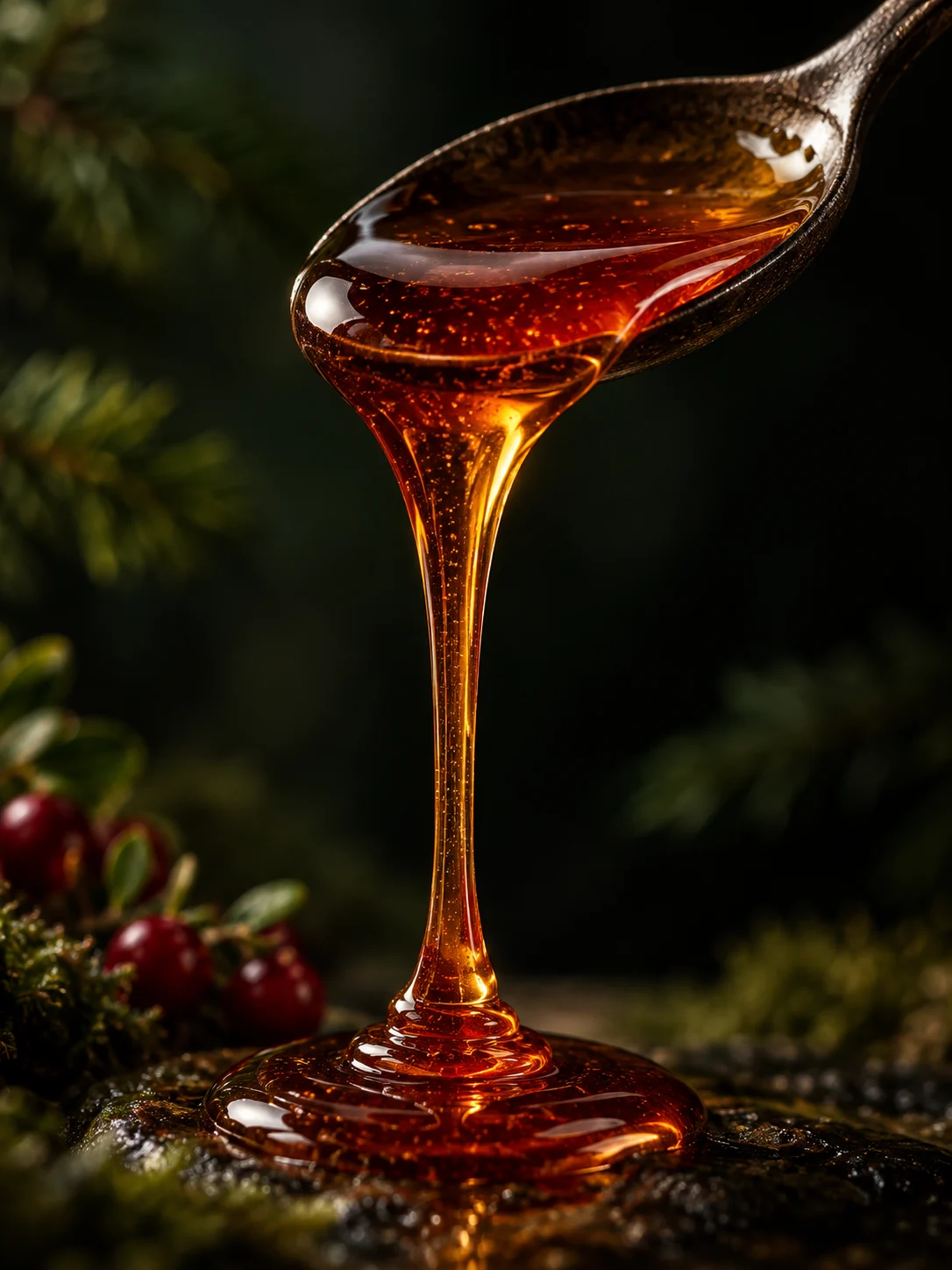
Finnish researchers note that lingonberry honey’s reddish colour and characteristic toffee odour and taste can make it recognisable even in the comb. That is an unusually strong sensory identity for such a quiet flower.
Tradition
Speciality honey from berry country
Finland’s relationship with lingonberry is usually culinary: berries, preserves, sauces and forest picking. Honey turns the same plant into a completely different seasonal product before the berries have formed.
Near Muhos, specialist beekeepers have spent years separating varietal honeys, and local lingonberry honey has repeatedly won national recognition — proof that “forest honey” need not mean an anonymous blend.
May
May
Boreal forest wakes and early willow forage builds colonies.
Mid-June
Mid-June
Lingonberry enters its short main flowering period.
End of June
End of June
The varietal harvest window closes quickly.
Modern speciality
Modern speciality
Muhos producers refine and award-test distinct lingonberry lots.
 Floral source · Finland
"Before the red berry comes a honey only the bees notice."
— The House of Meski
Rarity
Rare because the flower is reliable, but nectar is not
Lingonberries bloom every year, yet nectar yield depends strongly on June weather. A forest full of flowers can still give too little honey for a clean varietal harvest.
Why it matters
The plant is familiar; the honey is not.
Beekeeping
A short forage window close to the ground
Lingonberry bloom overlaps with other early-summer Finnish plants, so bees are never operating in a botanical vacuum. Producing a clear varietal lot depends on landscape dominance and careful timing.
The practice
The honey’s chemistry helps confirm what the palate suggests: high fructose and a sugar balance that tends toward slower granulation.
Sensory reading
Toffee in a boreal forest
Texture
Smooth and comparatively slow to granulate, reflecting its fructose-rich sugar profile.
Harvest notebook
From the field — a honey before the berry
There is something pleasingly counterintuitive about lingonberry honey. Most people know the plant for sharp red berries picked later in the year.
The bees meet it earlier, when the forest floor is full of small pale bells rather than fruit. The honey captures that earlier season in a completely different register: toffee, fruit and red-toned amber.
It may be the strongest argument in the Nordic part of the Atlas for looking down, not toward the canopy.
Pairings
How to serve it
Its toffee-fruit character works beautifully with Nordic dairy, grains and berries.
Meski rating
An editorial reading, not a certification
Six criteria of the House, judged in tasting. This rating describes the appellation, is revised for each lot presented, and replaces no analysis or certificate.
Provenance
The Meski Confidence Chain
Rare honey is one of the most counterfeited foods in the world, and named floral origins are no exception. Confidence does not come from one adjective or one certificate — it comes from a chain that stays continuous, from bloom to jar.
Read: How to read a rare honeyAnalysis describes the sample received by the laboratory. It does not automatically prove that every jar sold under the same name comes from that sample. A continuous chain does.
Continue the Atlas
An origin is never an island
Compare not to name a winner, but to understand what place, season and craft shift in the cup.