Vietnam · Hòa Bình · Độc Lập
Hoa Binh
Longan Honey
عسل زهر اللونجان الفيتنامي
A spring orchard honey gathered in the few weeks when northern Vietnam smells of longan blossom.
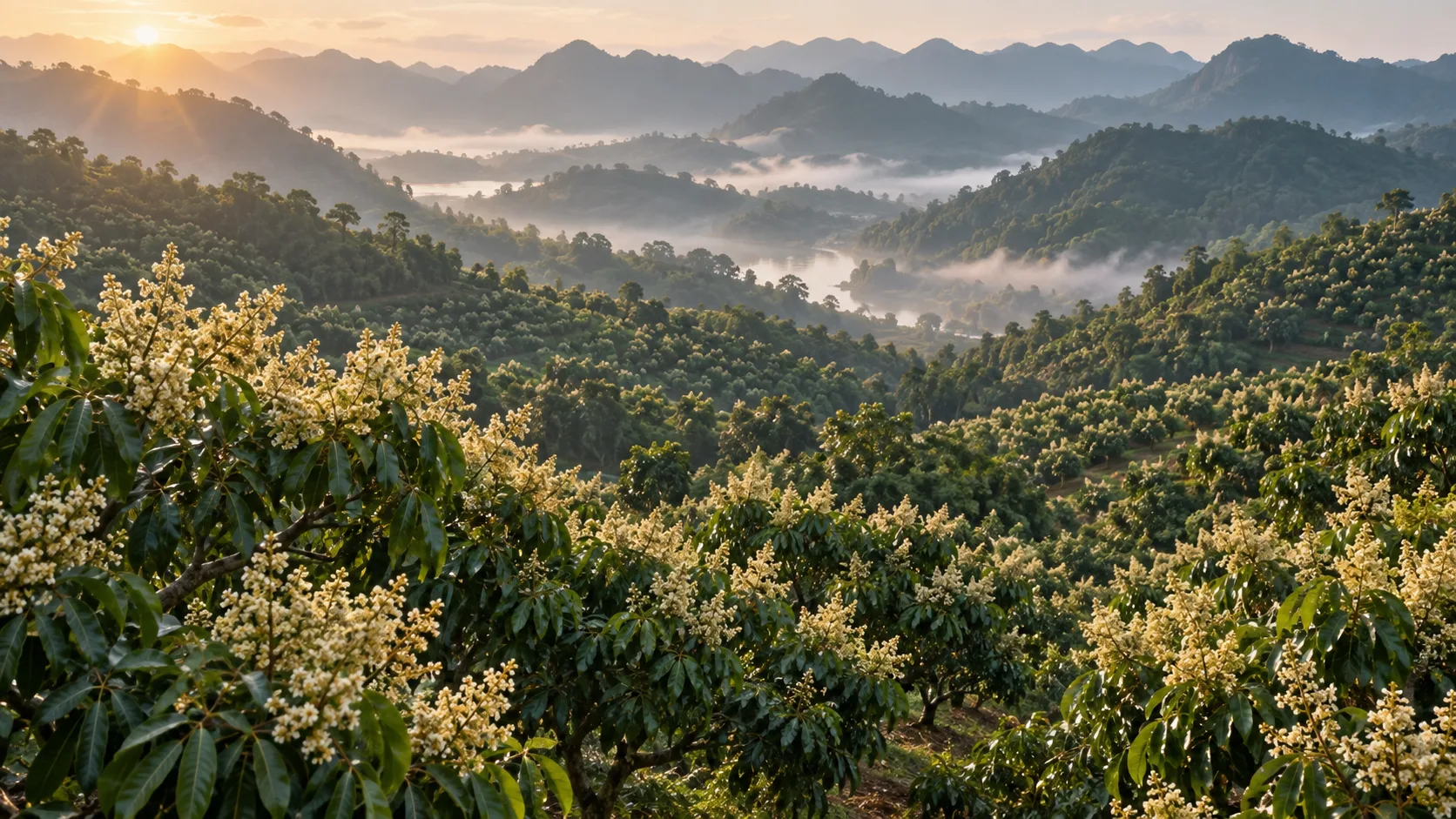
In Hòa Bình, March and April bring longan and lychee trees into flower almost at once. Beekeepers move colonies close to the orchards and work quickly. The longan bloom is generous, but it is brief, and its honey belongs to that narrow northern spring.
Terroir
An orchard season measured in weeks
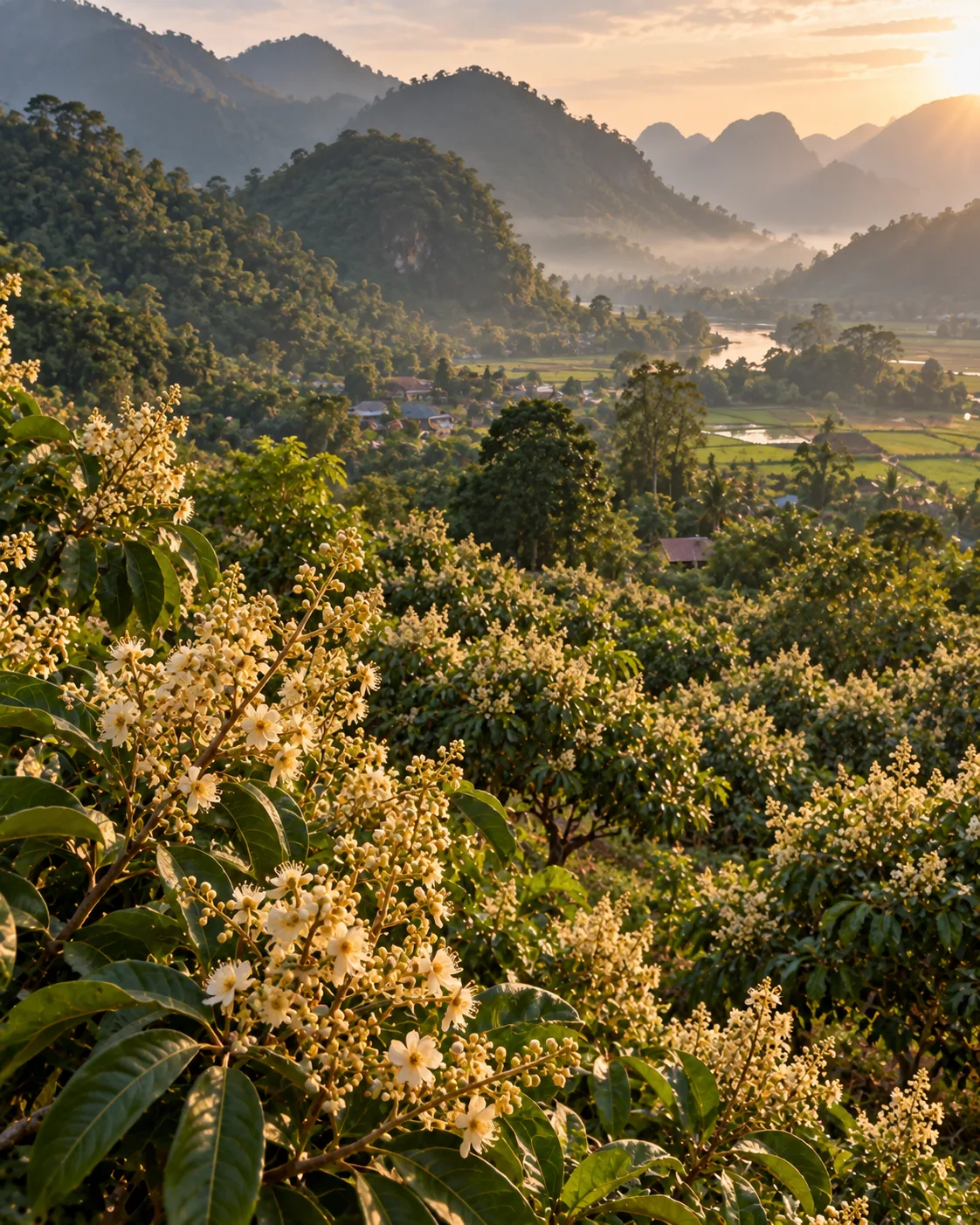
Hòa Bình sits west of Hanoi, where forested hills meet cultivated valleys. Around Độc Lập, beekeeping has grown beside longan and lychee orchards, using the spring blossom as a concentrated nectar source.
The harvest is not a year round style. It follows the flowering trees. In March and April, the orchards open, colonies are placed nearby, and the honey takes on the clean fruit blossom character of the season.
| Location | Độc Lập, Hòa Bình, northern Vietnam |
| Landscape | Forested hills, village orchards and subtropical valleys |
| Floral source | Longan blossom, Dimocarpus longan |
| Harvest | March to April |
| Character | Fragrant orchard honey from a short spring bloom |
"Longan honey tastes like spring before the fruit has even formed."
 Hòa Bình · Độc Lập
The orchard before the fruit
The honey comes first
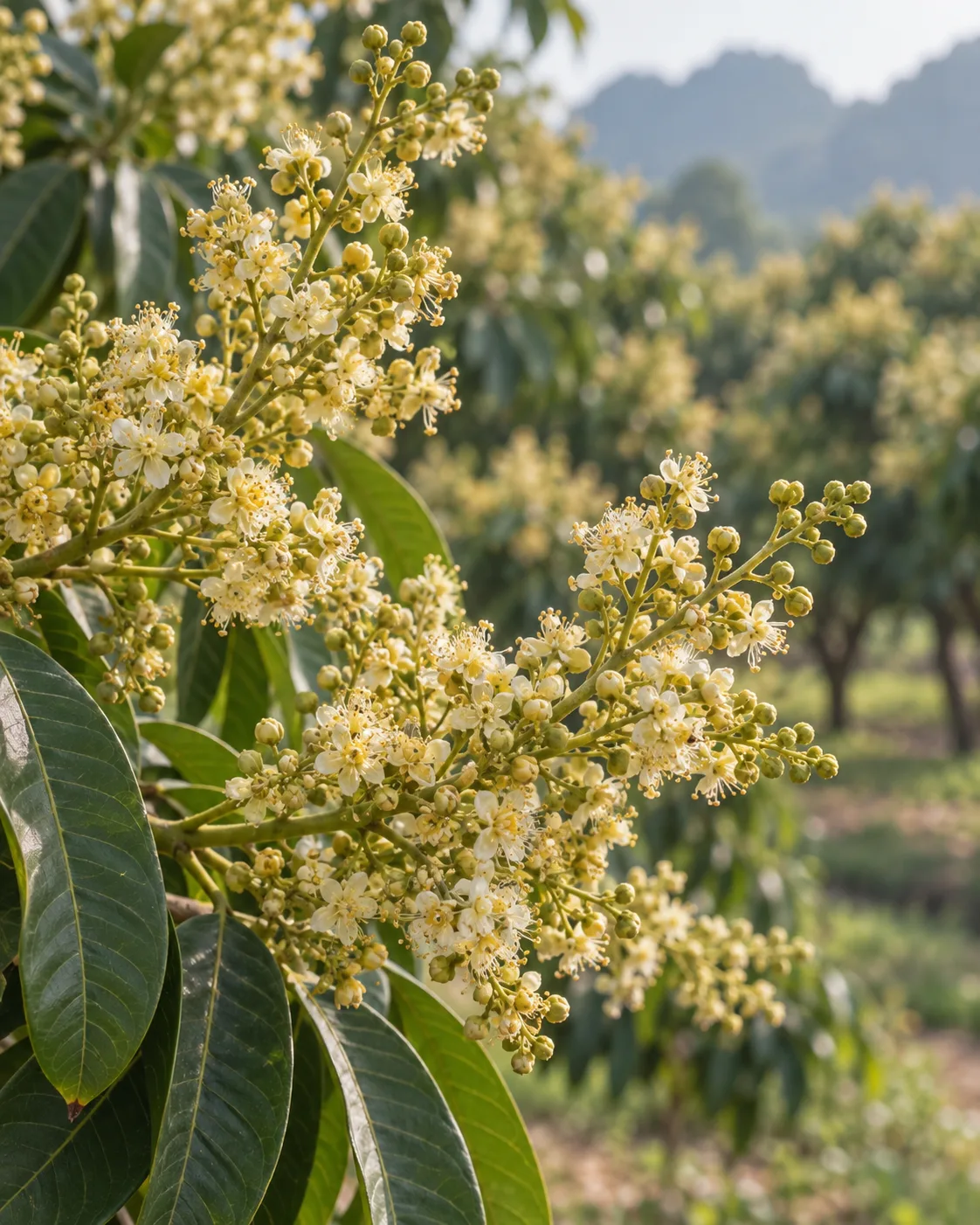
Longan is usually encountered as a small brown fruit with translucent flesh. The honey tells an earlier story. It belongs to the flowering stage, when the orchard is pale, fragrant and full of bees.
Tradition
Beekeeping that moves with blossom
The beekeepers of Hòa Bình do not ask one fixed place to feed colonies all year. Hives are positioned where the blossom is strongest, then moved again when the flowering window closes.
That seasonal mobility gives the honey a practical honesty. It exists because the trees flowered well, the weather held, and the bees were in the right orchard at the right time.
Late winter
Late winter
Colonies are prepared before the orchard bloom.
March
March
Longan flowers open across the hills and valleys.
April
April
The last main extractions close the spring flow.
After bloom
After bloom
Beekeepers move on while fruit begins to set.
 Botanical detail · Vietnam
"Before there is fruit, there is a blossom the bees know first."
The House of Meski
Rarity
Not globally rare, but beautifully seasonal
Longan honey is produced elsewhere in Asia, yet a named Hòa Bình spring lot remains tied to a short flowering calendar. Its interest comes from origin and timing, not from artificial scarcity.
Why it matters
Its value is freshness of origin, not a grand claim of rarity.
Beekeeping
Three hundred colonies, one flowering window
Local households can manage hundreds of colonies. The scale is real, but the work remains tied to weather and bloom. A few poor flowering days can change the entire spring.
The practice
The best lots are those where the orchard signal stays clear and the honey is harvested at full ripeness rather than rushed out simply because the season is short.
Sensory reading
Soft fruit blossom, warm finish
Texture
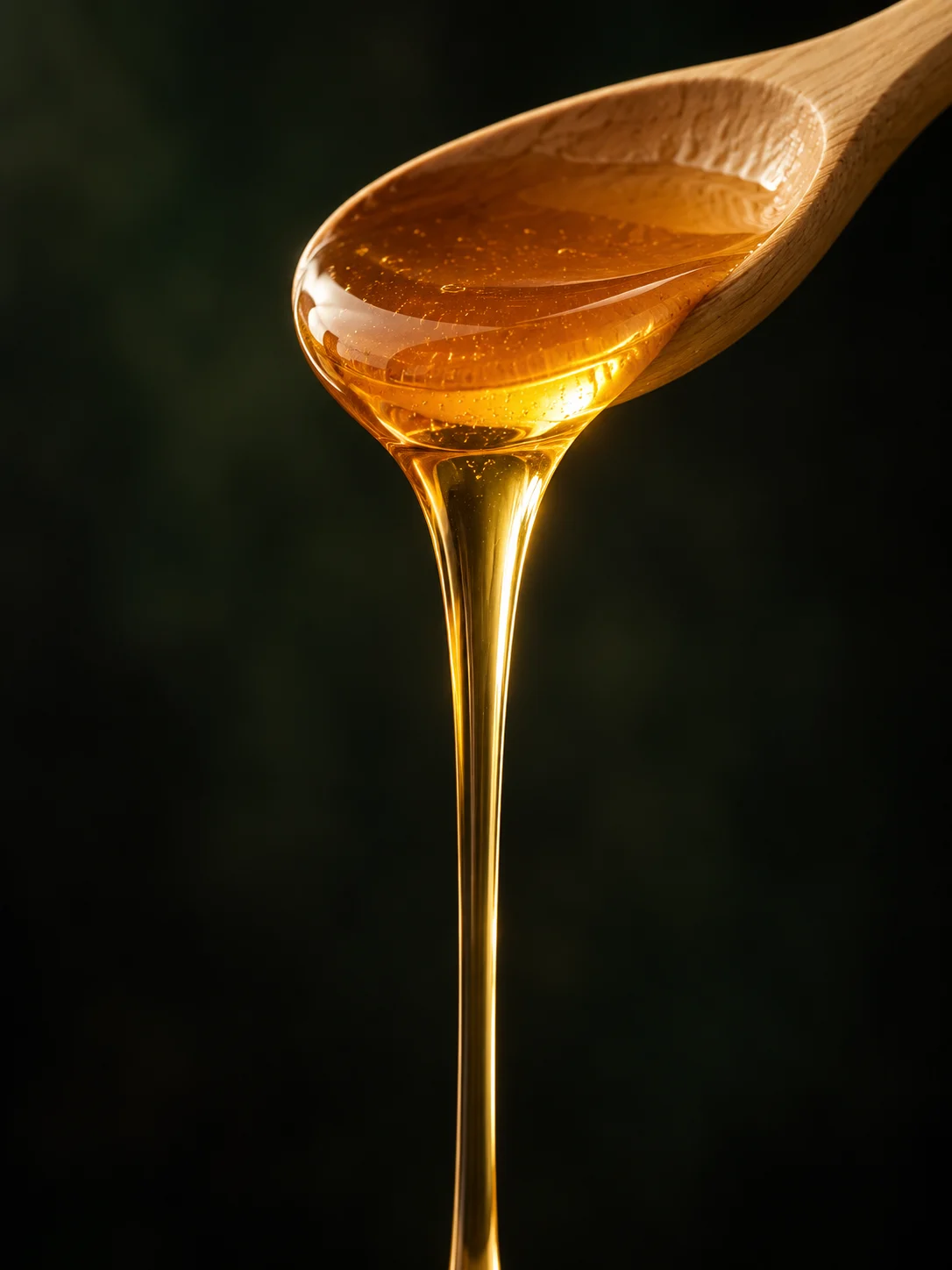
Smooth and medium bodied, easy to pour and easy to taste on its own.
Notebook
Tasting notebook
This is an easy honey to underestimate. It is not dramatic, smoky or bitter. Its pleasure is quieter: spring orchard perfume, clean sweetness and a finish that feels naturally warm rather than sugary.
Pairings
Ways to serve it
Meski rating
An editorial reading, not a certification
Six criteria of the House, judged in tasting. This rating describes the appellation, is revised for each lot presented, and replaces no analysis or certificate.
Provenance
The Meski Confidence Chain
Named honey needs more than a beautiful origin story. Confidence comes from a chain that stays continuous from place and season to lot, sample, analysis and sealed jar.
Read: How to read a rare honeyAnalysis describes the sample received by the laboratory. It does not automatically prove that every jar sold under the same name comes from that sample. A continuous chain does.
Continue the Atlas
Vietnam changes honey faster than a map suggests
Move from northern orchard to Central Highlands plantation, Mekong wetland and mountain forest. The country stays the same. Almost everything else changes.