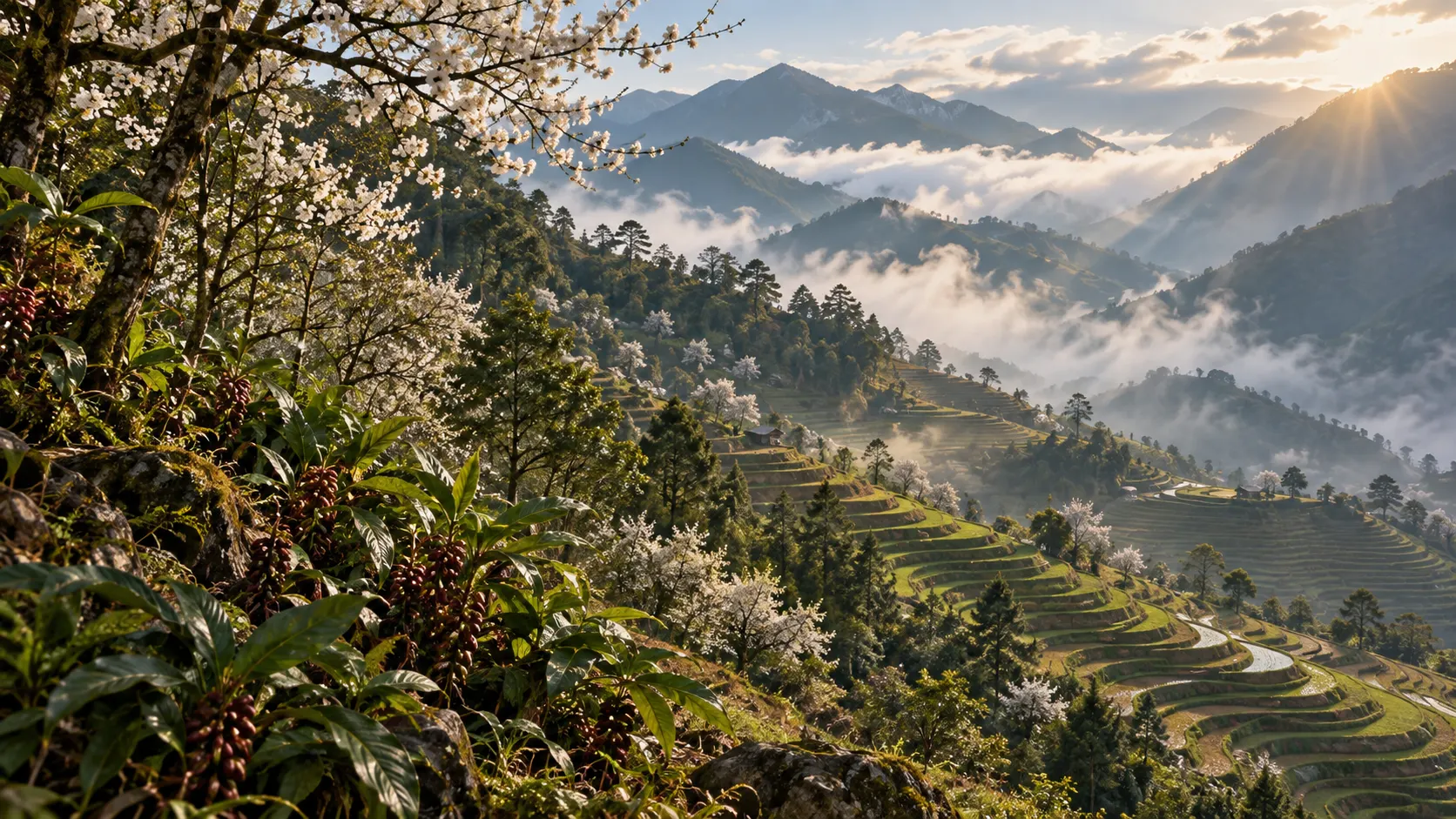
Vietnam · Yên Bái · Mù Cang Chải · Above 900 m
Mu Cang Chai
Spring Honey
عسل الهيل وسون ترا من مو كانغ تشاي
The orange spring counterpart to Mù Cang Chải’s white autumn honey, built around black cardamom and Sơn tra blossom.
The same mountain district gives a second honey in March and April. At higher elevations, black cardamom and Sơn tra, the local crabapple, flower in succession. The honey changes with them: transparent orange, thick, aromatic and distinctly sweeter than the autumn Blong song crop.
Terroir
One district, another season, another honey
Mù Cang Chải’s spring crop proves why season belongs inside the idea of terroir. The mountains have not moved, yet the honey is transformed because the dominant blossoms have changed.
In March and April, Lanxangia tsaoko, a black cardamom of the northern highlands, and Sơn tra, the local crabapple known scientifically as Docynia indica, become the principal nectar sources recorded in the geographical indication.
| Location | Mù Cang Chải, Yên Bái, northern Vietnam, mainly high elevations |
| Landscape | Mountain forest and highland cultivation above roughly 900 m |
| Floral source | Lanxangia tsaoko black cardamom and Sơn tra, Docynia indica |
| Harvest | March to April |
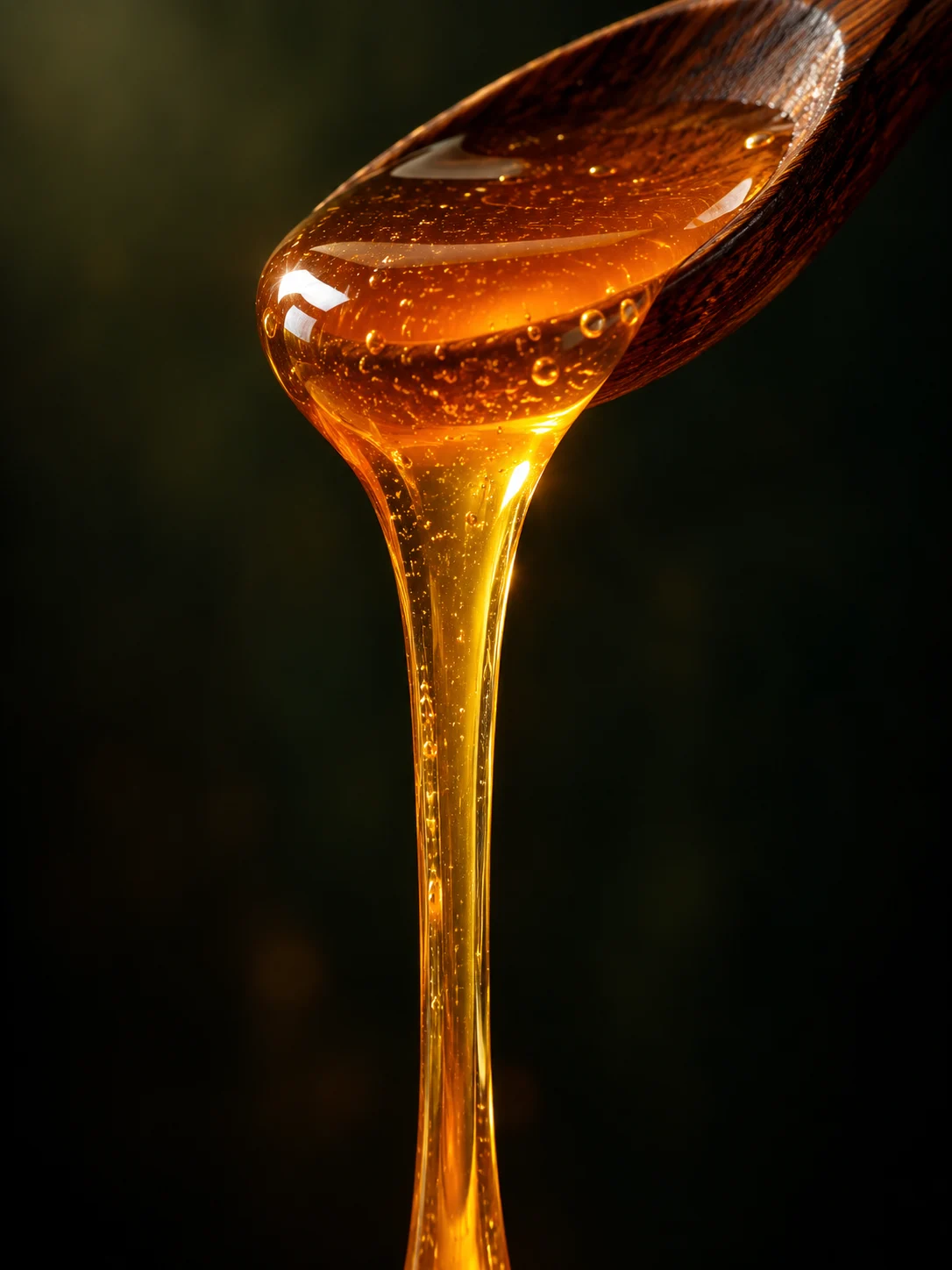
| Colour | Transparent orange |
"In Mù Cang Chải, spring and autumn do not merely change the landscape. They change the honey."
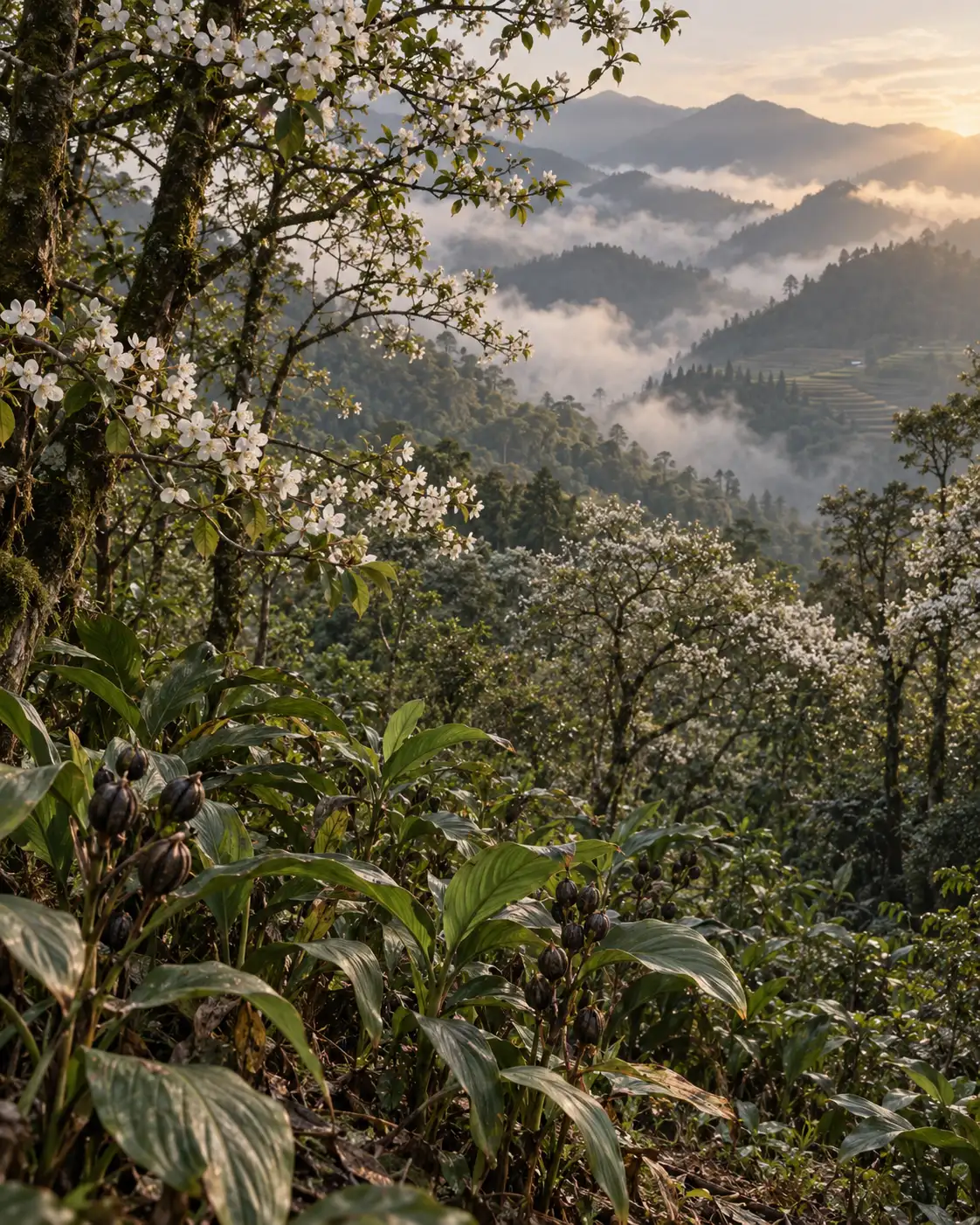 Yên Bái · Mù Cang Chải highlands
The comparison worth making
Orange in spring, milky white in autumn
Few places in the Atlas offer such a clean seasonal comparison. The autumn Blong song crop is pale and gently sweet. The spring cardamom and Sơn tra crop is orange, thicker in impression and more assertively sweet.
Tradition
A mountain calendar written in blossom
Sơn tra is an indigenous high elevation fruit tree of northern Vietnam. Its white spring flowers share the season with black cardamom grown in the same mountain environment.
For beekeepers, the combination creates a dependable spring flow. The official GI documentation notes enough nectar density for honey extraction cycles of roughly five to seven days during strong conditions.
Late winter
Late winter
Mountain temperatures begin to lift.
March
March
Sơn tra and black cardamom enter the principal spring flowering period.
April
April
Spring honey remains active and is extracted repeatedly.
After April
After April
The landscape moves toward fruit development and summer growth.
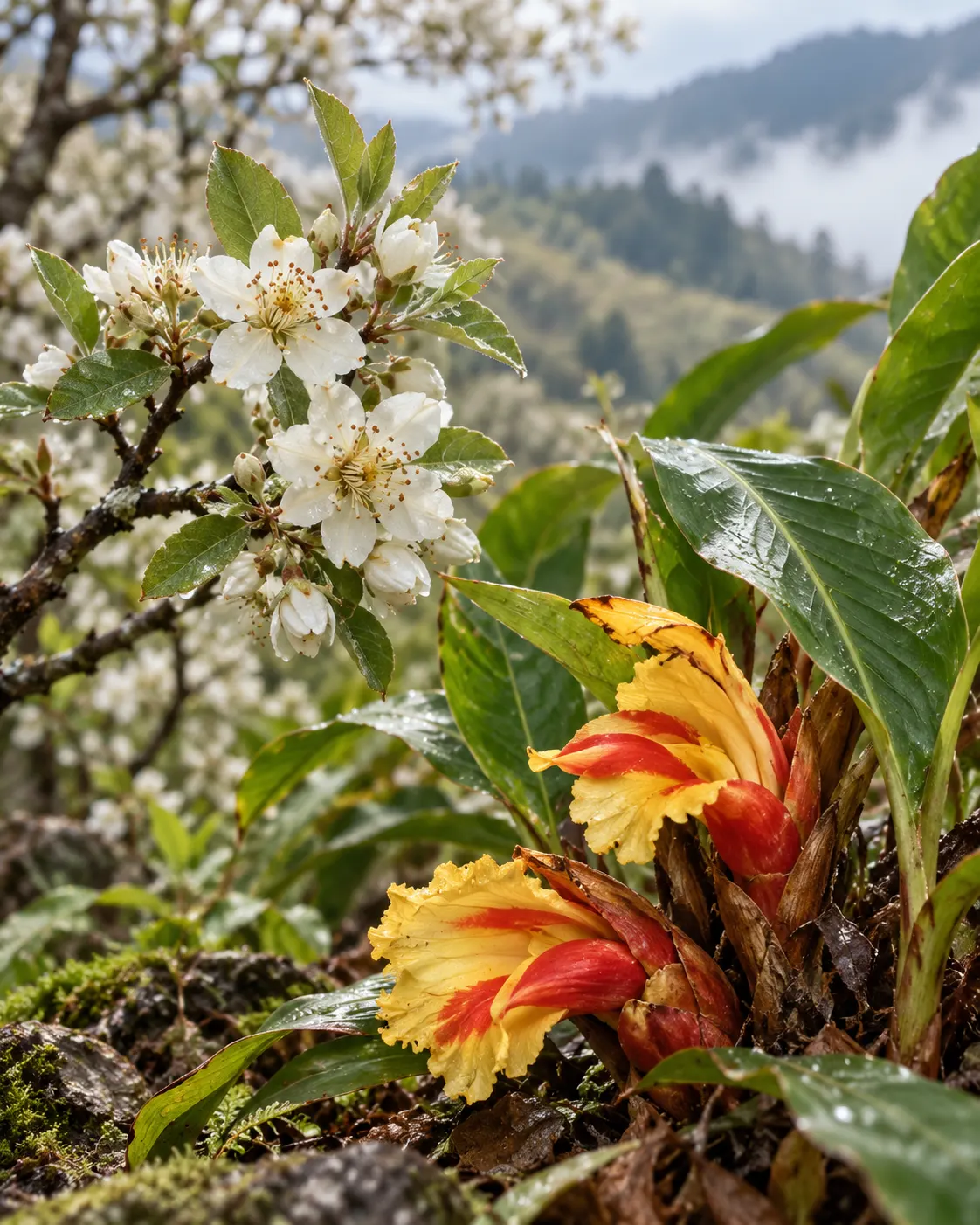 Botanical detail · Vietnam
"Same mountains, different season, entirely different honey."
The House of Meski
Rarity
Rare because it only makes sense in this mountain calendar
Cardamom honey exists elsewhere and crabapple grows beyond Mù Cang Chải. What is unusual here is the documented spring combination of both, tied to a protected mountain origin.
Why it matters
The origin is strongest when the two floral sources are kept together.
Beekeeping
A spring flow fast enough to watch daily
When blossom density is high, combs can fill quickly. The GI documentation records extraction cycles of roughly five to seven days for this spring season.
The practice
The beekeeper’s work is to preserve the mountain floral balance, not to force a single plant into dominance when the local identity is naturally shared.
Sensory reading
Orange colour, mountain sweetness
Texture
Thick and smooth, with a fuller impression than the autumn Mù Cang Chải honey.
Notebook
Tasting notebook
This honey makes the strongest case for tasting place twice. Try it beside the autumn Blong song crop and the district becomes legible through contrast: white against orange, mild against fuller, forest flower against spring spice and fruit blossom.
Pairings
Ways to serve it
Meski rating
An editorial reading, not a certification
Six criteria of the House, judged in tasting. This rating describes the appellation, is revised for each lot presented, and replaces no analysis or certificate.
Provenance
The Meski Confidence Chain
Named honey needs more than a beautiful origin story. Confidence comes from a chain that stays continuous from place and season to lot, sample, analysis and sealed jar.
Read: How to read a rare honeyAnalysis describes the sample received by the laboratory. It does not automatically prove that every jar sold under the same name comes from that sample. A continuous chain does.
Continue the Atlas
Vietnam changes honey faster than a map suggests
Move from northern orchard to Central Highlands plantation, Mekong wetland and mountain forest. The country stays the same. Almost everything else changes.