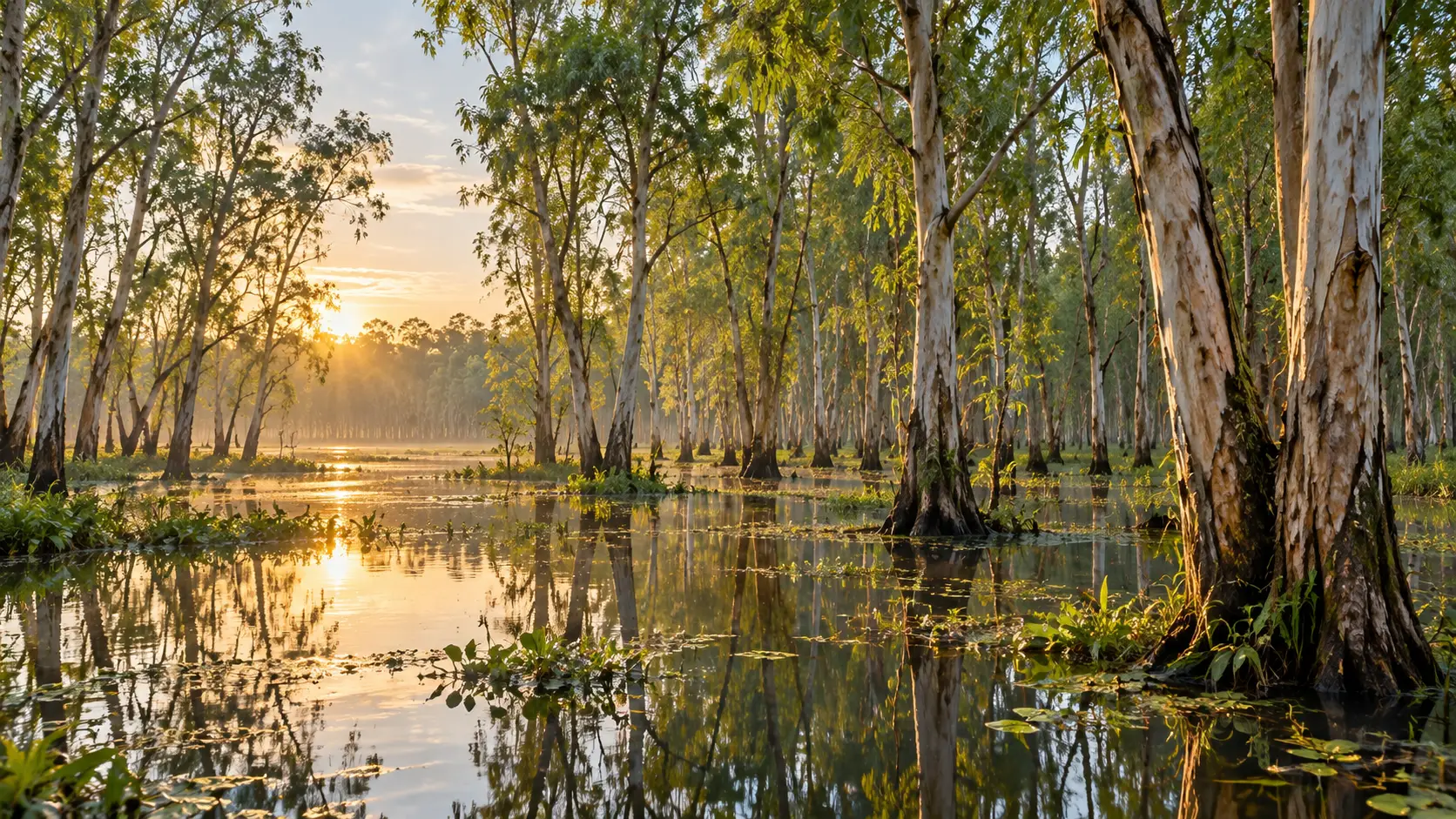
Vietnam · Đồng Tháp Mười · Mekong Delta
Dong Thap Muoi
Melaleuca Honey
عسل زهر الكاجيبوت الفيتنامي
A wetland honey with a pale colour and an unmistakable herbal lift from cajeput forest blossom.
Đồng Tháp Mười is a low, water shaped landscape in the Mekong Delta. Melaleuca cajuputi thrives here, and recent Vietnamese research confirms that its honey can carry a strong monofloral pollen signature and a distinct aromatic chemistry.
Terroir
Honey from a wetland tree
The Plain of Reeds, Đồng Tháp Mười, is defined by water, low horizons and wetland vegetation. Melaleuca fits the landscape perfectly, tolerating seasonally flooded and acidic soils that exclude many other trees.
The honey gathered here is lighter than Vietnamese rubber honey and chemically more aromatic. Terpenoids and aromatic esters give it a recognisable herbal and floral direction.
| Location | Đồng Tháp Mười, Mekong Delta, Vietnam |
| Landscape | Seasonal wetlands and melaleuca forest |
| Floral source | Melaleuca cajuputi |
| Harvest | December to February |
| Research | Recent samples showed dominant Melaleuca pollen and a distinct volatile profile |
"The colour is pale. The aroma remembers the forest."
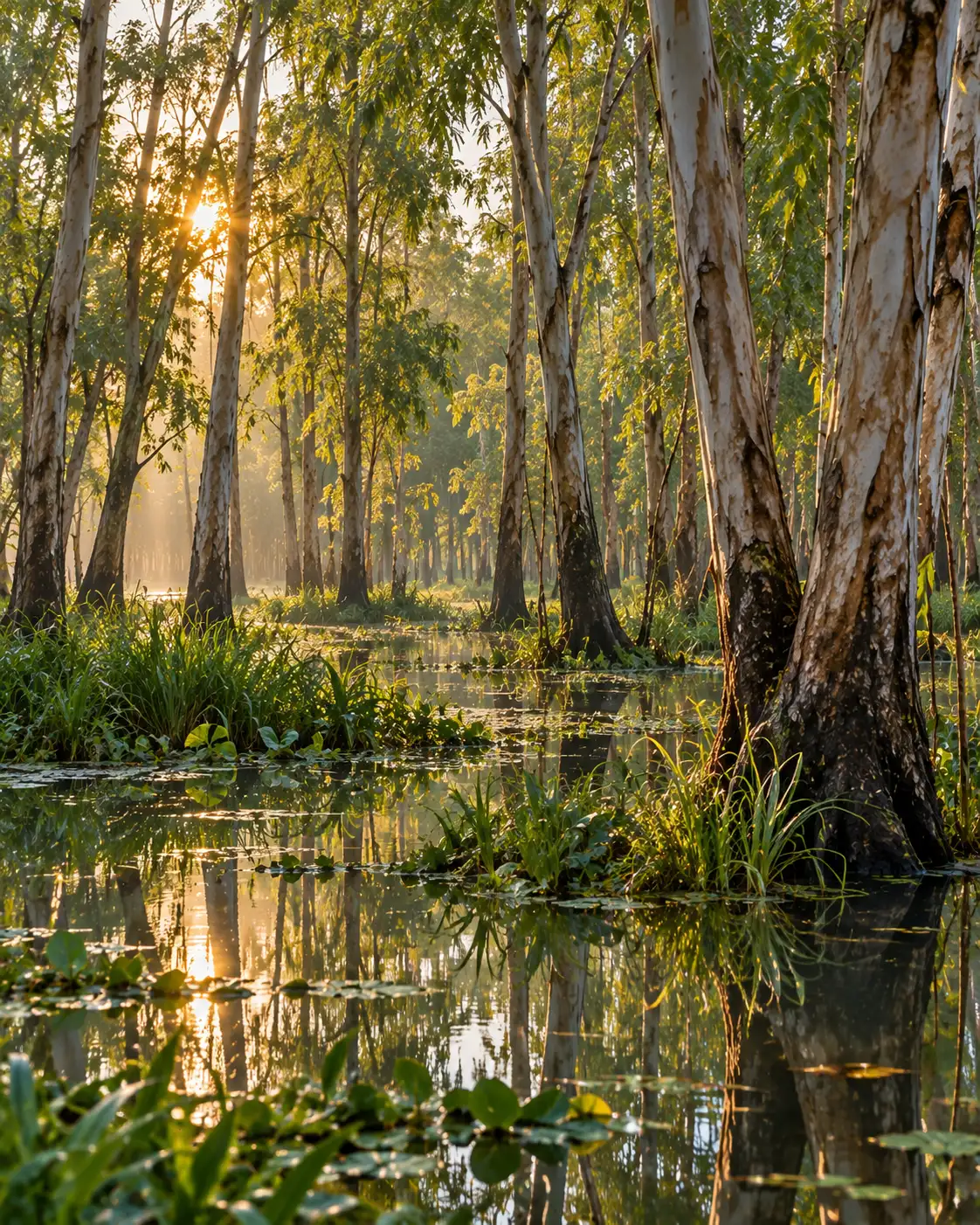 Đồng Tháp Mười · Mekong Delta wetlands
What sets it apart
Herbal without being medicinal
Melaleuca honey contains aromatic compounds associated with floral, herbal and mint like notes. In a fresh lot, the effect is lifted rather than harsh: a cool aromatic edge over light tropical sweetness.
Tradition
A modern monofloral with an old wetland behind it
Unlike U Minh forest honey, which carries a famous wild rafter tradition, Đồng Tháp Mười melaleuca honey is best read through botanical purity and wetland agriculture.
The comparison is useful. Same broad tree family, different landscape and practice. One fiche is about a monofloral wetland honey. The other is about wild bees, rafters and forest heritage.
Wet season
Wet season
The plain fills and the forest takes on its flooded character.
December
December
Melaleuca honey sampling begins in the cooler dry season.
January
January
The main monofloral window remains strong.
February
February
The sampled harvest period closes as floral conditions shift.
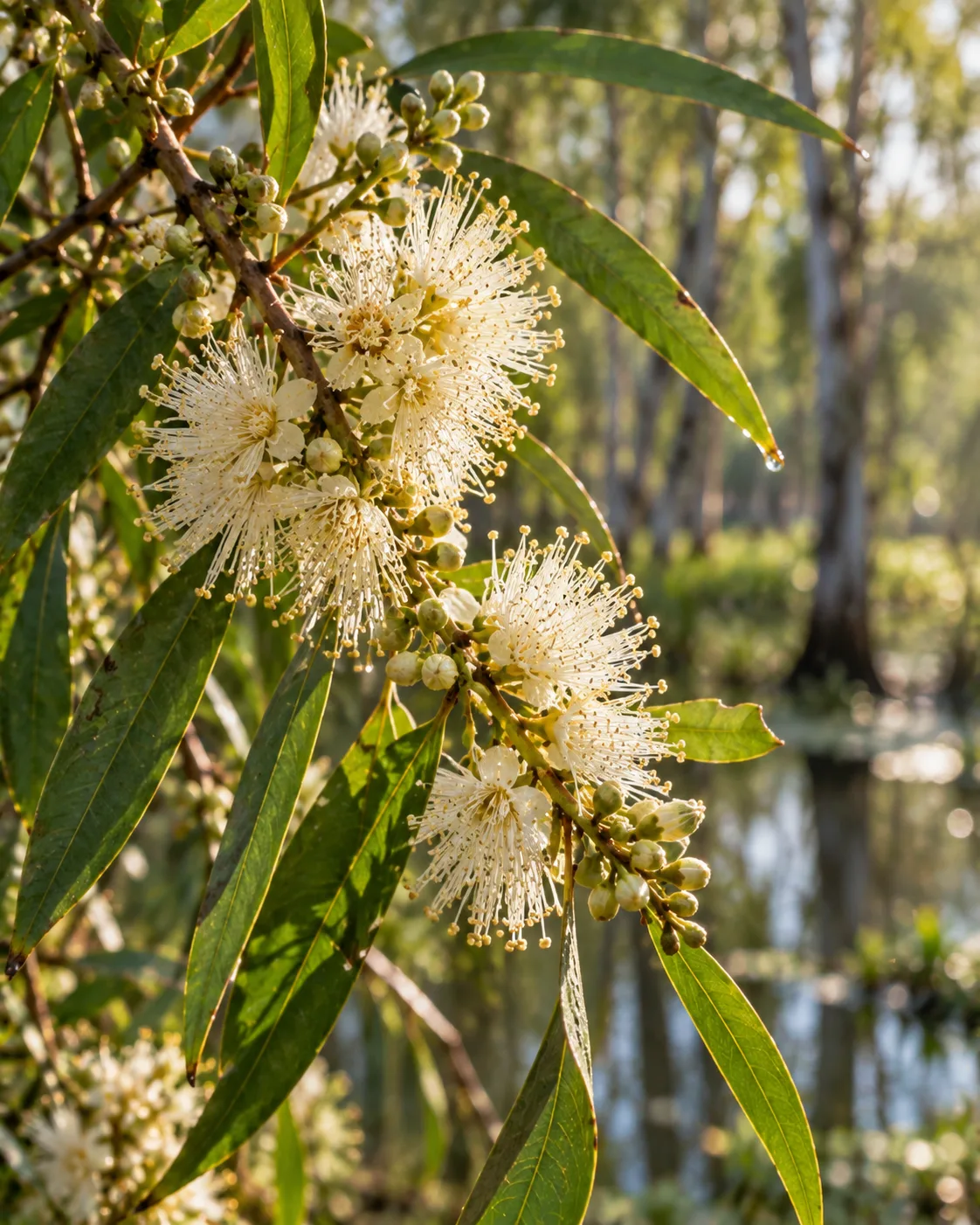 Botanical detail · Vietnam
"Pale in colour, unmistakably herbal in memory."
The House of Meski
Rarity
A serious monofloral hiding in a humble landscape
Melaleuca honey is economically important in Vietnam, yet it remains little known internationally. The strongest case for it is scientific clarity rather than exotic storytelling.
Why it matters
Its quiet appearance hides a surprisingly legible botanical identity.
Beekeeping
A wetland harvest built on timing
Colonies are placed where melaleuca bloom is dense enough to dominate forage. In a landscape with many flowering species, botanical concentration is the craft.
The practice
The recent analytical work matters because it gives producers a stronger way to authenticate what experienced beekeepers have long recognised by smell, colour and season.
Sensory reading
Cool herbs over pale sweetness
Texture
Fluid to medium bodied, with moderate crystallisation tendency depending on the lot.
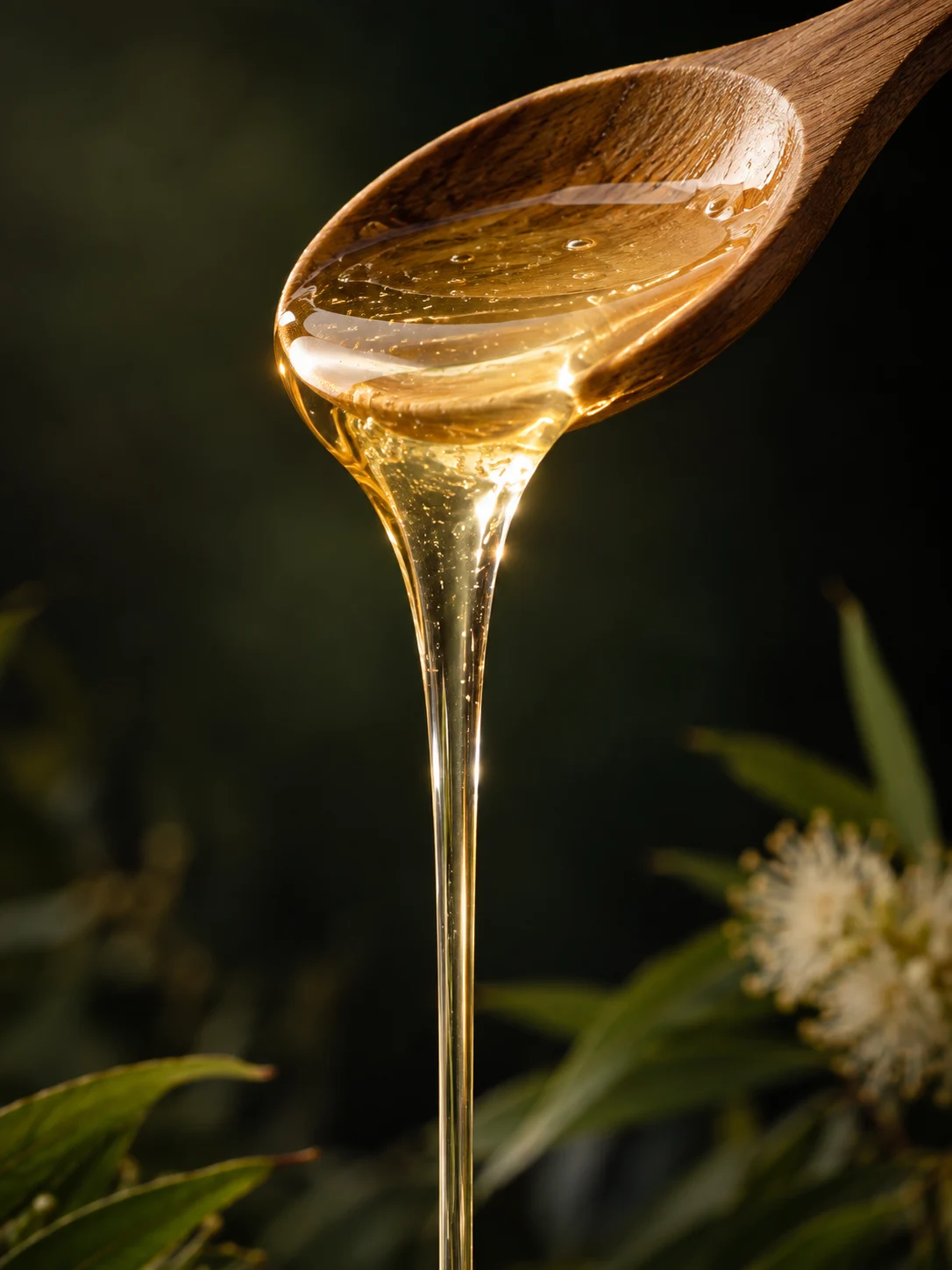
Notebook
Tasting notebook
This honey is about aromatic detail. The sweetness is not the main event. What stays is the cool herbal echo, something between wet leaves, blossom and a distant minty note.
Pairings
Ways to serve it
Meski rating
An editorial reading, not a certification
Six criteria of the House, judged in tasting. This rating describes the appellation, is revised for each lot presented, and replaces no analysis or certificate.
Provenance
The Meski Confidence Chain
Named honey needs more than a beautiful origin story. Confidence comes from a chain that stays continuous from place and season to lot, sample, analysis and sealed jar.
Read: How to read a rare honeyAnalysis describes the sample received by the laboratory. It does not automatically prove that every jar sold under the same name comes from that sample. A continuous chain does.
Continue the Atlas
Vietnam changes honey faster than a map suggests
Move from northern orchard to Central Highlands plantation, Mekong wetland and mountain forest. The country stays the same. Almost everything else changes.