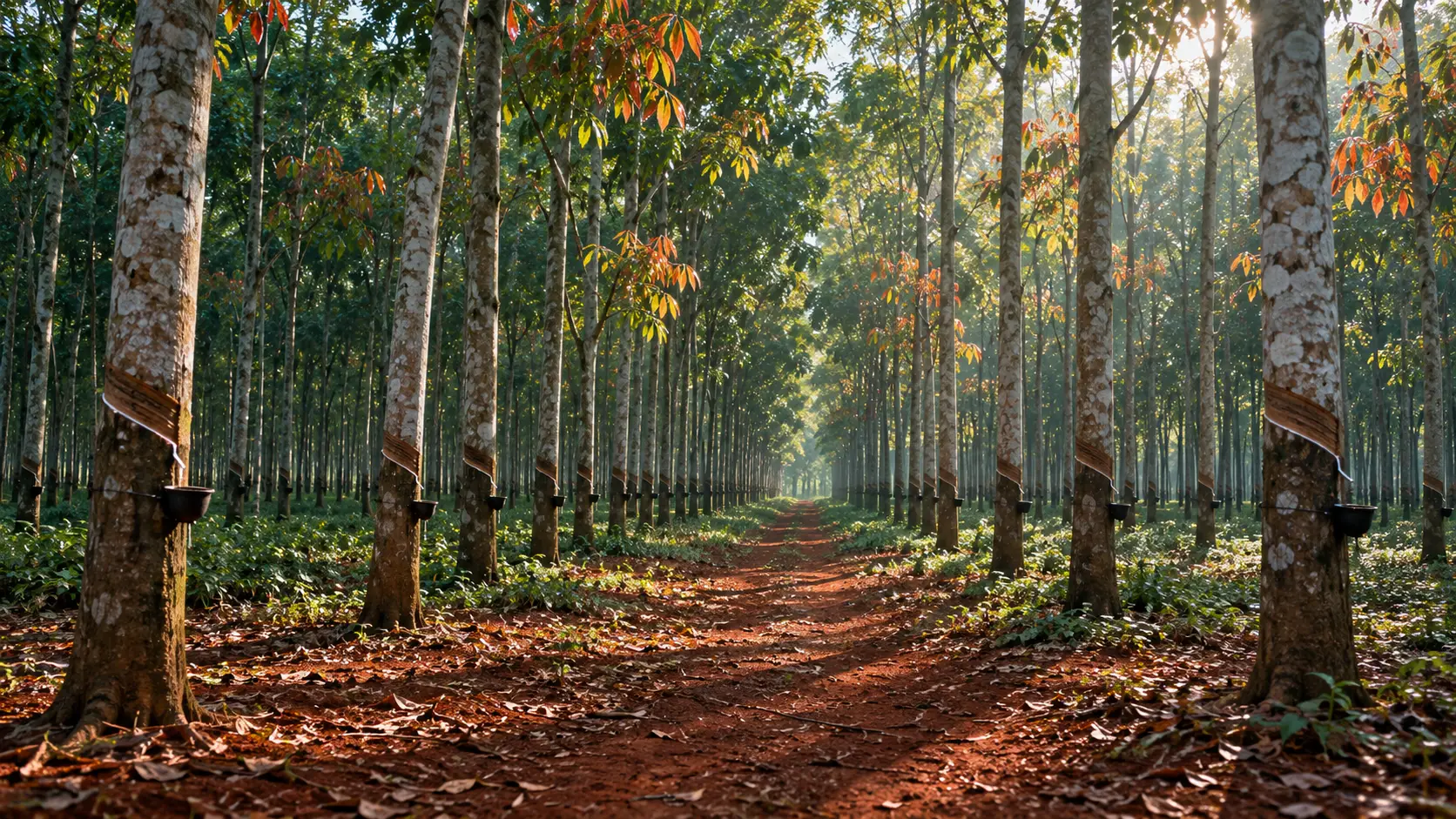
Vietnam · Bình Phước · Rubber belt
Binh Phuoc
Rubber Honey
عسل شجر المطاط الفيتنامي
One of the Atlas’s stranger origins: honey from a plantation tree that can feed bees from nectar secreted at the leaf stalk.
Bình Phước is covered in rubber plantations. During the tree’s seasonal leaf change and new growth, nectar can appear around the leaf stalks, giving bees a source that is not limited to conventional blossom. The result is a genuine monofloral honey with an unusual botanical story.
Terroir
A honey that makes you look at the leaf, not only the flower
Rubber trees, Hevea brasiliensis, are planted across southeastern Vietnam. In Bình Phước they form broad, ordered landscapes of pale trunks and seasonal canopies.
Local beekeepers pay close attention to the leaf change. Rubber can release nectar around the petiole, the leaf stalk, during this period. That makes the honey unusual in the Atlas: the tree feeds bees in a way most visitors would never notice.
| Location | Bình Phước, southeastern Vietnam |
| Landscape | Large rubber plantations and agricultural forest mosaics |
| Botanical source | Rubber tree, Hevea brasiliensis, including extrafloral nectar at leaf stalks |
| Harvest | Peak January to March, with a broader flow extending into spring |
| Colour | Light amber to amber |
"Not every honey begins inside a flower."
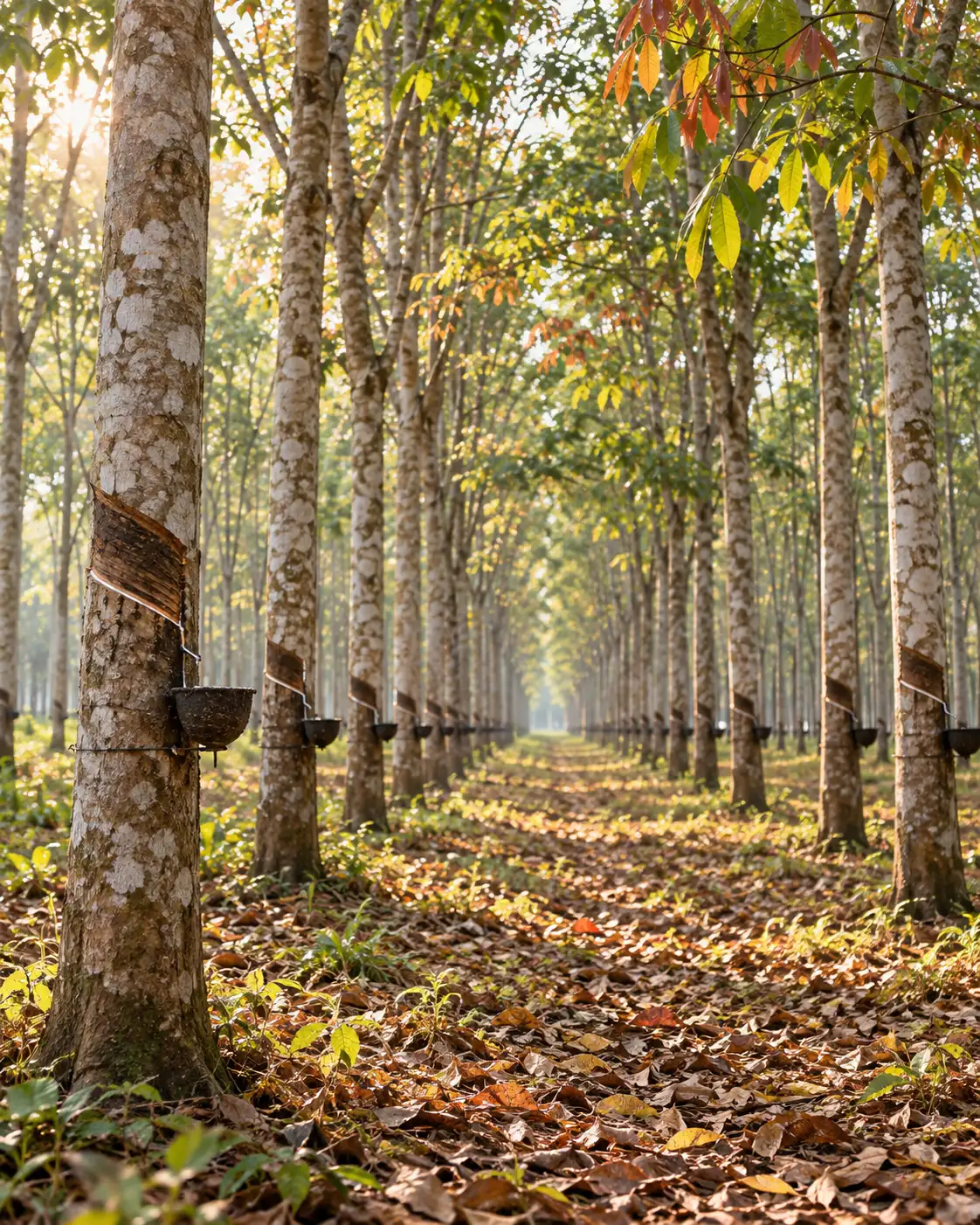 Bình Phước · Southeast rubber belt
The botanical twist
Nectar at the leaf stalk
Rubber honey changes the way we think about nectar. In Bình Phước, beekeepers watch the tree’s leaf cycle because sweet secretions around the petiole can become a major forage source.
Tradition
Plantation apiculture with a migratory rhythm
Beekeepers move into Bình Phước when rubber, cashew and other crops create a dense seasonal food landscape. Colonies may be harvested every week or two when conditions are strong.
The practice is mobile and pragmatic. Bees are taken where the food is, then moved again when the plantation cycle changes. Rubber honey is a product of this modern agricultural migration.
Late year
Late year
Rubber begins its seasonal leaf cycle.
January
January
Nectar flow strengthens as colonies are placed in plantations.
February to March
February to March
The clearest rubber honey lots are commonly gathered.
Spring
Spring
Beekeepers move toward other flowering crops and regions.
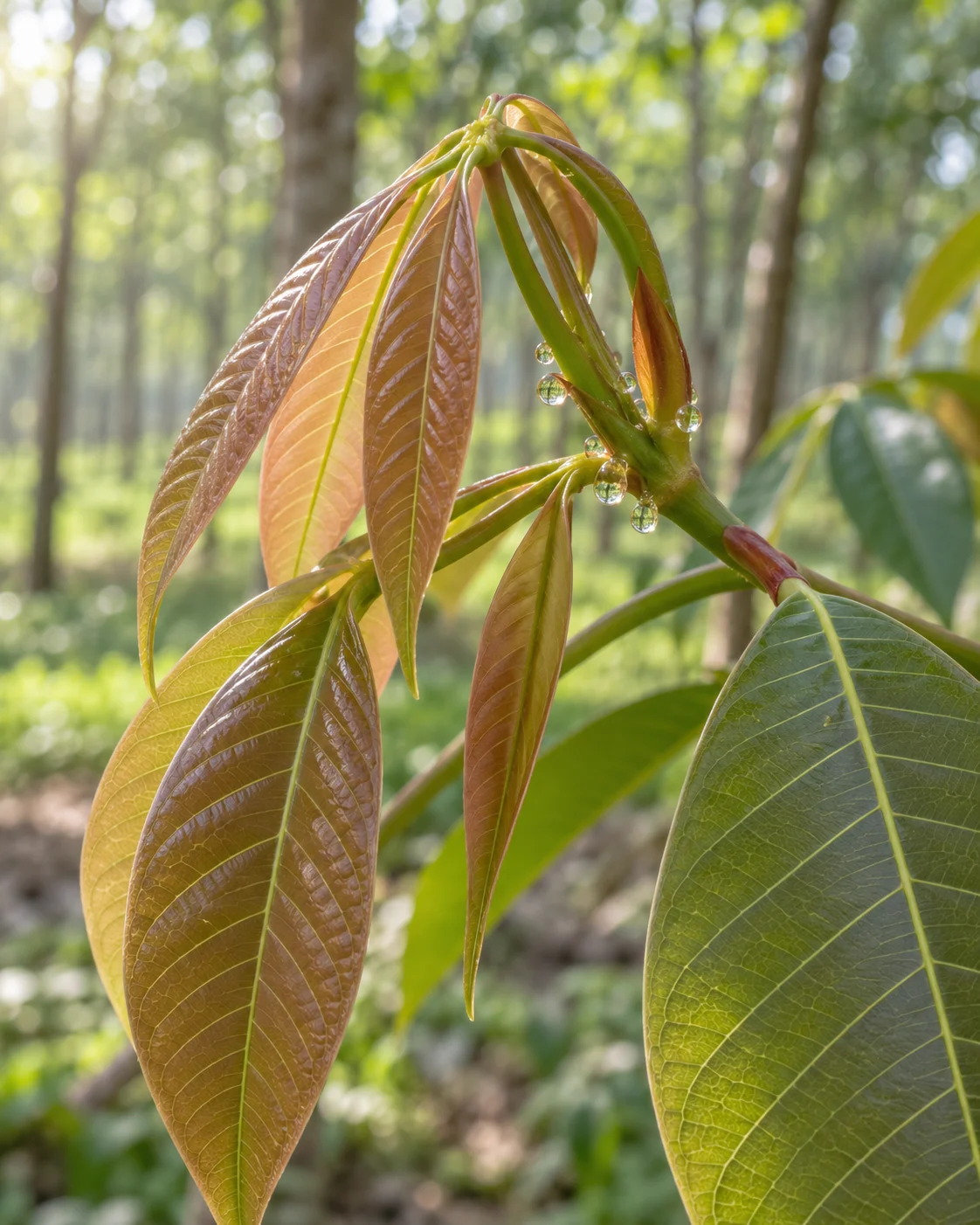 Botanical detail · Vietnam
"Not every honey begins with a blossom."
The House of Meski
Rarity
A familiar tree with an unfamiliar honey story
Rubber is one of the world’s great plantation crops, so the tree itself is not rare. What is unusual is seeing its nectar ecology treated seriously as a named honey origin.
Why it matters
The curiosity is botanical, not theatrical.
Beekeeping
The hives follow the rubber leaf cycle
Bình Phước attracts mobile beekeepers because its plantations can provide sustained forage. Colonies are placed between rows and monitored closely as the trees shed and renew leaves.
The practice
Because other crops also flower in the province, origin control matters. A convincing rubber honey needs a clear seasonal window and enough botanical dominance to keep the style distinct.
Sensory reading
Mild honey, strange origin
Texture
Fluid to medium bodied, with relatively slow crystallisation in many lots.
Notebook
Tasting notebook
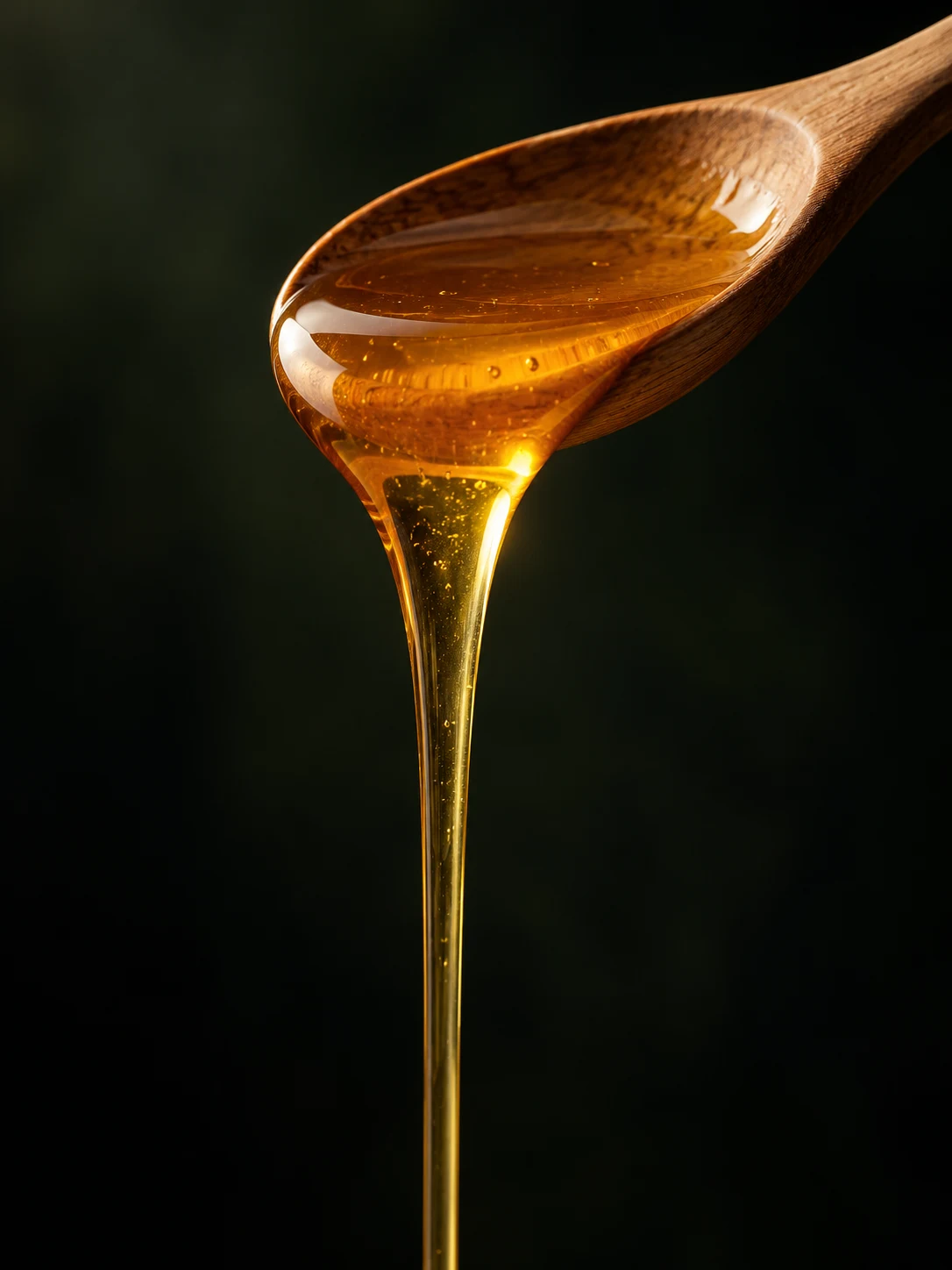
The story is more dramatic than the flavour, and that is part of its charm. Rubber honey is not a sensory stunt. It is mild, practical and quietly distinctive, the kind of honey that becomes more interesting once you know where the nectar came from.
Pairings
Ways to serve it
Meski rating
An editorial reading, not a certification
Six criteria of the House, judged in tasting. This rating describes the appellation, is revised for each lot presented, and replaces no analysis or certificate.
Provenance
The Meski Confidence Chain
Named honey needs more than a beautiful origin story. Confidence comes from a chain that stays continuous from place and season to lot, sample, analysis and sealed jar.
Read: How to read a rare honeyAnalysis describes the sample received by the laboratory. It does not automatically prove that every jar sold under the same name comes from that sample. A continuous chain does.
Continue the Atlas
Vietnam changes honey faster than a map suggests
Move from northern orchard to Central Highlands plantation, Mekong wetland and mountain forest. The country stays the same. Almost everything else changes.