Vietnam · Cà Mau · U Minh Hạ
U Minh
Forest Honey
عسل غابة يو مينه الفيتنامي
Wild giant bees, cajeput forest and wooden rafters: one of Southeast Asia’s most distinctive living honey traditions.
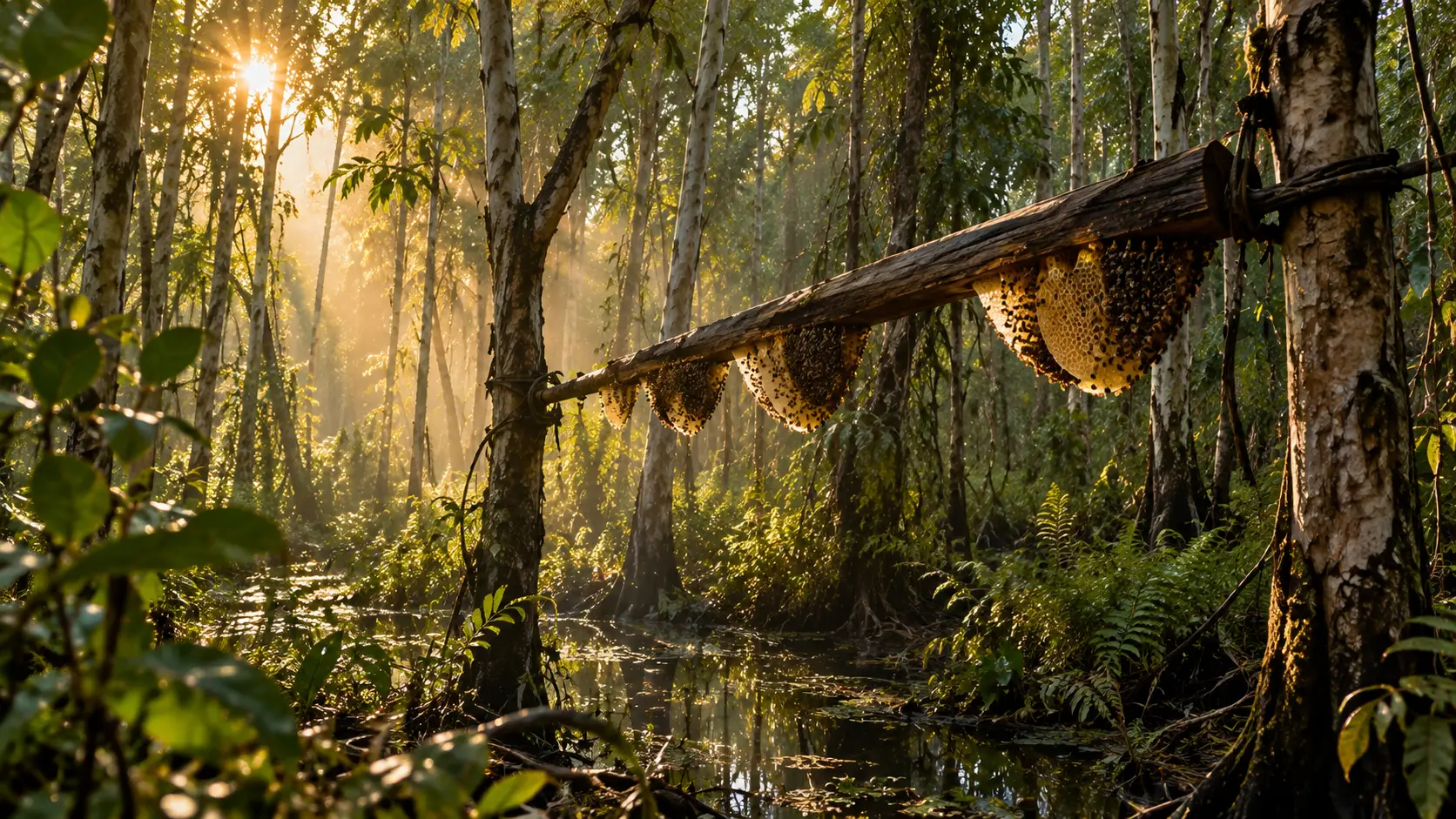
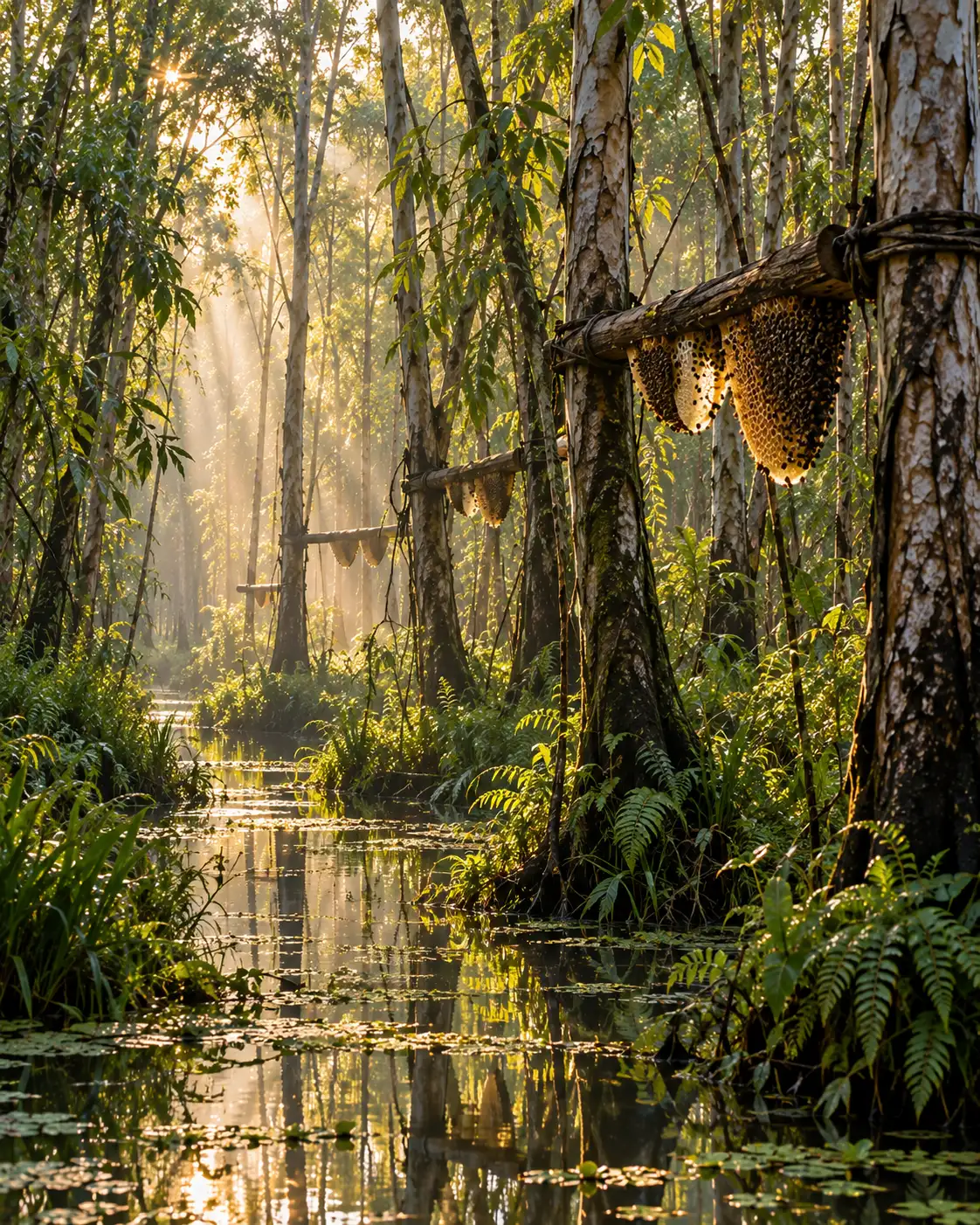
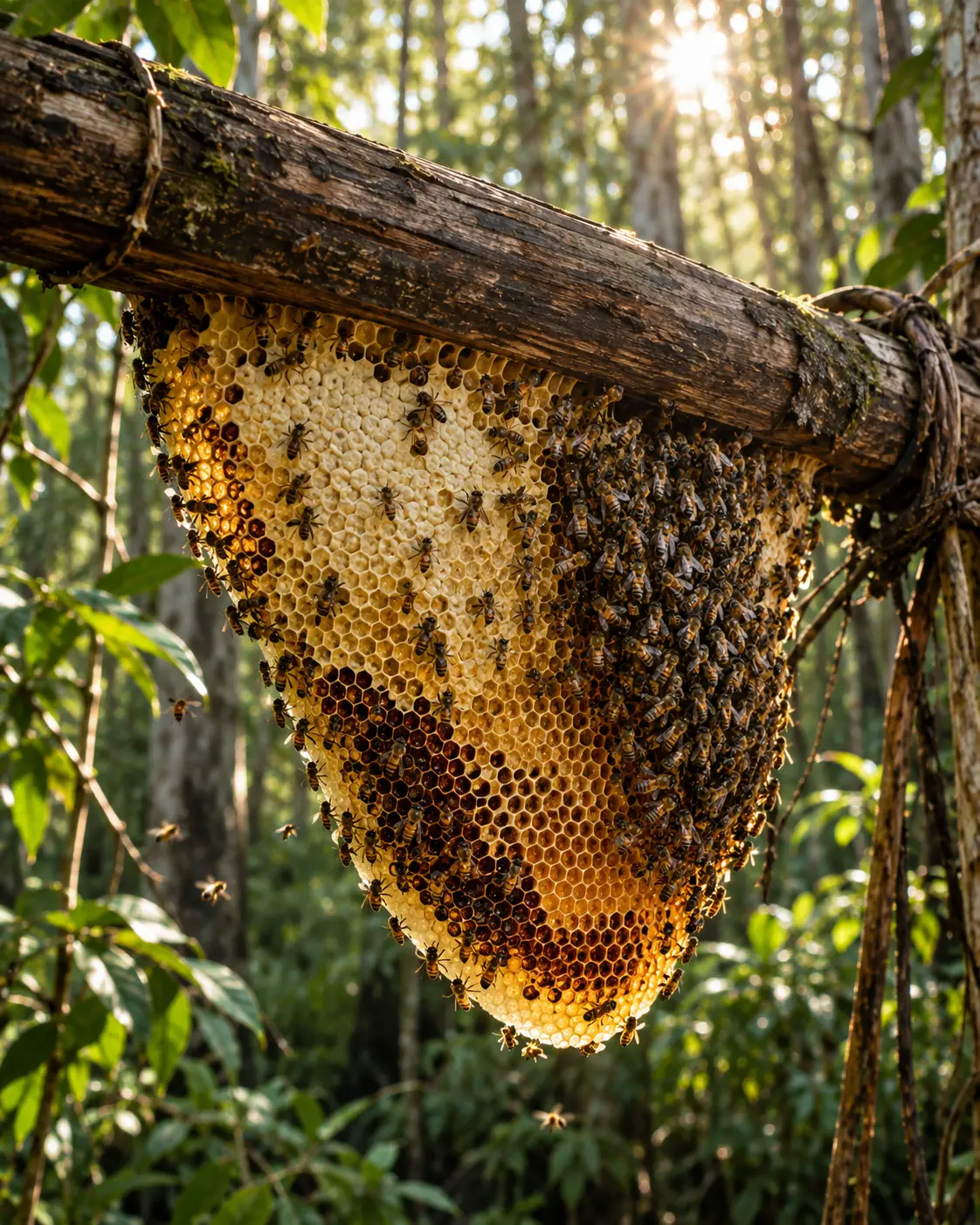
U Minh Hạ is not simply another melaleuca origin. Here, local forest workers practice gác kèo ong, setting slanted wooden rafters to invite migratory giant honey bees, Apis dorsata, to build a single exposed comb beneath them. The forest does the beekeeping; people learn how to read it.
Terroir
Peat, water and cajeput forest at Vietnam’s southern edge
U Minh Hạ is a peat swamp and wetland forest in Cà Mau. Melaleuca cajuputi dominates large areas, growing in acidic soils that flood in the rainy months and dry dramatically as the monsoon retreats.
That seasonal switch brings the honey season. When the rain eases and cajeput blooms, migratory giant bees return. Their arrival has shaped a forest profession that local people have refined over generations.
| Location | U Minh Hạ, Cà Mau, Mekong Delta, Vietnam |
| Landscape | Peat swamp cajeput forest |
| Bee | Apis dorsata, the giant honey bee |
| Floral source | Melaleuca cajuputi led forest forage |
| Harvest | From late October or November into the dry season, commonly through March or April |
"The beekeeper does not own the wild colony. He earns the right place for it to land."
 Cà Mau · U Minh Hạ
The practice
A rafter instead of a hive
A gác kèo rafter is a carefully placed wooden beam, angled and oriented according to sun, wind and bee flight. Apis dorsata chooses whether to settle beneath it. The skill lies in making the forest feel right to a wild colony.
Tradition
A profession learned from wind and sunlight
Rafter beekeeping in the U Minh forests has been documented for more than a century and is rooted much deeper in local memory. Honey and wax once formed part of the forest economy, even appearing in historical tax systems.
Today the practice survives as both livelihood and heritage. It asks for a different relationship with bees: no box, no queen management, no domestication. The colony remains migratory and wild.
Rainy months
Rainy months
Heavy rain pushes colonies away from the forest.
Late October to November
Late October to November
Sun returns, cajeput begins to bloom and bees come back.
Dry season
Dry season
Rafters are occupied and combs are selectively harvested.
2019
2019
Gác kèo ong is recognised as national intangible cultural heritage.
 Botanical detail · Vietnam
"In U Minh, the forest is the real apiary."
The House of Meski
Rarity
Rare because the bees remain wild
This honey cannot be reduced to a floral label. Its identity comes from a wetland forest, a migratory wild bee and a human technique designed to attract rather than domesticate.
Why it matters
The rare part is the relationship between forest, bee and beekeeper.
Beekeeping
Reading the forest instead of controlling the colony
Workers choose the rafter site by watching wind, light and flight paths. In cooler wet periods the beam needs more sun. In the dry season, too much sun can make a site unattractive.
The practice
When the comb is ready, only part is cut. The aim is to take honey while leaving the colony enough structure to continue. It is a negotiation with a wild bee, not conventional hive management.
Sensory reading
Forest cajeput with a wilder edge
Texture
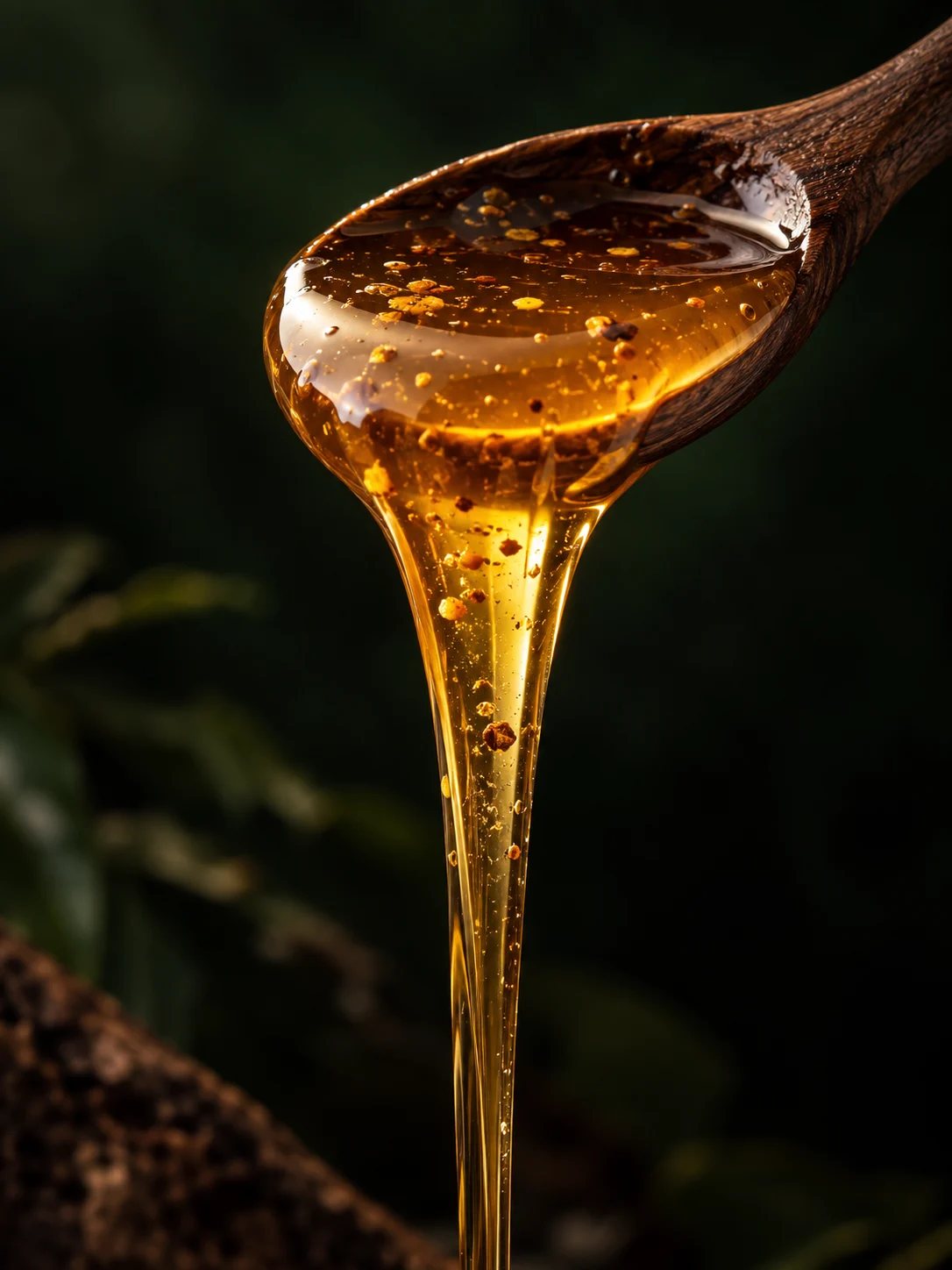
Thick and raw, sometimes carrying tiny traces of pollen or wax from traditional extraction.
Notebook
Tasting notebook
U Minh honey should not taste polished into anonymity. The charm is in the forest edge: cajeput perfume, warmth, a little grip and the knowledge that the colony that made it was never domesticated.
Pairings
Ways to serve it
Meski rating
An editorial reading, not a certification
Six criteria of the House, judged in tasting. This rating describes the appellation, is revised for each lot presented, and replaces no analysis or certificate.
Provenance
The Meski Confidence Chain
Named honey needs more than a beautiful origin story. Confidence comes from a chain that stays continuous from place and season to lot, sample, analysis and sealed jar.
Read: How to read a rare honeyAnalysis describes the sample received by the laboratory. It does not automatically prove that every jar sold under the same name comes from that sample. A continuous chain does.
Continue the Atlas
Vietnam changes honey faster than a map suggests
Move from northern orchard to Central Highlands plantation, Mekong wetland and mountain forest. The country stays the same. Almost everything else changes.