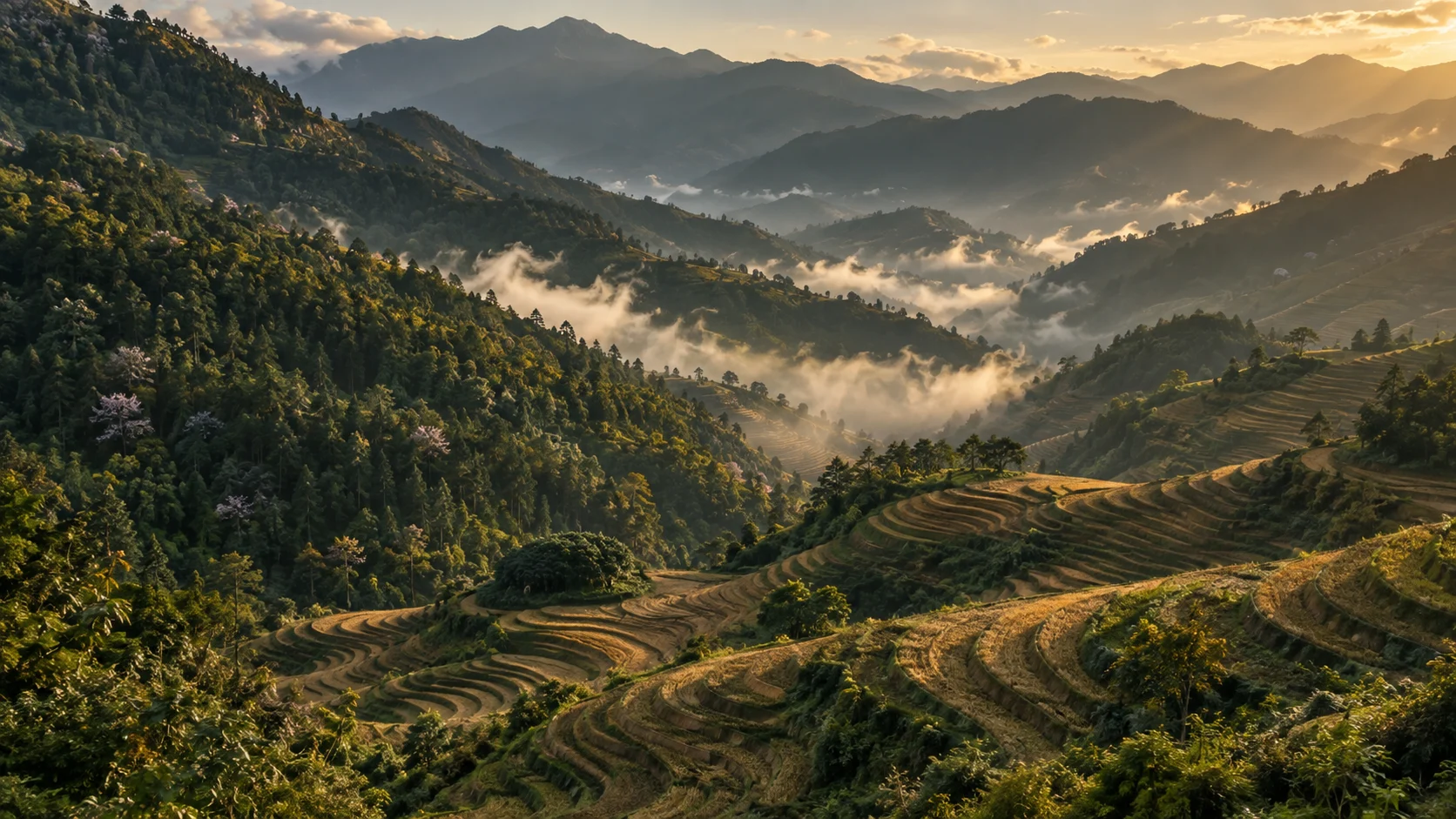
Vietnam · Yên Bái · Mù Cang Chải
Mu Cang Chai
Blong Song Honey
عسل بلونغ سونغ من مو كانغ تشاي
A protected mountain honey whose main autumn crop turns an unusual milky white when the local Blong song forest flower takes over.
Mù Cang Chải is famous for rice terraces, but its geographical indication for honey tells another mountain story. From September to November, Blong song blooms in the forest and becomes the main nectar source, producing a pale, thick honey unlike the orange spring crop from the same district.
Terroir
A mountain honey with two seasons and two colours
Mù Cang Chải rises through steep northern mountains where forest, highland crops and famous rice terraces share the same slopes. Honey from the district carries a protected geographical indication because its seasonal floral sources create recognisable local styles.
The main crop comes in autumn. Blong song, the local forest plant named in the official geographical indication documentation, flowers densely enough to dominate bee forage from September to November.
| Location | Mù Cang Chải, Yên Bái, northern Vietnam |
| Landscape | High mountain forest and terraced valleys |
| Floral source | Blong song, a local forest blossom named in the GI documentation |
| Harvest | September to November, the main annual honey season |
| Colour | Transparent milky white |
"A white mountain honey from a flower most of the world has never heard named."
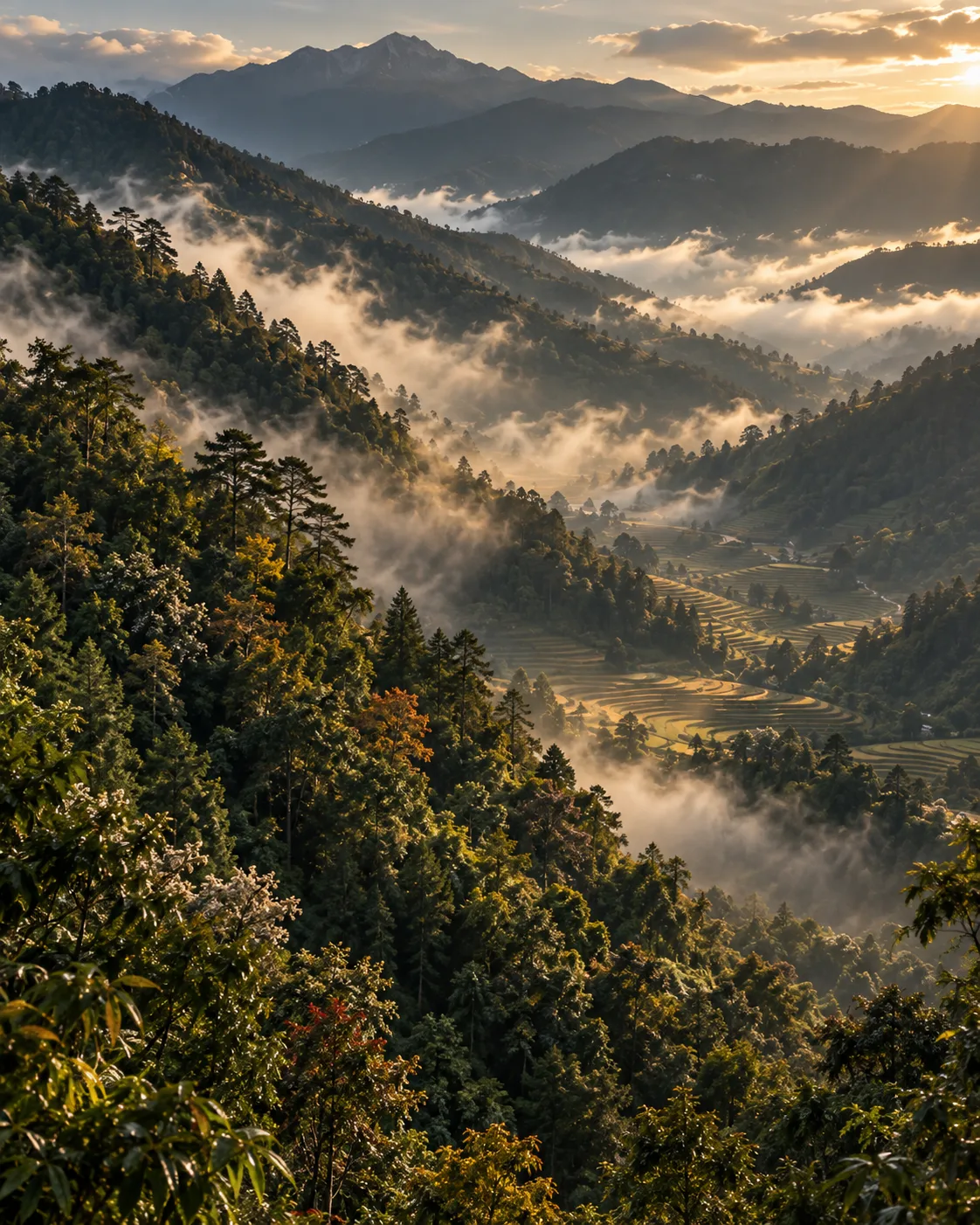 Yên Bái · Mù Cang Chải
A note on the name
Blong song stays Blong song
The official English documentation names the local flower as Blong song but does not fix a botanical Latin identity. The Atlas keeps the local name rather than inventing certainty that the source does not provide.
Tradition
Protected because the season is recognisable
The geographical indication does more than protect a place name. It records the honey’s specific seasonal differences, including colour, texture, sugars and the dominant floral sources of each crop.
That makes Blong song honey unusually well suited to the Atlas. Its identity is not based on folklore alone. The autumn honey is formally described as milky, thick, pleasantly aromatic and gently sweet.
Late summer
Late summer
Forest conditions prepare the main autumn bloom.
September
September
Blong song begins to dominate the forage.
October
October
The principal white honey crop is in full production.
November
November
The main season closes as the mountain flowering pattern shifts.
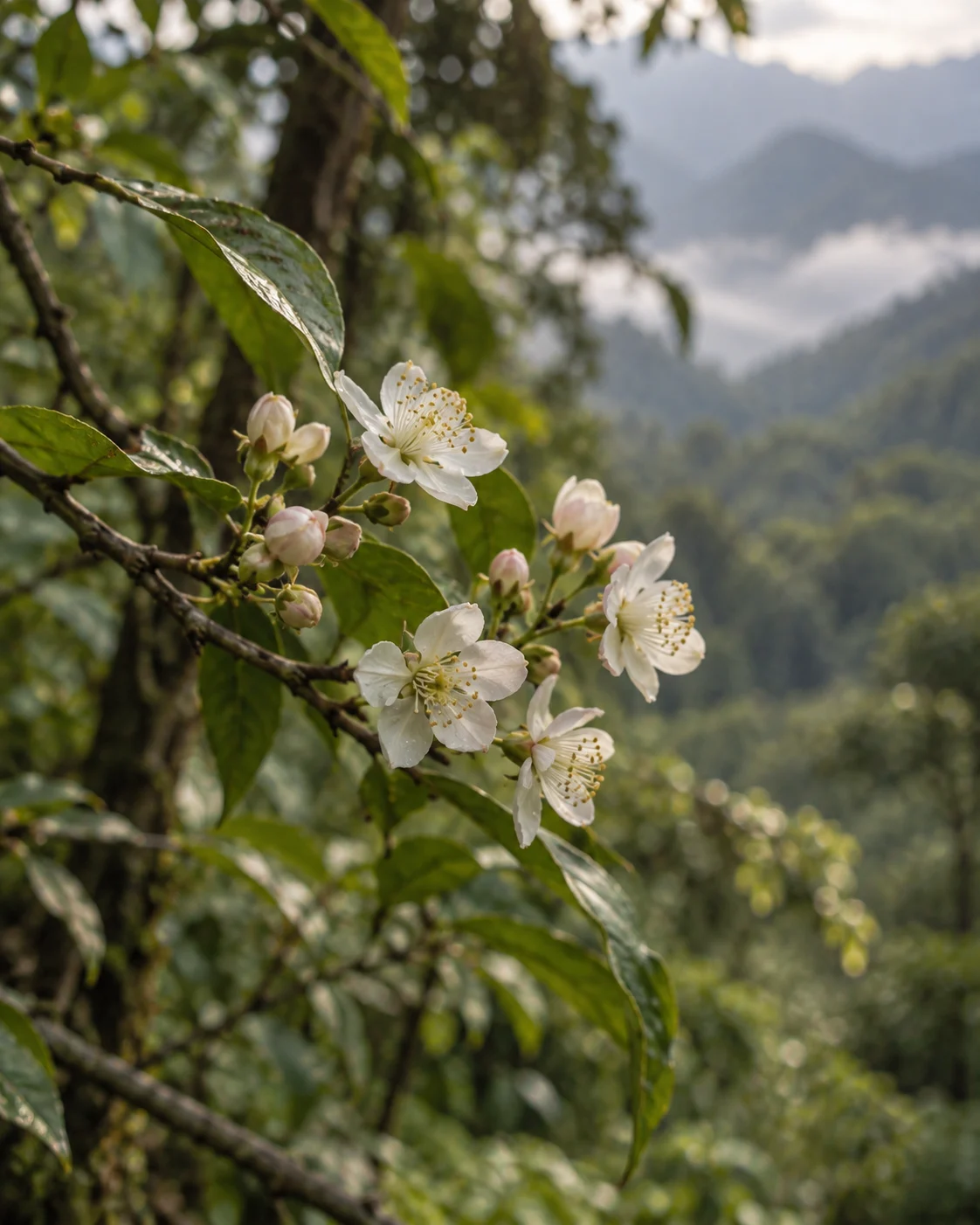 Botanical detail · Vietnam
"A local name, an unusual colour, a mountain identity that needs no embellishment."
The House of Meski
Rarity
Rare because the identity is intensely local
Blong song honey is not an international commodity style. Its importance lies in a small mountain district, a local plant name and a colour profile specific enough to become part of a geographical indication.
Why it matters
A local flower name is sometimes more honest than a borrowed Latin label.
Beekeeping
Fast cycles when the forest is full
The GI documentation notes that Blong song flowers produce abundant nectar. During the main season, combs can fill quickly enough for extraction cycles of roughly four to five days.
The practice
That speed does not make the honey industrial. The terrain remains mountainous, and each apiary still depends on where the forest is flowering most strongly.
Sensory reading
Milky pale, gently sweet
Texture
Thick and clear, with a smooth mountain honey body.
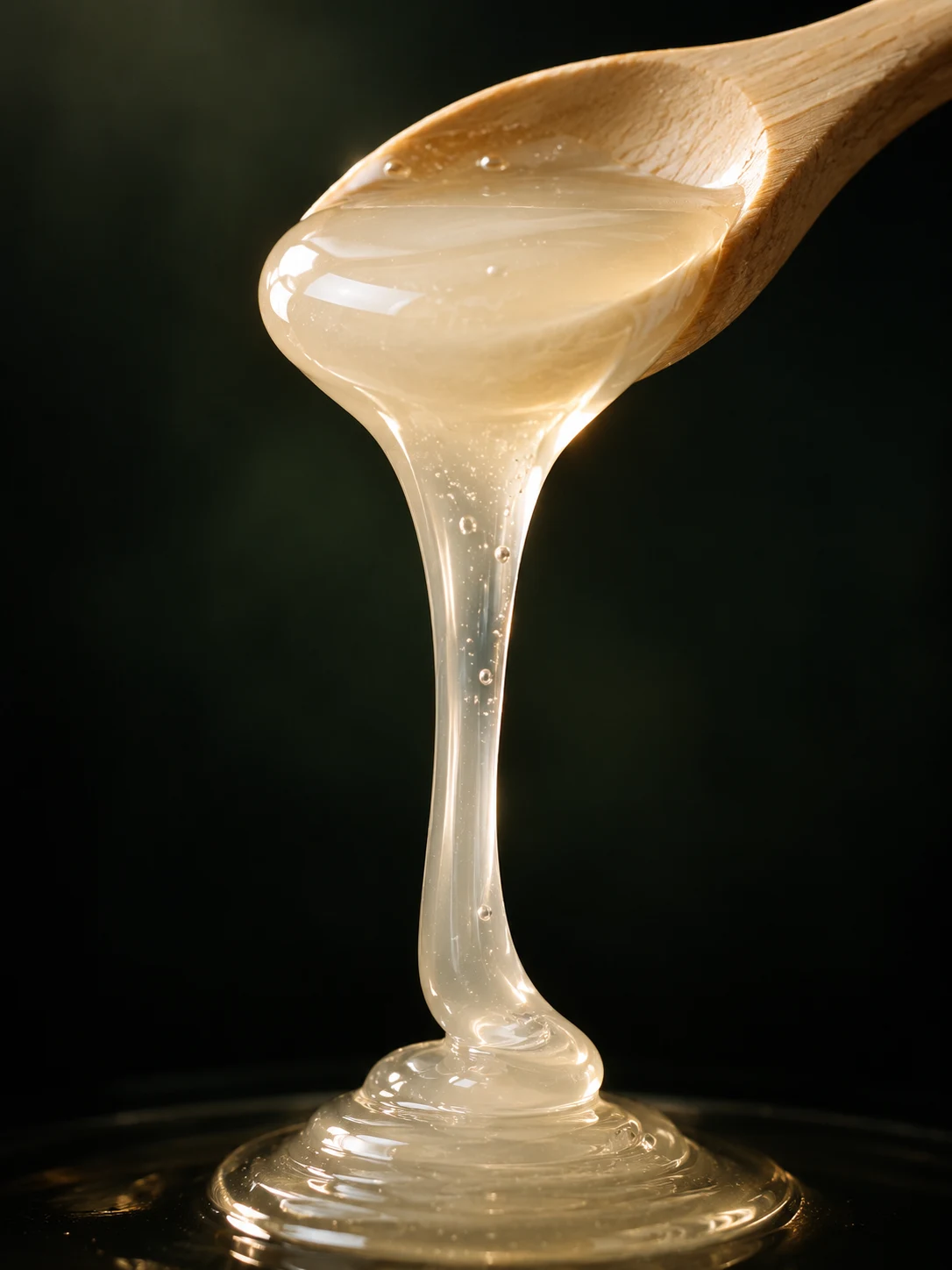
Notebook
Tasting notebook
The colour does half the work before the spoon reaches the mouth. A nearly milky honey from tropical Vietnam feels unexpected. The flavour then refuses drama: gentle sweetness, forest perfume and a cool, restrained finish.
Pairings
Ways to serve it
Meski rating
An editorial reading, not a certification
Six criteria of the House, judged in tasting. This rating describes the appellation, is revised for each lot presented, and replaces no analysis or certificate.
Provenance
The Meski Confidence Chain
Named honey needs more than a beautiful origin story. Confidence comes from a chain that stays continuous from place and season to lot, sample, analysis and sealed jar.
Read: How to read a rare honeyAnalysis describes the sample received by the laboratory. It does not automatically prove that every jar sold under the same name comes from that sample. A continuous chain does.
Continue the Atlas
Vietnam changes honey faster than a map suggests
Move from northern orchard to Central Highlands plantation, Mekong wetland and mountain forest. The country stays the same. Almost everything else changes.