
Culture & Traditions · Arabian Life
The Pearl Divers of the Gulf Before Oil
Before towers and oil, the Gulf already had its seasons, risks and dreams. Among them was the pearl, and the men who dived for it.
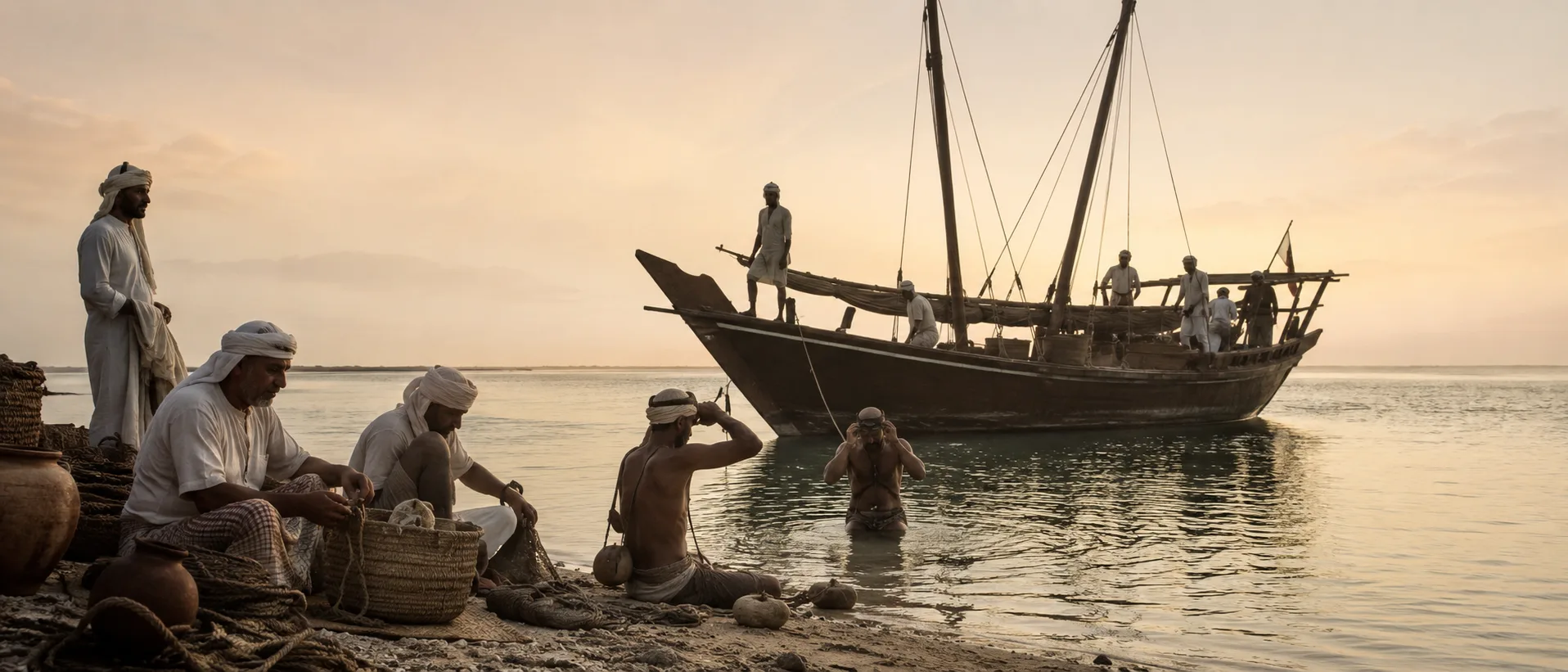
Many people now look at the Gulf through its most visible cities.
Glass towers. Marinas. Highways. Ambitious new districts.
But before all of that, there was the sea.
And for many men and families, there was the pearl season.
An economy before oil
Pearl diving was not a decorative memory created later to make the past look romantic. It was a central economic activity across parts of the Gulf. Families depended on it. Ports organised themselves around it. Seasons, debts, hopes and risks were tied to it.
The sea promised nothing.
Yet it remained a possibility.
The departure was not romantic
It is easy to remember pearling through beautiful boats and songs. There was beauty, certainly. But there was also hardship.
Divers left for long periods. The work was physical, repetitive and dangerous. The body absorbed pressure, exhaustion and heat. Income remained uncertain.
The pearl could enrich trade without necessarily protecting the man who searched for it.
Old economies were not gentler than ours. Their cost was simply more visible on the body.
Meskaoui
The dhow as a floating world
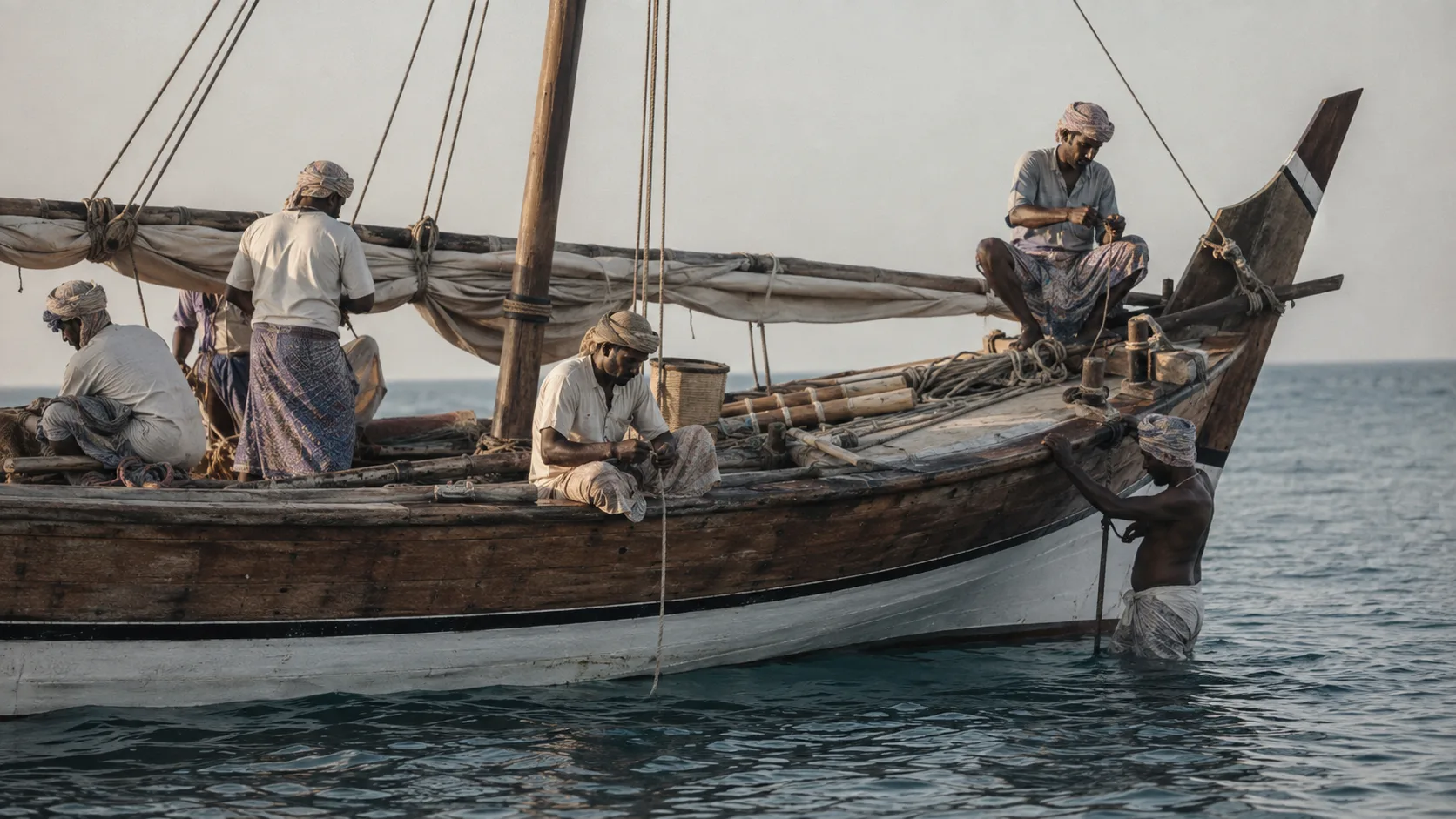
The boat was more than transport. During the season it became an entire social world: discipline, hierarchy, routine and cooperation.
At sea, everyone had a role. Work, waiting and hope followed the rhythm of the boat.
The songs remembered in Gulf maritime heritage were not decoration. They helped men endure, keep time and remain part of a collective effort.
The pearl was more than jewellery
To modern eyes, a pearl is often first a luxury object. Historically, it was more than that. It was a source of income, a traded commodity and a resource around which relationships of credit, labour and power were organised.
Boat owners, crews, merchants, financiers and markets all formed part of the same system.
The sea did not erase inequality. Sometimes it made it sharper.
Before the skylines
This is perhaps what moves me most.
Gulf societies did not begin with oil or with modern architecture. They already possessed economic knowledge, maritime skills, networks and ways of surviving difficult environments.
The relationship with water, port, season and risk was already part of the region’s texture.
What memory kept
Old stories preserved boats, names, songs and departures. They also preserved sadness, because industries change and essential professions can become ceremonial memories within a few generations.
Yet pearl diving should not be reduced to nostalgia.
It still helps explain the value placed on courage, endurance, teamwork and maritime identity across the Gulf.
Before oil, there was already dignity
When we say “before oil,” we should be careful not to create an image of emptiness.
There were already full lives. Hard lives, often. Uncertain lives, certainly. But full of skill, structure and human resourcefulness.
The pearl divers of the Gulf belonged to a world in its own right.
And remembering that world allows us to see the region with more depth than any skyline can provide.
Pearl Diving and Life Before Oil
A pearling season required time, labour and equipment while the result remained uncertain. A crew could work for weeks without knowing how many valuable pearls would be found or what price they would ultimately bring.
During the season the dhow became a working community. Divers, crew members and the people responsible for the boat depended on a shared rhythm, clear roles and cooperation while living away from home for long periods.
Work songs helped organise effort and create a collective rhythm during demanding days at sea. Their survival also preserves the human side of pearling, not only the commercial value of the pearls.
It shows a region that already had skilled labour, maritime knowledge, trade networks and complex economic relationships. The Gulf before oil was not an empty period waiting for modern development to begin.
For the communities that depended on pearling, the pearl was first a livelihood and a traded resource. Its modern image as jewellery can hide the labour, uncertainty and social structure that existed behind each successful find.
Continue Through the Old Gulf
Read the Gulf through its sea, markets, hospitality and the everyday practices that existed long before the towers.