
Culture & Traditions · Travel & Places
The Incense Route, When Arabia Perfumed the World
A grain of frankincense on hot charcoal can reopen a world of mountains, ports, caravans and ancient Arabian routes.
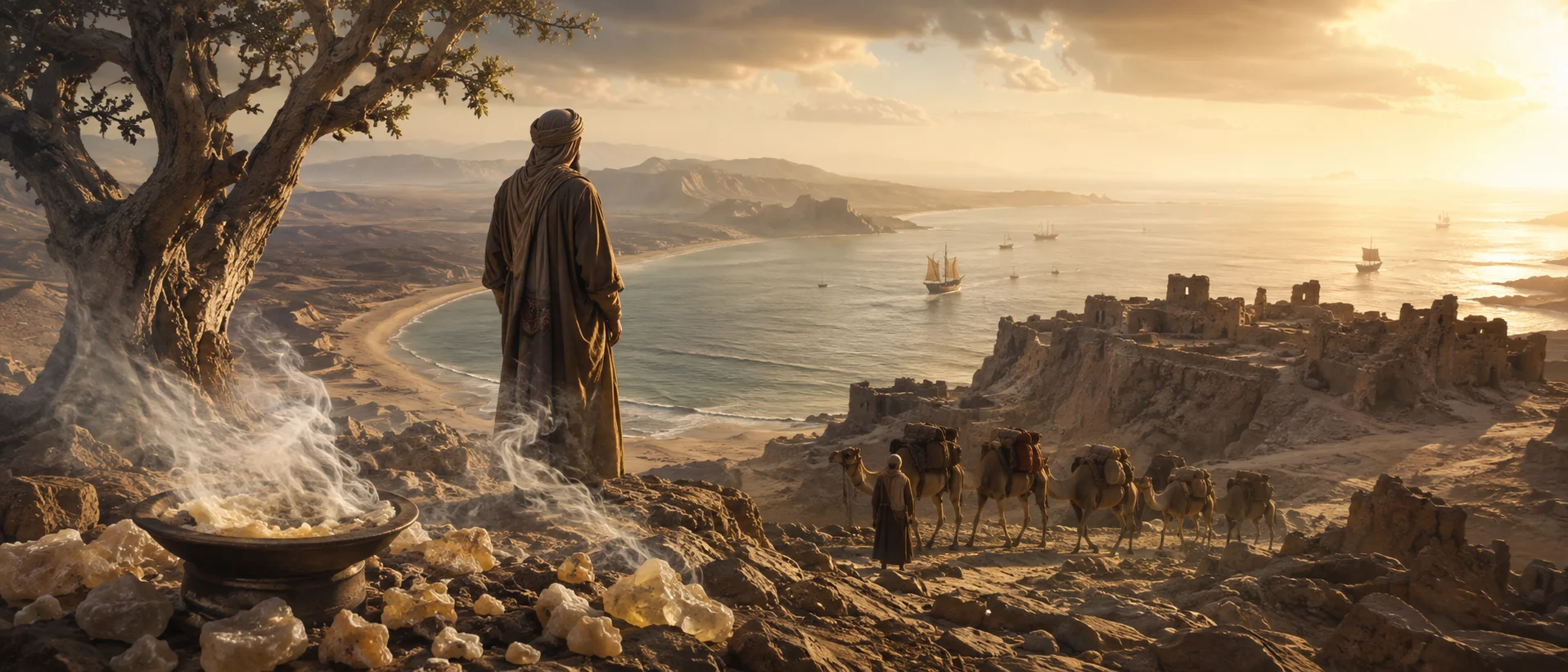
I have always found it remarkable that a fragrance can contain a geography.
A little frankincense touches the charcoal. Smoke rises. The room changes. And before we have opened a map, we are already thinking of trees, mountains, harvesting, ports and long roads.
Luban was never merely something that smelled beautiful.
It travelled the way rare things travel: slowly, far and with value.
Before the road, there was the tree
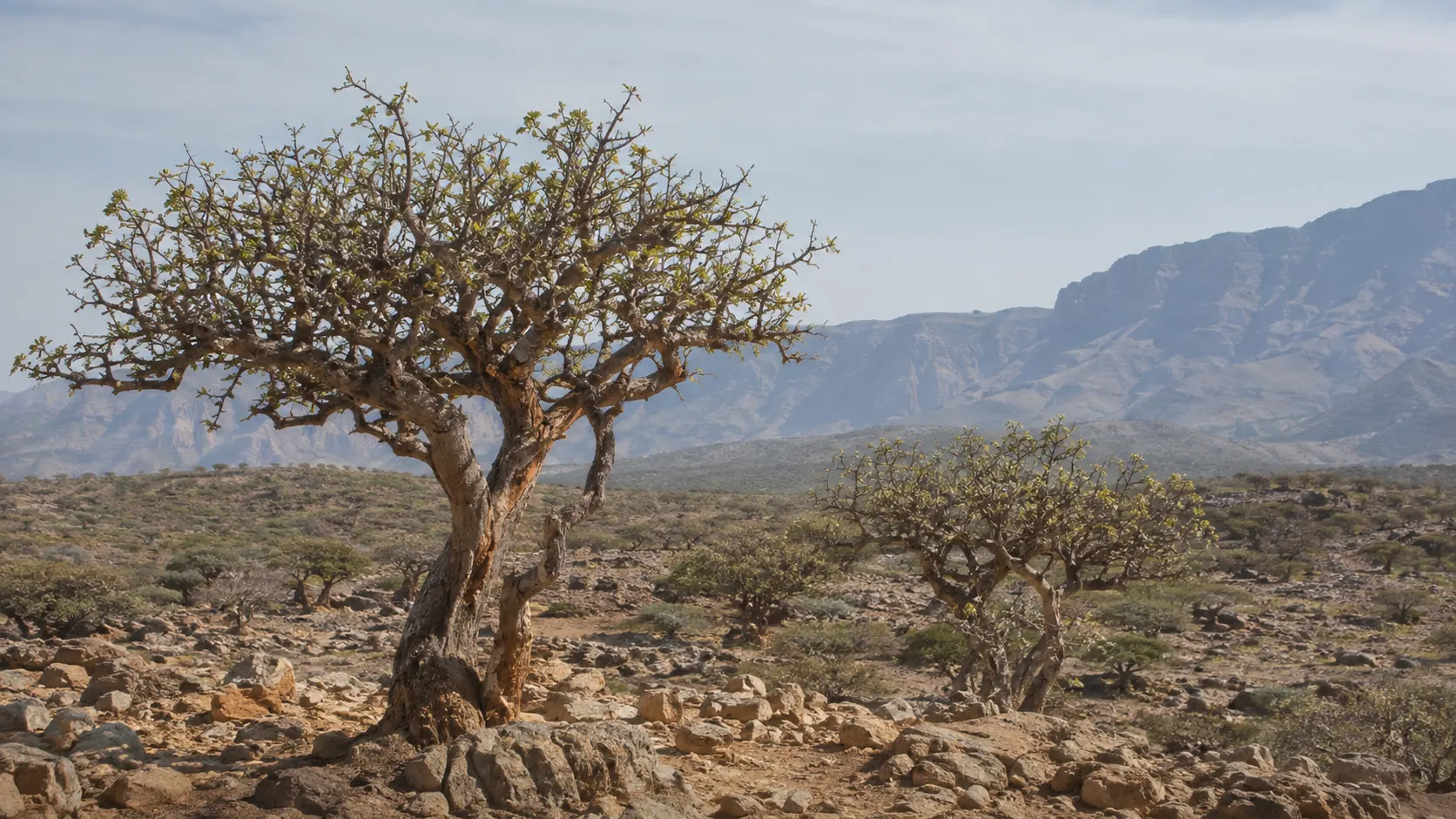
The story begins before trade. It begins with the tree and with the careful incision made into its bark. Resin emerges, hardens and is gathered. In parts of southern Arabia, especially Dhofar, this relationship between people, tree and landscape has endured for centuries.
That is worth remembering.
When we speak of the Incense Route, we tend to picture caravans first. But the first wealth was not the caravan. It was the land itself, capable of producing something other regions wanted deeply.
Arabia was not at the edge of the world
The history of frankincense overturns a common misconception about ancient Arabia. Southern Arabia was not a forgotten margin. It stood at the centre of trade connecting the Indian Ocean, Red Sea, Levant, Egypt and Mediterranean.
Frankincense, myrrh and other aromatics travelled because they mattered in temples, palaces, rituals and elite life.
Great trade routes never move goods alone. They also move an idea of what a civilisation considers precious.
Meskaoui
Ports, tracks and kingdoms
The Incense Route was not one perfect line across a map. It was a network. Ports received cargo. Caravan tracks crossed the interior. Kingdoms such as Saba, Qataban and Hadramawt took part in a world where aromatics carried economic and political importance.
The desert was not silence. It was organisation.
Goods had to be protected, taxed, stored, moved and negotiated.
Why the ancient world wanted it
Frankincense transformed air. It marked sacred space. It accompanied worship, ceremony and memory across different traditions.
Its value therefore came from more than its physical substance. It came from what societies believed it could do.
That is why certain materials travel so far. They become connected to the sacred, to prestige, to care, to the invisible.
Dhofar as living memory
One of the most beautiful parts of this story is that it has not completely disappeared into books. In Dhofar, frankincense is still tangible. The landscape itself continues to explain part of the history.
For a visitor, that changes everything. Arabia suddenly appears with another texture, another climate, another botanical memory.
What remains when the smoke disappears
The smoke from one grain of frankincense does not last long. It rises, takes shape and fades.
But the history it carries is enormous.
It speaks of an Arabia that produced one of the most desired materials of its time. It speaks of kingdoms, ports, caravan routes and rituals connecting distant worlds.
And it reminds us of something simple.
Before frankincense became a fragrance in a room, it was a tree, a land and a road.
The Incense Route Beyond the Map
No. It is more accurate to think of it as a network of overland tracks, ports and maritime connections. Resin could move north by caravan or leave southern Arabia through ports toward other parts of the Indian Ocean world.
Long-distance caravan travel depended on reliable stages, wells and oases. A valuable resin could only move through arid country when people also understood where animals and travellers could rest, drink and continue safely.
Because the valuable material began there. Frankincense-producing landscapes gave southern Arabian communities control over a resource that distant societies wanted for ritual, prestige and daily use.
No. Arabian ports also connected to maritime networks across the Indian Ocean. The story of frankincense therefore belongs to both caravan history and seaborne trade.
When a tree produces a rare material desired far beyond its natural range, controlling harvest, storage and movement creates economic value. Frankincense turned a botanical resource into part of a much larger political and commercial system.
Follow the Scent Further
From the Boswellia tree in Dhofar to the homes and markets where frankincense is still part of daily life.