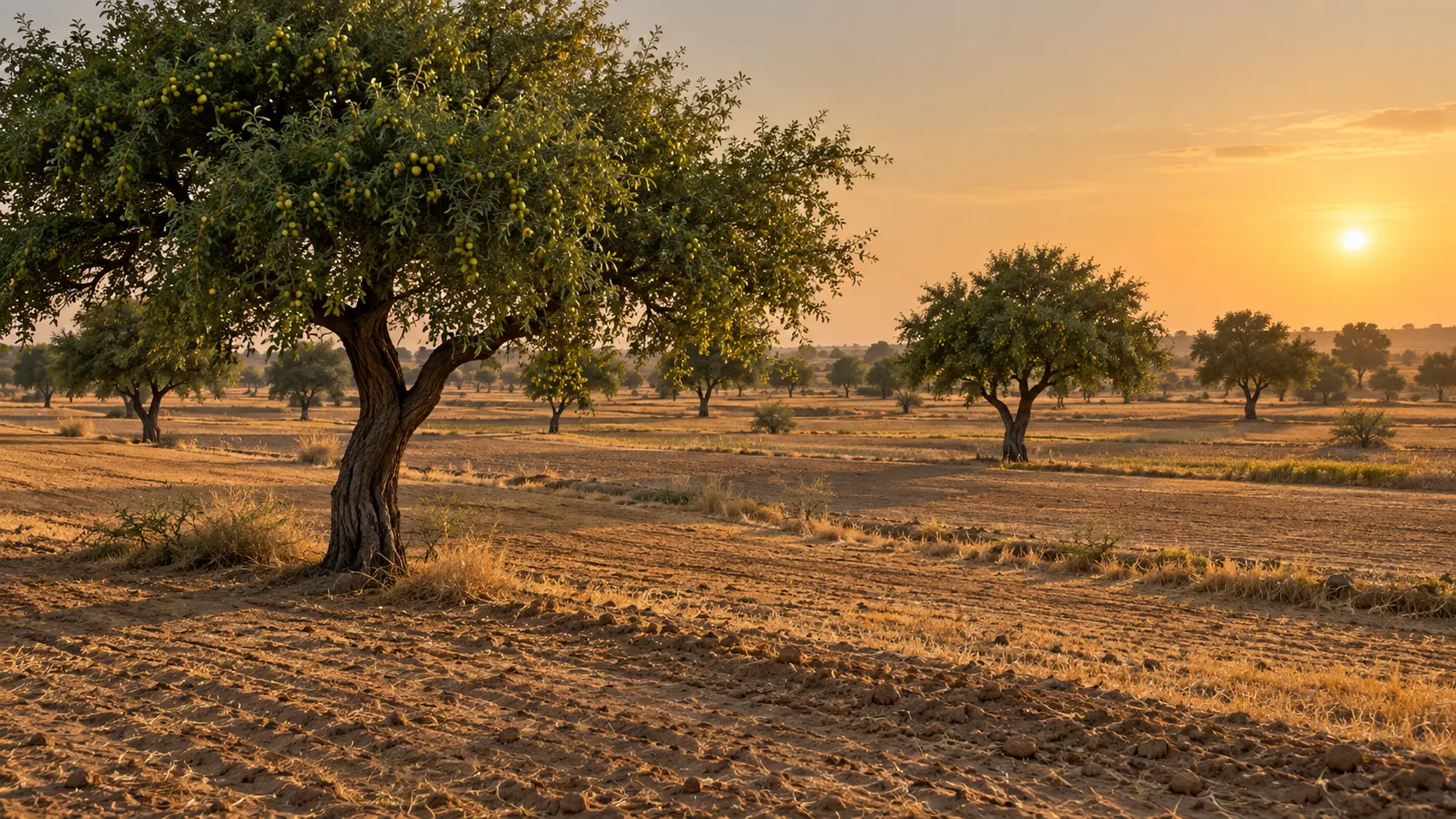
India · Rajasthan · Ganganagar & Hanumangarh
Rajasthan
Ber Honey
عسل البير الهندي
India’s jujube honey comes from Ziziphus mauritiana — a cultivated and semi-wild dryland tree whose autumn bloom gives a distinctly Indian answer to Sidr.
Across northern Rajasthan, Ber is both a fruit tree and a bee plant. Ziziphus mauritiana is deeply adapted to India’s arid and semi-arid landscapes, and around Ganganagar and Hanumangarh its autumn flowers can support a thick, golden honey with warm, malty depth.
Terroir
Jujube as orchard, hedgerow and honey plant
Ber is indigenous to the Indian subcontinent and cultivated widely across Rajasthan. It thrives where many fruit trees struggle: high heat, limited rainfall and soils that reward drought tolerance.
For bees, the relevant moment comes before the fruit. In Rajasthan, flowering extends broadly from late July into November, with the strongest northern bloom concentrated around late August to October. Honey harvest follows that autumn flow.
| Location | Ganganagar and Hanumangarh, northern Rajasthan, India |
| Landscape | Semi-arid farmland, dry orchards and hedgerows |
| Floral source | Ber / Indian jujube — Ziziphus mauritiana |
| Harvest | October–November |
| Character | Golden to reddish amber, thick and warm |
"In Rajasthan, the jujube is not an exotic tree. That may be exactly why its honey deserves more attention."
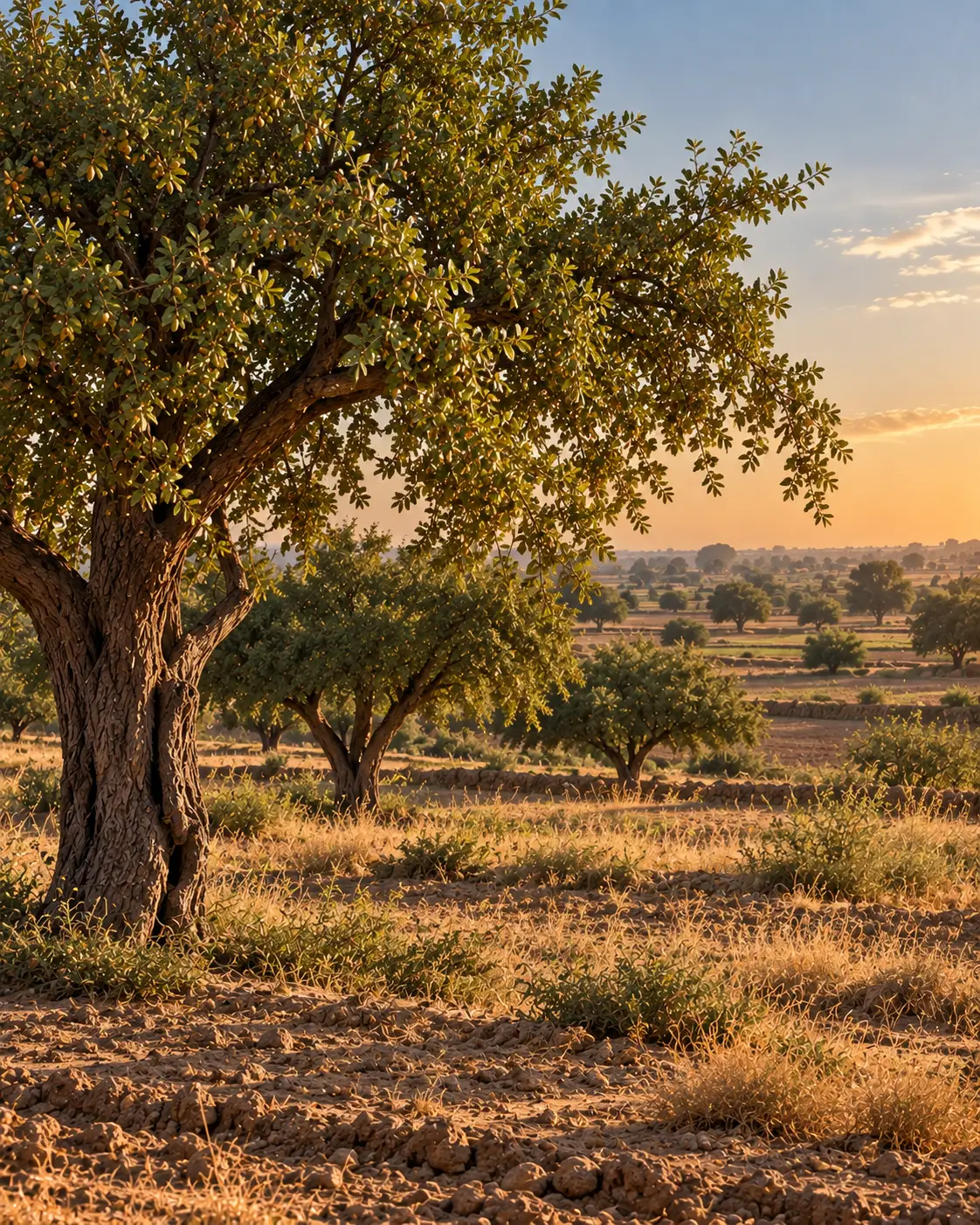 Northern Rajasthan · Ganganagar & Hanumangarh
Botanical distinction
Ber is not Arabian Sidr
The family resemblance is real, but the species is different. Indian Ber Honey comes from Ziziphus mauritiana, not the Ziziphus spina-christi that defines much of Arabian Sidr. The Atlas should preserve that difference instead of hiding it behind one export-friendly word.
Tradition
A fruit crop with a second life as bee forage
Indian Ber is first understood as food: fresh fruit, orchard crop and dryland horticulture. Honey comes from the same tree at a different moment in its annual cycle.
That gives this fiche an agricultural tone quite different from wild desert Sidr. The landscape is worked, grafted, irrigated in places and selected for fruit — yet still capable of giving a recognisable monofloral honey.
Old crop
Old crop
Ber becomes one of India’s classic arid-zone fruit trees.
Dryland horticulture
Dryland horticulture
Rajasthan develops commercial orchards and improved cultivars.
Autumn bloom
Autumn bloom
Flowers become a major post-monsoon resource for bees.
Premium niche
Premium niche
Ber honey begins to be positioned internationally alongside the wider Sidr family.
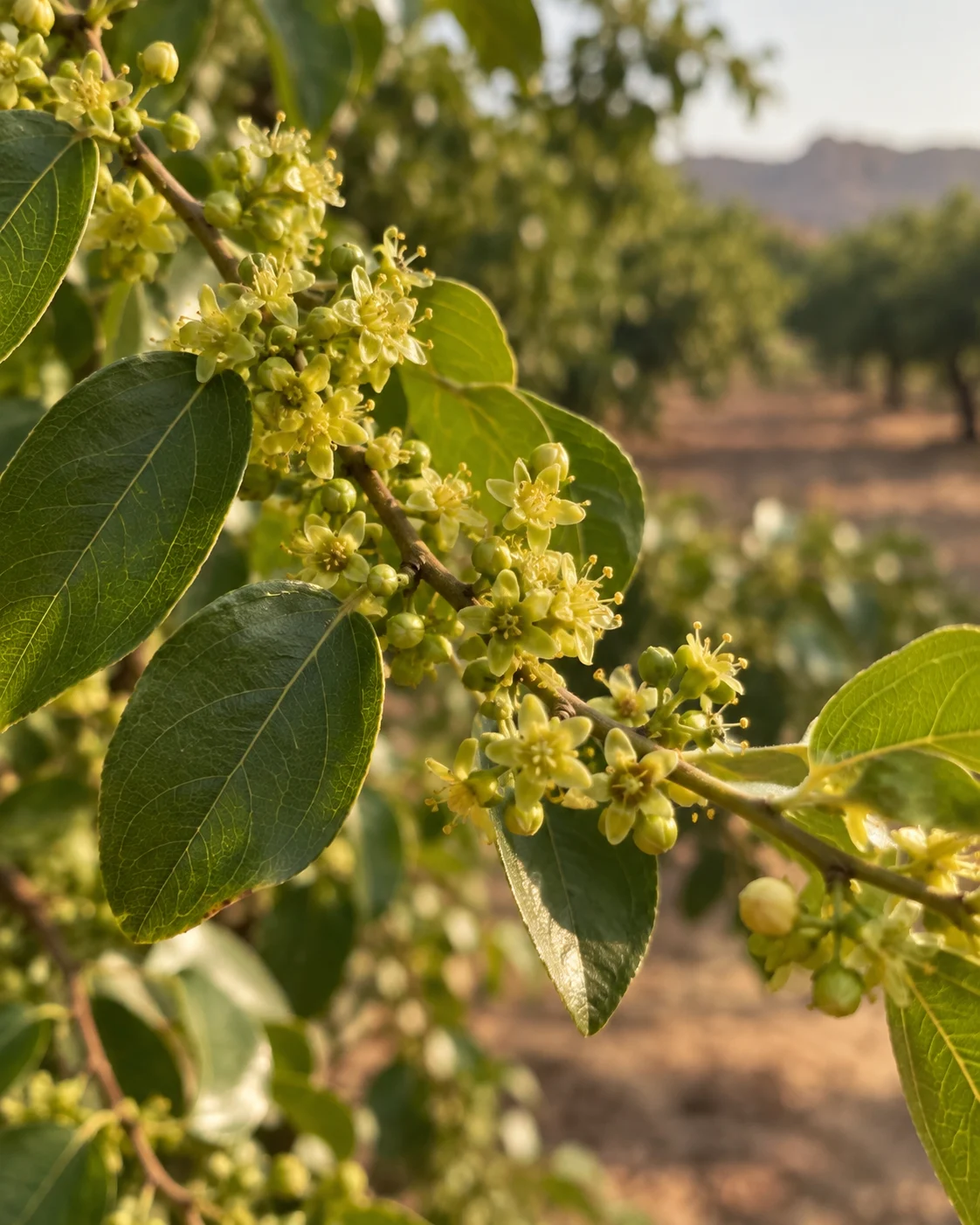 Floral source · India
"In India, the honey story begins in a fruit orchard."
— The House of Meski
Rarity
Rare because fruit and honey compete for attention
Ber is common as a crop, but clean Ber honey is less common than the abundance of trees might suggest. Apiary placement, competing autumn flora and a finite bloom window all matter.
Why it matters
The rarity is not the tree; it is the clarity of the floral harvest.
Beekeeping
Following the post-monsoon bloom
Northern Rajasthan’s main bee flows include a strong post-monsoon period. Ber flowers within that window, giving colonies an important nectar source before winter.
The practice
To produce a recognisable Ber honey, beekeepers need enough flowering Ziziphus around the apiary to keep competing crops from taking over the pollen and flavour profile.
Sensory reading
Golden, malty and fruit-led
Texture
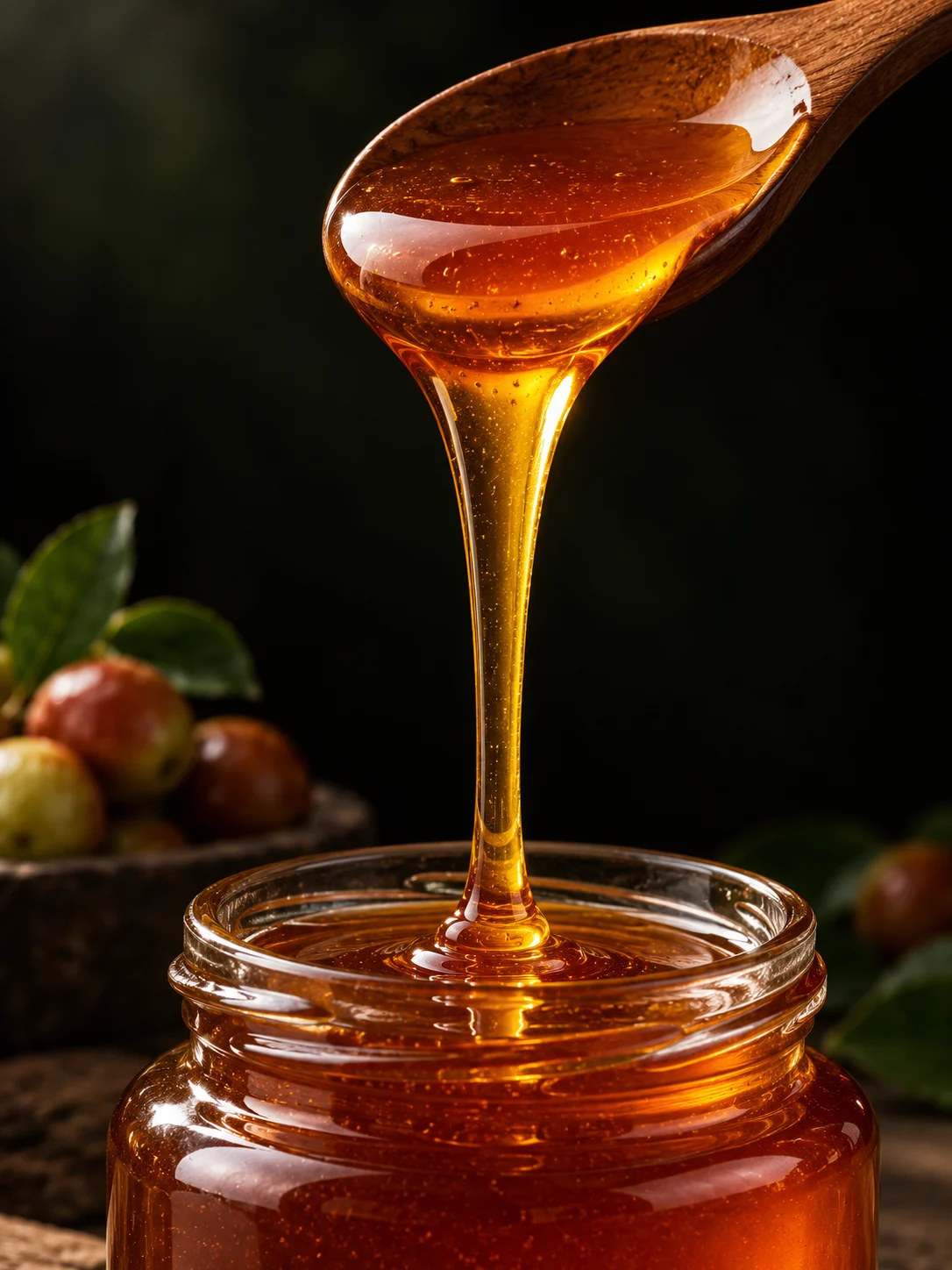
Thick and smooth, less resinous than classical Yemeni Sidr but clearly more substantial than light floral honey.
Harvest notebook
From the field — the importance of naming the species
“Sidr” is useful in trade because buyers recognise it. “Ber” is more useful in an Atlas because it tells us what India actually calls the tree.
The scientific name makes the distinction even clearer: Ziziphus mauritiana belongs to the same honey family without being botanically identical to Arabian Z. spina-christi.
That difference gives India a genuine place in the Ziziphus route rather than a supporting role in someone else’s story.
Pairings
How to serve it
A warm, malty honey that enjoys grain, dairy and nuts.
Meski rating
An editorial reading, not a certification
Six criteria of the House, judged in tasting. This rating describes the appellation, is revised for each lot presented, and replaces no analysis or certificate.
Provenance
The Meski Confidence Chain
Rare honey is one of the most counterfeited foods in the world, and named floral origins are no exception. Confidence does not come from one adjective or one certificate — it comes from a chain that stays continuous, from bloom to jar.
Read: How to read a rare honeyAnalysis describes the sample received by the laboratory. It does not automatically prove that every jar sold under the same name comes from that sample. A continuous chain does.
Continue the Atlas
An origin is never an island
Compare not to name a winner, but to understand what place, season and craft shift in the cup.