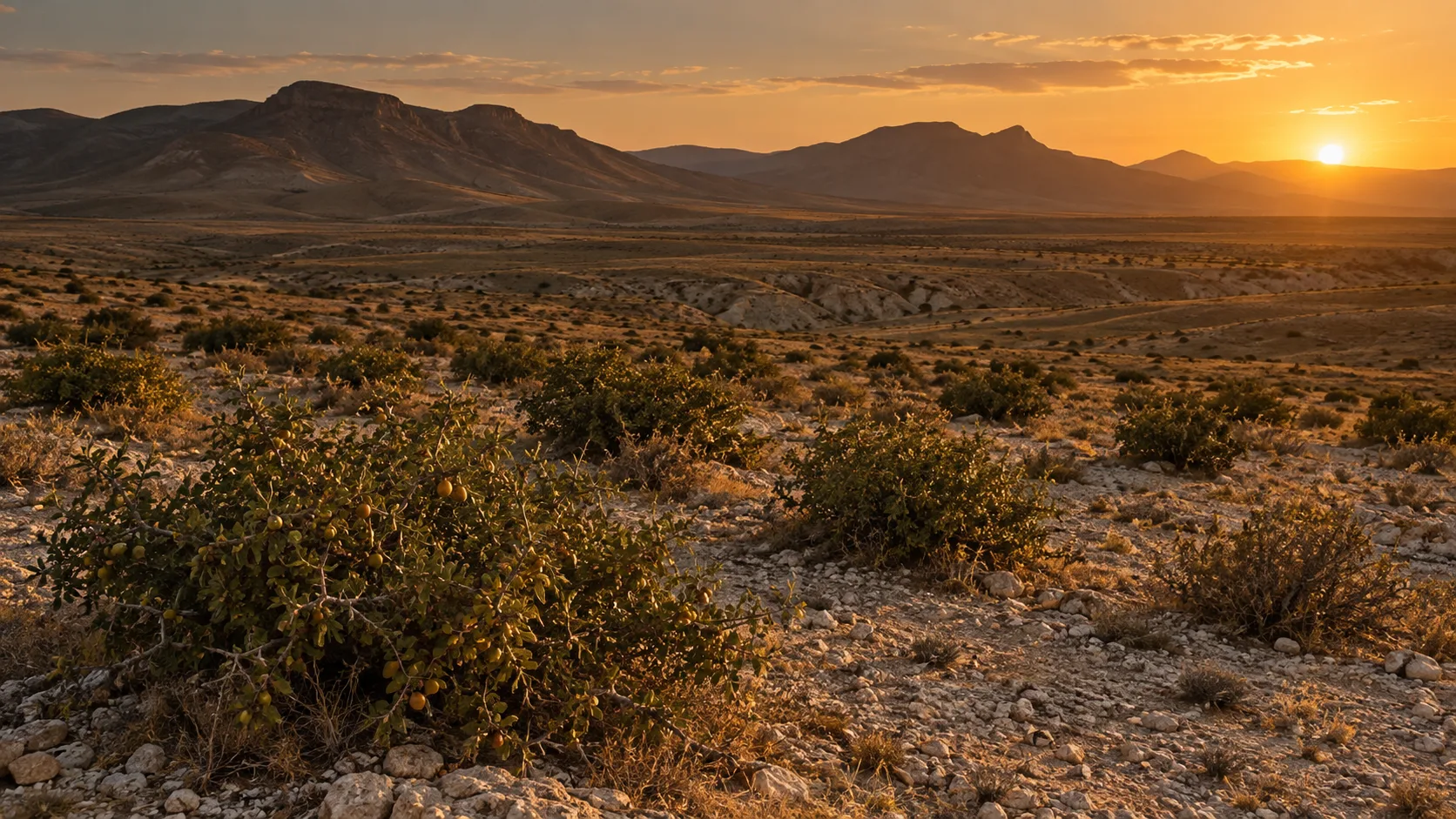
Tunisia · Gafsa · South-West
Gafsa
Jujube Honey
عسل السدر القفصي
A Tunisian Ziziphus lotus honey with something rare in the category: a current lot whose pollen percentage and laboratory dates are public.
Around Gafsa, the jujube is not the Arabian Sidr tree but Ziziphus lotus, a thorny North African relative. A documented 2026 harvest from the region contained 57% jujube pollen — enough to anchor the honey not in legend, but in a measurable floral identity.
Terroir
Jujube at the edge of the Tunisian steppe
Gafsa sits in south-western Tunisia, between steppe, low mountains and the approaches to the Sahara. Ziziphus lotus grows as a low, thorned shrub suited to exactly this kind of dry North African country.
Botanically, that matters. This is not Ziziphus spina-christi from Yemen or Jordan, and not Indian ber. It is the Mediterranean and Maghrebi Ziziphus lotus — another branch of the jujube family with its own honey expression.
| Location | Gafsa region, south-western Tunisia |
| Landscape | Semi-arid steppe and low mountain country |
| Floral source | Ziziphus lotus — North African jujube |
| Harvest | July on the documented 2026 Gafsa lot |
| Pollen | 57% jujube pollen on the documented 2026 lot |
"The most persuasive luxury adjective in honey may be a number you can actually verify."
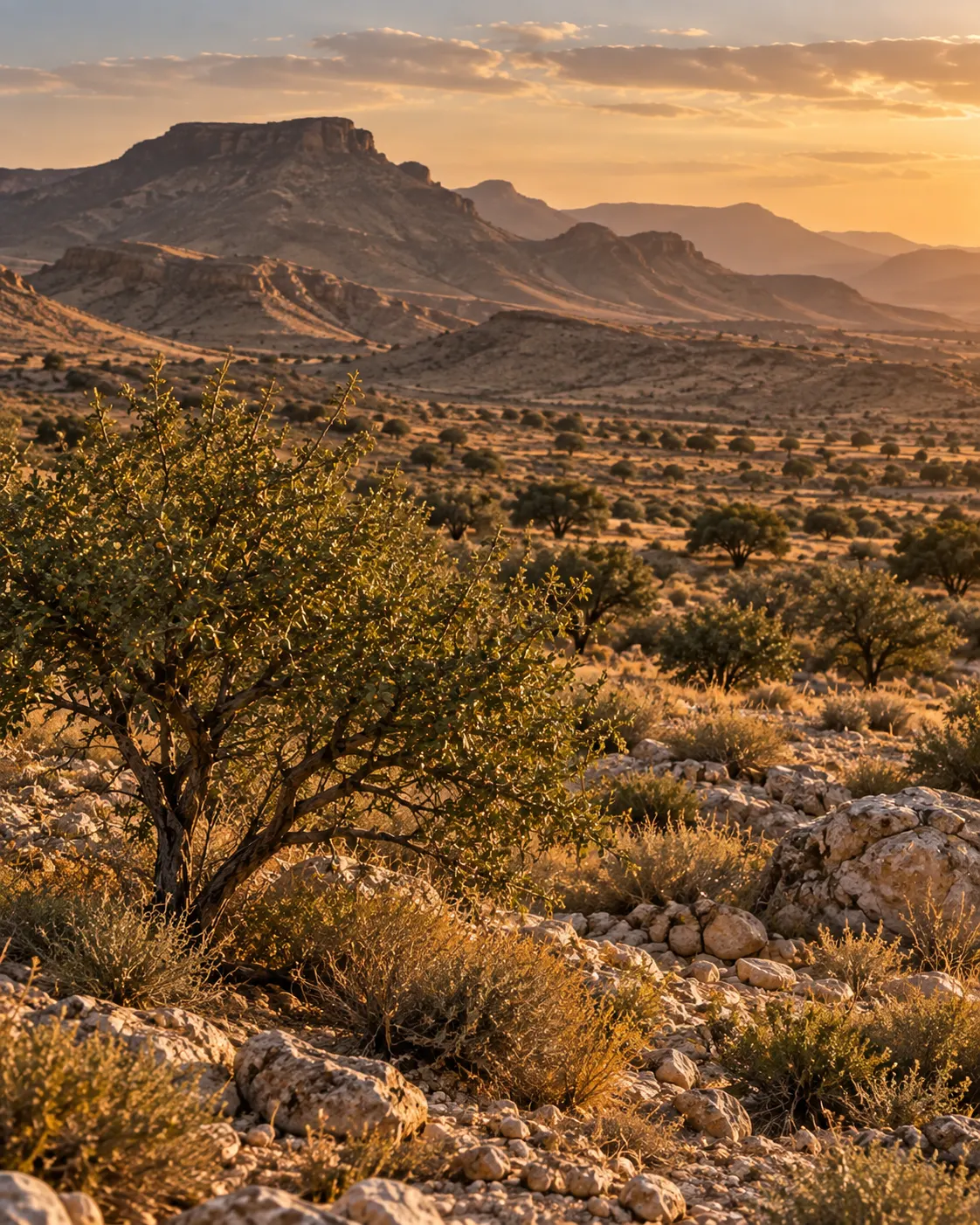 Gafsa · South-western Tunisia
Why this fiche is different
Evidence before mythology
Gafsa gives the Atlas a chance to talk about rare honey without relying on prestige language. A named lot, harvest month, moisture, HMF, invertase and pollen percentage are more useful than a dozen claims that a honey is “the best in the world”.
Tradition
The Maghreb’s other jujube
Across North Africa, Ziziphus lotus has lived close to pastoral life, hedges and dry-country food traditions for centuries. Its fruit and thorned form are familiar long before its honey becomes a premium object.
What is new is the level of documentation. A Gafsa beekeeper publishing laboratory results lot by lot turns a traditional product into something unusually legible for the modern buyer.
Old landscape
Old landscape
Ziziphus lotus persists across the Maghrebi drylands.
Local honey
Local honey
Jujube becomes one of Tunisia’s distinctive regional honeys.
2024–2026
2024–2026
Lot-level laboratory publication becomes part of the sourcing story.
July 2026
July 2026
A Gafsa lot records 57% jujube pollen and five compliant quality parameters.
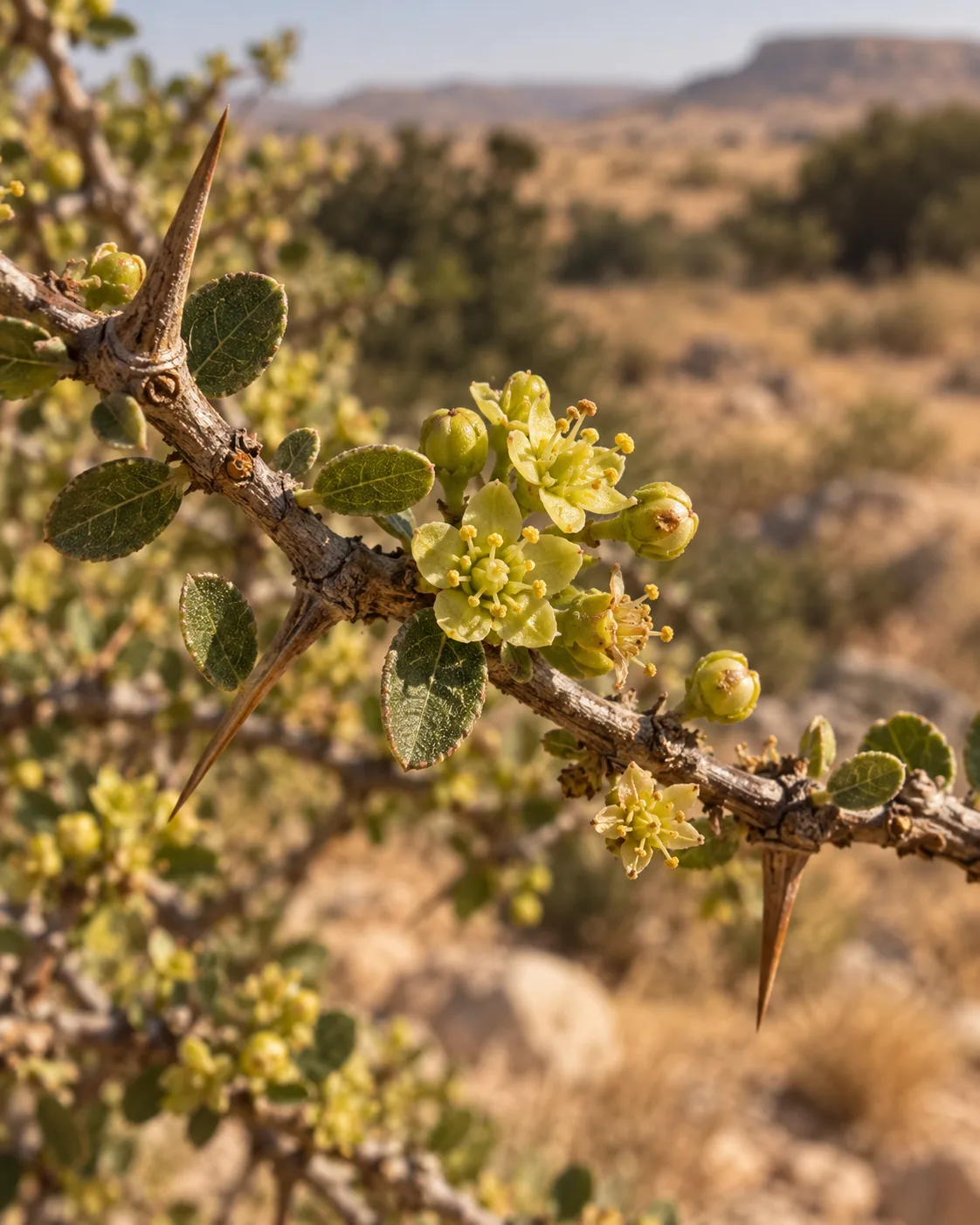 Floral source · Tunisia
"In Gafsa, proof becomes part of the flavour story."
— The House of Meski
Rarity
Rare enough to deserve documentation
Jujube honey is not produced at commodity scale in Gafsa, and clean monofloral expression depends on both the bloom and the placement of the hives.
Why it matters
A rare honey becomes more interesting, not less romantic, when its numbers are visible.
Beekeeping
From apiary to report, not just apiary to jar
The documented Gafsa method links a known apiary, cold extraction, a lot number and an accredited laboratory report. That is exactly the kind of chain the Atlas encourages.
The practice
The honey remains agricultural and seasonal, but the evidence is modern: pollen analysis helps test whether the floral story survives contact with the sample.
Sensory reading
North African jujube, without the Arabian weight
Texture
Rich and smooth, with a natural density that still feels clean on the palate.
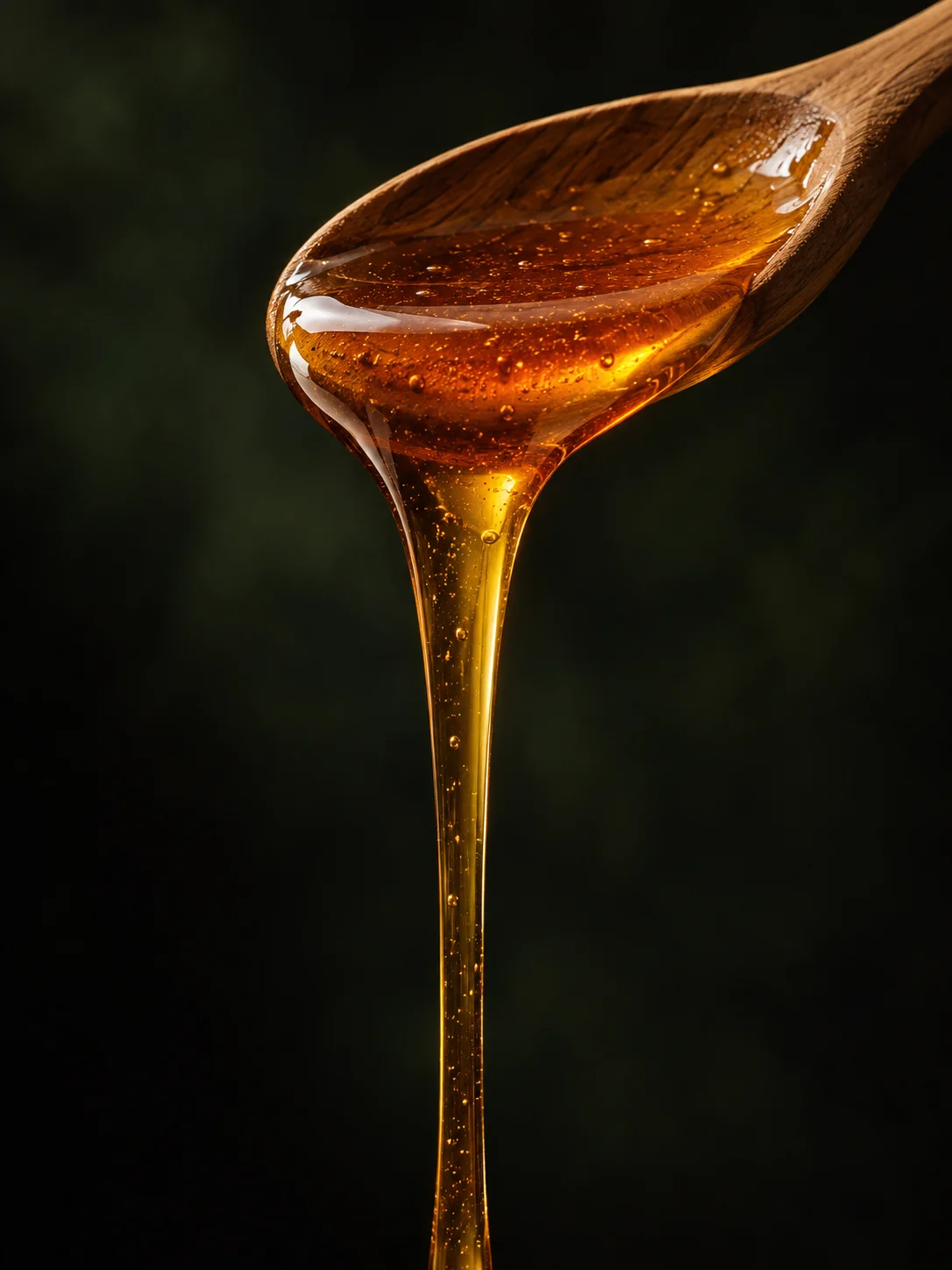
Harvest notebook
From the field — a lot you can read
The Atlas usually has to separate the appellation from whatever one producer says about it. Here the current producer data is unusually useful.
The published Gafsa lot gives a harvest month and a pollen percentage, then publishes the laboratory chain that produced those values.
The right editorial response is not to turn one lot into a universal rule, but to show how much clearer a rare honey becomes when a real batch is documented.
Pairings
How to serve it
Its warm jujube character works best with foods that add acidity or toast rather than more sugar.
Meski rating
An editorial reading, not a certification
Six criteria of the House, judged in tasting. This rating describes the appellation, is revised for each lot presented, and replaces no analysis or certificate.
Provenance
The Meski Confidence Chain
Rare honey is one of the most counterfeited foods in the world, and named floral origins are no exception. Confidence does not come from one adjective or one certificate — it comes from a chain that stays continuous, from bloom to jar.
Read: How to read a rare honeyAnalysis describes the sample received by the laboratory. It does not automatically prove that every jar sold under the same name comes from that sample. A continuous chain does.
Continue the Atlas
An origin is never an island
Compare not to name a winner, but to understand what place, season and craft shift in the cup.