
The most memorable gift is not always the largest box. In Abu Dhabi, hospitality gives us a better way to think about luxury.
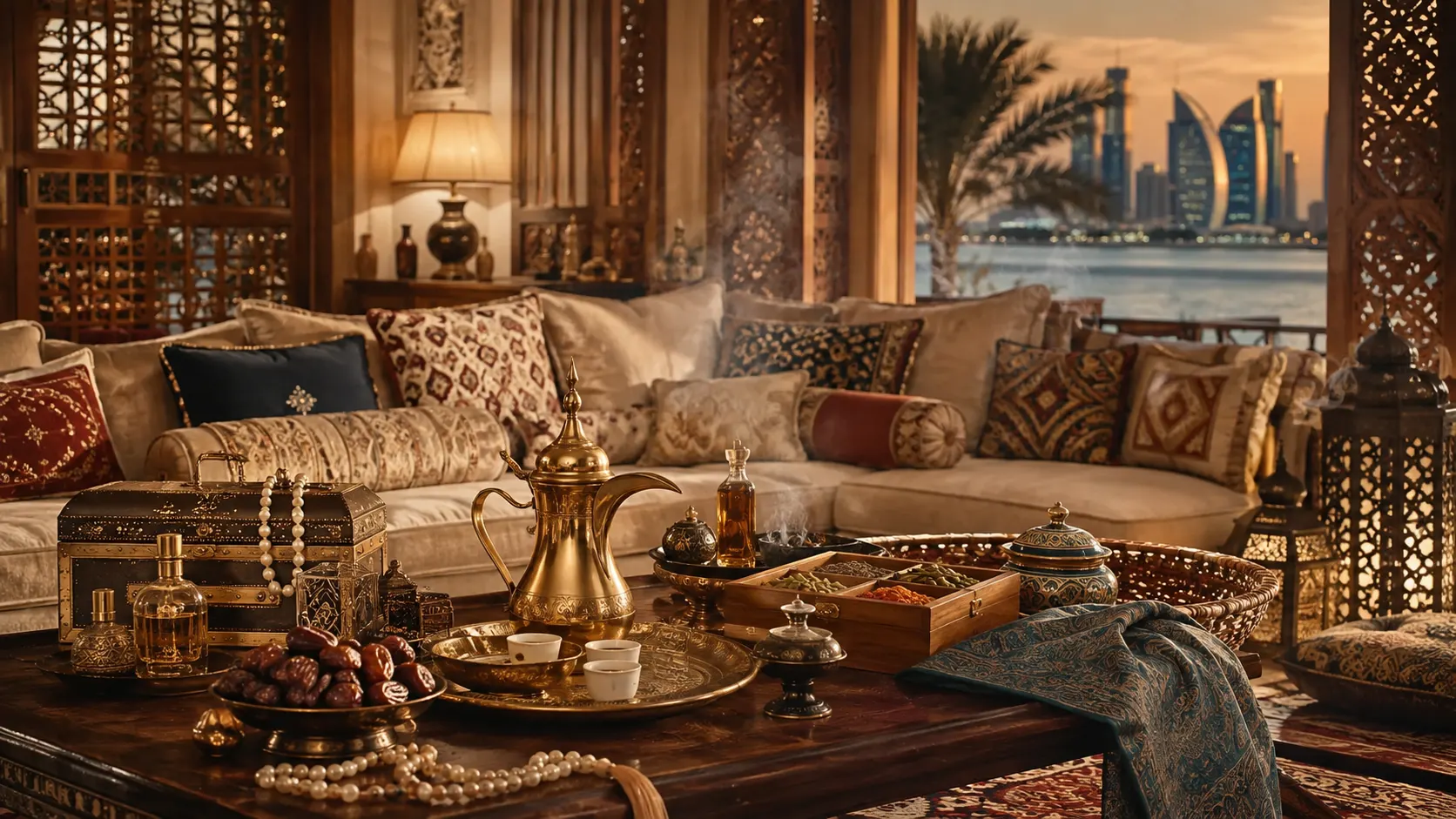
In Abu Dhabi, a gift enters a culture where coffee, dates and the majlis already carry centuries of hospitality. Honey fits beautifully into that world, but only if we remember that generosity is more important than packaging.
A gift in Abu Dhabi is not only an object
In Abu Dhabi, hospitality already has a grammar before the gift arrives. Arabic coffee, dates, the majlis, the order in which guests are received, the way food is offered without hurry: all of these gestures tell the visitor that generosity is relational before it is commercial.
That matters when choosing a honey gift for Ramadan, Eid or a majlis visit. The best question is not simply which box looks most expensive. It is what the gift says about attention, origin and the person receiving it.
Ramadan changes the meaning of giving
Ramadan concentrates visits, family gatherings, corporate gestures and acts of generosity into a month where food carries unusually strong social meaning. Dates and Arabic coffee are already deeply connected to hospitality, and specialty food gifts sit naturally within that world.
Experience Abu Dhabi’s Ramadan and Eid shopping guide explicitly includes locally produced honey among edible souvenirs and gift ideas alongside dates, coffee and spices. Honey therefore does not need to be forced into the occasion. It already belongs comfortably within the broader language of food gifting.
A large box can announce money. A carefully chosen jar can announce attention.
Meskaoui
Eid is different from Ramadan
Ramadan and Eid are close on the calendar but not identical in feeling. Ramadan gifts can accompany iftar invitations, family visits, charity-minded gestures or professional appreciation during the month. Eid gifts lean more toward celebration, visiting, clothing, sweets and the pleasure of marking the end of fasting.
A honey gift can work in both moments, but the presentation may change. During Ramadan I often prefer restraint and usefulness. At Eid, a more celebratory box can feel appropriate. The occasion should shape the gift instead of the same luxury package being used for everything.
The majlis teaches us not to overcomplicate generosity
UNESCO describes the majlis as a social and cultural sitting space for receiving guests, exchanging news and discussing community matters. Experience Abu Dhabi notes that many Emirati homes still have a majlis for visitors, where coffee and conversation remain central.
This is why I do not think a gift needs to dominate the room. In a majlis, the relationship is already the main event. A beautifully selected jar of honey, carried with respect and offered without theatrical explanation, can be more elegant than a giant box designed to announce its price.
Coffee and dates are the natural reference point
Experience Abu Dhabi describes Arabic coffee as a symbol of hospitality and generosity, often served with dates. UNESCO similarly treats Arabic coffee as a living practice of generosity across the UAE and neighbouring Arab states.
Honey enters this world best when it behaves like food, not jewellery. It can accompany breakfast, breads, yoghurt, cheese, tea, desserts or simply a spoon. The gift becomes stronger when the recipient can actually open it and use it instead of admiring a package that feels too precious to touch.
One exceptional jar can beat a large box
Luxury gifting often assumes more compartments mean more value. I disagree. If I know the origin of one remarkable Sidr, Samar or Ghaf harvest, I would rather give that with a clear story than fill a box with five anonymous jars.
This is a MESKI bias, of course. But it comes from provenance. A strong single-origin product gives the receiver something specific to taste and remember. Variety boxes are excellent when every component deserves its place, not when variety is used to hide average sourcing.
Luxury honey should eventually survive the moment when the ribbon is gone.
Meskaoui
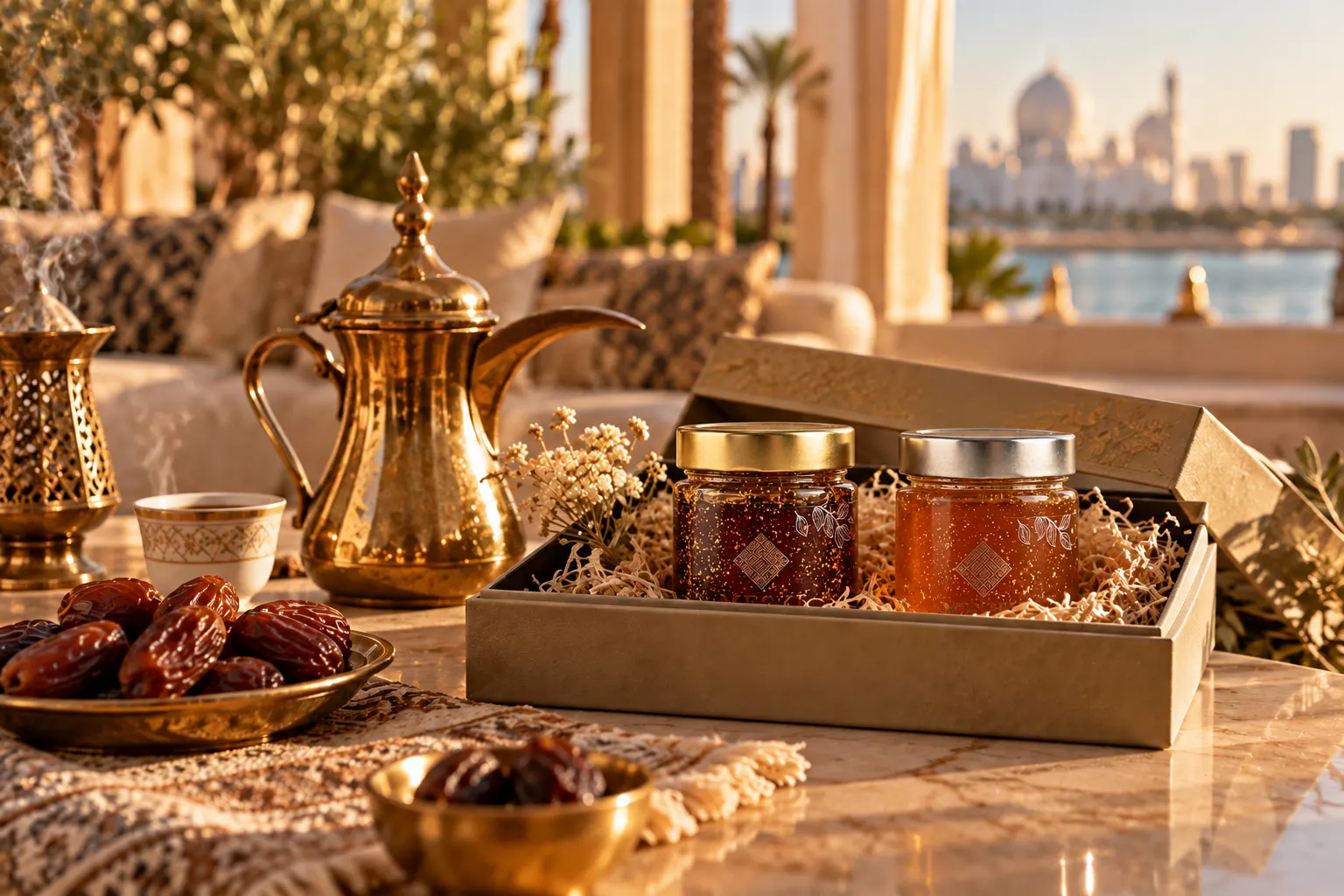
Local Emirati honey gives Abu Dhabi another option
ADAFSA recognises a diverse local honey sector connected to Sidr, Samar, Ghaf, Mangrove, Harmal and wildflower environments. In 2026 the authority and Emirati beekeepers won multiple awards for local samples, including Sidr, Samar and crystallised Ghaf.
For an Abu Dhabi gift, a genuinely local harvest can be meaningful because the origin and occasion meet. That does not make imported Yemeni or Omani honey inappropriate. It simply creates another honest choice: give something from the place where the gathering is happening.
Imported honey can still be the more personal gift
Origin should serve meaning, not nationalism. If the recipient loves Yemeni Do’ani Sidr, an imported harvest with real traceability may be far more thoughtful than a local honey chosen only because it is local. The same applies to Omani Sidr or Samar.
The strongest gift often says, I know what you like. Geography then becomes part of the story rather than a rule.
Ramadan corporate gifts need restraint too
Corporate gifting can become a race toward size, gold foil and visible value. That may suit some institutions, but it can also produce boxes that are impressive for thirty seconds and forgotten immediately after.
A corporate honey gift becomes more memorable when the selection has a reason: one Emirati honey for local identity, one Yemeni harvest for heritage, one Omani harvest for regional contrast, or a focused collection built around Sidr. The explanation should be short enough to read and precise enough to trust.
Do not hide weak honey inside strong packaging
A polished wooden box cannot improve a poorly sourced honey. A heavy jar cannot prove botanical origin. Gold colour cannot prove rarity. We return to the same rule that applies when buying Sidr in Doha: packaging is presentation, not evidence.
For premium gifting, I want the batch, region and producer chain to be at least as impressive as the ribbon. Otherwise luxury becomes decoration around uncertainty.
How much should you spend?
There is no culturally correct price. A modest jar from a beekeeper can be generous. A limited harvest can justify a high price. The relationship, occasion and financial context matter more than a universal threshold.
The danger is using price as a substitute for judgement. Expensive can be exceptional, and expensive can be ordinary honey with a costly box. Inexpensive can be weak, and inexpensive can be a small producer with almost no branding overhead.
What I would give for a majlis visit
For a personal majlis visit, I usually prefer something easy to carry, easy to open and easy to share later. One or two jars, not a suitcase. If I know the family enjoys Sidr, I would choose a traceable harvest. If I want something strongly Emirati, Ghaf or local Sidr becomes interesting.
I would not arrive and begin a ten-minute lecture on pollen analysis. Give the gift first. If they ask, tell the story. Hospitality should remain lighter than the packaging.
What I would give for Ramadan or Eid
For Ramadan, a date-and-honey pairing can feel natural because it joins two foods that already belong easily on the table. For Eid, a refined honey collection with coffee or incense can create a broader sensory gift, provided the products are genuinely good rather than assembled for appearance.
Our Ghaf honey guide and Emirati honey comparison can help decide whether local UAE origin matters for the gift.
The best luxury gift should become food again
A gift can be beautiful. It should be. But at some point the ribbon is removed and the product has to survive without the ceremony. Honey has one advantage over many luxury gifts: it returns to the table.
That is where I think the real test begins. Does the recipient want another spoon? Does the origin remain interesting after the box is gone? If yes, the gift worked.
The recipient matters more than the season
A Ramadan gift for a family that already buys excellent honey should not be the same as a corporate gift sent to two hundred clients. One may reward specificity, the other consistency and ease of presentation.
Thinking about the receiver first prevents the season from becoming a marketing template. Ramadan is not a packaging style.
What not to put in a luxury honey box
I would avoid filler products chosen only to make the box look full. A mediocre spoon, generic tea, anonymous nuts and several small jars can make the presentation larger while making the idea weaker.
If every component has a reason, variety is beautiful. If not, space can be more luxurious than clutter.
A note on reservations and limited harvests
Rare harvests do not always align perfectly with Ramadan or Eid dates. A serious honey house may have limited stock, future allocations or batches still being prepared.
I prefer honest scarcity to permanent availability. A seasonal product that is never out of stock deserves questions.
One last MESKI rule
I would rather leave a documented limit visible than fill it with a perfect story. A tree can be real and a honey claim still need proof. A brand can be prestigious and a historical anecdote still need sourcing.
That distinction is part of the Journal’s voice. Curiosity is stronger when it is allowed to say: this is what we know, and this is where the evidence stops.
What makes the story worth publishing
The subject earns its place when it teaches something beyond the product: how a landscape works, how a gift carries meaning, how a material moves through history or how a beekeeper reads a season.
If the reader only remembers the jar, we have written an advertisement. If the jar becomes more interesting because the world around it is clearer, we have written MESKI.
Questions People Ask
Yes. Experience Abu Dhabi includes locally produced honey among specialty food gifts for Ramadan and Eid, alongside dates, coffee and spices.
Yes. A food gift can be thoughtful and easy to share, though there is no requirement to bring honey to a majlis.
Local honey can give the gift a strong Abu Dhabi connection, but a well-chosen Yemeni or Omani harvest may be more personal depending on the recipient.
ADAFSA recognises local varieties including Sidr, Samar, Ghaf, Mangrove, Harmal and wildflower honey.
Absolutely. One exceptional, traceable jar can be more meaningful than a large box of average products.
Dates, Arabic coffee, tea, nuts or a simple breakfast pairing can work naturally. The quality of each item matters more than the number of items.
Not necessarily, but Eid is more celebratory, so presentation may be more festive. The relationship and context should guide the scale.
No. Packaging can improve presentation but cannot prove origin, botanical source or harvest quality.
A clear origin story, useful batch information and a coherent selection are more valuable than simply adding more jars or decorative material.
Choose the harvest before the box
Explore Ghaf, Emirati honey and provenance before building a Ramadan, Eid or majlis gift around the jar.