
Spain had the jujube tree. Greece had the word Sidr on a jar. Then one Latin name forced me to slow down.
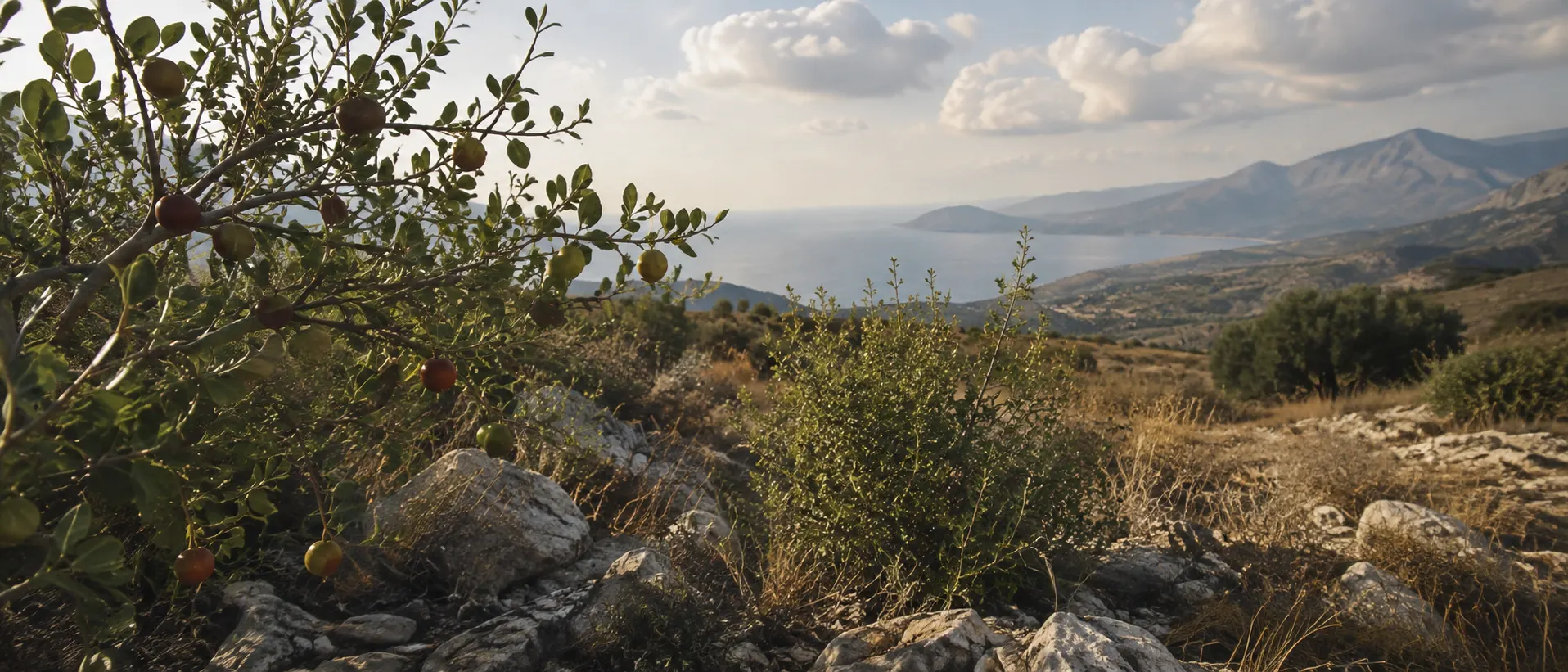
I nearly wrote this final part too quickly. I had seen honey sold as Greek Sidr honey, Greece sits inside the Mediterranean jujube story, and the conclusion looked easy. Then I checked the plant named behind some of those jars. Paliurus spina-christi. Not Ziziphus. I stopped. The honey itself was real. The botanical literature was real. The word on the market was real too. What was no longer simple was the relationship between them. That small disagreement became the reason this is the final chapter of the series.
Part 1 covered Arabia and Asia. Part 2 followed jujube honey through Africa. This final page asks what the words Sidr and jujube mean when they reach Europe and the wider Mediterranean.
I Was Ready to Write “Yes” Until the Botany Made Me Stop
I expected the question “Does Sidr honey exist in Europe?” to have a clean yes or no answer.
The botanical side immediately complicated that. Ziziphus lotus is genuinely native in Mediterranean Europe. Kew records it in southeastern Spain, Greece, Sicily and Cyprus, as well as across North Africa and the eastern Mediterranean.
So Europe does contain a true Ziziphus species. That part is not a marketing invention.
But the existence of the tree does not automatically prove the existence of a recognised monofloral honey from it in every country where it grows. And a jar carrying the word Sidr does not automatically tell us which plant supplied the nectar.
That difference sounds small. It is the entire article.
“The jar did not prove anything was wrong. It proved I had asked the question too quickly.”
Meskaoui
Spain Has the Tree. The Honey Question Is Harder
Spain gives us the easiest botanical starting point in Europe.
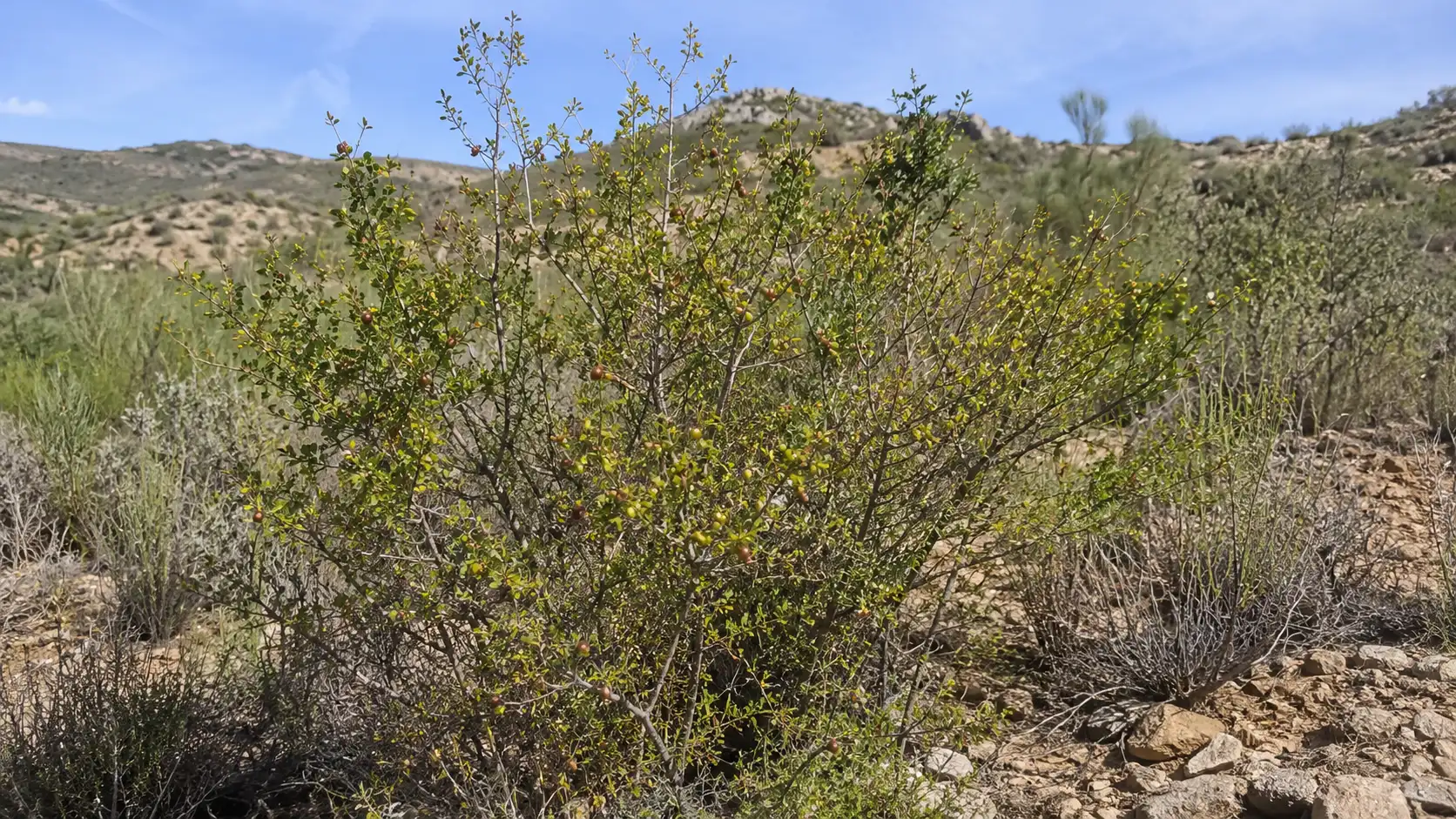
In southeastern Spain, Ziziphus lotus is native. The Andalusian environmental authorities describe shrublands dominated by the species in the dry southeast of the Iberian Peninsula. These formations occur in semi-arid, frost-free Mediterranean conditions, including parts of Almería, Granada and Málaga.
The plant is known locally as azufaifo or arto blanco. It can form dense, thorny islands of vegetation. Official Andalusian descriptions emphasise its adaptation to aridity, including deep roots and tough leaves, and the way its shrubs create small refuges for other plants and animals in hot, dry surroundings.
Reading that description, the landscape does not feel completely foreign to the jujube story we followed through North Africa.
There is heat.
There is water scarcity.
There are dry channels and semi-arid soils.
There is a plant capable of staying present where softer vegetation struggles.
Geographically, the Mediterranean has connected these environments for far longer than modern borders have separated them.
So Does Spain Produce Jujube Honey?
This is where I would rather be careful than fill the gap with an attractive answer.
We found strong official evidence that Ziziphus lotus grows naturally in southeastern Spain. We also know jujube species are melliferous and that bees can use them.
What I have not found, at the time of writing, is equally strong scientific or official evidence establishing Spanish Ziziphus lotus honey as a recognised and well-characterised monofloral honey category comparable with Moroccan or Algerian Ziziphus lotus honey.
That difference matters.
It would be very easy to write “Spain produces Sidr honey because Sidr trees grow in Spain.”
I do not think we have enough evidence to write it that way.
There may be individual beekeepers producing honey during jujube flowering. There may be regional products that are poorly indexed online or described only in Spanish local markets. Future pollen studies may document them. But those possibilities are not the same as proof.
For now, Spain belongs in this dossier because the tree is unquestionably there and because its climate helps us understand how far the Mediterranean jujube ecosystem reaches.
The honey question remains open.
Greece: The Jar That Changed the Article
Greece is where the clean version of this dossier broke.
I had seen honey sold commercially as “Greek Sidr honey”. The phrase looked perfectly at home beside Yemeni, Omani or Moroccan Sidr in an international honey market.
Then I found Greek and wider Mediterranean honey research documenting monofloral honey from Paliurus spina-christi.
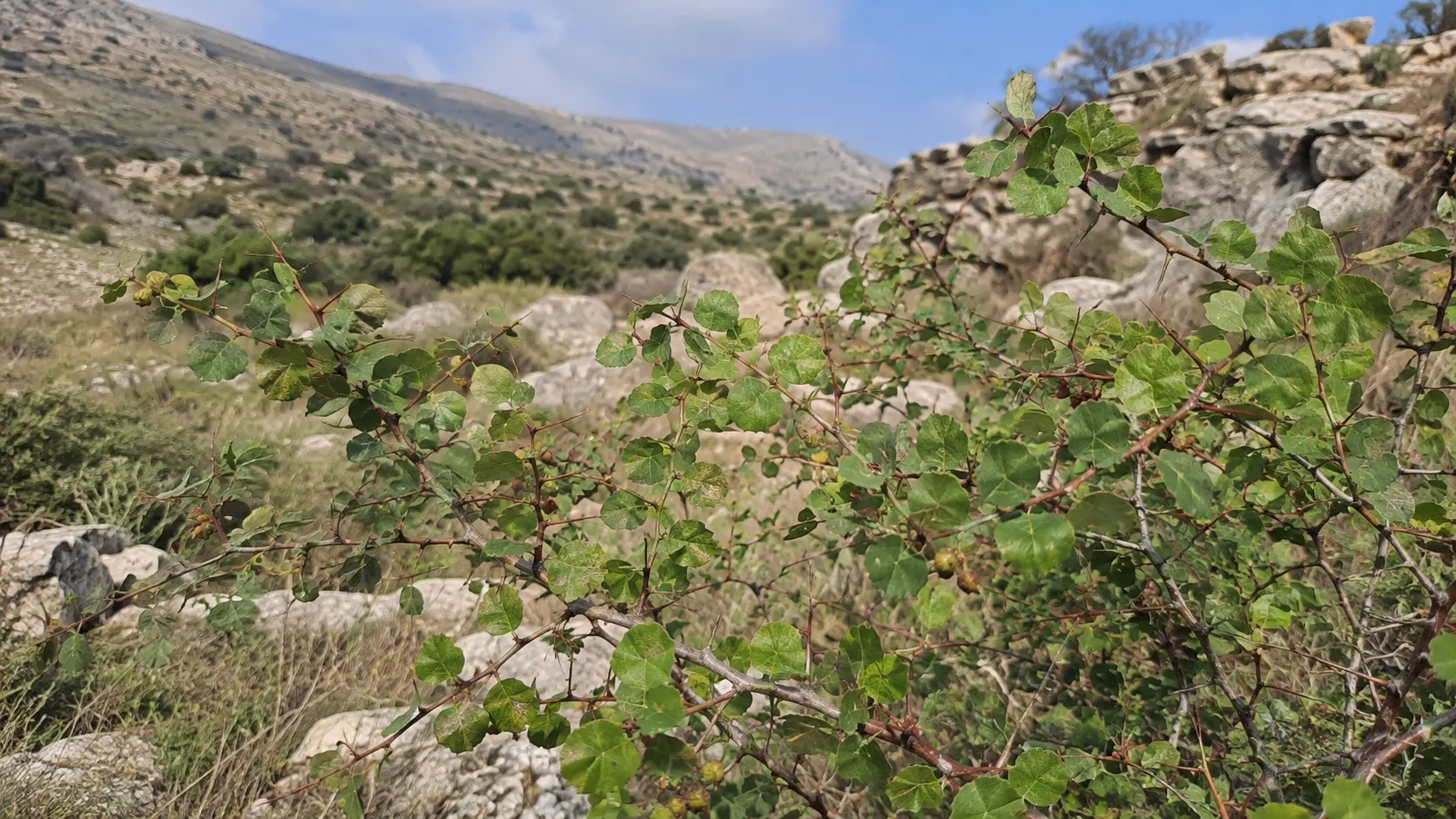
Paliurus spina-christi belongs to the family Rhamnaceae, the same botanical family that includes Ziziphus, but it is a different genus. That is not a minor spelling difference. It means a honey can be real, distinctive and scientifically studied while the export word “Sidr” still needs explanation.
At that point I stopped trying to make the label fit my first assumption and started asking a better question: what exactly does “Greek Sidr” mean on this particular jar?
Paliurus spina-christi is not Ziziphus spina-christi
They belong to the same plant family, Rhamnaceae, but to different genera. That is the central caution behind the “Greek Sidr” discussion on this page.
Why Is It Called Greek Sidr? I Still Do Not Have a Complete Answer
This was the point where I wanted an authoritative historical explanation.
I did not find one strong enough to present as fact.
I found commercial examples using “Greek Sidr honey”. I found scientific literature documenting Paliurus spina-christi honey. What I did not find was a botanical authority, Greek government source or peer-reviewed historical study showing exactly when exporters began applying the word Sidr to that honey, why they chose it, or whether every Greek product sold under that name refers to the same plant.
So I am leaving the bridge open rather than inventing it.
Perhaps the explanation is commercial translation. Perhaps there is a local naming history I have not yet found. Perhaps different sellers are using the word differently.
Not knowing is part of the result.
The Honey Is Real. The Question Is the Name
This distinction is important.
Questioning the word Sidr does not mean questioning the existence or quality of Paliurus spina-christi honey.
The honey is scientifically documented. Research has examined its volatile profile as a unifloral honey and identified characteristic aromatic compounds useful for botanical authentication. Greek honey authentication literature includes Paliurus spina-christi among botanical sources found in the country’s honey landscape.
So the interesting question is not “is Greek Sidr fake?”
That would be a careless conclusion.
The better question is: what plant does this individual seller mean when they write Greek Sidr?
If laboratory pollen analysis identifies Paliurus spina-christi, then the honey can be genuine monofloral Paliurus honey even if we think the international marketing name needs clarification.
If a producer claims Ziziphus, then that claim needs its own evidence.
One word on the front of a jar cannot answer both questions.
Greece Also Has Ziziphus lotus
There is one more reason not to make the Greek story too simple.
Ziziphus lotus is itself native in Greece. Kew’s distribution data includes Greece among the countries in the species’ native range.
So if someone asks, “Are there real jujube trees in Greece?” the answer is yes.
What we still need to separate is the existence of the plant from the botanical origin of a specific honey being sold as Greek Sidr.
A future Greek Ziziphus lotus honey could be entirely plausible. It may already exist at a small scale. But the existence of native Ziziphus lotus does not allow us to relabel every Greek Christ’s thorn honey as Ziziphus.
This is the kind of detail that disappears quickly when product descriptions copy each other.
Sicily, Cyprus and the Mediterranean Belt
The European edge of the jujube story does not stop with Spain and Greece.
Kew records Ziziphus lotus as native in Sicily and Cyprus as part of a wider Mediterranean distribution. These places make ecological sense within the story: hot summers, dry periods, coastal and lowland habitats, and a long history of plants moving with people as well as surviving in wild communities.
Paliurus spina-christi has an even broader Mediterranean-to-Central-Asian native range that includes Greece, Italy, Cyprus and parts of the Balkans.
This overlapping geography is one reason common names become unstable.
Two thorny relatives can grow in the same broad cultural world. Traders can translate names loosely. A familiar English or Arabic term can replace a local one. Then e-commerce carries the new label into countries where consumers already have expectations about what “Sidr” means.
None of this is unusual in food history.
It simply means that a global honey guide has to slow down when the names start travelling faster than the botany.
Climate Explains Why the Mediterranean Belongs in This Story
Europe is often imagined as the climatic opposite of Arabia or North Africa.
The Mediterranean edge complicates that picture.
Southeastern Spain contains semi-arid habitats where summer heat, low rainfall and water stress shape vegetation. Greek landscapes can also experience long, hot, dry summers. Islands and southern coasts support plants adapted to drought, rocky soils and seasonal moisture.
That does not make Almería the same as Hadhramout or Crete the same as the Middle Atlas.
It does explain why related dryland plants can appear on both sides of the Mediterranean.
For bees, this creates another version of the question we asked in Arabia and Africa: what flowers at the right time, in enough abundance, close enough to the hive?
The answer determines whether a plant becomes merely part of a pollen spectrum or the dominant source of a recognisable honey.
One Extra Line Would Solve Most of the Problem
I do not think the solution is to attack a Greek jar because it uses a familiar market name.
I would ask for one extra line.
Greek Sidr honey. Botanical source: Paliurus spina-christi, if that is the identified source. Then add the region, harvest year and beekeeper. Pollen analysis when available would make the claim stronger.
With those details, almost all of the confusion disappears.
The buyer can still search for Greek Sidr. The beekeeper keeps the market vocabulary. The botanist knows which plant is involved. And someone comparing it with Yemeni Ziziphus spina-christi honey immediately understands that the floral origins are not the same.
Traceability does not need to destroy tradition or commerce. Sometimes it only needs to finish the sentence.
The Mediterranean Makes Categories Uncomfortable
Perhaps that is why this final part became my favourite of the three.
The Mediterranean constantly refuses clean cultural and botanical boxes. A plant can be native in North Africa, southeastern Spain, Greece, Sicily and the eastern Mediterranean at the same time. A common name can arrive through Arabic, Greek, Latin, Turkish, French or English and change slightly at every stage.
Honey follows the same routes people do.
Not literally from one hive to another, but through the way we recognise flowers, trade foods and explain them to strangers.
So Europe is not an appendix to the Sidr story.
It is the place where the story shows most clearly why a botanical family, a cultural name and a commercial label should not automatically be treated as the same thing.
I Would Not Treat “European Sidr Honey” as One Botanical Category
After this research, I would not use the phrase as though it described one established botanical category.
I would separate at least three situations.
True Ziziphus presence. Europe genuinely has native Ziziphus lotus, especially around the Mediterranean.
Documented honey from a related genus. Paliurus spina-christi honey is a real Mediterranean monofloral honey, but it is not botanically a Ziziphus honey.
Commercial use of the word Sidr. Some sellers use “Greek Sidr” as a market name. That label needs to be read together with the botanical source, not instead of it.
This approach is less convenient than one universal definition.
It is also more honest.
Could Spain Produce a Recognisable Ziziphus lotus Honey?
Botanically, the possibility is not difficult to imagine.
The plant is present. It flowers in a region where beekeeping exists. The climate can support strong seasonal blooms when conditions align. Across the Mediterranean, related dryland plants already produce distinctive monofloral honeys.
But possibility is not the same thing as documentation.
To move from “bees can visit Spanish Ziziphus lotus” to “Spain produces a recognised jujube honey”, I would want to see actual harvests studied or clearly traced. Pollen analysis would help. Repeated samples across more than one season would be better. Sensory and physicochemical characterisation could then show whether the honey has a stable enough profile to be treated as a distinct regional type.
Perhaps that research already exists somewhere we have not found. Perhaps a beekeeper in Almería already harvests it on a tiny scale.
If so, I would rather add it later with evidence than claim it now simply because the idea is attractive.
That is the difference between leaving a question open and filling it with marketing.
A Honey Name Can Travel Faster Than a Plant Name
The Greek case also shows how modern food vocabulary develops.
A beekeeper has a local plant. A laboratory may identify the pollen with a Latin name. A domestic market knows the honey by one common name. Then an exporter needs to explain it to customers in London, Paris, Dubai or Doha.
The exporter looks for a word people already understand.
Sidr is a powerful word in the honey market.
Once that choice is made, the new name can spread through search engines, marketplaces and copied product descriptions much faster than the explanation behind it. Years later, a buyer may assume the name has always been botanical.
I am not saying that this is definitively what happened in Greece. I have not found the historical evidence to say that.
But it is exactly why I want the article to preserve the question.
When a common name and a Latin name disagree, the disagreement itself is information.
Why This Matters Beyond One Greek Jar
It would be easy to treat this as a small naming argument.
I think it matters more than that.
Honey is one of those foods where origin carries value. A mountain name, a valley, a flower or an old local term can change what people are willing to pay. That makes precision useful not only for consumers but also for serious beekeepers.
If Paliurus spina-christi honey is distinctive, it deserves to be understood for what it is. It does not need to become Yemeni Sidr in order to be interesting. If Greek Ziziphus lotus honey is eventually documented, that deserves its own identity too.
The same principle applies in Spain.
Keeping the names clear does not reduce the value of these honeys.
It gives each one somewhere real to belong.
Three Continents Later, I No Longer Trust Sidr Without a Second Line
We began in Arabia with a famous word.
Sidr.
Yemen and Oman gave us a strong connection with Ziziphus spina-christi. Pakistan brought ber and several Ziziphus names into the conversation. China moved us toward Ziziphus jujuba. Morocco and Algeria made Ziziphus lotus impossible to ignore. Spain proved that the same species reaches Mediterranean Europe.
Then Greece gave me a jar whose commercial name and botanical story did not line up as neatly as I expected.
I do not think that leaves us with confusion. It leaves us with a better habit.
When I read Sidr now, I want a second line.
Which tree?
Which place?
Which harvest?
If the answer is Paliurus spina-christi, tell me. That honey does not become less interesting because it is not Ziziphus. If Spain one day gives us well-documented monofloral Ziziphus lotus harvests, tell me that too.
The smaller claim is not the weaker claim.
Very often, it is the one I trust.
اللهم ارزقنا علماً نافعاً، وصدقاً في القول، وبركة فيما تخرجه الأرض من خير.
Frequently Asked Questions About Sidr and Jujube Honey in Europe
It can be sold under Sidr as a commercial or translated common name, but that does not make the plant botanically Ziziphus. A transparent label should state the actual botanical source when it is known.
Not necessarily, and often the answer appears to be no. Yemeni Sidr is strongly associated with Ziziphus spina-christi. Some commercial Greek Sidr references are associated with Paliurus spina-christi, a different genus in the same family. The specific jar should be checked.
It is monofloral honey produced predominantly from the nectar of Paliurus spina-christi, commonly called Christ’s thorn or Jerusalem thorn. The honey is documented in Mediterranean apicultural research. The plant belongs to the Rhamnaceae family but to the genus Paliurus, not Ziziphus.
Yes. It is native in southeastern Spain. Andalusian environmental authorities describe protected semi-arid shrub habitats containing Ziziphus lotus, particularly in the Mediterranean southeast.
No. The plant is genuinely native in southeastern Spain, but plant presence alone does not establish a recognised monofloral honey category. That would require documented harvests and ideally pollen, physicochemical or other authentication evidence.
No. They are different genera within the same botanical family, Rhamnaceae. Similar common names such as Christ’s thorn can make them easy to confuse, but Paliurus spina-christi is botanically distinct from Ziziphus spina-christi and Ziziphus lotus.
Ask for the botanical source, harvest region, beekeeper or apiary, harvest year and any pollen analysis or other authentication information. If the source is Paliurus spina-christi, the label should ideally say so clearly.
Sources & Further Reading
Royal Botanic Gardens, Kew, Plants of the World Online: Ziziphus lotus
Royal Botanic Gardens, Kew, Plants of the World Online: Paliurus spina-christi
Junta de Andalucía: protected Ziziphus lotus shrub habitat in southeastern Spain
Junta de Andalucía: native coastal flora and adaptation of Ziziphus lotus to aridity
Xagoraris et al., Greek Honey Authentication: Botanical Approach
Jerković et al., volatile patterns of Paliurus spina-christi unifloral honey
Return to the Full Sidr Journey
Read the three parts together, then continue through the Honey Atlas to compare origin, flora, climate and harvest without reducing every jujube honey to one name.