
Culture & Traditions · Travel & Places
Zenobia, the Queen of Palmyra Who Defied Rome
Behind the legend of Zenobia stands a real desert city, a political ambition and a moment when Palmyra challenged Rome.
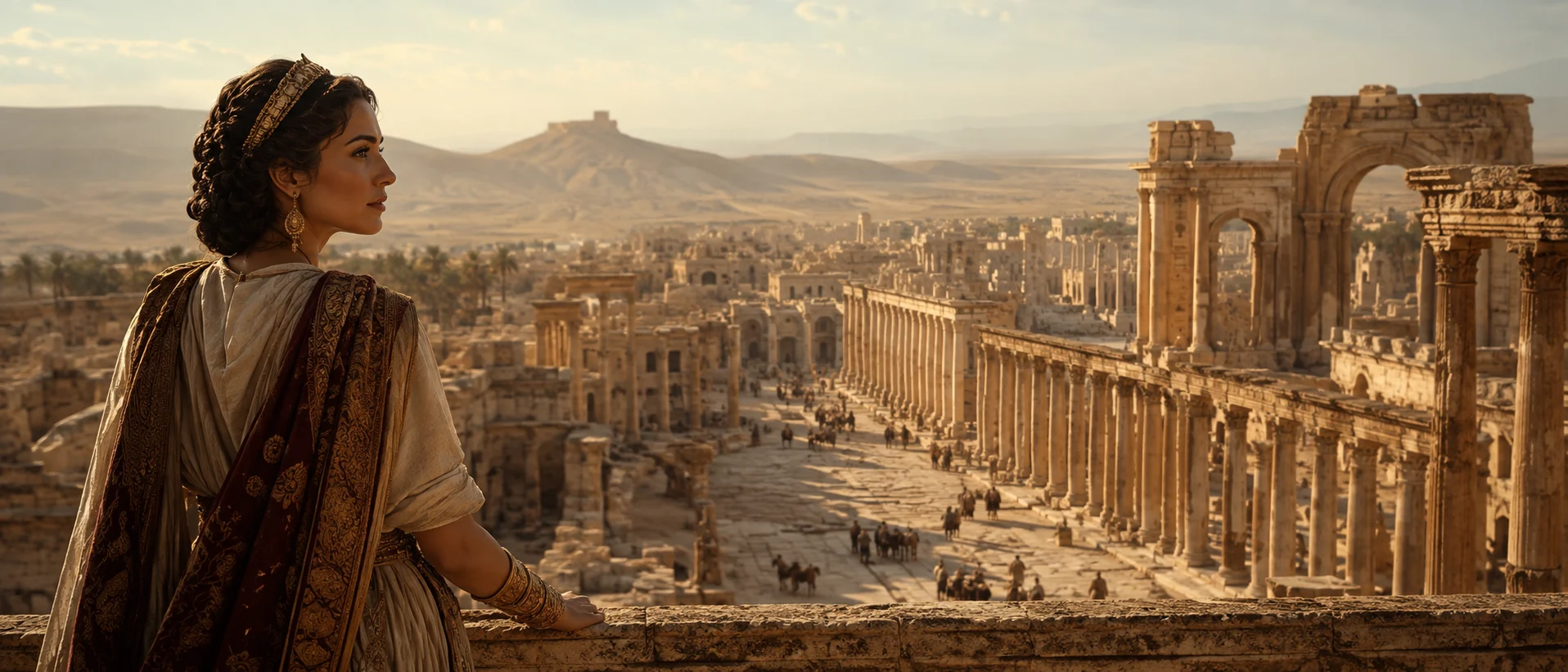
Some historical figures survive because they seem to carry two faces at once.
One belongs to legend. The other belongs to stone, dust, trade routes and cities that truly existed.
Zenobia is one of those names.
She is often encountered almost like a character from a novel: a desert queen, a learned ruler, a woman who stood against Rome. Yet what keeps her story alive is not only the drama of her life. It is also what she reveals about Palmyra itself, a city that stood between worlds and refused to think of itself as marginal.
A city that was never on the edge
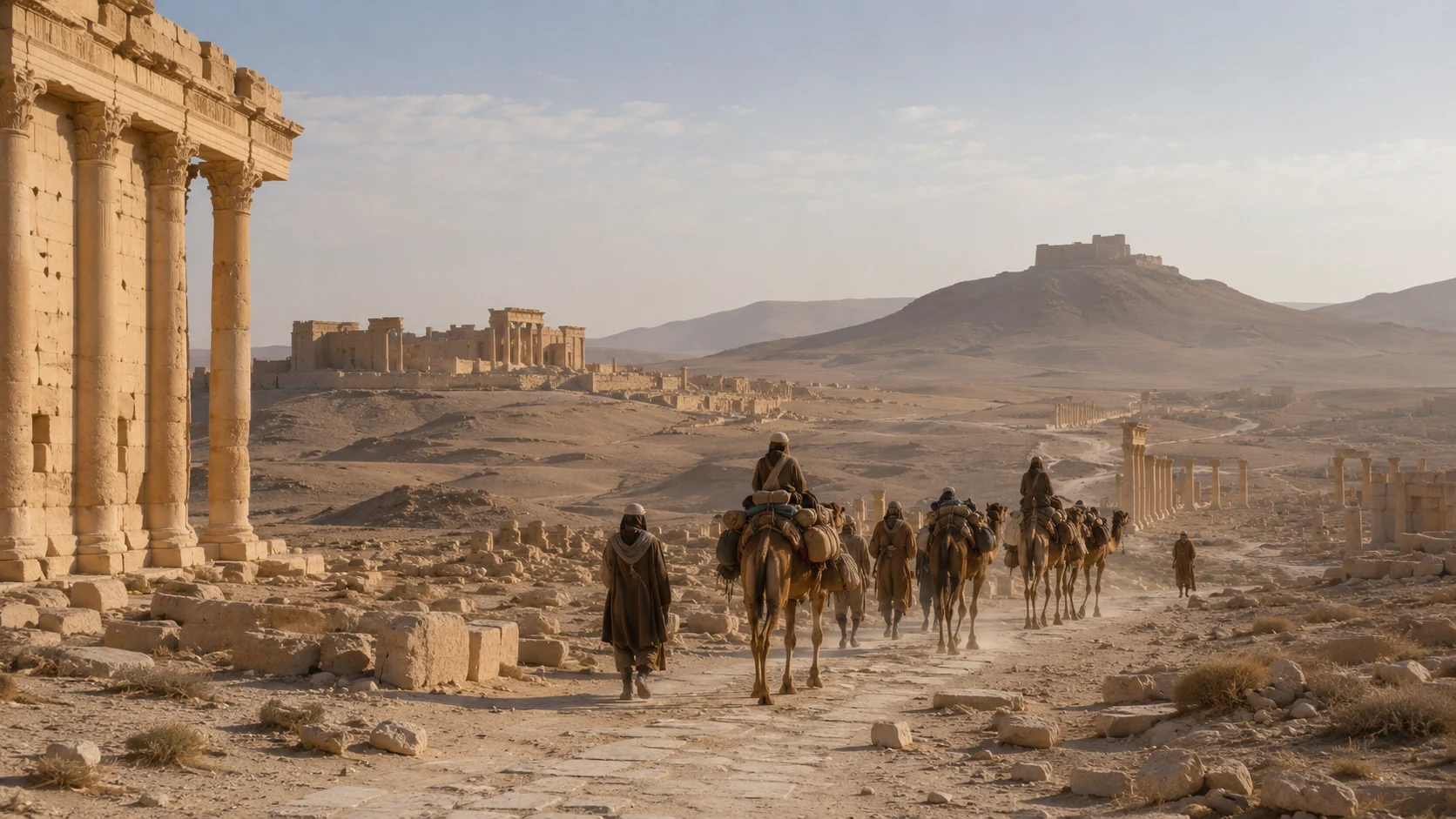
Palmyra was not an isolated settlement lost in an empty desert. It was a meeting point. Merchants, languages, beliefs and ambitions crossed there. The desert routes were not peripheral roads. They were arteries.
That matters when we speak about Zenobia.
Her rise did not happen in a vacuum. It emerged from a city already wealthy, connected and politically important enough to matter across the eastern Roman world.
After Odaenathus, power changed hands
The story of Zenobia is often told from the moment of rupture that followed the death of her husband, Odaenathus. He had become a powerful figure in Rome’s eastern defence while strengthening Palmyra’s own position.
After his death, Zenobia entered the centre of power at a difficult moment.
She did not simply preserve what had been built. She governed in the name of her son, consolidated authority and pushed Palmyra’s ambitions farther than before.
Some figures do not ask permission to enter history. Their time becomes too small to contain them.
Meskaoui
Palmyra, Egypt and the eastern Mediterranean
Zenobia did not aim merely to survive between larger powers. Her rule expanded into territories of major strategic value, including Egypt. At that point, the question was no longer local. It concerned the balance of the entire eastern region.
Rome could tolerate autonomy when it served imperial interests. It could not easily accept the emergence of a centre strong enough to become an alternative.
Why her image still fascinates
Perhaps because Zenobia gathers several imaginations in one figure: queen, intellectual, political leader, ruler of a desert city and symbol of an East that cannot be reduced to a Roman frontier.
Through her, Palmyra stops being merely a caravan station in modern memory. It becomes a possible capital, a city capable of looking at the world from its own centre.
The confrontation with Rome
When Emperor Aurelian moved against Palmyra, the conflict was larger than a simple rebellion. Rome was reasserting imperial order. Zenobia, meanwhile, had already moved too far beyond the role expected of a subordinate ruler.
The clash became almost inevitable.
Later storytelling added drama, simplification and sometimes romance to the details. But the core remains clear: Palmyra had become too powerful to ignore, and Zenobia embodied that rise.
The desert is never silent
What I find most compelling is how her story changes the way we look at arid landscapes.
The desert is often imagined as emptiness. Yet oasis cities, caravan routes and trading centres tell another story. These spaces moved incense, textiles, metals, languages, ideas and political ambitions.
Palmyra belonged to that world.
Zenobia did too.
What remains
There are ruins, columns and names preserved by chronicles and archaeology.
But there is also something less tangible: the sense that great histories do not always begin where later maps tell us to look.
Sometimes they begin at the crossing of a caravan road, a city of stone and a political will that refuses a secondary place.
Zenobia did not defeat Rome.
Yet she achieved something rarer than victory.
She made forgetting impossible.
Zenobia, Palmyra and Rome
Palmyra already mattered because it stood on important desert trade routes linking eastern and western markets. Zenobia inherited a city with wealth, connections and strategic importance rather than creating power from an isolated settlement.
Her rule moved beyond defending Palmyra. The expansion reached major territories, including Egypt, and began to affect the balance of power across Rome’s eastern provinces. That made Palmyra a political alternative Rome could not simply ignore.
Caravan routes helped make Palmyra wealthy and connected. Trade brought merchants, information and influence through the city, creating the economic and strategic foundation that made a larger political ambition possible.
Because Palmyra shows that desert cities were not empty margins of ancient empires. They could be commercial centres, cultural crossroads and political powers. Zenobia became the most famous human symbol of that reality.
No. Her story is also about the rise of Palmyra, the importance of eastern trade routes and the limits of Roman tolerance for a powerful regional centre. Reducing it to one dramatic confrontation misses the city behind the queen.
Continue the Story
Stay with the old routes of Arabia and the desert cities that connected kingdoms, caravans and memory.