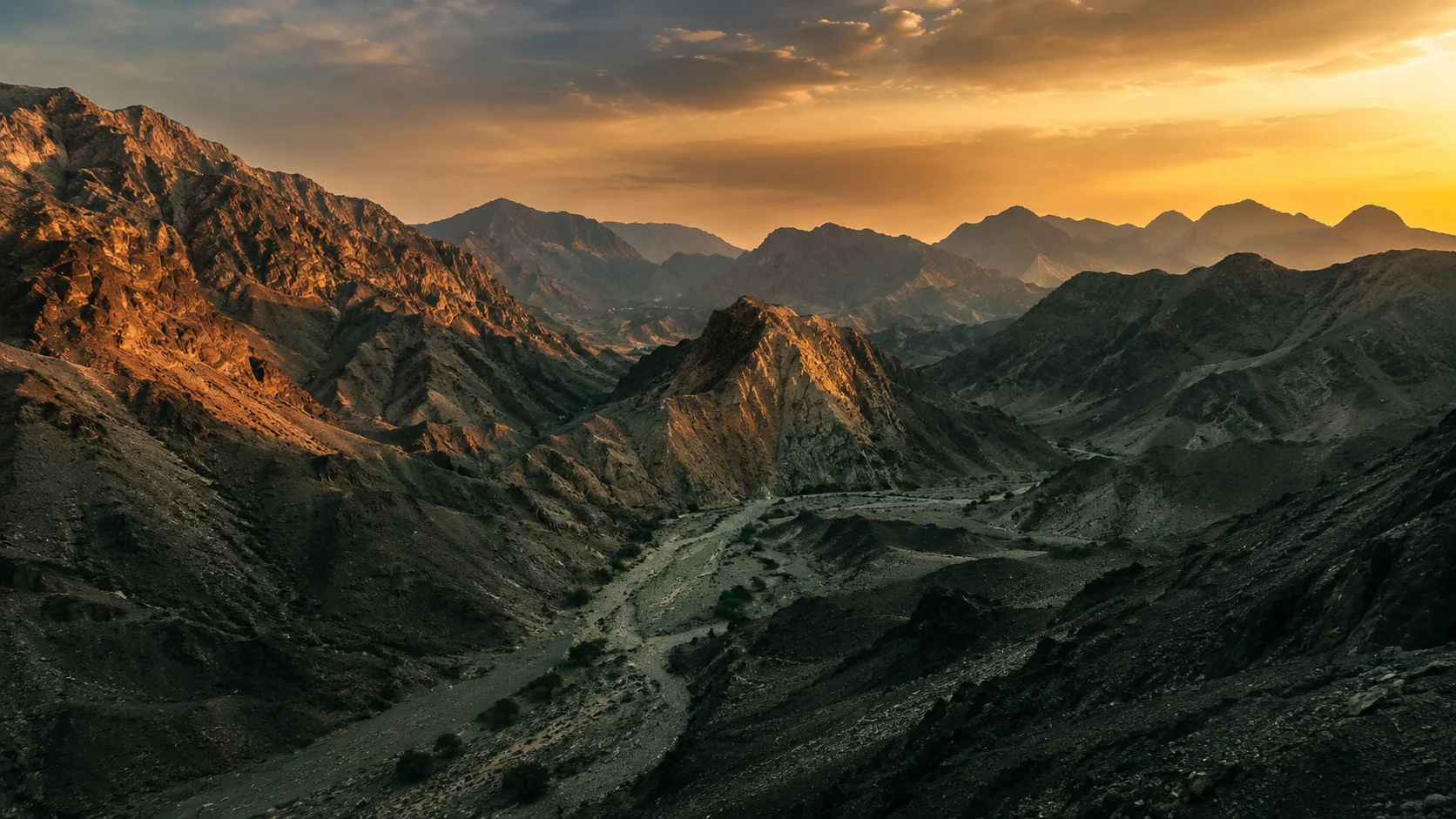
United Arab Emirates · Hatta · Hajar Mountains
Emirati
Sidr Honey
عسل السدر الإماراتي
A mountain honey the House keeps by hand, one hive at a time.
In the Hajar range above Hatta, on the border with Oman, Meski tends its own hives each year the season allows — sometimes from farms near Abu Dhabi, sometimes from the mountain itself.
Terroir
Hatta, where the mountains meet the border
Hatta lies in the Hajar Mountains, on the border with Oman, roughly 105 km from Dubai — once a stopover on the route linking the northern Emirates to Oman, and long known for its resilient Sidr trees.
Meski’s Emirati Sidr does not come from a trading floor. It comes from hives the House maintains itself, year after year, wherever the season allows — a farm near Abu Dhabi in some years, the Hatta mountains in others.
| Location | Hatta, Hajar Mountains, UAE, near the Oman border, ~105 km from Dubai |
| Landscape | Rugged mountain valleys and wadis |
| Tree | Sidr — Ziziphus spina-christi |
| Bloom | A brief flowering, typically October to November |
| Harvest | Winter — October to November, the region’s Sidr season |
“Ask Hatta for a second batch, and the mountain’s only answer is next October.“
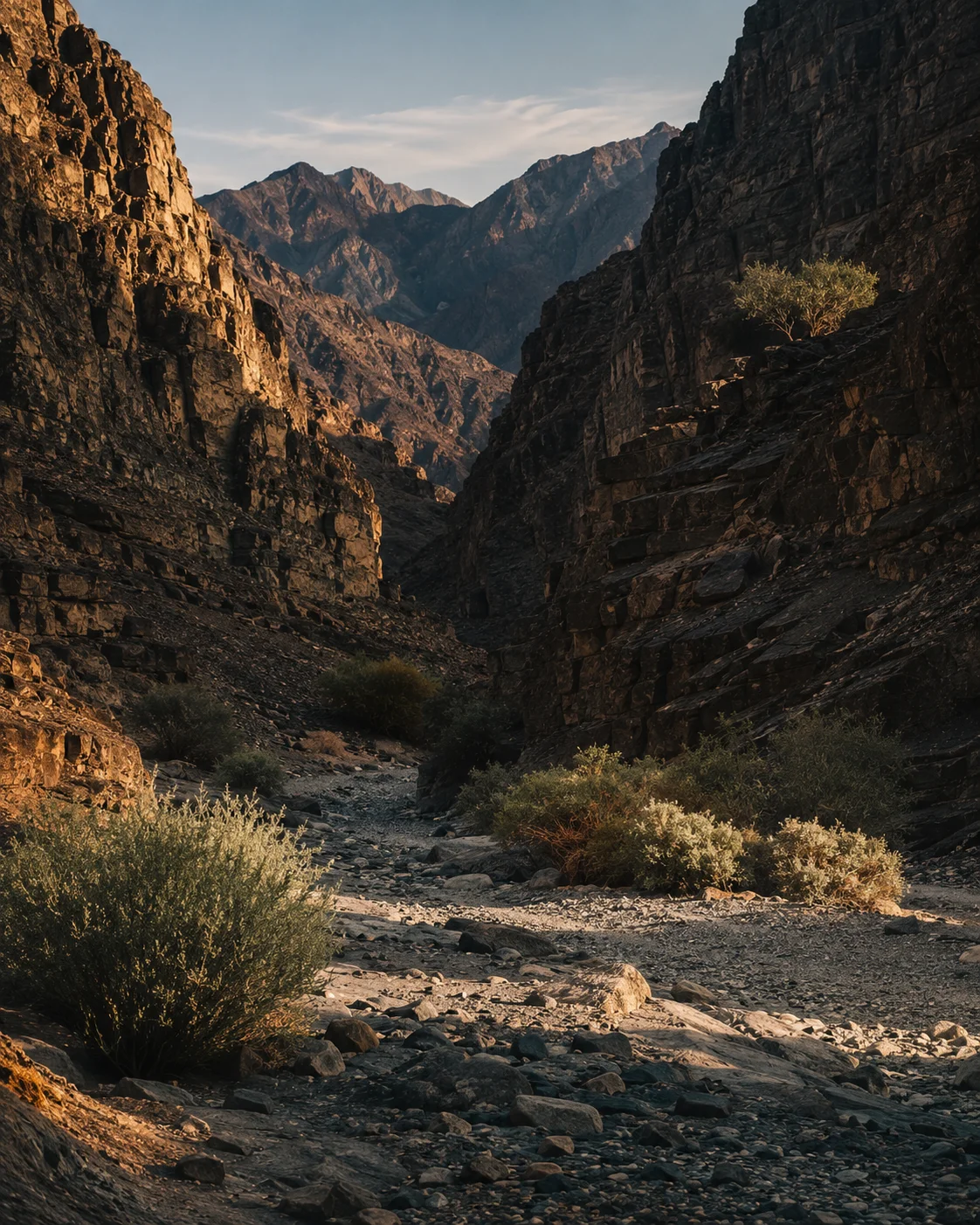 Hatta · Hajar Mountains
A rare position in the trade
Most Sidr honey changes hands before it reaches a house like this one
Meski’s Emirati Sidr does not. It comes from hives the House keeps and tends itself, year after year — a position very few honey houses hold at all, and the reason this Sidr carries a traceability the others on this page cannot claim.
Tradition
A young harvest on an old route
Hatta’s Sidr trees have outlasted the trade routes that once passed through the valley — the honey they give is a newer pursuit than the caravans, but no less rooted in the mountain.
In recent years, the UAE’s beekeeping authorities have worked to develop a resilient Emirati bee strain suited to the country’s climate, part of a broader push to grow a domestic honey sector with its own identity.
Trade-route valley
A waypoint before it was a harvest
Long before honey defined it, Hatta’s position between the northern Emirates and Oman made it a waypoint for travellers moving through the Hajar range.
National programme
A resilient local bee
National programmes have developed and distributed an Emirati honeybee strain adapted to the UAE’s climate, supporting local beekeepers across the mountains.
2022
London Honey Awards
Meski’s Emirati Sidr honey was awarded at the London Honey Awards — recognition for a young but exacting apiary tradition.
Today
A House-kept harvest
The House keeps its own hives near the mountain, tending them by hand each season the bloom allows.
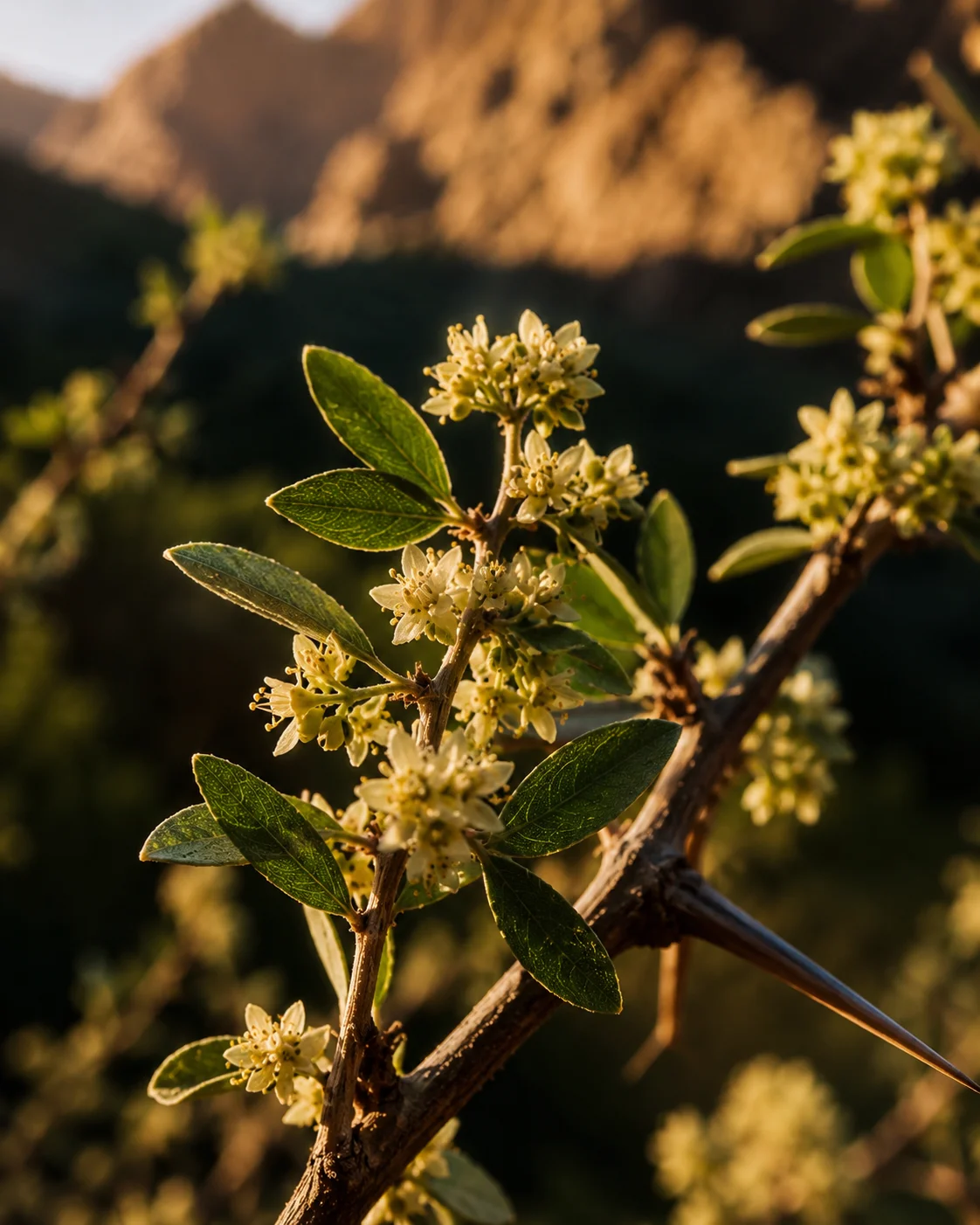 Sidr bloom · Hajar Mountains
“A mountain does not hurry its harvest.”
— The House of Meski
Rarity
A harvest that follows the climate, not a calendar
Sidr blooms briefly in the Hajar range each winter. What that short window and that year’s climate allow decides whether the season favours Hatta or the Abu Dhabi hives instead.
Why it cannot scale
The House keeps a limited number of its own hives, moved between sites as the climate dictates. Growing the harvest would mean losing what makes it Meski’s own.
Beekeeping
Hives the House keeps itself
Unlike honey bought from a trading floor, this Sidr comes from hives Meski tends itself — smoker, uncapping knife and a standard extractor, the same equipment any beekeeper uses today. What is rare is not the tool but the position: a House that keeps its own hives at all.
The practice
Depending on the year, the hives sit in Hatta’s mountain wadis or on a farm near Abu Dhabi; the choice follows the climate, not a fixed calendar. The comb is handled cold from start to finish, never warmed to move faster.
Sensory reading
Smooth enough to glaze, warm enough to linger
Texture
A velvety, pouring consistency — among the House’s most fluid Sidr honeys, and part of why it lends itself so well to nappage.
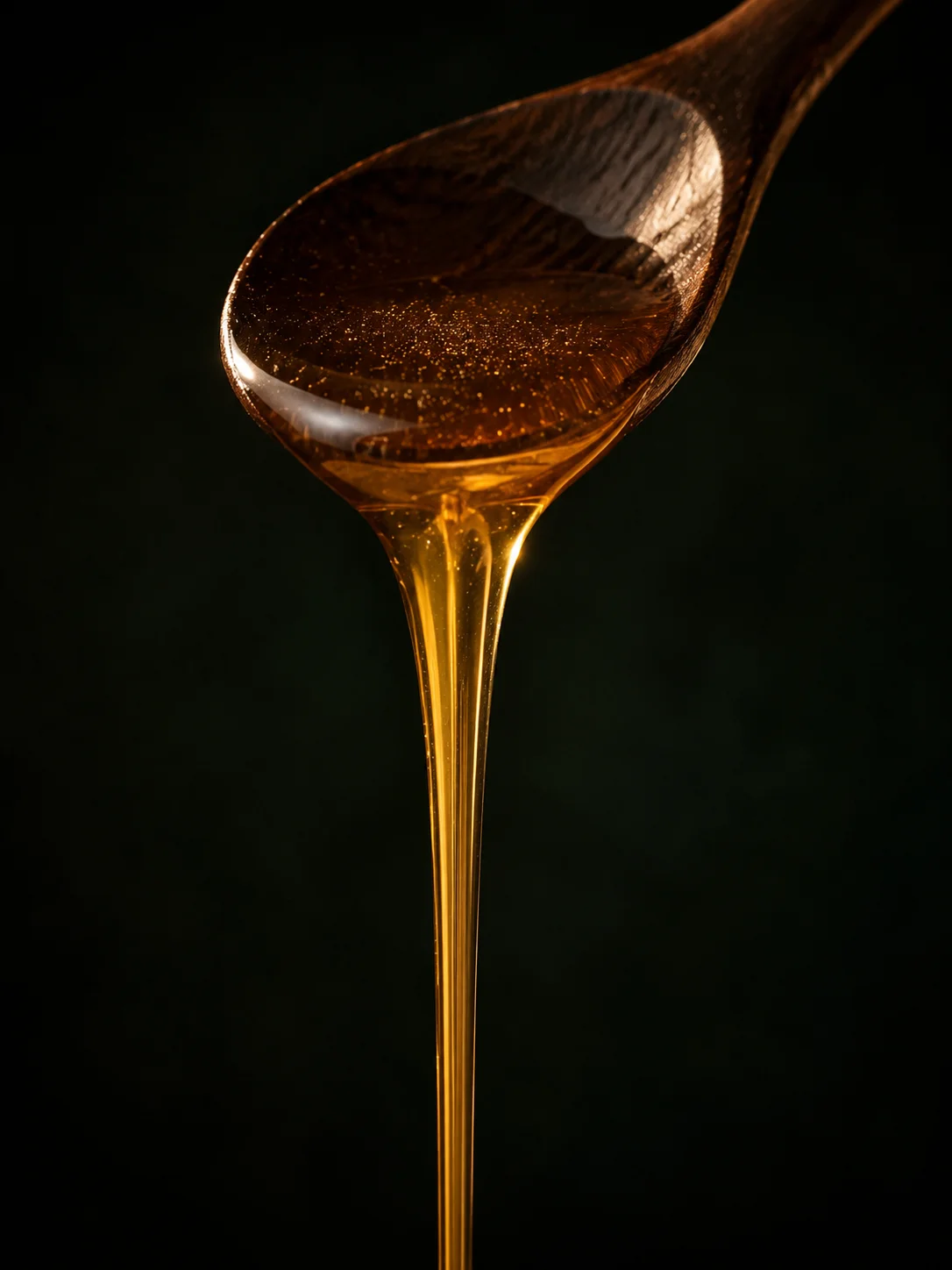
Harvest notebook
From the field — a House-kept harvest
Most Sidr reaches a table through hands the buyer will never meet. This one does not: the hives are Meski’s own, and the harvest follows whichever site the season favours that year.
When conditions hold in Hatta, the mountain gives its own honey; when they don’t, the Abu Dhabi hives carry the season instead. Either way, the extraction stays the same — raw, unheated, and never far from the hand that kept it.
It is this closeness, more than any single trait of colour or texture, that the House points to first when asked why this Sidr sits among its most complete expressions.
Pairings
How to serve it
Smooth and pourable — built for drizzling as much as for tasting alone.
Meski rating
An editorial reading, not a certification
Six criteria of the House, judged in tasting. This rating describes the appellation, is revised for each lot presented, and replaces no analysis or certificate.
Provenance
The Meski Confidence Chain
Confidence in a rare honey does not come from a single certificate. It comes from a chain that stays continuous — from bloom to jar.
Read: How to read a rare honeyAnalysis describes the sample received by the laboratory. It does not automatically prove that every jar sold under the same name comes from that sample. A continuous chain does.
Continue the Atlas
An origin is never an island
Compare not to name a winner, but to understand what place, season and craft shift in the cup.