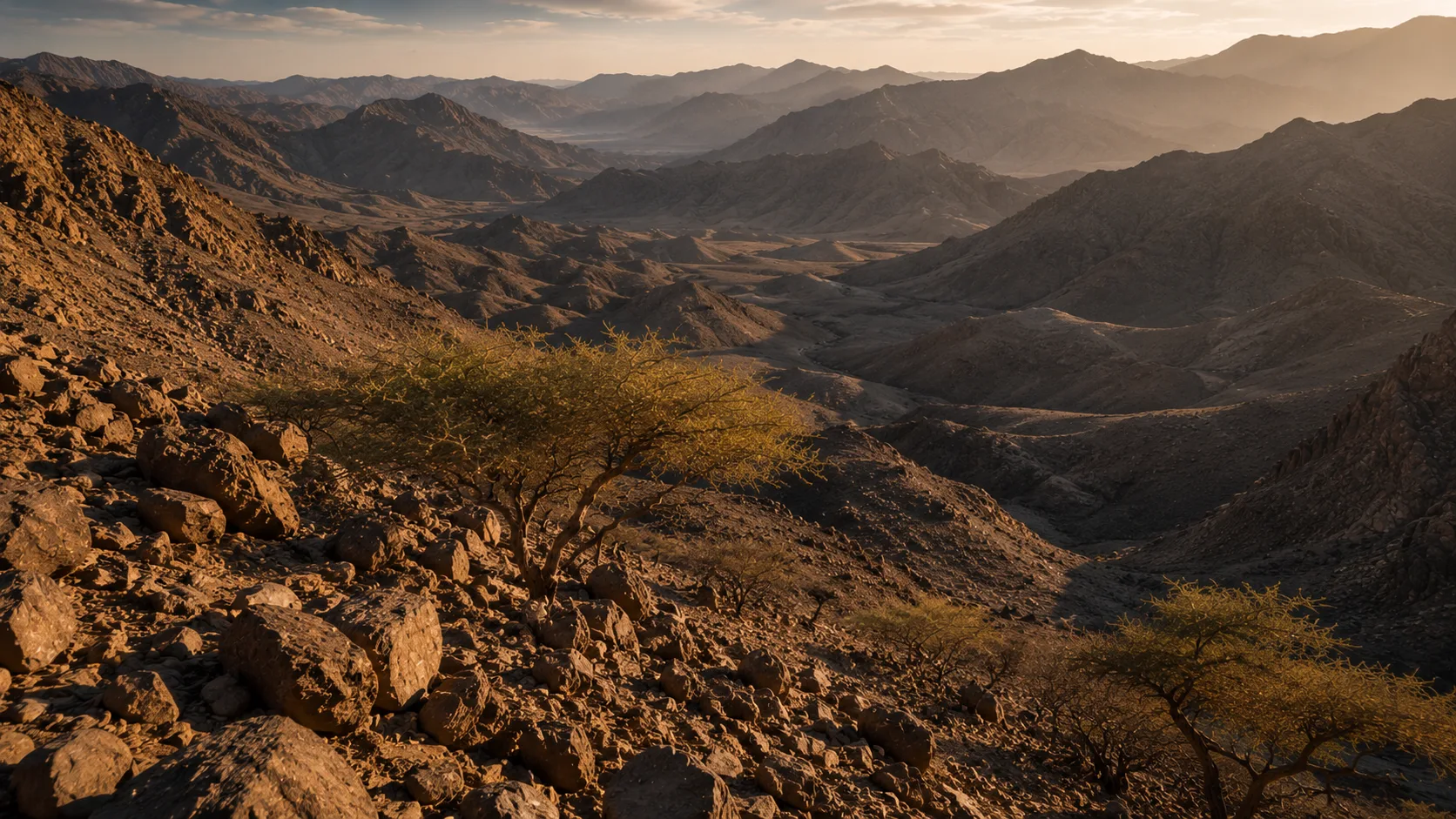
Oman · Nizwa · Al Hajar Mountains
Omani
Samar Honey
عسل السمر العماني
The same partnership, a darker season — Nizwa’s acacia honey.
From the same Nizwa apiary that gives Meski its Sidr, a second and much darker honey emerges each spring — gathered from Samar, through a partnership the House has kept for years, not just one good season.
Terroir
Where the oasis cannot reach
Beyond Nizwa’s oasis, in terrain too rocky and dry for most cultivation, the Samar tree takes hold — deep-rooted, small-leaved, built to survive where water is scarce.
The same Nizwa beekeeper who tends the Sidr hives in autumn leads Meski to a different corner of the mountain each spring, where the Samar grows instead.
| Location | Nizwa, Al Hajar Mountains, Oman |
| Landscape | Rocky, arid mountain and desert terrain |
| Tree | Samar — Acacia tortilis |
| Bloom | Spring, typically beginning in April |
| Harvest | Spring, April to May |
“The oasis built Nizwa. The mountain around it built this honey.“
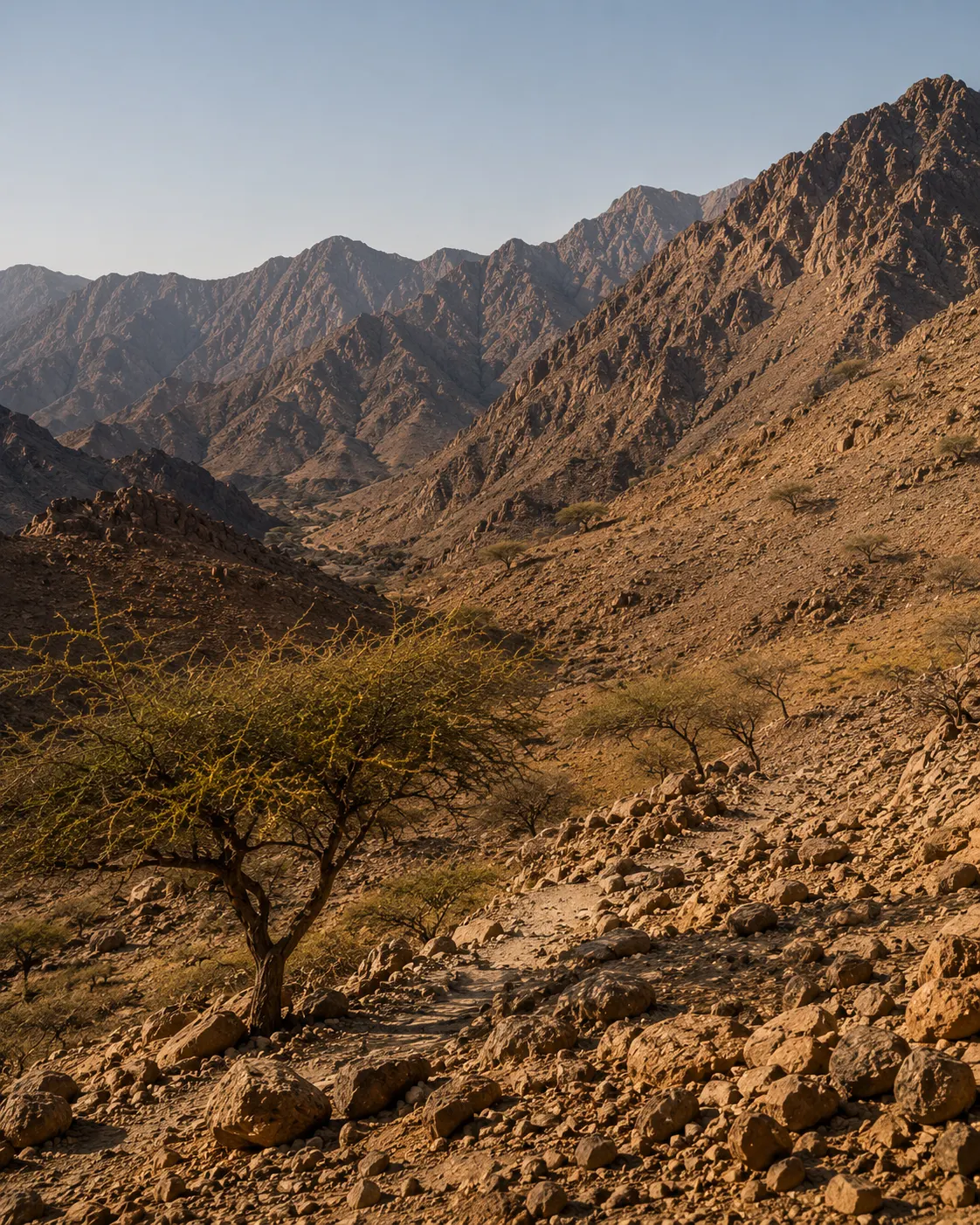 Al Hajar Mountains · Samar terrain
Tradition
Two honeys, one apiary
Sidr made Nizwa’s name. Samar is the honey Nizwa keeps quieter — darker, harder-won, and, by the beekeeper’s own preference, reserved for those who ask for it by name.
The two honeys share an apiary and a beekeeper, but almost nothing else: different tree, different season, different character entirely.
Generations
A tree for hard ground
Samar’s resilience let it take hold in Al Hajar terrain too dry and rocky for the oasis economy that built Nizwa.
Working rhythm
A second season, the same apiary
Beekeepers who kept Sidr hives in autumn learned to follow Samar’s spring bloom in the same mountains, doubling their working year.
Ongoing
One steady partnership
The same standing arrangement that secures the Sidr harvest secures this one too — one beekeeper, not a market lot, in a relationship that predates any single good season.
Today
The mountain’s other face
The same partnership, a different tree, a darker honey — Nizwa’s two faces of the same mountain.
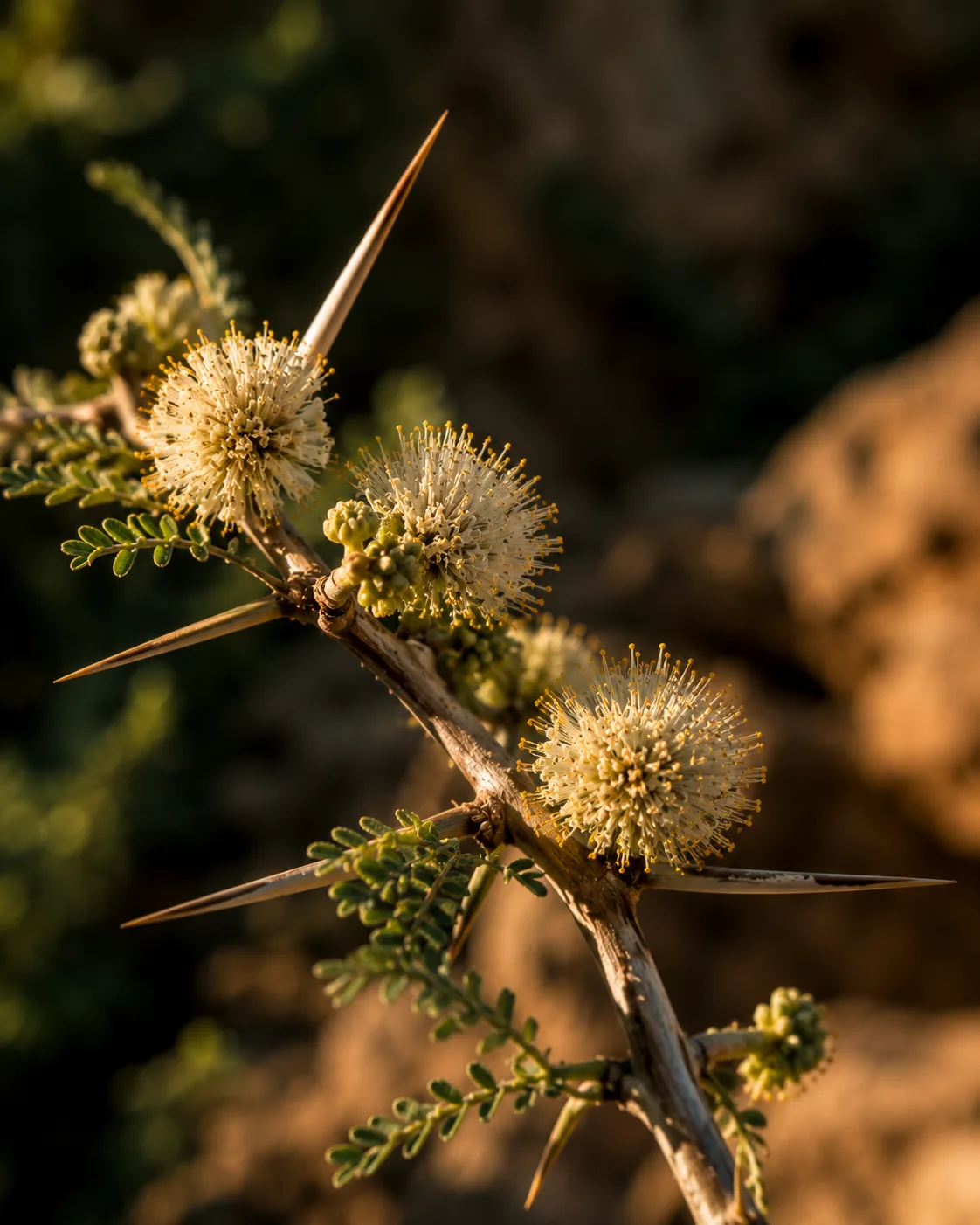 Samar blossom · Al Hajar Mountains
“Some roots go looking for water. Samar’s go looking for a reason not to need it.”
— The House of Meski
Rarity
A harder season for a smaller return
Samar holds ground the Nizwa oasis cannot reach — and gives up its nectar just as reluctantly, in a short spring window shaped entirely by that year’s rain.
Why it cannot scale
Samar holds terrain nothing else will — that same hardiness limits how much any one season can give.
Beekeeping
The same hands, a harder season
The visits that bring the House to the autumn Sidr harvest happen again in spring, for Samar: suit on, a frame drawn from a hive that looks nothing like the one in October, and the same simple test — tasted straight from the comb before it becomes anything else.
The practice
Nothing here is heated or filtered before it’s sealed — the same restraint the House applies to its Sidr, just for a fiercer honey.
Sensory reading
Nizwa’s boldest expression
Texture
Fluid and velvety despite its darkness — intensity carried without heaviness.
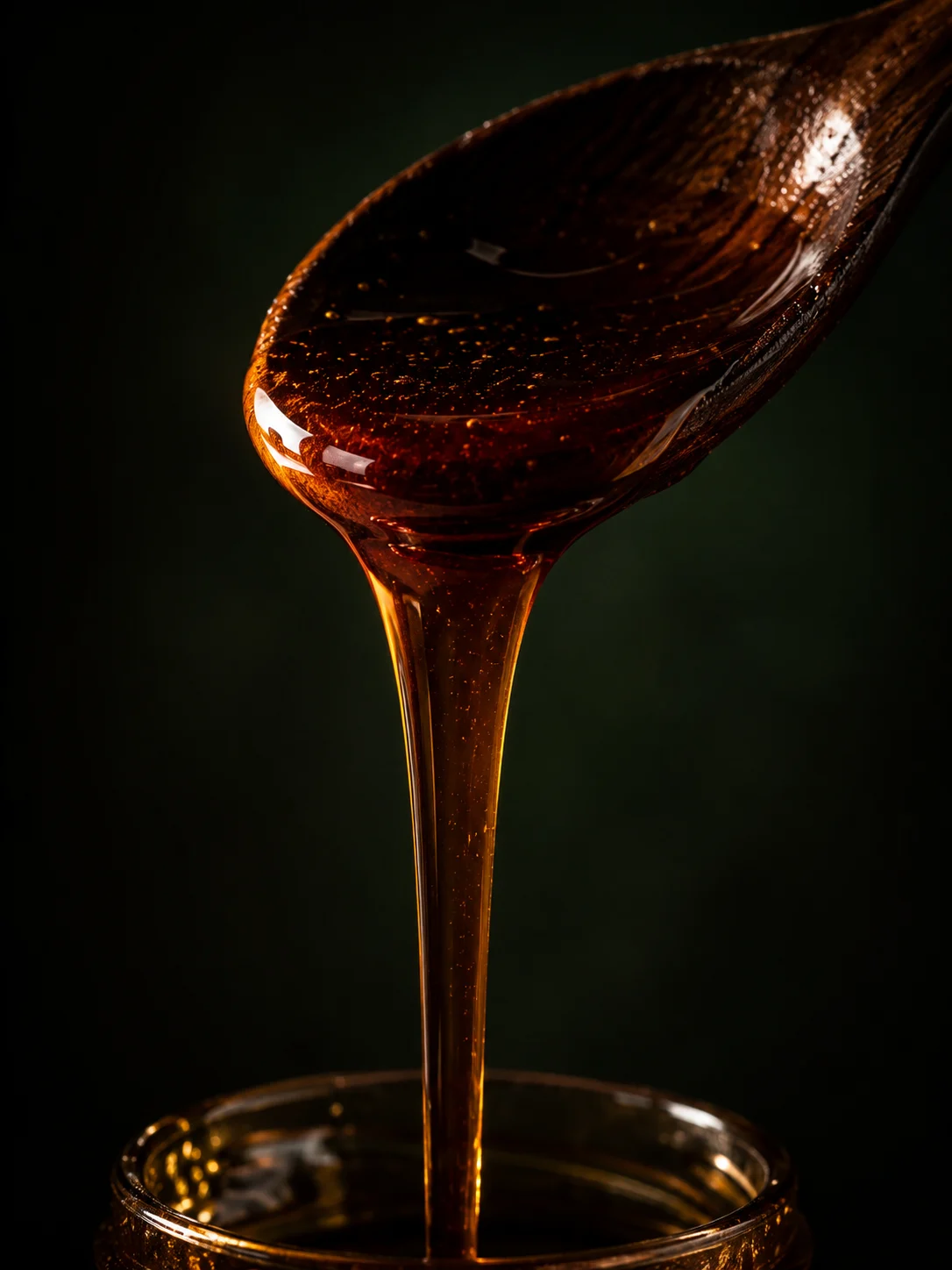
Harvest notebook
From the field — the mountain’s second season
The same beekeeper who shows Meski the autumn Sidr harvest returns to a different part of the mountain in spring, when the Sidr trees are bare and the Samar blossoms instead.
The window is short and the terrain harsher than the oasis edges Sidr prefers — a season that asks more of the beekeeper for a smaller, darker return.
It is, by the House’s own account, Nizwa’s most assertive honey — not a variation on the Sidr theme, but its opposite.
Pairings
How to serve it
Bold and smoky — meant to hold its own, not to blend quietly in.
Meski rating
An editorial reading, not a certification
Six criteria of the House, judged in tasting. This rating describes the appellation, is revised for each lot presented, and replaces no analysis or certificate.
Provenance
The Meski Confidence Chain
Rare honey is one of the most counterfeited foods in the world, and Sidr is no exception. Confidence does not come from a single certificate — it comes from a chain that stays continuous, from bloom to jar.
Read: How to read a rare honeyAnalysis describes the sample received by the laboratory. It does not automatically prove that every jar sold under the same name comes from that sample. A continuous chain does.
Continue the Atlas
An origin is never an island
Compare not to name a winner, but to understand what place, season and craft shift in the cup.