Ba3zizi
The clearest memory I have of his death
is my father crying.
He stood before the house, surrounded by relatives and friends trying to comfort one another. I was there, but memory did not preserve the whole day. It kept only a few flashes, and my father’s grief among them.
I knew my grandfather, but I did not know him long enough. What remains of him inside me is not a continuous story. It is a collection of scenes: his height, the strength of his body, his shaved head, and the white rezza sometimes wrapped around it.
His name was Mohamed ben Touhami. His friends called him Bina. To us, his grandchildren, he was ba3zizi.
He had no moustache and no beard. He was kind with us, but he was also strict. He could be generous, and he did not pretend to like everyone. He was a family man, not a man made perfect by memory.
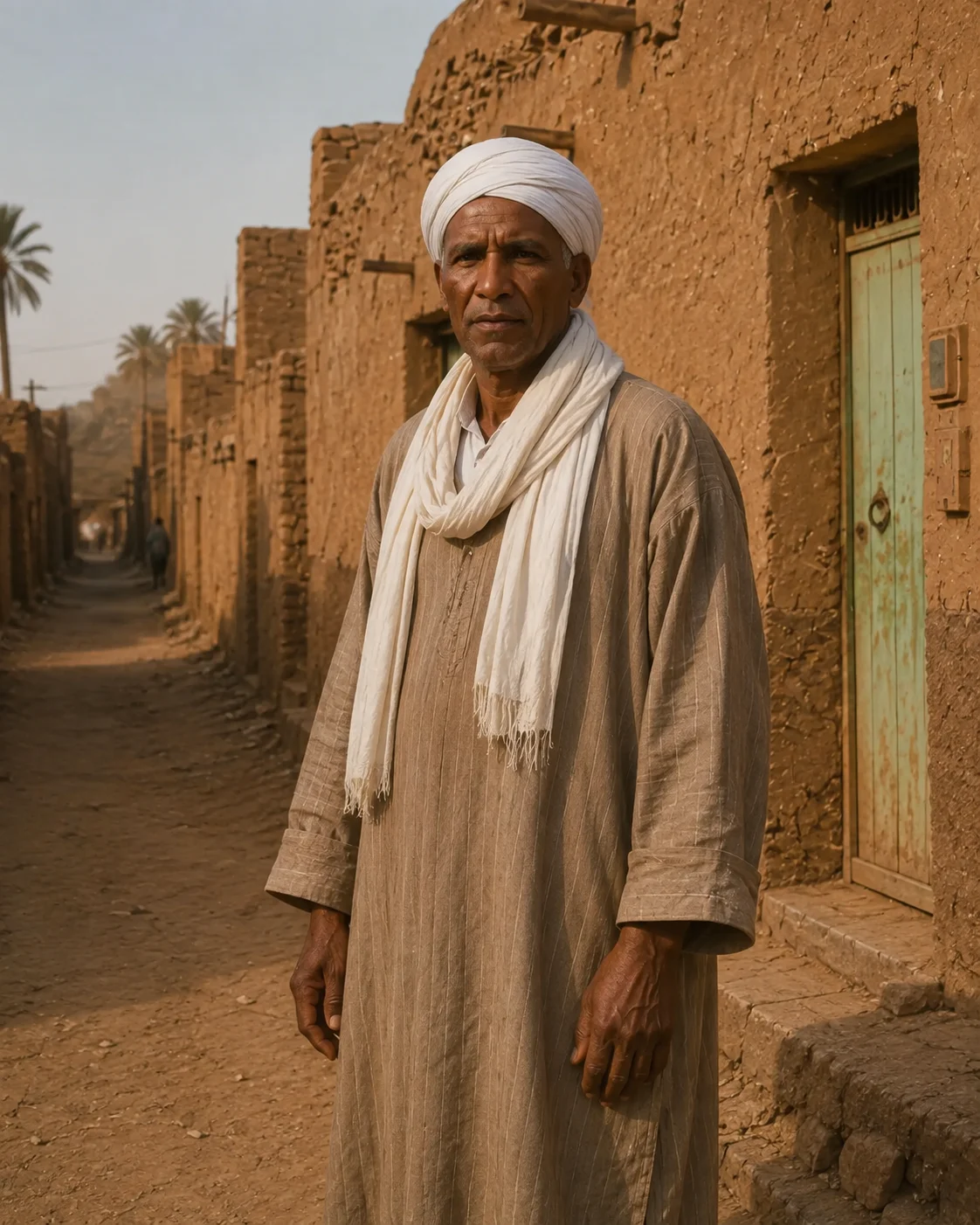 Historical visual reconstruction based on family testimony
Strong, Generous,
and Not Easily Moved
He was the head of the family. He decided. Five sons and one daughter grew beneath that authority.
Yet authority was not the only thing he gave. My father spoke of him with respect. The family remembers his generosity, his sense of responsibility, and the joy that could gather around him.
When we children misbehaved, he sometimes called out: “ben lihoudi lakhour.” I remember the expression more clearly than any explanation of it. It belonged to his voice, and that was enough for us to understand.
The Day the Village Waited for Him
When he returned from Mecca, the village waited for him. People were happy that he had come back.
I do not want to enlarge the scene into something more sacred than the memory itself. What matters is simple: his return belonged not only to the family, but to the people who had watched him leave and were joyful to see him home again.
The Mine and the Distance Home
He worked inside the mines of Aouli. He had a place to stay there for work and lived there for a time, returning often to Meski before coming back permanently.
The mine was one of the ways he carried the needs of the family. It was not the whole of his life, but it demanded a part of his body. The dust and weight of such work had affected his health, though I will not give a name to what the family did not name precisely.
My father knew that world closely. As a boy, he sometimes carried food to him: an ordinary plate or a small container, with bread wrapped in cloth. The meal did not travel far, but the child carrying it was already learning how work and family met.
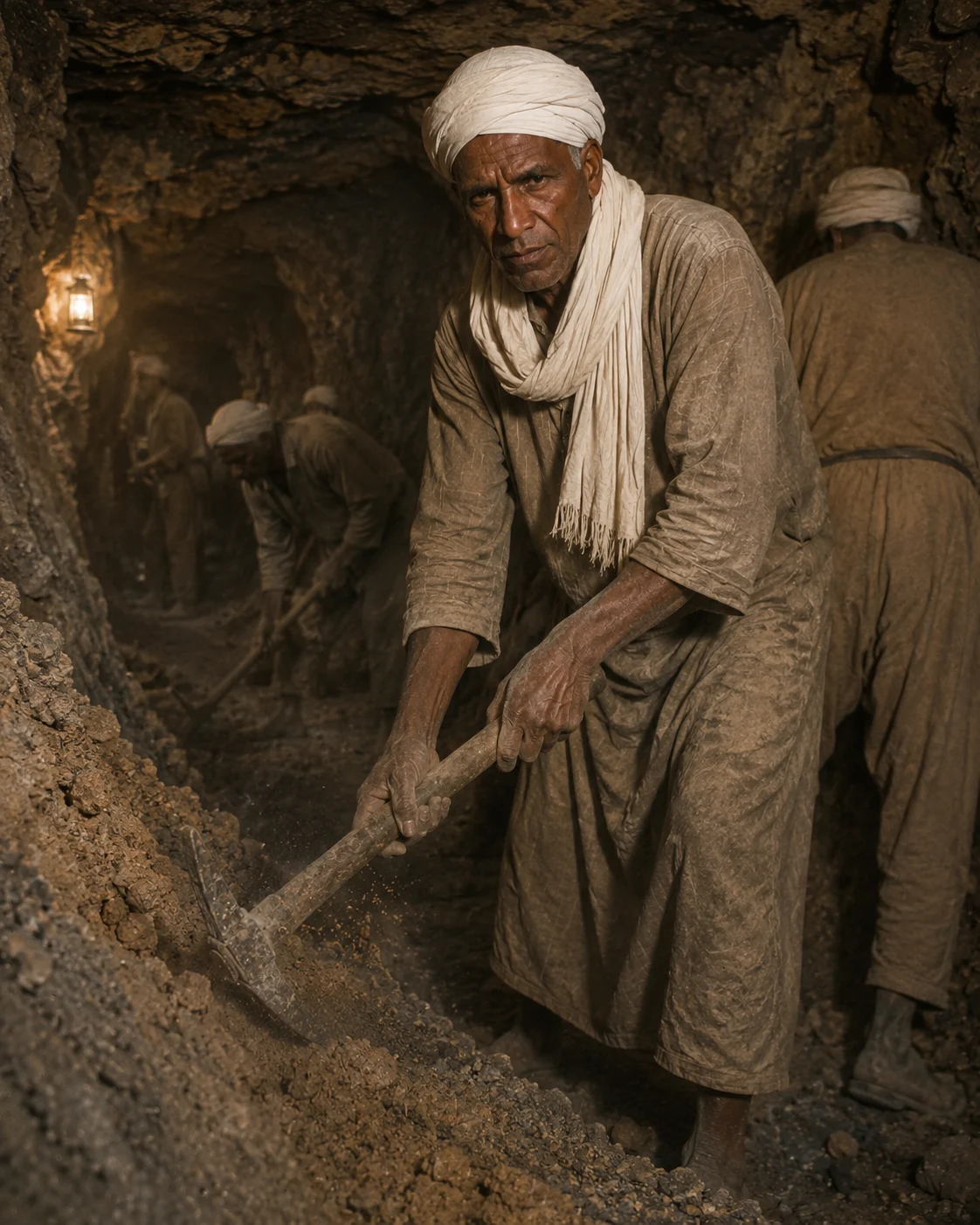 Historical visual reconstruction
Inside Aouli
Work underground helped support the family, while Meski remained the place to which he returned.
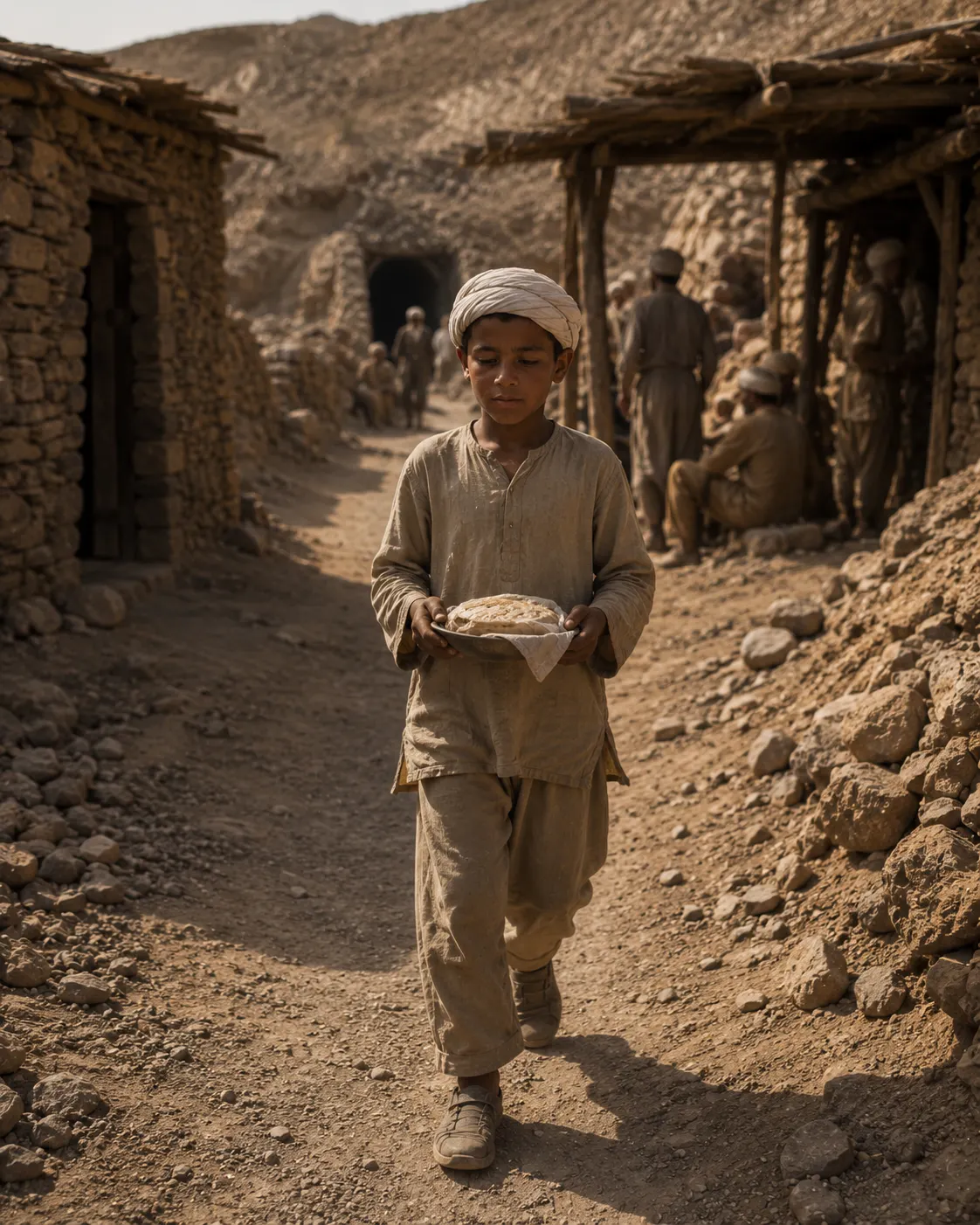 Historical visual reconstruction
A Son Carrying Food
A plate or small container, bread in cloth, and responsibility beginning early.
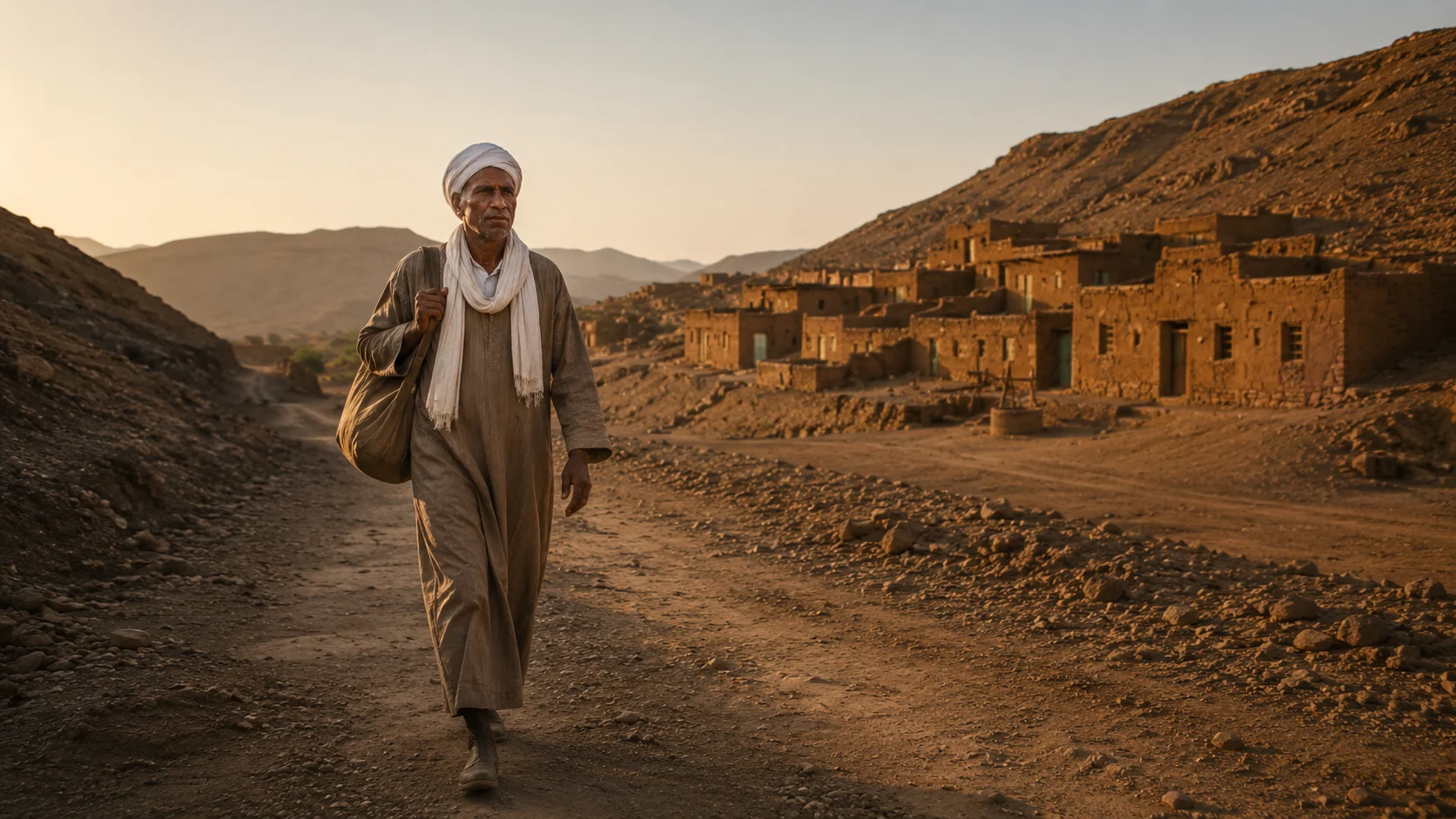 Historical visual reconstruction
The Weight Changes Hands
His son eventually told him he no longer needed to continue.
Then the son began to carry more of the burden.
“You no longer need to continue.
I can help now.”
He Was Also a Man of the Land
His fields were not gathered into one place. Some lay five minutes from the house, some much farther away, some near the Blue Spring, and others across the Ziz Valley.
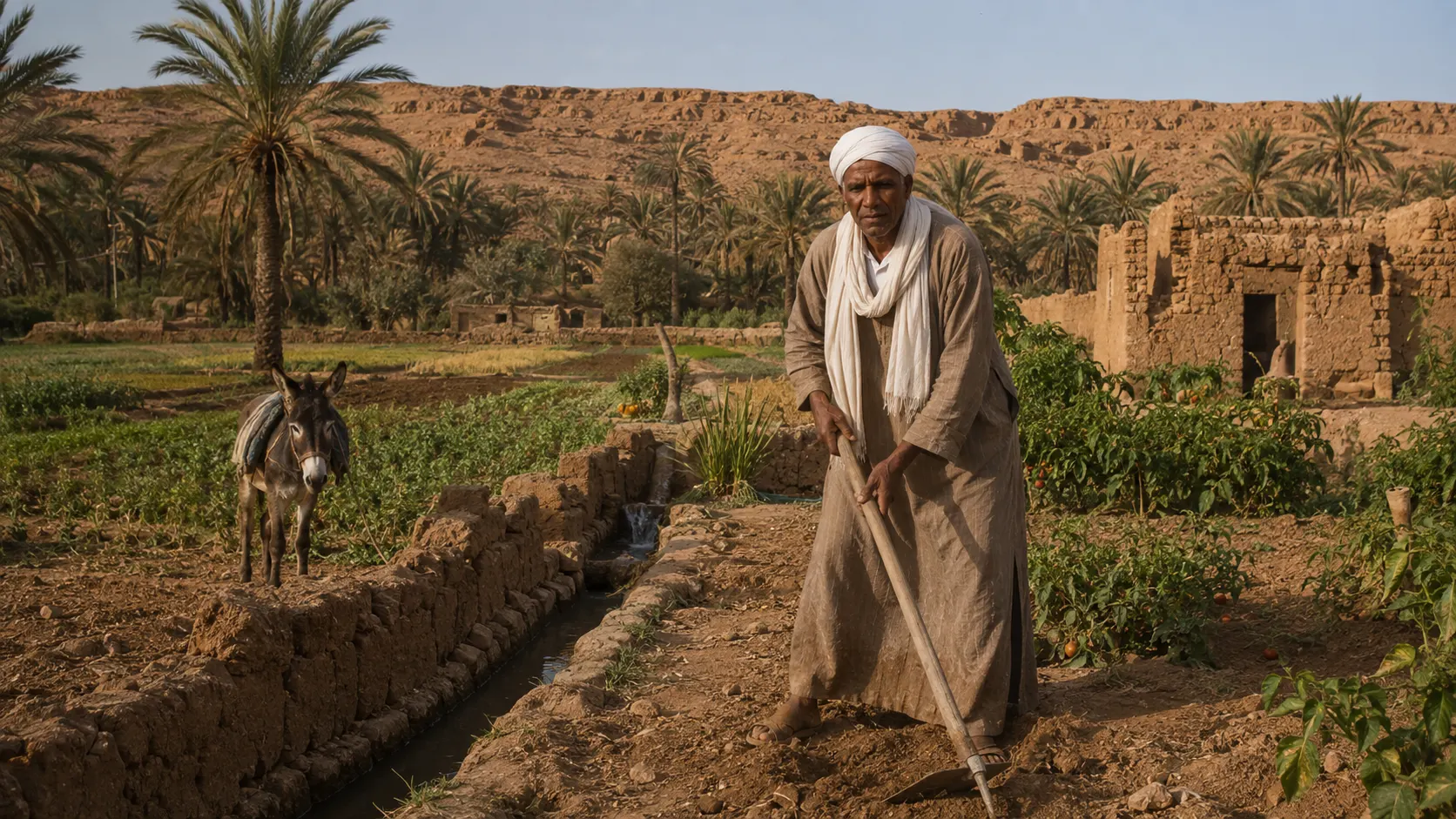 Historical visual reconstruction
Dates, Wheat,
Tomatoes and Shade
He cultivated dates, tomatoes, okra, wheat, olives, squash, pomegranates, peppers and grasses for the animals.
Sometimes he worked alone. Sometimes the family worked with him. There were donkeys, pumps, and at times the water of the seguias.
The land still exists. The family still uses parts of it. It has not remained untouched, but it has not disappeared from us.
The Wheat Continued
The wheat my grandmother cleaned and ground came from these family lands. Years later, my father planted wheat again.
I added kamut, a grain that did not belong to Meski, and after the harvest I asked my aunt to grind it with the old stone mill. I may still have a photograph.
My aunt often makes me think of my grandmother. She resembles her. In that moment, the land of my grandfather, the mill of my grandmother, my father’s work and my own love of tradition met again in the same grain.
The Brown Moped
He owned an old moped with a rear rack. At a time when there were few such machines in the village, people knew it. He rode it to Errachidia and to neighbouring villages.
My father rode behind him as a child. I also have a direct memory of sitting behind ba3zizi, before the house. It is a small memory, but it is mine.
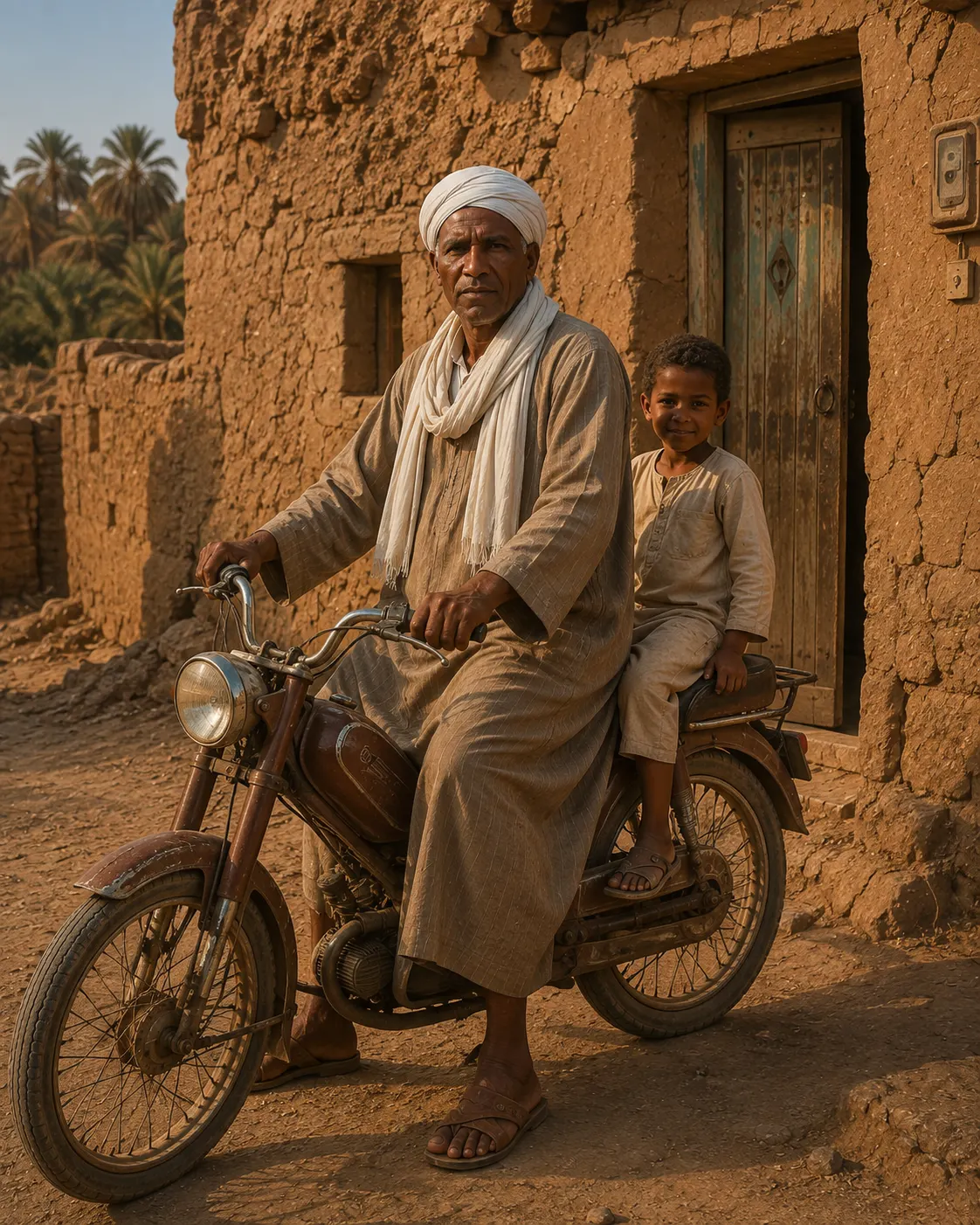 Historical visual reconstruction based on direct memory
New for Two Days.
Gone for a Year.
He had bought the moped new. Two days later, it was stolen from before the door.
About a year passed. Then one day, the thief brought it back and left it in the same place, worn from use. My mother was there and remembers it.
I do not know what explanation could improve the story. Sometimes a family anecdote is complete the moment everyone begins to laugh.
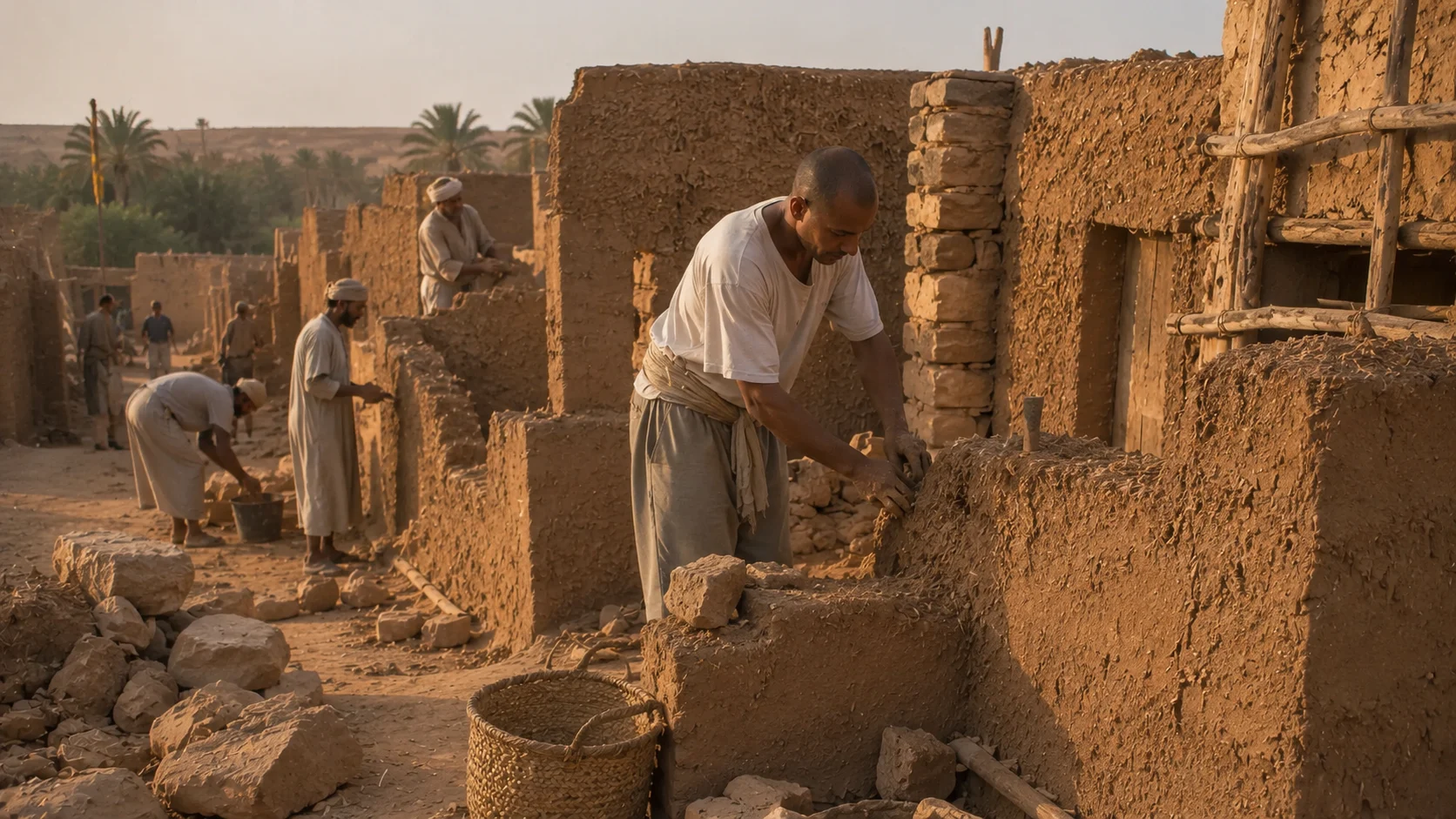 Historical visual reconstruction
The House He Built for the Family
During the move to the new Ksar, he built the family house. It belonged to him, and within it the family took another form.
He was its head. Decisions passed through him. Yet the house was never his only inheritance to us. Around it were lands, work, routes, responsibilities and the memory of a man who understood that property also created duties.
He Chose Not to Keep the Water Inside
The well was placed outside, where the people of the village could reach it. That decision tells me more about him than any monument bearing his name could have done.
Down Through Stone
He did not dig alone. Other men helped. The well was deep, and most of the work was done by hand with the tools available in the village.
Once the depth was reached, the opening was protected with stone and cement. The simple circle before the house became part of the life of everyone who came for water.
As long as the well was used often, water overflowed behind it and formed a permanent stream down the slope.
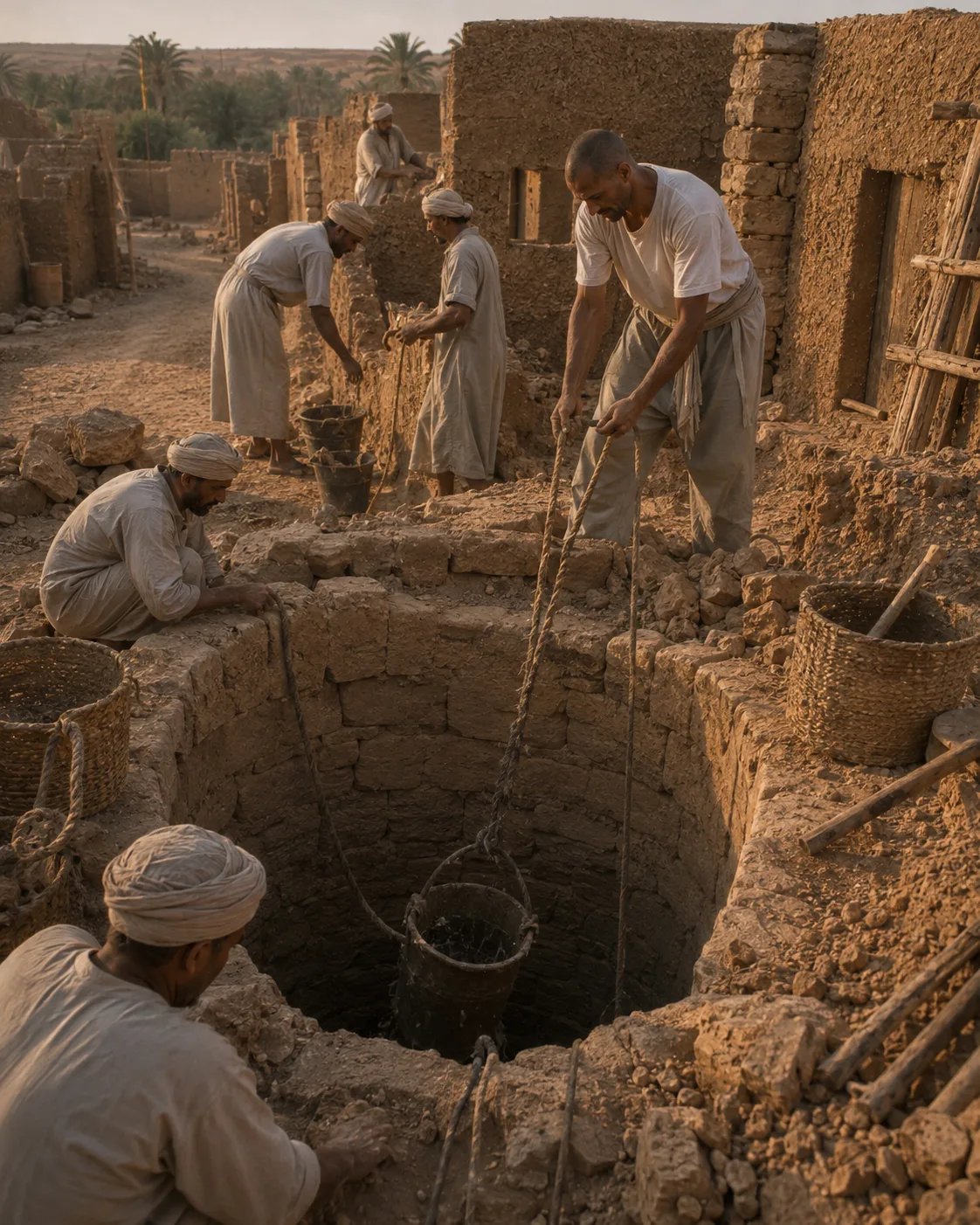 Historical visual reconstruction based on family testimony
A Private House.
A Well for Everyone.
Neighbours arrived with buckets. Children stopped. News travelled. The rope moved, and water rose into the common light.
In our faith, giving water carries immense value. But this chapter does not need a sermon. The well itself is enough: useful, open, and placed where others could reach it.
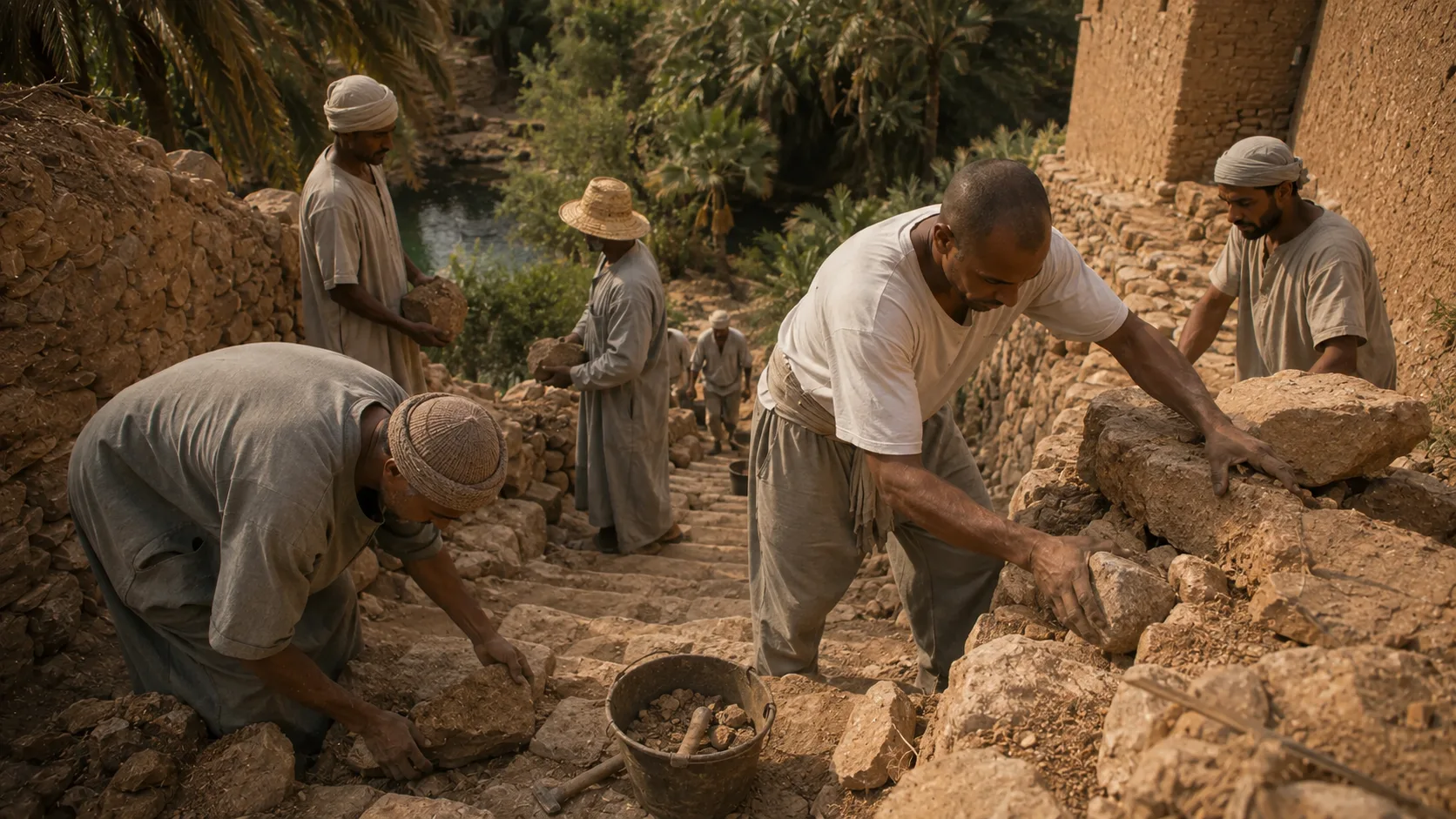 Historical visual reconstruction based on family testimony
The Steps to the Blue Spring
Family memory also places him among the villagers who helped consolidate the steps descending to the Blue Spring, in the years before my childhood.
He did not build them alone. The work belonged to several men and to the shared need to make the descent easier for people.
The animals used another entrance, farther away and sloping. These steps were for the inhabitants going down toward the water. They remain there today.
What I Would Say to Him Now
I would not begin with the mine. I would not begin with the land, the moped, the house or the well.
I would thank him. Then I would ask him to sit with me and tell me about the life he had lived before I was old enough to listen.
I would ask about the hard years, the journeys between Aouli and Meski, the fields, the people he trusted, the people he did not, and the choices that made him the man my father remembered with respect.
I cannot recover that conversation. I can only admit that I wish I had known him better.
The mine closed behind him. The moped grew old. His children took different roads. The well remained before the house.
It still faces the village. It does not carry his name. It does not need to. The water was placed where people could reach it, and that is the part of his life that continues to speak most clearly.
اللهم ارحمه وارحم موتى المسلمين أجمعين
O Allah, have mercy on him and on all deceased Muslims.