For an adult, it may have been only a walk. For us, it was a country crossed on foot.
The old ksar always looked closer than it truly was.
From the new village, the old ksar seemed close enough to reach without effort. It stood beyond the oasis, its earthen walls rising above the palms, visible from almost everywhere. Distance behaved strangely in that landscape. The ruins appeared near because nothing interrupted the eye, yet for children the journey could take more than an hour, sometimes longer, depending on what the path offered us.
We never walked in a straight line. No child crosses an oasis as an adult crosses a road. We followed water, fruit, voices and curiosity. A narrow path disappeared under palms, another turned beside a cultivated plot, a third descended toward the oued. Every detour belonged to the journey.
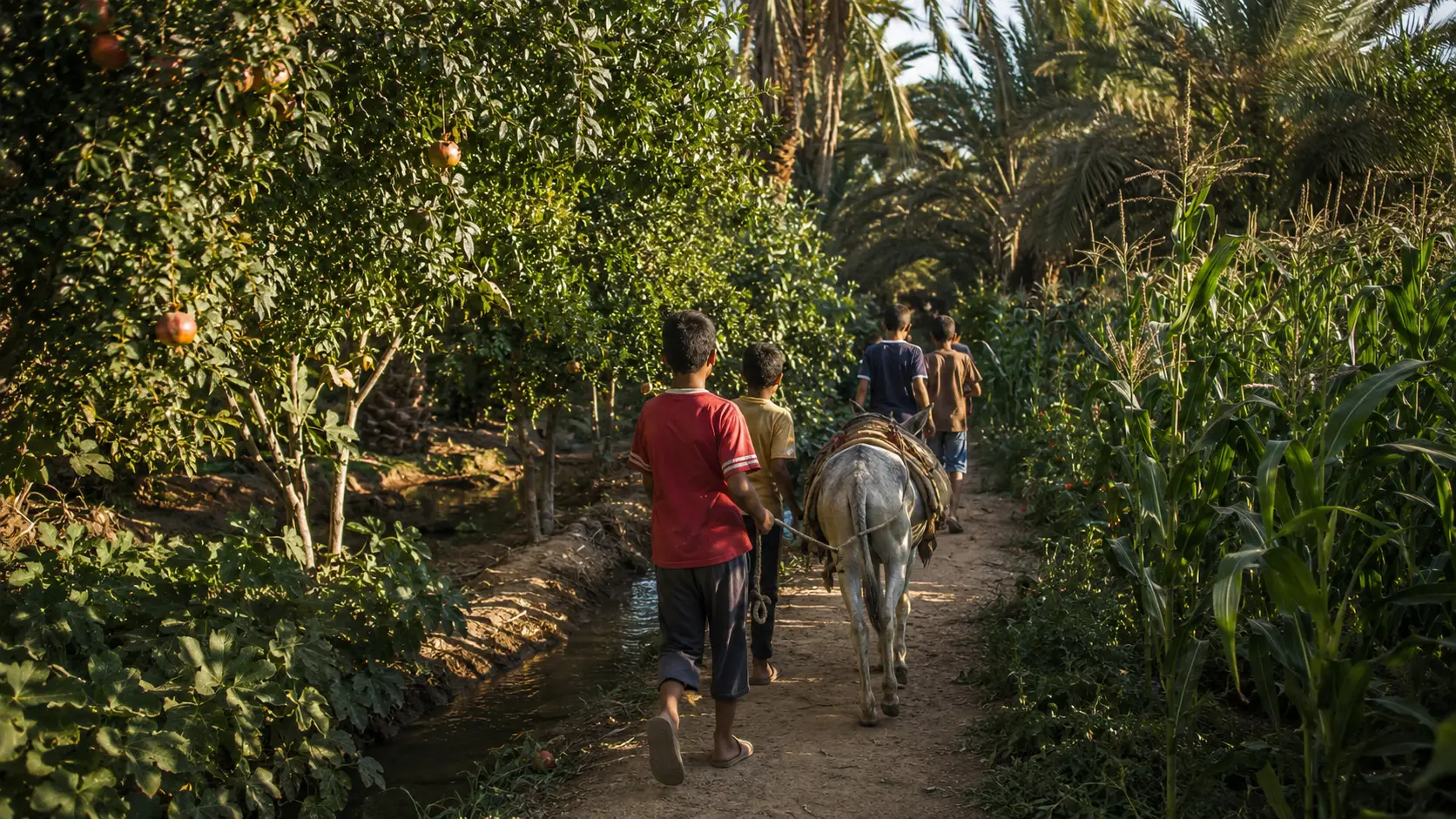
We were several children, and with us came a grey donkey. Sometimes one of us rode while the others walked beside him. Sometimes we all walked and held the rope. He was patient with our noise and our changing decisions. We probably believed we were leading him, although he often seemed to know the paths better than we did.
The Road Through the Oasis
Everything was alive before the ruins.
The Paths Knew Our Families
The oasis was not an empty wilderness. It was a woven world of gardens, irrigation channels, cultivated plots and trees belonging to families we knew. Maize rose in some fields. Elsewhere there were peaches, figs, pomegranates, almonds and palms heavy with dates.
We knew which garden belonged to our family and which did not. If the fruit was ours, we could eat. If it belonged to someone else, we left it untouched. No sign was needed. The rule lived in us before anyone explained it.
When the season was right, we picked a peach, opened a pomegranate or ate figs warmed by the sun. We gathered dates from the ground and sometimes ate belh, the firm yellow dates before full ripeness. A child walking through the oasis learned the calendar through taste.
The land fed us, but it also taught us what was ours and what had to be respected.
The Oasis Was Also a Place to Sit
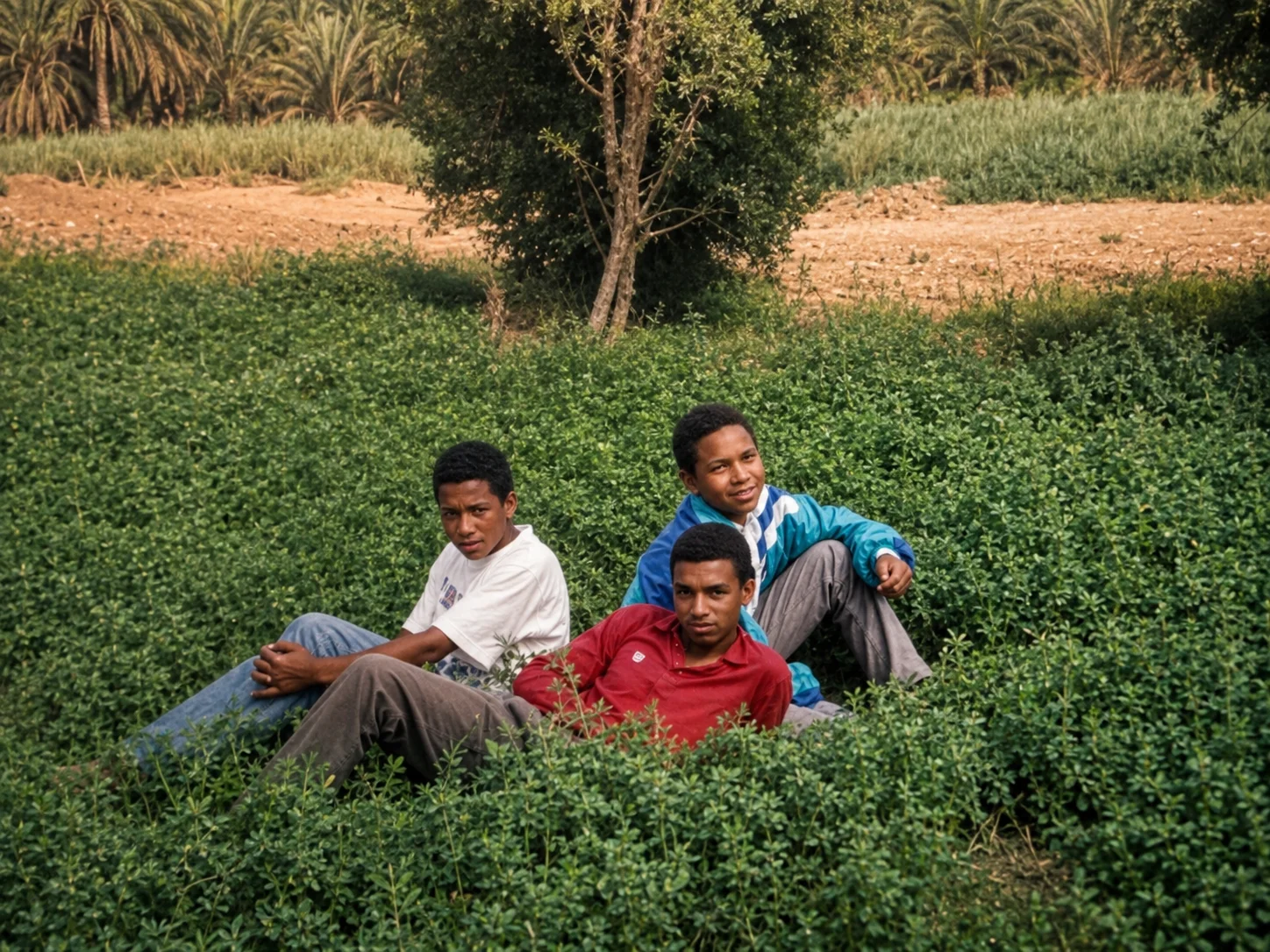
This photograph was taken later than the childhood journey told here, yet the posture belongs to the same world: sitting directly among the plants, without a bench, without a table, without asking the landscape to become anything other than itself.
The older boys were sometimes with us. Their presence did not reduce the adventure. It widened the circle of safety around it.
The Village Was Larger Than Its Houses
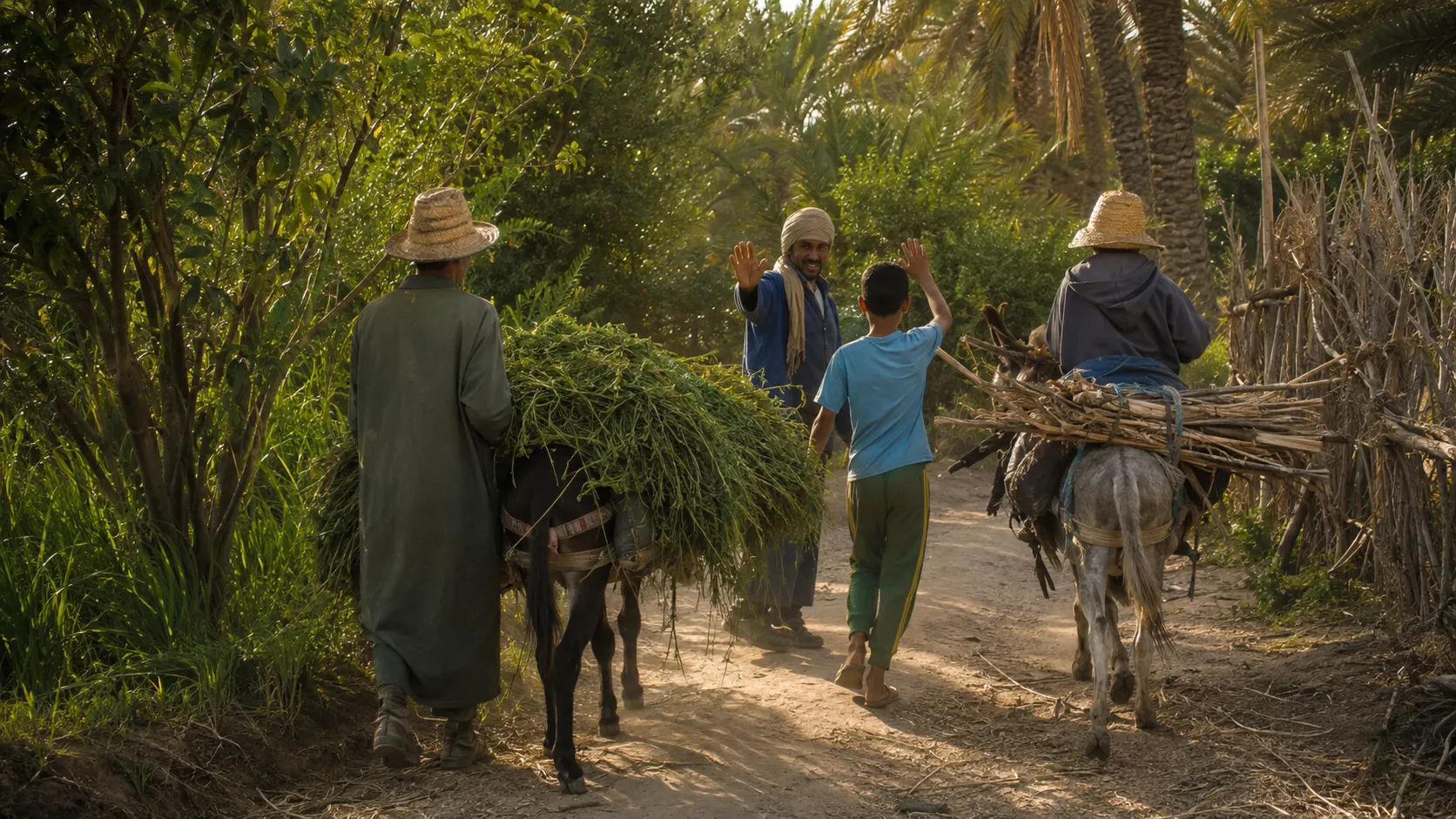
We felt safe because the oasis was full of people who knew us. Men worked their plots or returned from gathering. Some walked beside donkeys loaded with fresh grass. Others carried wood. Their animals passed slowly under burdens that seemed enormous to us.
Every encounter began with salam. A few words were exchanged, a question about the family, a smile, perhaps a joke. Then everyone continued. We were children far from the house, yet we were never entirely beyond the eyes of the village.
That was our freedom. It did not come from being invisible. It came from being known.
Women at the Oued
Near the oued, women sometimes washed clothes and carpets. The fabrics darkened with water, then brightened again in the sun. Their hands worked while voices crossed the riverbed.
We passed without treating the scene as unusual. It belonged to the same day as the fields, the donkeys and the paths. Only much later did I understand that what seemed ordinary to us was an entire way of life.
The Oued Was Made of Stone
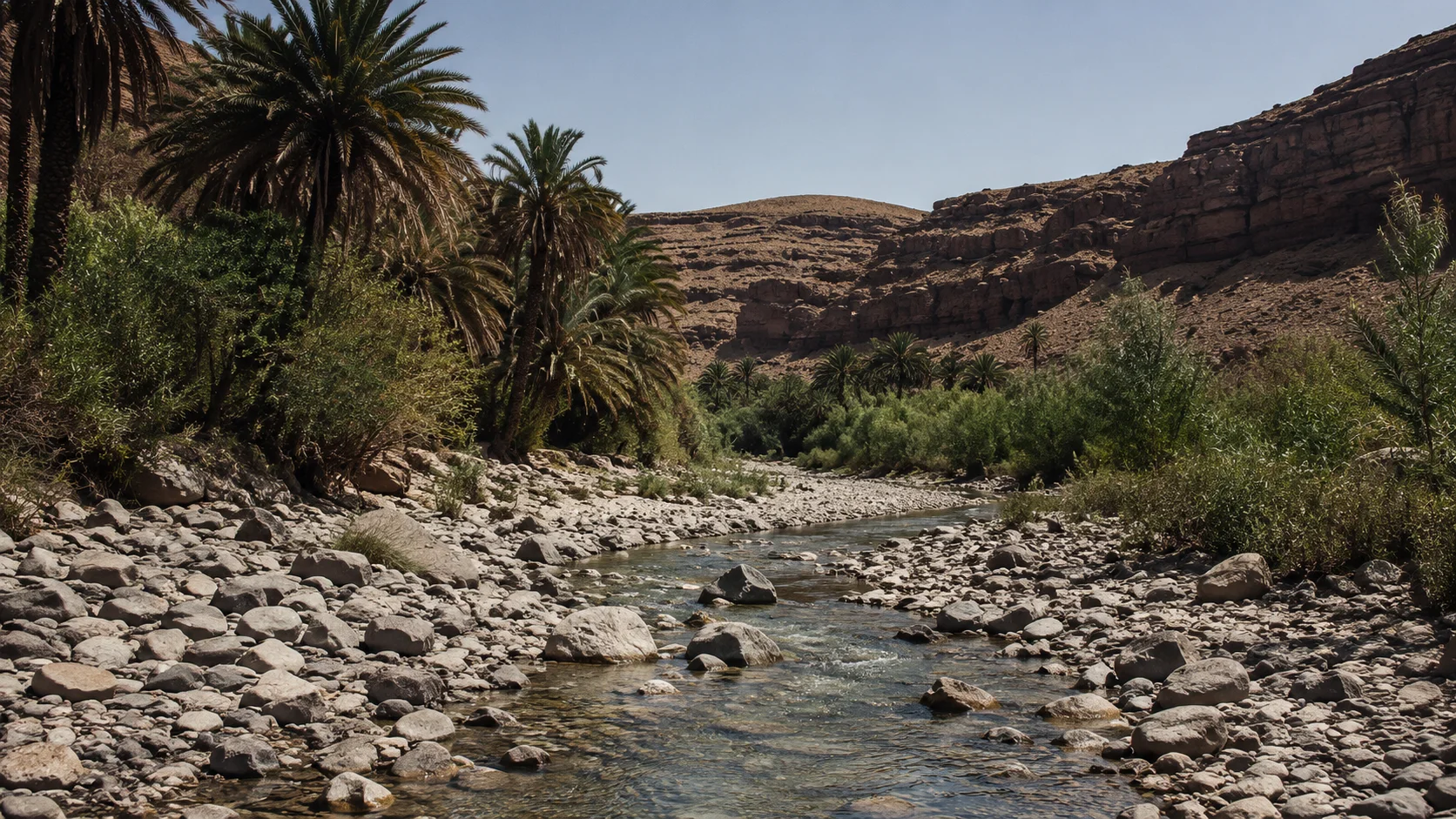
The oued was not a desert of sand. Its bed was filled with rock and smooth grey pebbles, many of them oval from the work of water. When the river ran across our path, we lifted our trousers and crossed on foot. At other times, one of us crossed on the donkey.
We sometimes led him to the water and let him drink. His head lowered, his rope loose in our hands, while the current moved around the stones.
The flattest pebbles became toys. We threw them sideways and counted the small jumps they made over the surface. A good ricochet could delay the entire expedition. The old ksar was our destination, but childhood never allowed a destination to become more important than a game discovered on the way.
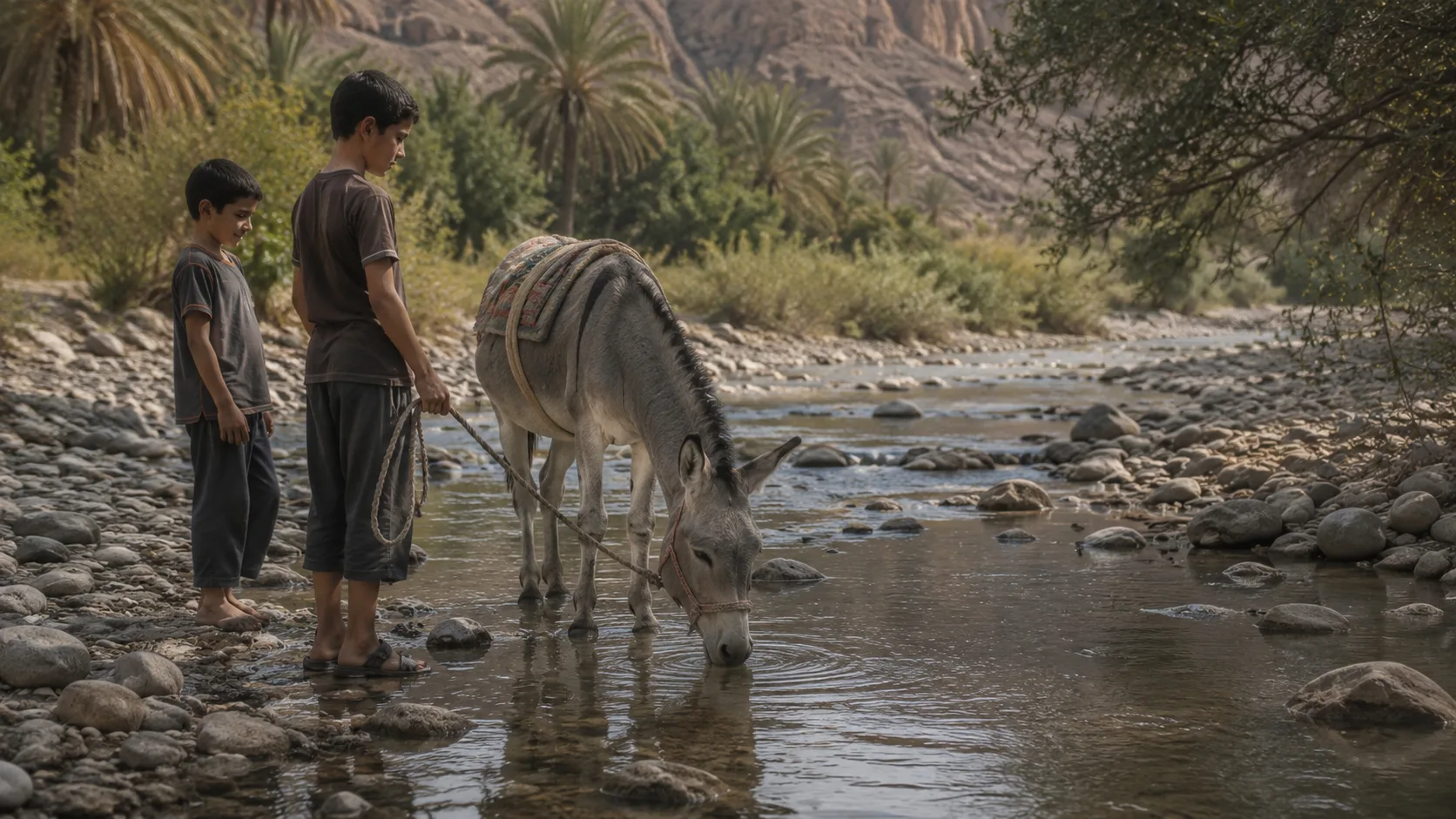
The Poor Grey Donkey
He carried us when we were tired, waited while we played, and drank when we finally remembered that he was thirsty too.
In my memory he is patient, grey and slightly burdened by our freedom.
A Landmark That Refused to Come Nearer
The old ksar remained visible through much of the journey. From one path it appeared directly ahead. From another, it rose above a line of palms. Because we could see it, we believed we were almost there.
Yet it never seemed to grow closer quickly enough.
When we entered the deepest parts of the palm grove, the view disappeared completely. The palms closed around us. For a time there was only vegetation, running water, cultivated earth and the narrow path beneath our feet.
Then the grove opened again, and the ksar returned.
Then the palms opened, and the destination returned.
Beyond the Last Palms,
the Old Ksar Appeared Again.
The light was the same. The feeling was about to change.
Continue to Part II →