Visitors remember the water first. I remember the friends, the cliff, my uncle’s hanout, the music, and the path that continued into the gardens.
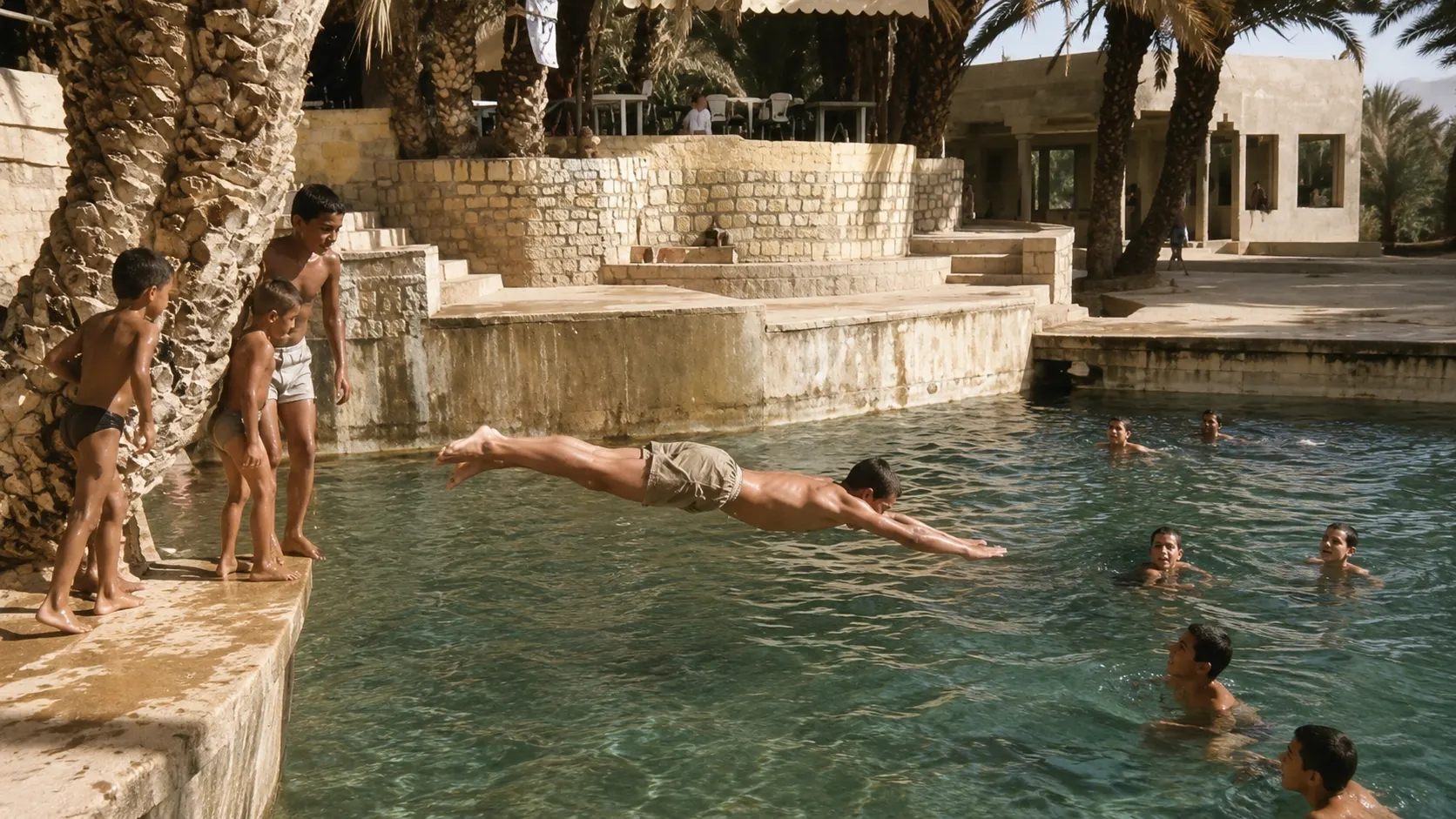
People speak of the Blue Spring of Meski as though it were a jewel placed beneath the cliff for the world to discover. They remember the basin shaded by palms, the water cold enough to steal the breath, the boys who leapt from the rocks, and the sound of voices rising toward the plateau.
They are right to love it. It is beautiful. It belongs to the memory of the village, and its name travelled far beyond the oasis long before many of us understood what it meant for a place to become famous.
But fame changes the order in which things are remembered. Visitors remember the water first.
I remember the friends.
We went almost every day, although we did not always go to swim. There were days when the spring was only the place where everyone happened to meet. We descended because somebody was waiting below, because a cousin had arrived, because a friend had nothing else to do, or because childhood rarely needed a better reason than the possibility of several hours together.
Some of my friends were not from Meski. The inhabitants entered without paying, and from time to time they came with me, quietly enjoying the advantage of belonging to my company. We laughed about it. At that age, friendship made its own small laws.
Perhaps this is why the Blue Spring never stirred me in the same way it stirred those who came from far away. I was not looking at a wonder. I was moving through a familiar part of life.
Above the Cliff
Sometimes we did not descend immediately.
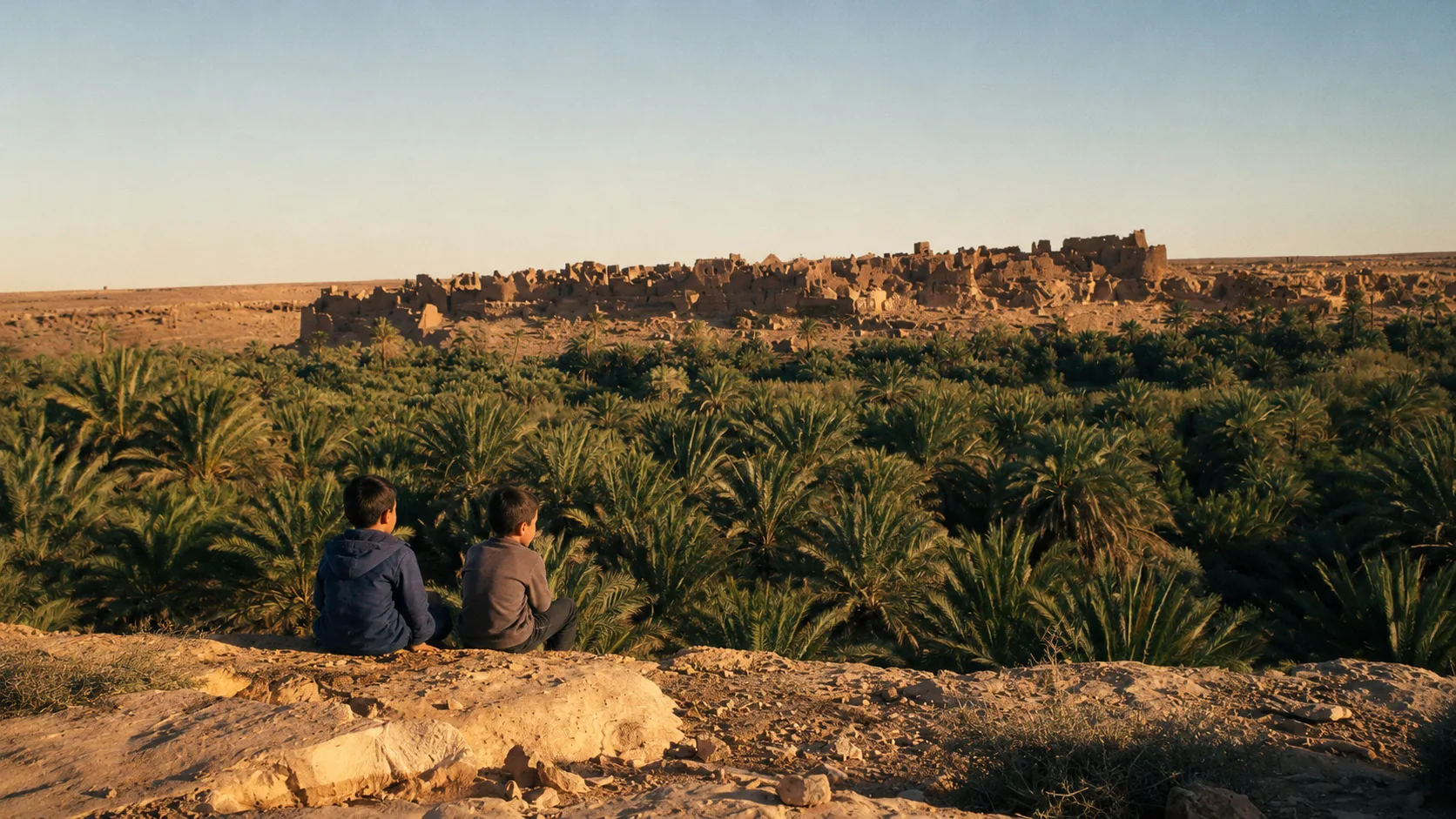
We sat near the edge of the cliff and looked down. It was dangerous enough to require care, but not dangerous enough to prevent boys from believing they knew exactly how close they could sit.
Beneath us, people moved along the stairs. Some descended quickly, still full of strength. Others climbed slowly, stopping to breathe, already regretting how easily they had gone down.
Beyond the pool, the palms spread across the oasis in every shade of green. The old ksar rose from the earth on the other side, the same colour as the plateau, as if it had not been built upon the land but drawn out of it.
From that height, we could see the whole world of our childhood: water, stone, palms, pathways, houses and people calling one another from below.
A Small World Under the Palms
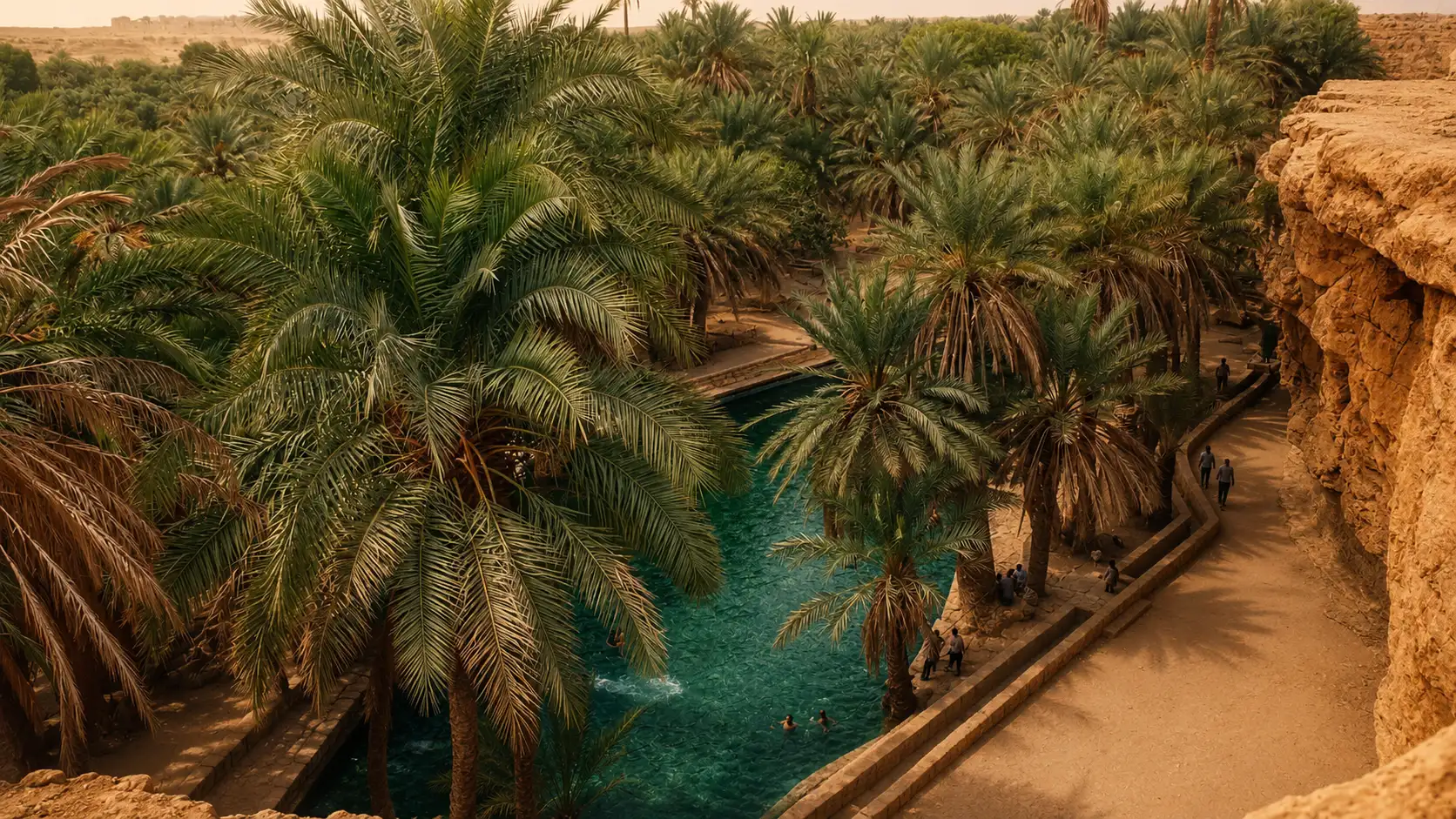
From above, the pool seemed almost hidden by the palms. The water caught the light in broken pieces, and the people below became small figures moving between shade and sun.
The Blue Spring was never still. Even when the surface calmed, the place remained full of anticipation. Someone was always climbing higher. Someone was preparing to jump. Someone else was calling to a friend to watch.
We admired the best divers. They jumped from the rocks, and some climbed even higher among the palms. Their bodies turned in the air with such ease that we believed courage was a kind of grace given naturally to certain boys.
The famous pool lay beneath the palms, filled with voices, movement and expectation.
Going Down Was Easy
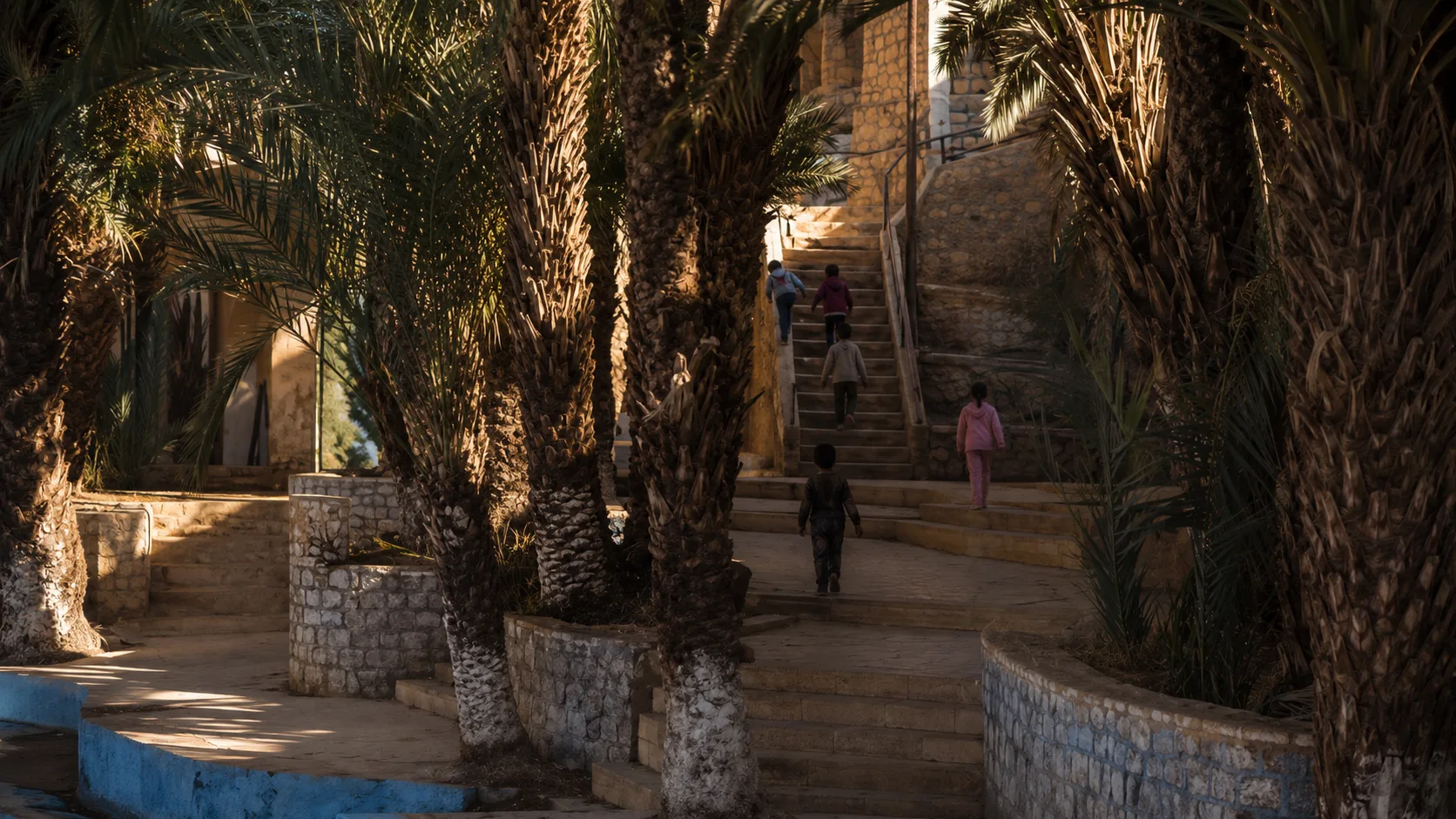
The staircase began high on the cliff and disappeared beneath the palms. Going down required little thought. We were young, the day was ahead of us, and gravity seemed like a generous companion.
Coming back was another matter.
After hours in cold water, after laughter and walking and the heaviness of wet clothes, every step became more serious. The staircase that had welcomed us in the morning tested us in the afternoon.
Perhaps this is one of the truest laws of childhood: descent belongs to excitement; the climb belongs to memory.
The Day I Tried to Look Fearless
One day, a friend came with me. I wanted to impress him. There was no great plan behind it. Pride often arrives in a boy before wisdom has time to object.
I climbed higher than usual and did what I almost never did: I tried to imitate those who knew how to dive properly.
The experienced boys entered the water and moved forward, rising quickly, their bodies already prepared for what the water would do. I entered badly. Instead of travelling through the pool, I went down.
My head lightly struck the bottom. The shock ran into my back, and for two days I carried the lesson in every movement.
Fortunately, it was not serious. Today I laugh when I remember it. It was one adventure among many—small enough to become funny, sharp enough never to disappear.
My Uncle’s Hanout
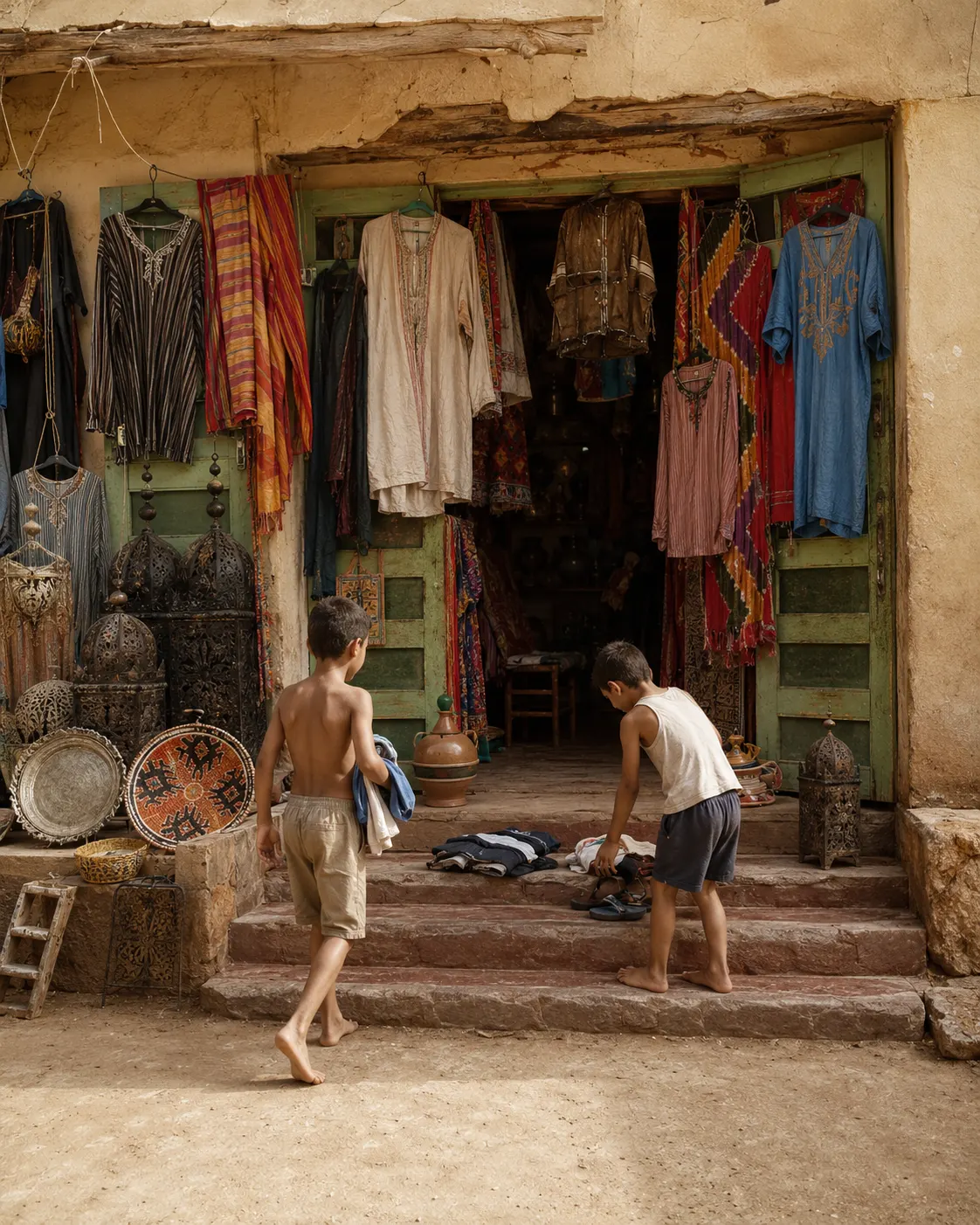
Beside the spring stood my uncle’s small souvenir shop. To visitors, it was a place of carpets, garments, jewellery, lanterns and handmade objects. To us, it was something more intimate and more useful: a place where we could leave our belongings, change our clothes, rest, talk and return to ourselves between two swims.
Before swimming, we deposited our clothes and sandals in the hanout. When the cold became too much, or when we simply wanted to sit, we came back.
The shop held the quiet warmth that the pool did not. There were objects everywhere: woven trays, jewellery, brass pieces, garments and carpets. We sat among them as though they had always belonged to our own domestic world.
Sometimes we drank tea. Often we only talked. For tourists, the shop was part of the visit. For us, it was a refuge.
The hanout changed the meaning of the spring. It made a public place feel familial.
When the Shop Became a Room of Music
In the evening, the hanout sometimes ceased to be a shop. The merchandise remained on the walls, but commerce withdrew from the room.
My cousins gathered. One sang. Another played the derbouka. Someone took up the guitar. There was no stage, no performance, no audience waiting to be impressed. There were only familiar voices, tea glasses, laughter and the freedom to join a song whenever it reached you.
The Blue Spring was only a few steps away, famous beneath the palms. Yet the deepest warmth of the day was here, inside the small hanout, among family.
This is one of the strange mercies of memory: it allows a modest room to outlive a celebrated place.
When the Crowd Remained Behind
Leaving the Blue Spring did not always mean going home. Sometimes it meant that the part of the day I loved most was only beginning.
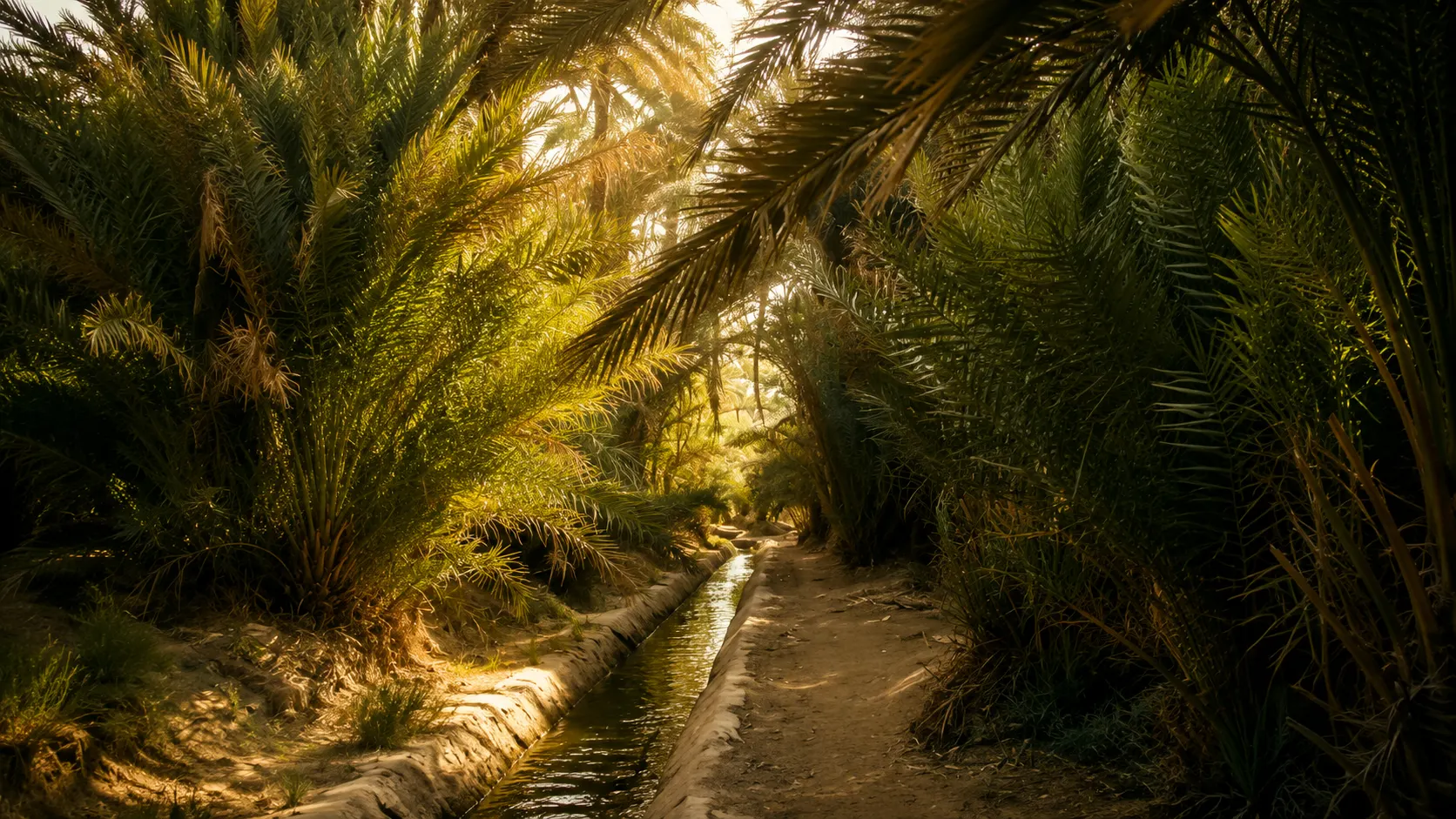
We walked into the oasis and followed the small streams beneath the palms. We knew several places where fresh water emerged. We drank from them because we knew them, and because childhood trusts the familiar long before it learns to question it.
The noise of the pool slowly disappeared behind us. The path narrowed. The palms closed above our heads. The world became quieter and more ours.
About fifteen minutes away was my grandfather’s garden. We did not measure the distance. We knew it through our feet.
Where the Day Became Ours Again
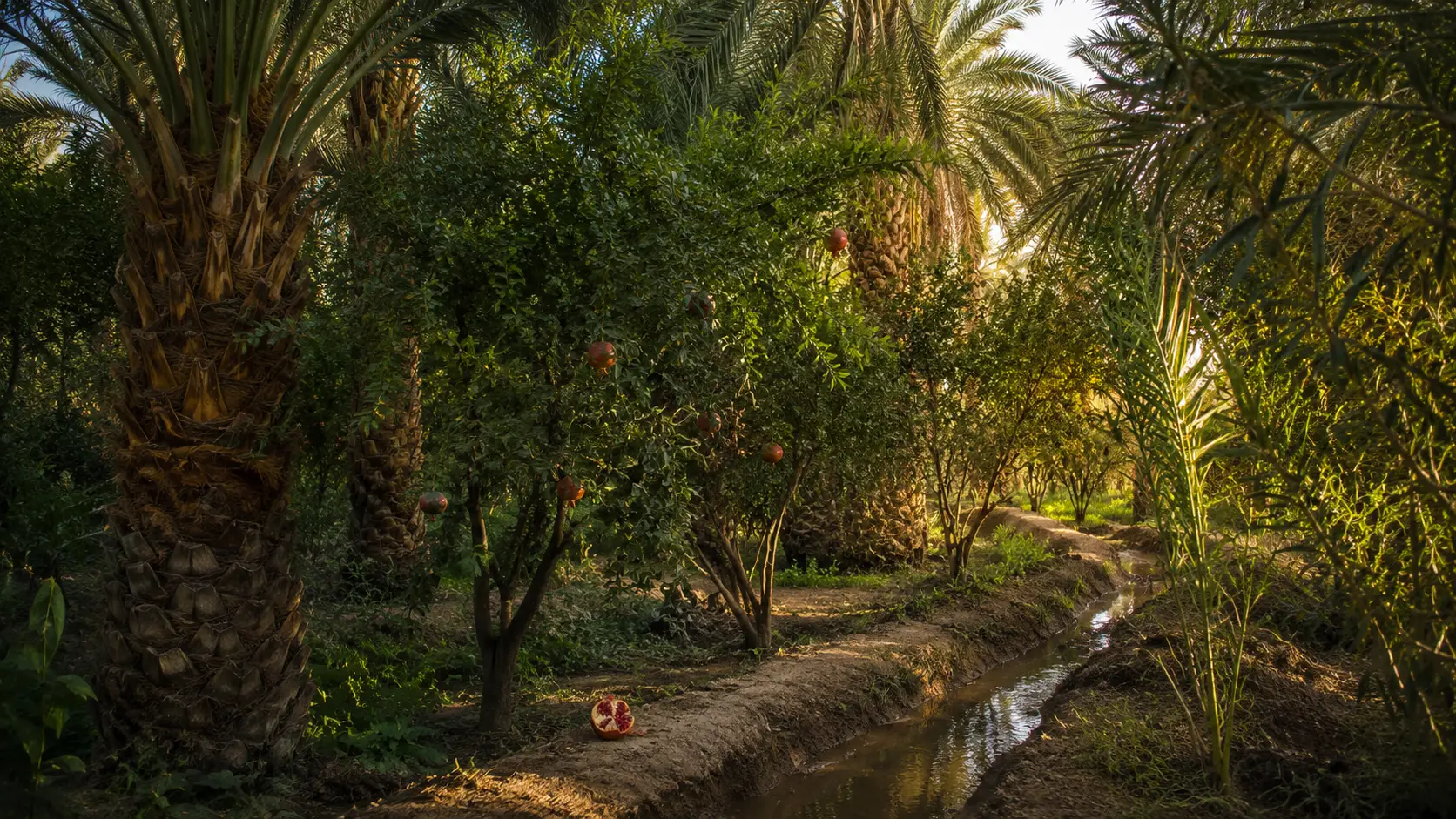
In the garden, there were palms, channels of water and pomegranate trees. We opened the fruit with our hands and ate it there, the seeds bright against the shade.
We played at jumping from one bank of the irrigation channels to the other. It was a small game, repeated many times, yet memory does not measure the importance of a moment by its complexity.
There was no programme to follow. One thing led naturally to another: the cliff, the descent, the friends, the cold water, the hanout, the tea, the music, the path through the palms, the garden, the pomegranates.
The Blue Spring was the most famous point on the map. My heart travelled beyond it.
What This Place Taught Me
A place becomes part of us not only through what it shows, but through the people who teach us how to live around it.
Visitors came to Meski to discover the Blue Spring. I remember the friends, cousins and relatives who transformed the famous place into an ordinary territory of childhood.