Ksar Meski did not wake all at once. It returned sound by sound.
The oasis was already awake before we opened our eyes.
Memory does not always return as an image. Sometimes it arrives as a rhythm from far away, as a cry in a narrow street, as an animal calling before dawn, or as water running behind a well. When I think of Ksar Meski, I do not first hear a great event. I hear the ordinary life of the village gathering itself around the morning.
The ksar was quieter then. There were fewer engines, fewer strangers and fewer houses. A voice carried farther. A donkey could be heard before it entered the street. A motor announced an arrival long before the vehicle appeared.
Silence did not mean emptiness. It meant that nothing was loud enough to erase anything else.
Poum. Poum. Poum.
Far inside the palm grove, the irrigation pumps began their work. Some beat slowly:
Poum... poum... poum...
Others trembled more quickly:
Trrrr... trrrr... trrrr...
They were probably diesel pumps. Distance and echo changed every sound. One came from the left, another from beyond the palms, another answered from the right. They could run all morning or much of the day, depending on the cultivator.
Their noise did not disturb me. It sounded like the oasis breathing.
The Earliest Voices
The roosters came very early, before the village had decided to rise. The donkeys often answered at the same hour. Their braying crossed the stillness with no concern for anyone sleeping.
Even today, that sound returns me more quickly than any photograph. A donkey calling at dawn is enough to replace the road beneath my feet with the streets of Ksar Meski.
The birds belong to another hour in my memory. I remember them most strongly in the evening, hidden inside the trees, speaking among the palms when the heat began to withdraw.
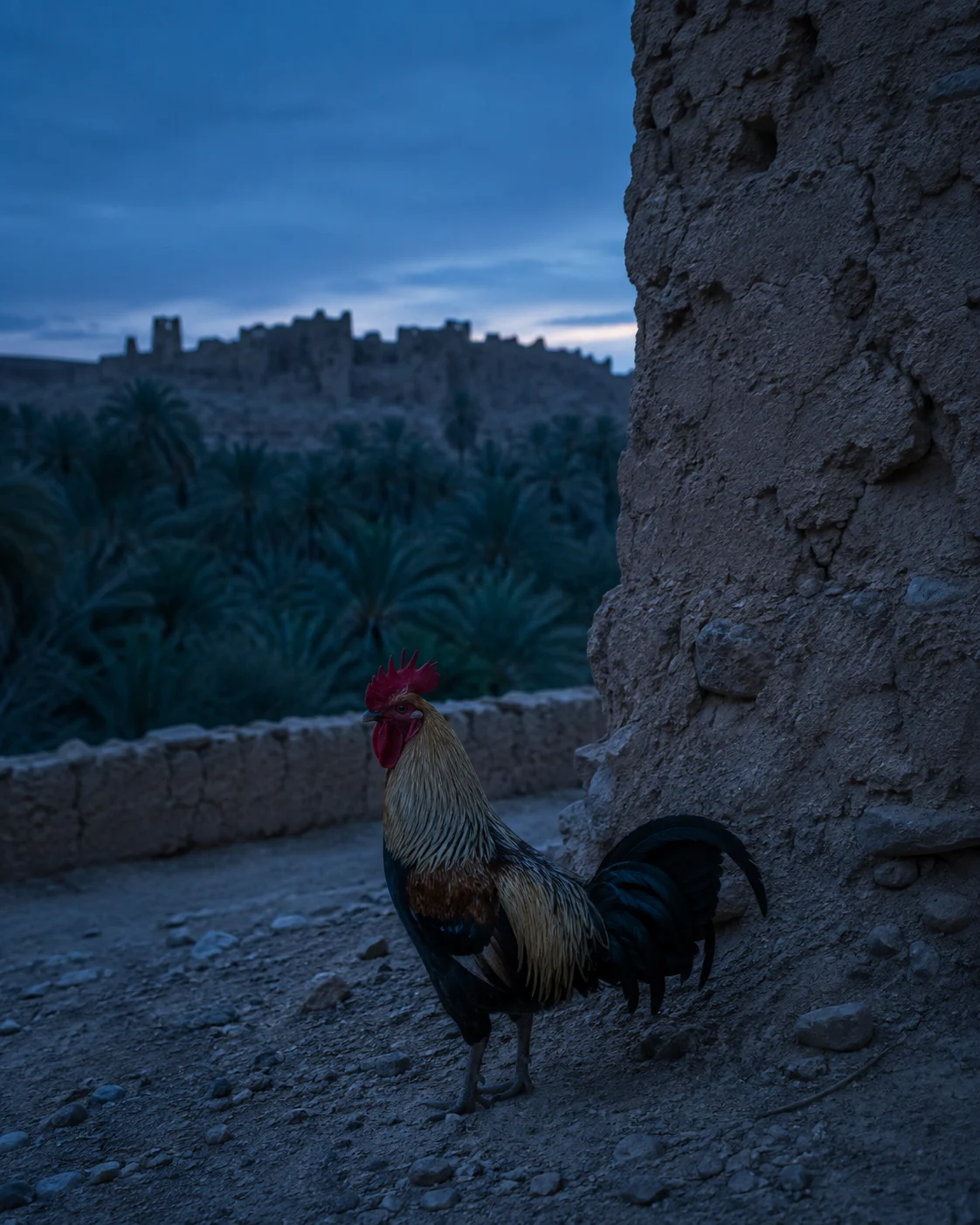
The Roosters
They announced the morning before it existed.
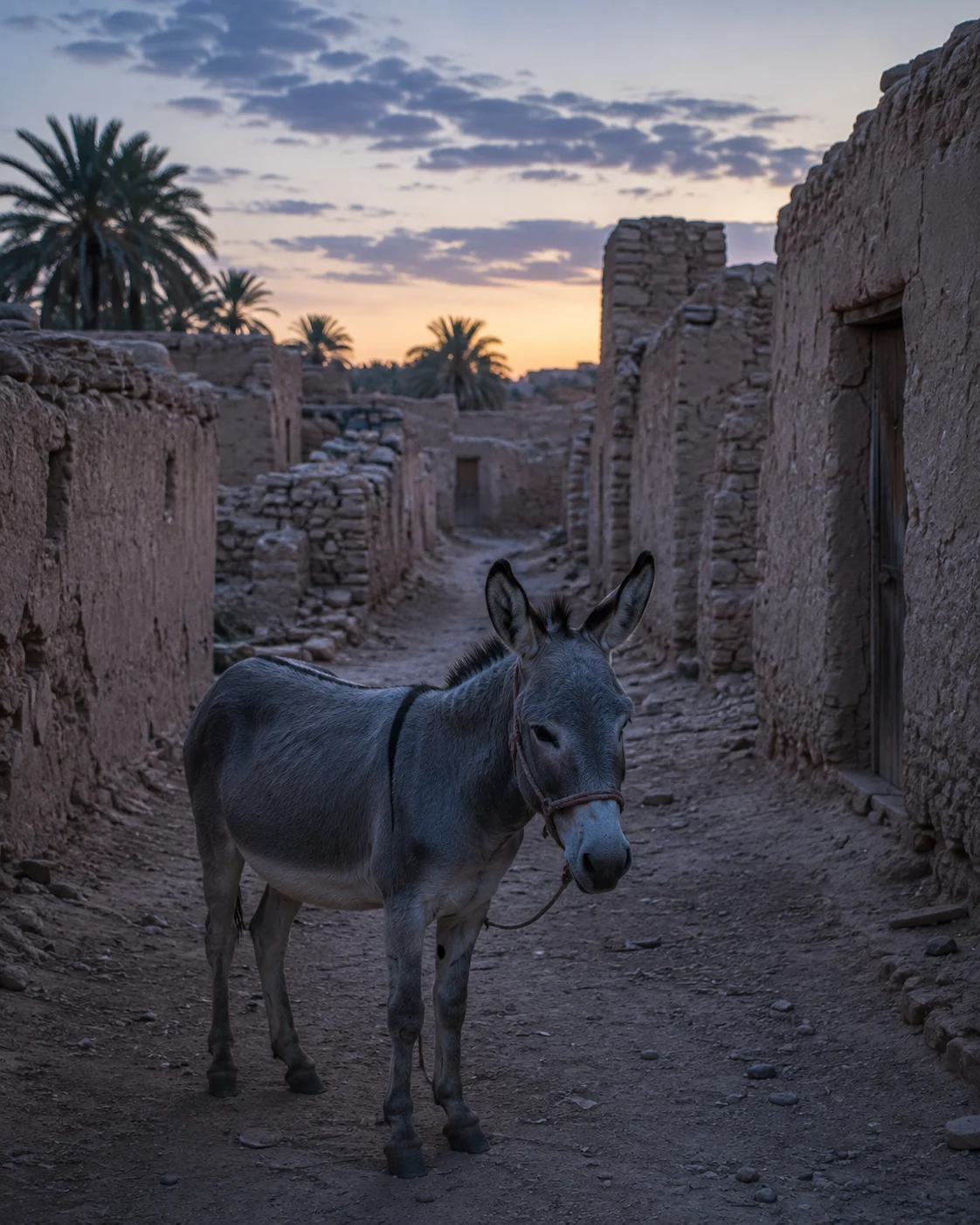
The Donkeys
One call at dawn, and the child I was returns.
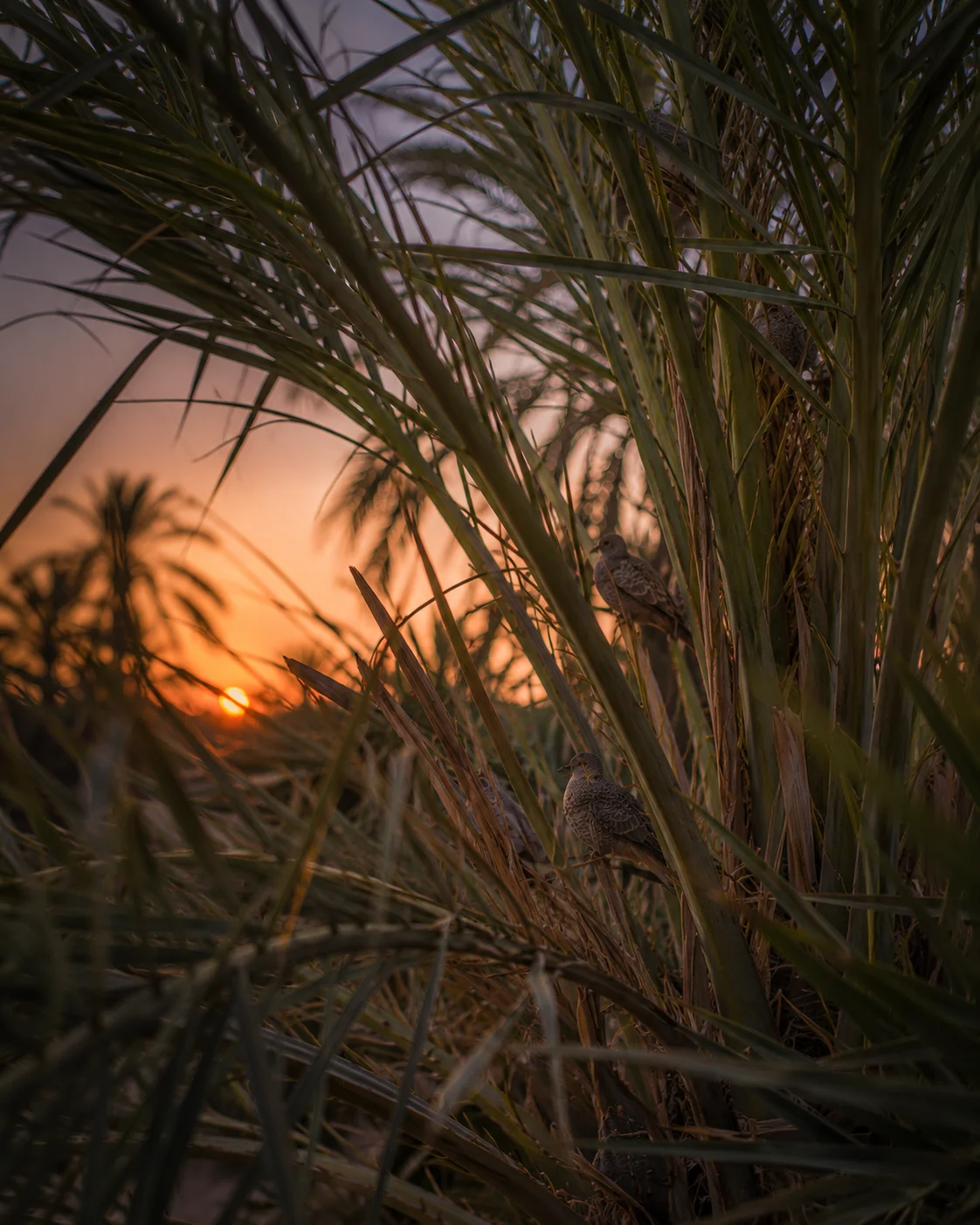
The Birds
I remember them in the trees when the day softened.
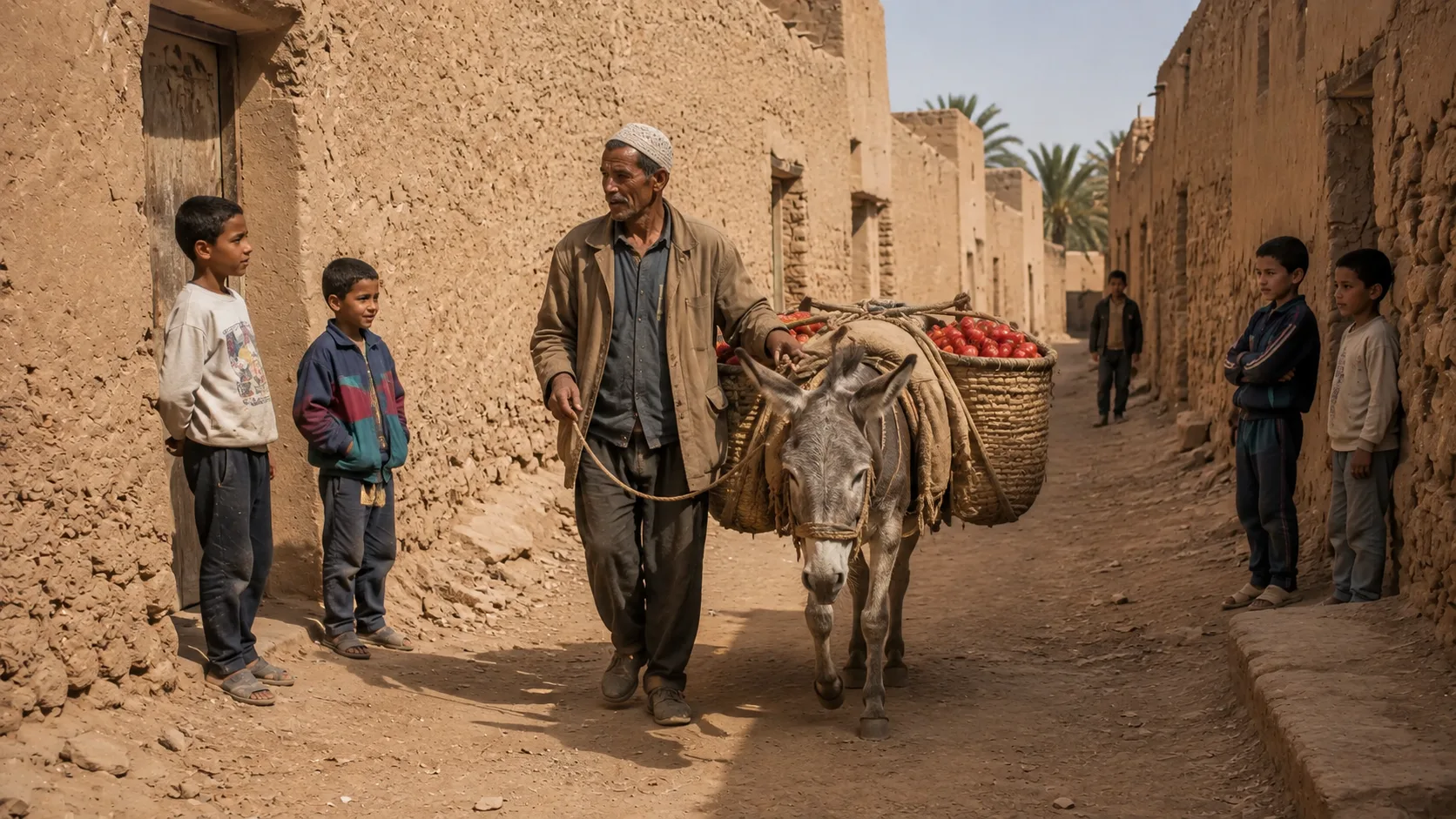
Wa ha l-maticha
Sometimes a travelling seller crossed the streets calling out his goods. For tomatoes, the phrase returned again and again:
وا ها لمطيشة... وا ها لمطيشة...
We heard the seller before we saw him. His voice moved between the walls, announcing both the tomatoes and the fact that someone was passing through.
The Well Never Gave Only Water
The well stood in front of the house, near one of the paths descending toward the oasis. People came constantly to draw drinking water or fill their containers.
They greeted one another, spoke, laughed and remained longer than necessity required. Women talked. Children watched passers-by. Men stopped on their way to the fields. Hooves crossed the street. Buckets moved. Water spilled.
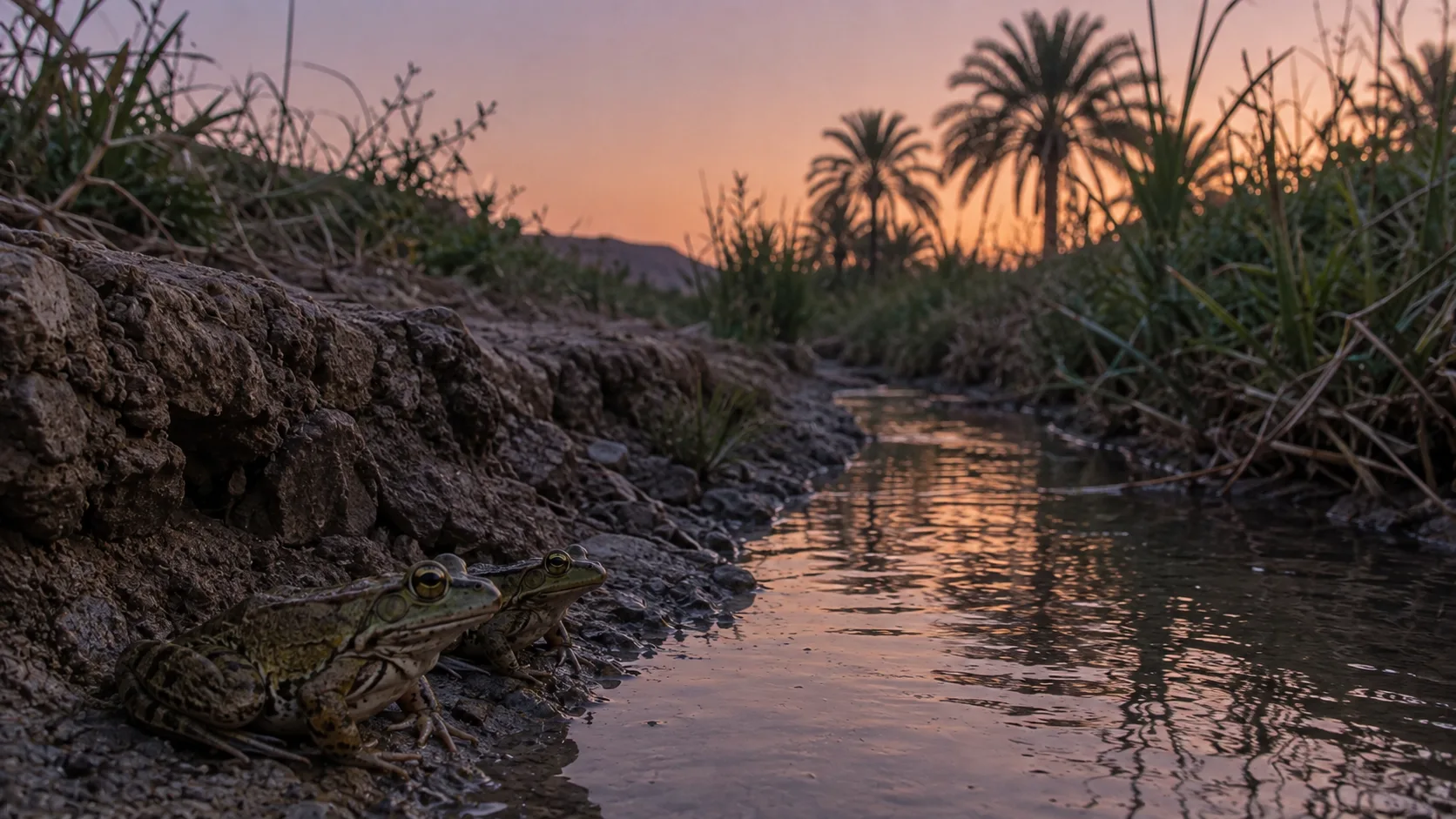
Behind the well, the overflow ran down the rocky slope. Frogs remained nearby and along the seguias.
The well was not a monument. It was conversation made visible.
The Frogs Began When the Day Grew Quiet
When we sat outside the house, their calls rose from damp places near the well and from the seguias. During the day we saw them beside the channels. At night they became sound more than creature.
When night fell, the dogs came nearer.
The Dogs of the Night
During the day they were hardly present in my memory. After darkness, stray dogs came near the ksar from the cliffs and surrounding land.
Their barking could continue through the night. One called, another answered farther away, and the sound crossed spaces we could not see.
We knew only that they could be dangerous. Their presence belonged to the night outside, while the family remained behind walls, doors and familiar lamps.
Voices Between the Palms
In the oasis, people sometimes called to one another across cultivated plots. A name, a question, a short reply. The mountains and palms gave the voices a strange reach.
In the house, women and children talked throughout the day. Outside, children of every age sat near their doors, watched passers-by, played in the sand or ran through the street.
There were few toys, but there was no shortage of life.
Children of three, four or ten years old could be outside without the constant fear of being lost. Every doorway, passer-by and neighbour extended the boundary of the family.
No one followed us with a telephone. Yet we were rarely beyond the knowledge of someone.
Even donkey hooves moving through the earthen streets announced that someone was coming.
We Never Ran for the Car
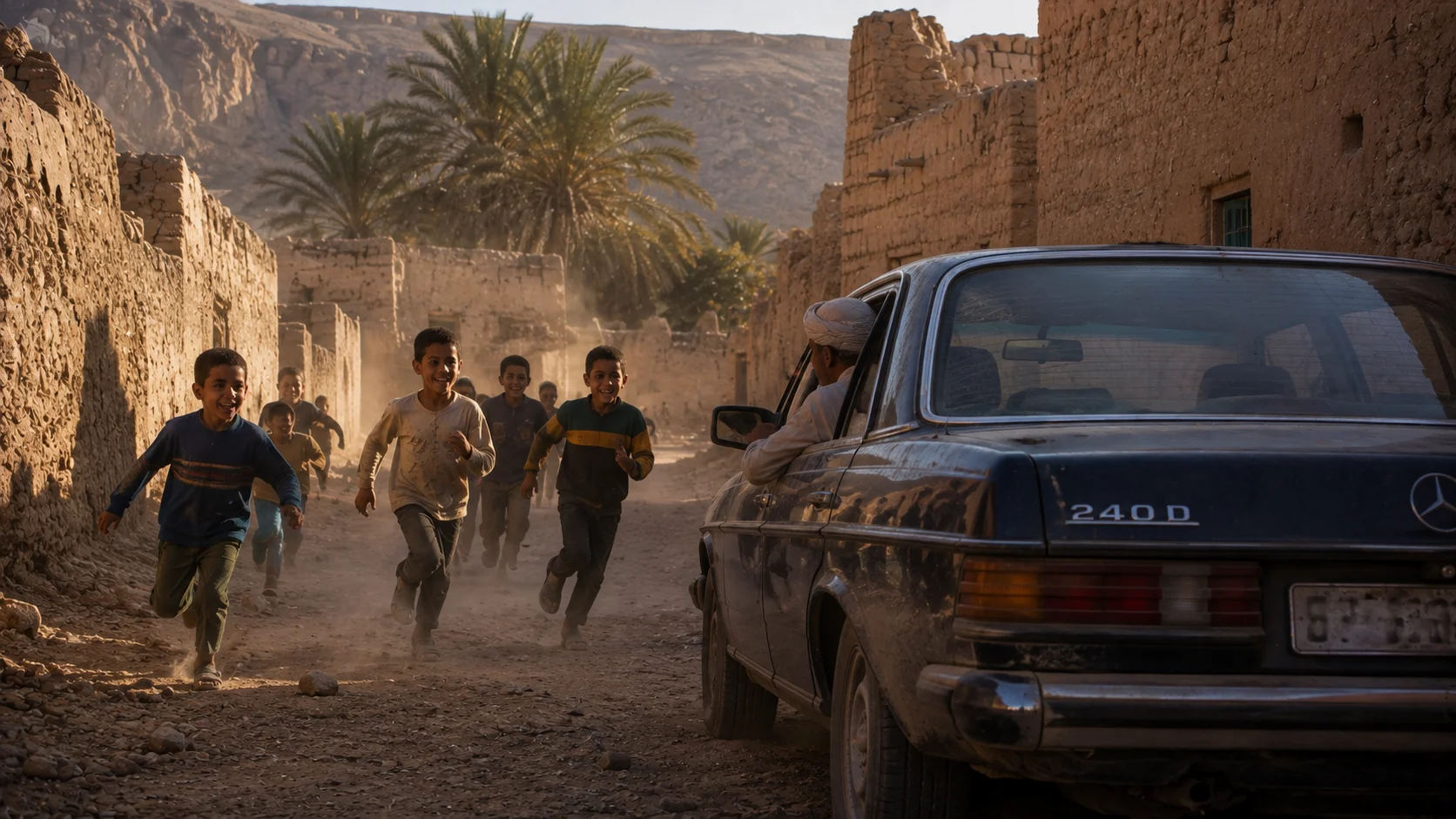
Cars and motorbikes were rare. When an engine approached, we heard it from far away.
One child noticed, then another. Doors opened. Heads turned. Within moments, we were all running.
But the machine was not what mattered. We wanted to know who had arrived: a relative, a visitor, someone returning home.
We did not run to admire the car.
We ran because someone was coming.
Rain Had a Smell Before It Had a Sound
When rain came, people stepped outside. The red earth released a smell that belonged only to those brief moments. Then came the mud, everywhere.
Everyone Closed the Doors
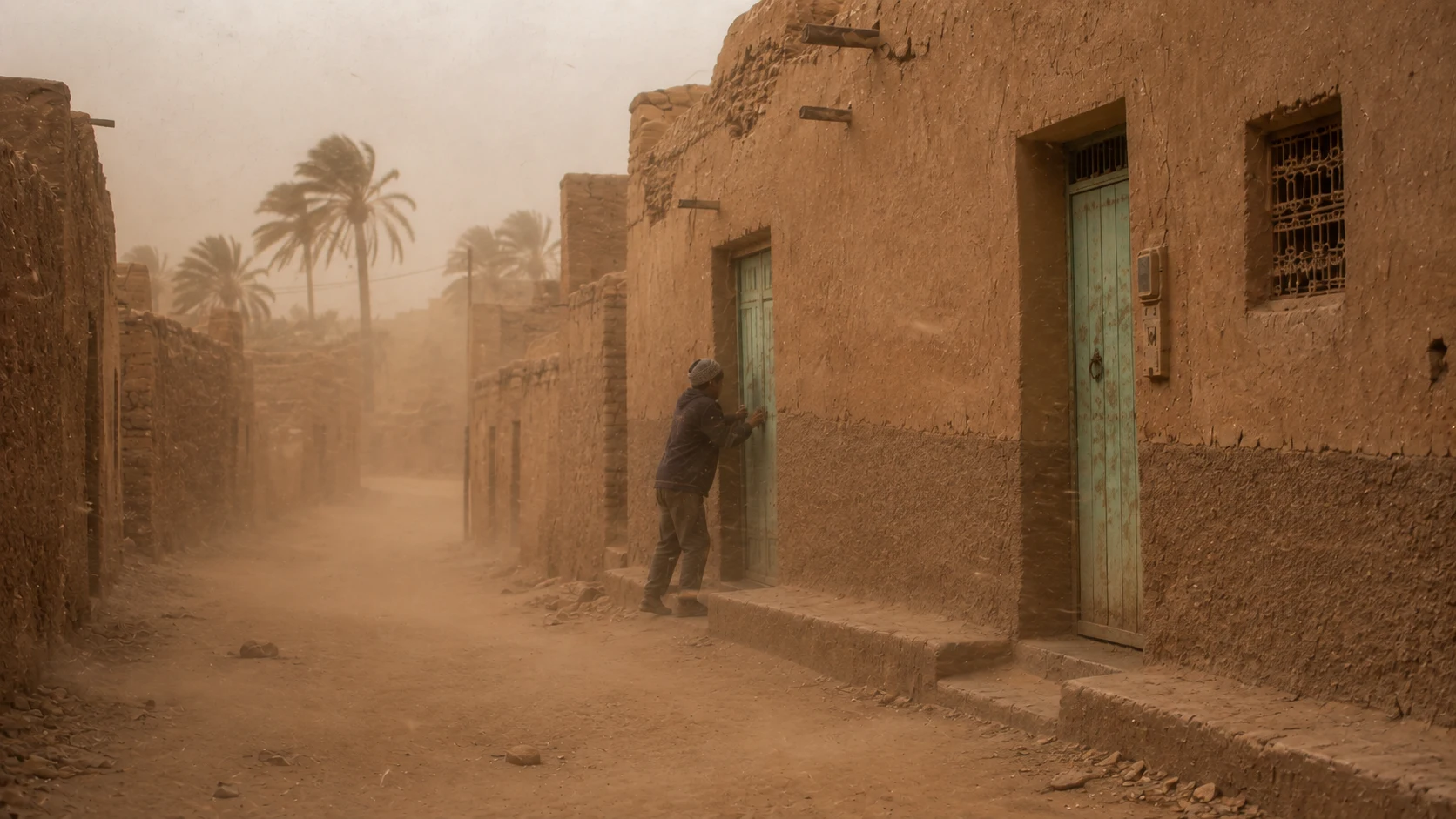
Wind was not always poetic. When it rose strongly, dust and sand entered the houses. People went inside and closed the doors until the air became clean again.
Children Fell Asleep Before the Conversation Ended
After the adventures of the day, children were often the first to sleep. Sometimes we fell asleep in the salon while the family continued talking around us.
On other nights, we lay down and whispered until our sentences shortened and sleep finished them.
The house did not become silent at once. The voices of adults remained for a while, held inside the weak light of gas and petroleum lamps.
What Remains Today
The old sounds have not vanished completely. They remain, perhaps, at twenty per cent of what they once were.
The ksar has changed. More people live there, including many who were not part of the village of my childhood. The old quiet has thinned.
The pumps have changed too. Some are now solar and almost silent. What once announced the work of the fields can now happen without a sound.
Progress solved many difficulties. But sometimes, in solving them, it also removes the noises by which a child understood that the world around him was alive.
There is one sound that still opens the whole village inside me.
Even today, if a donkey brays at dawn, I am no longer where I stand. I am back in Ksar Meski.
What the Oasis Taught Me
Happiness Had Its Own Sound
It was not a perfect world, and I was not its hero. I was only one child listening from inside it.
The pumps, donkeys, seller, frogs, dogs, hooves, voices by the well and the distant engine of a visitor belonged to one living place.
I tell these sounds because Ksar Meski is the true subject of this book: sometimes my adventure, sometimes its people, sometimes its houses, sometimes its smells, and sometimes nothing more than an echo returning across the oasis.
This is not the story of my life.
It is the story of a place that gave life to mine.