A house does not disappear when its walls are altered. It disappears only when no one remembers what each door once meant.
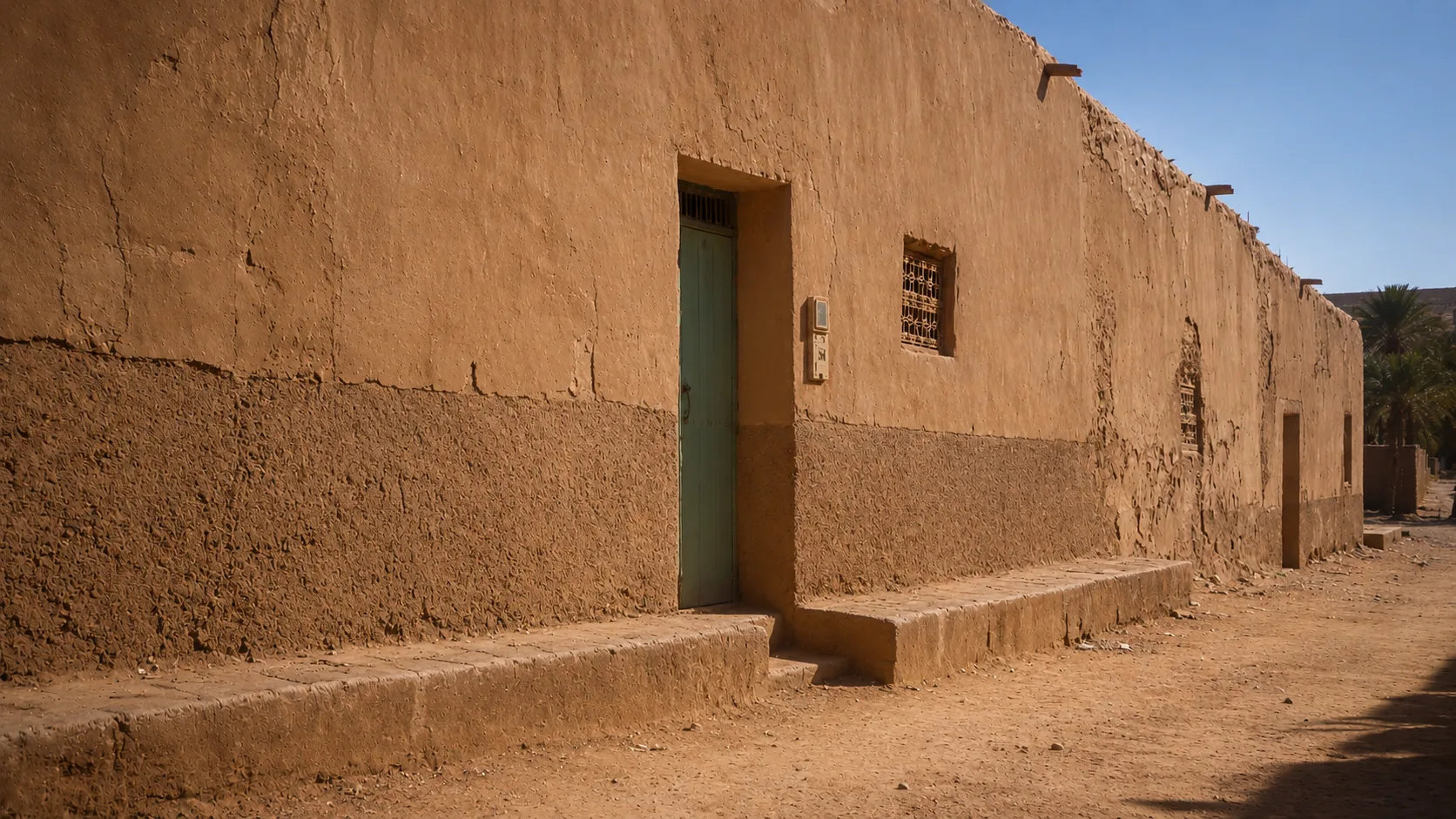
From the road, our house did not explain itself. It offered a long earthen façade, a few small windows and two pale green doors set far apart. A stranger could pass without imagining the rooms behind that wall, the voices, the animals, the stored food, the children asleep on the floor, or the small open court through which the sky entered the house.
The first door belonged to the Grand Salon. It was the more formal entrance, the one through which men generally entered for large meals, Quran readings, tea and important gatherings. The second door belonged to everyday life. Family, children, neighbours and familiar visitors crossed that threshold. Behind it began the house as we truly knew it.
I did not understand this architecture as a child. I did not think in terms of public and private space, hospitality or domestic order. I only knew that every door led to a different feeling.
Two Doors,
Two Worlds
The door nearest the Grand Salon opened directly into the world of guests. During great dinners, men entered there without crossing the intimate heart of the house. Hospitality had its own path.
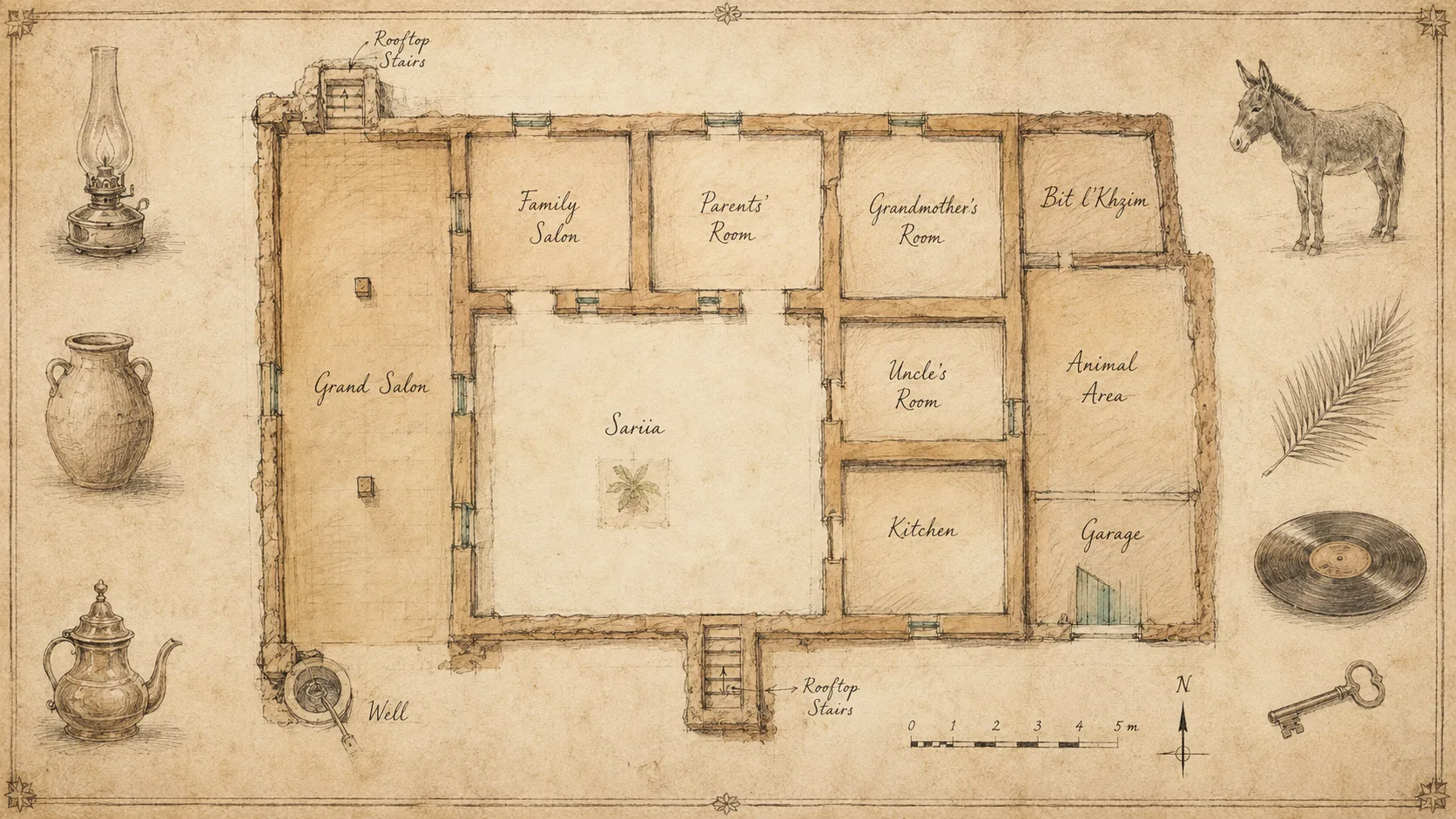
Farther along the façade, the family door opened into another rhythm: the small salon, the Sariia, the bedrooms, the kitchen, the storeroom, the animals and the passages leading toward the roof.
We did not need signs. Everyone knew which door belonged to which moment.
The House Was Longer Than It Appeared
Its rooms unfolded one after another behind the simple façade. Near the road were the spaces of welcome. Deeper inside were the spaces of family, storage, cooking, sleep and work. At the far end were the animals and the garage.
The house was not designed to impress. Every part had a purpose. The roof dried food. The storeroom protected provisions. The open court brought light. The well brought neighbours. The Grand Salon received the village. The smaller rooms held us.
The Water Jar
Beside the family door stood a large earthenware jar filled with drinking water. A small cup or ladle rested nearby. The jar was wrapped in cloth, and after drinking we wet the fabric again so that evaporation would keep the water cool.
We did not call it technology. We did not explain the science. We only knew that the water from that clay jar tasted colder, softer and more alive than water kept in any modern container.
The first welcome of the family entrance was not decoration. It was water.
The Sariia
We called the central open space the Sariia. It was not merely a courtyard. It was a room whose ceiling was the sky.
Daylight entered the house through it. Air moved through it. Voices crossed it. Doors and small interior windows opened toward it, connecting rooms that would otherwise have remained dark.
Sometimes we sat beside it in the evening. The house gathered around that opening as though every room needed a small share of the heavens.
The Sariia did not separate the rooms. It allowed them to breathe together.
Bit l’Khzim
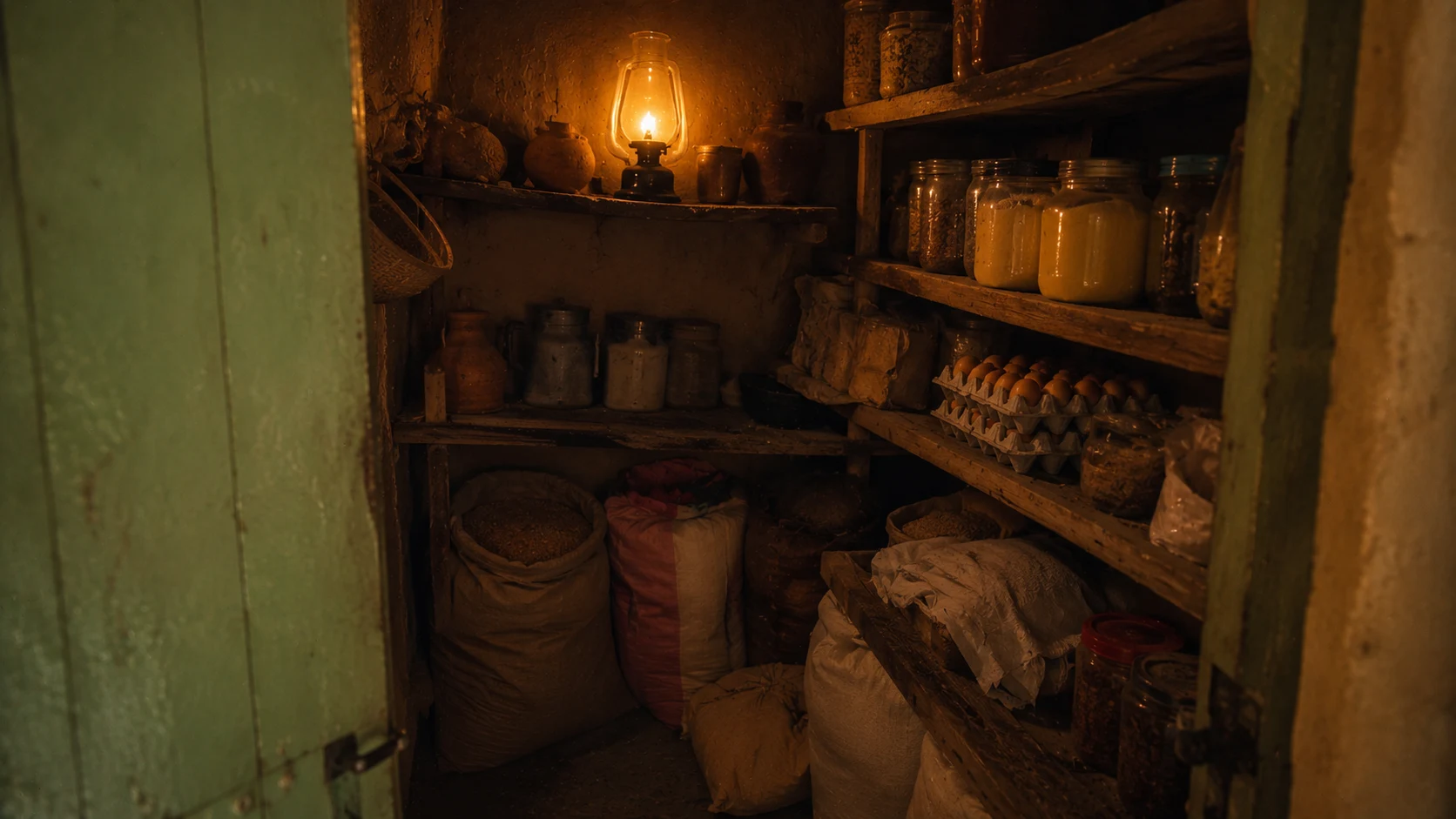
There was a storeroom we called Bit l’Khzim. In French or English, one might call it a pantry, a provision room, perhaps even “the room where things were hidden.” None of those translations contains its true meaning.
My grandmother alone kept the key.
Behind that locked door were the foods the household depended on and the small pleasures children desired: eggs, smen, zeemita, tea, coffee and other provisions. If we wanted something, we asked her. Sometimes she agreed and went to open the room. Sometimes she simply said there was none left.
The smell was unlike any other room in the house. Smen, tea, coffee, grain, eggs, dried ingredients and clay walls had joined over the years into a scent that could never be manufactured.
I believe I could recognise Bit l’Khzim with my eyes closed.
At Night,
The Floor Became Our Bed
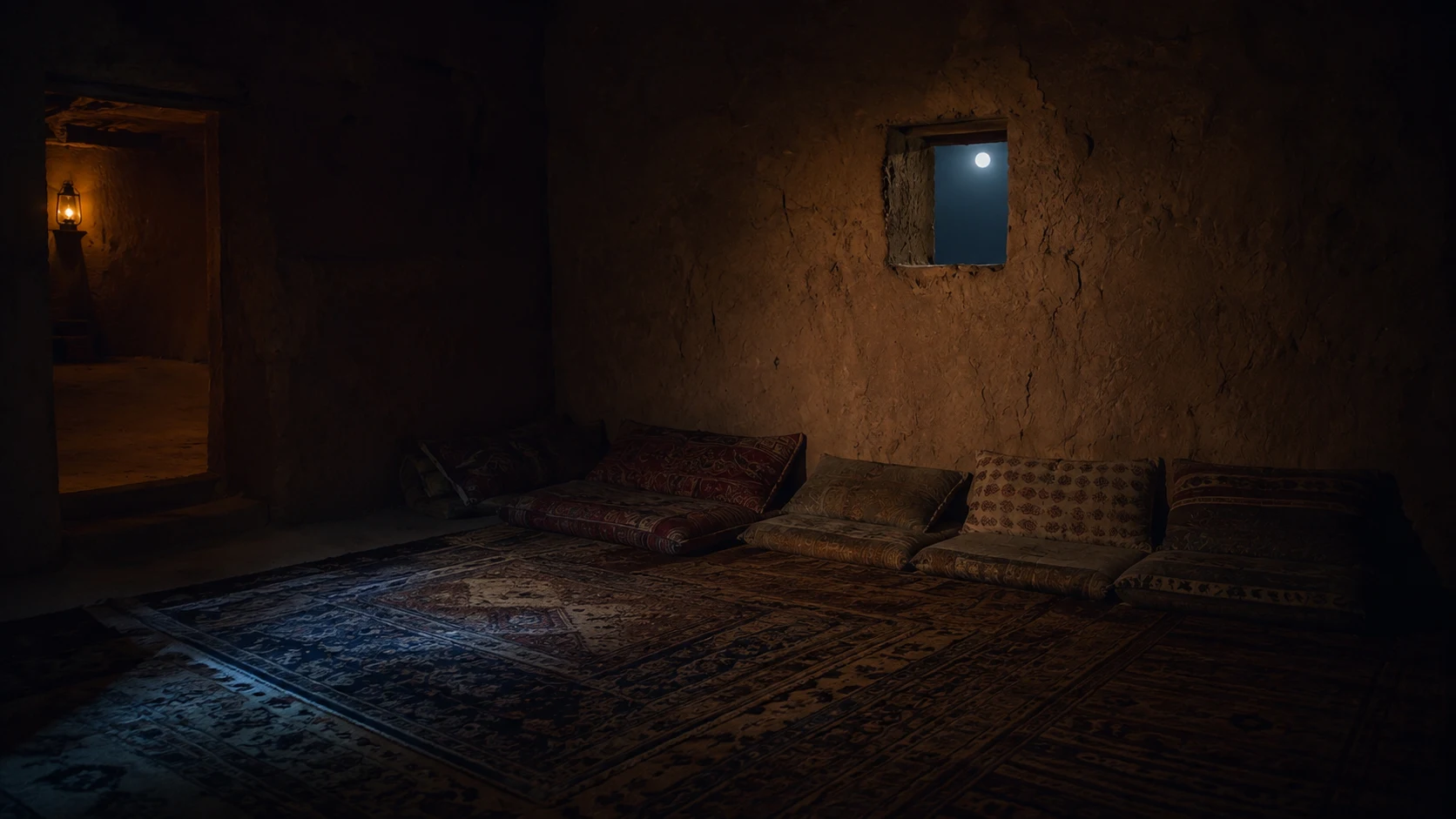
There were no raised beds. Whether we slept in our parents’ room or in the small family salon, the bedding was prepared directly on the floor. Sheets, blankets, cushions and mattresses were unfolded when the house needed them and gathered again when morning returned.
The children slept in groups, scattered according to the number of people and the space available. We were many, yet closeness never seemed like a problem. It was simply the shape of family life.
I remember an old orange curtain that I loved to pull around myself like a playful mosquito net. In the morning, the light passed through the fabric and gave the world an orange colour. In my parents’ room, a white sheet with vivid red stripes remains fixed in my memory with the certainty of a face.
We did not each possess a room. We possessed one another’s presence.
The Light Travelled With Us
At night, the house was not illuminated all at once. The principal room sometimes received light from a small gas bottle fitted with a delicate mantle. The mesh was fragile, but when it burned correctly it produced a clear glow around which the family could gather.
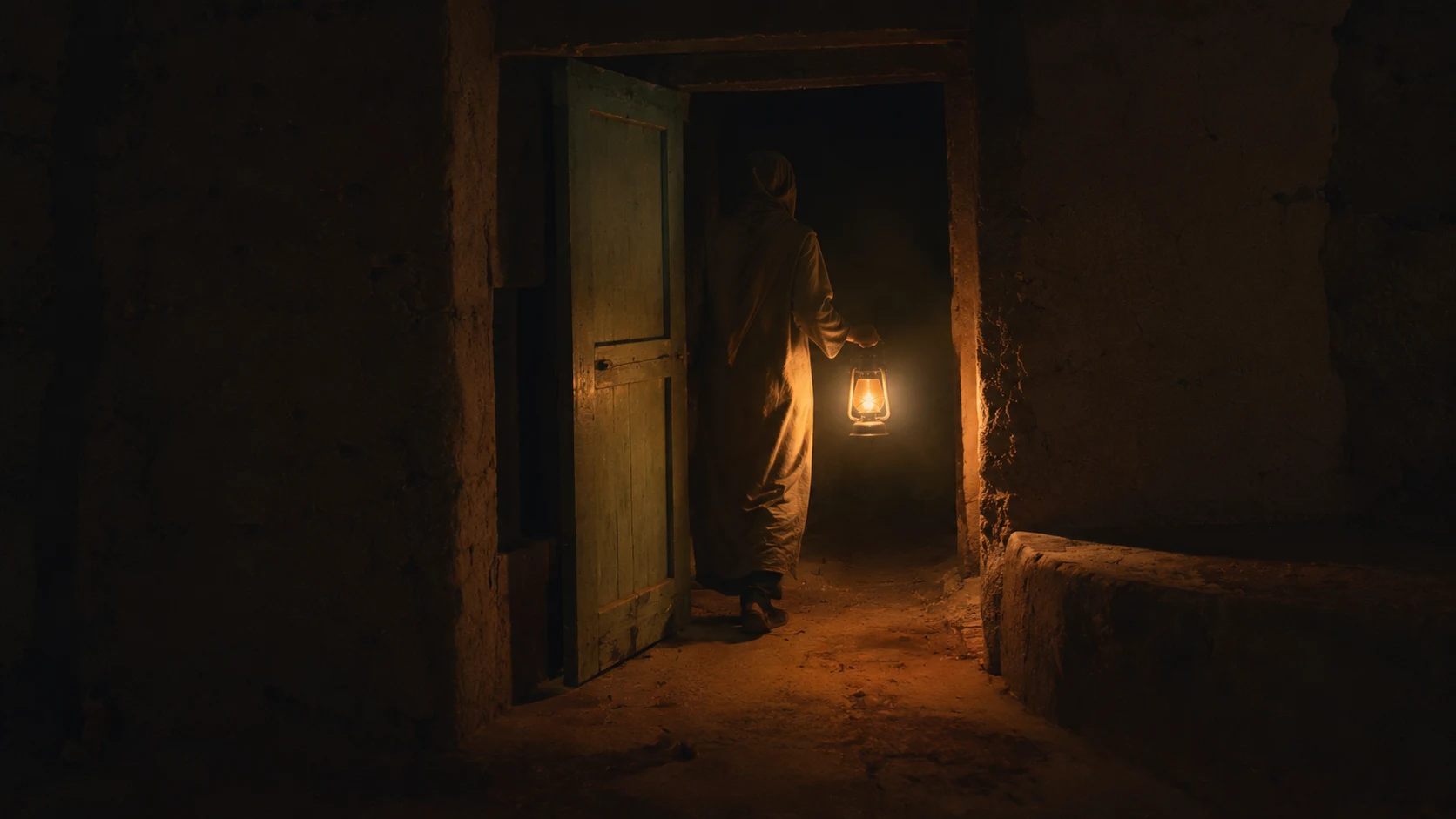
We also had several petroleum lamps. If someone needed to cross the house, enter a dark room or go toward the animals, a lamp was taken, carried through the passage and brought back afterwards. Each parents’ room had a lamp reserved for it.
Light was therefore not fixed to walls or ceilings. It moved in human hands. A person would disappear with the flame, and for a moment the room left behind became darker.
The house was never fully lit. It was lit only where someone was living.
The Stah
The roof terrace had two doors, one at each end of the house. That was enough to turn it into a suspended road for children. We ran from one side to the other, although our parents rarely wanted us there. They knew the height. We knew only the freedom.
We did not often sleep on the roof, but we sometimes climbed there as a refuge. From above, the village opened around us. We saw smoke rising from houses, heard engines and irrigation pumps travelling through the oasis, and looked across toward the distant side of the canyon.
The roof also worked for the household. Dates were spread across cloths to dry. Washed wheat rested in the sun. Meat could be suspended in the air. What seemed to us a place of escape was, for the adults, another room of labour and preservation.
The Stah belonged to the provisions of the adults, and to the freedom of the children.
The Animals Were Part of the Household
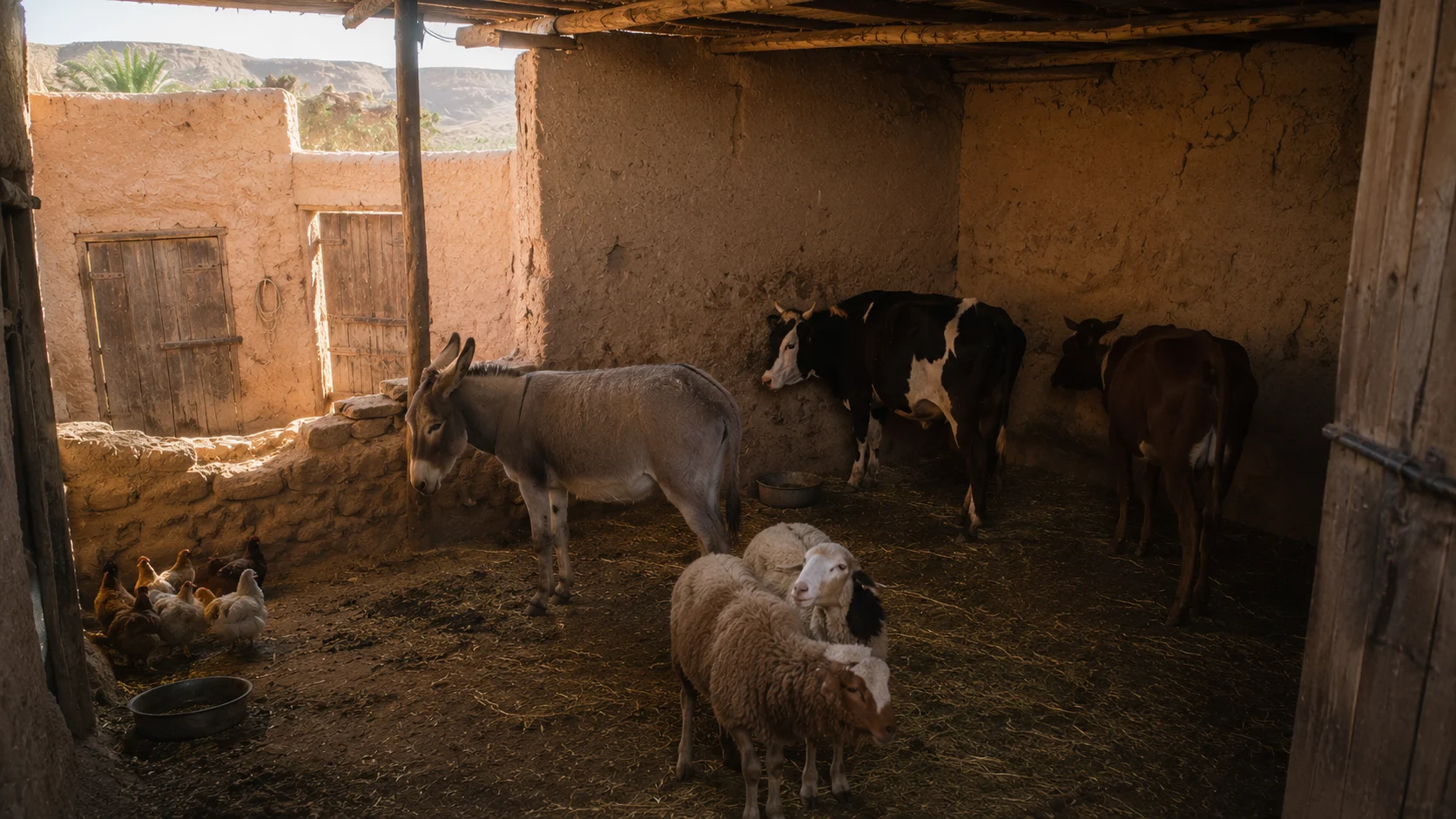
Before the garage, a door opened toward the animals. There might be one or two cows for milk, the donkey, hens for eggs, sheep and the practical disorder of a small domestic farm.
Nearby stood the toilet, in a small room slightly raised above the surrounding floor. Nothing was hidden behind decorative walls. The house contained sleeping, cooking, receiving, storing, working and keeping animals within the same long body.
The animals were not an attraction for children from the city. They belonged to the economy of the family. Milk, eggs, transport, meat and work entered the house through them.
The Well My Grandfather Dug
In front of the house stood the well. For a long time, I remembered that my grandfather—or perhaps an ancestor before him—had dug it. I refused to state this as certainty until I asked again.
My parents confirmed it: the well had been dug by my grandfather. My father, still young, had helped in the measure available to a boy, carrying the crowbars his father needed.
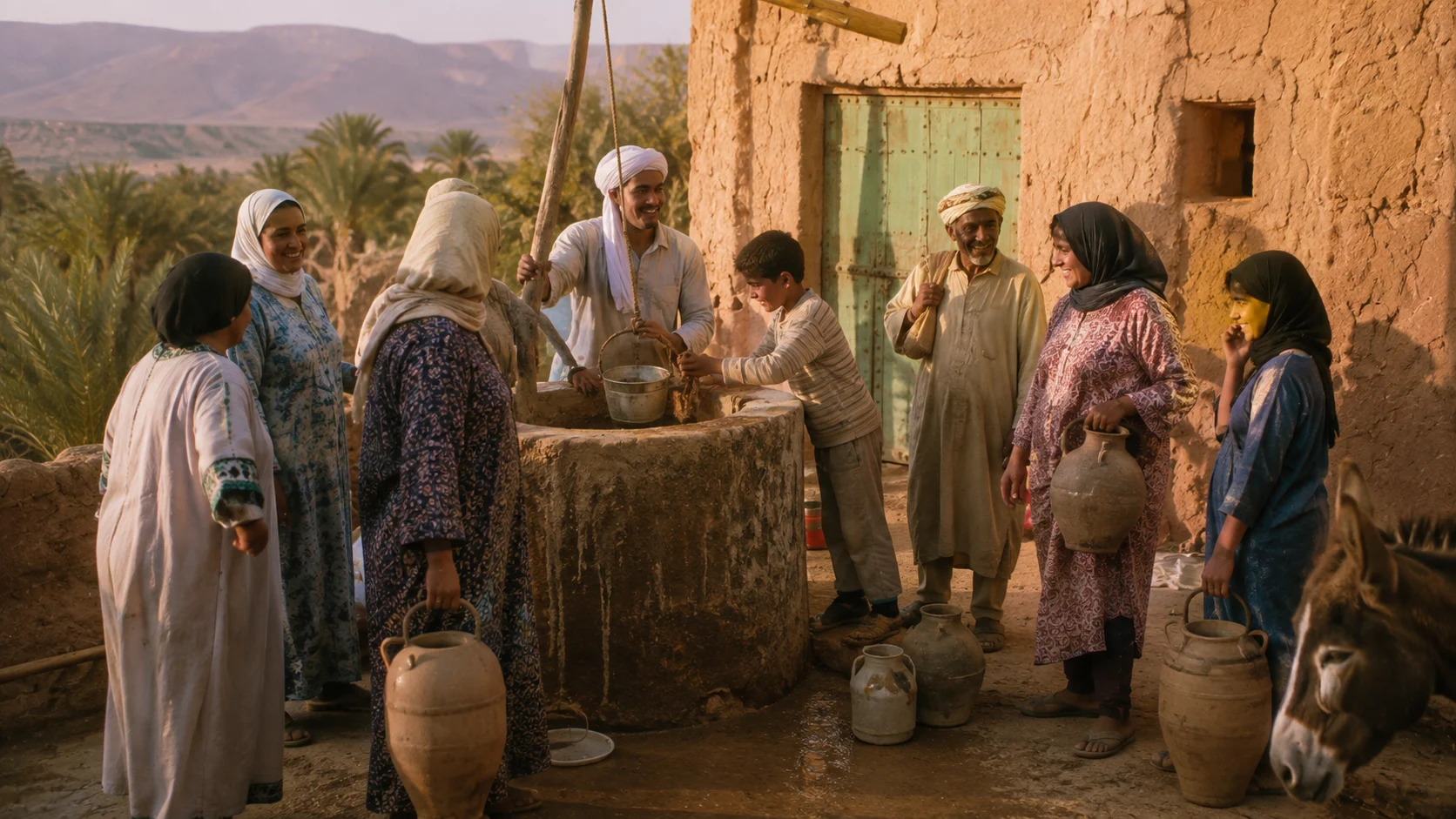
The well served more than our family. Neighbours from nearby houses came to collect water. They arrived with their containers, exchanged salam, remained to speak and often laughed before returning home.
I do not remember quarrels around that well. In my childhood memory, water gathered people in good humour.
My Grandfather
I possess very few direct memories of him. One is an old motorbike. I cannot say where he was going, how often I saw him ride it, or even whether memory has preserved every detail correctly. Yet the machine and the man have remained joined inside me.
The second image is harder. I was very young. My father stood outside the house, near the door, crying after his father’s death. I remember no complete conversation, no sequence of events, only the doorway, my father and his tears.
Memory does not always preserve a life. Sometimes it preserves a motorbike, an earthen door and a son weeping for his father.
What the House Taught Me
A Home Is Not Measured by the Number of Rooms
Our house was made of earth, timber, cloth, clay, flame and memory. It had no electricity. We slept on the floor. Water was cooled by wet fabric. Food was guarded behind a locked door. Light travelled from room to room in our hands.
Yet nothing in my memory describes poverty of spirit. The house was full of order, laughter, hospitality, work and nearness. Each space existed for others.
The façade has since changed. Some rooms have been altered. The Grand Salon has become crowded with objects and visitors. But the earlier house still survives inside those who knew what every door, smell, shadow and passage once meant.
I am not rebuilding the house because its walls have disappeared.
I am rebuilding it because the life inside them deserves not to.