It was not the last meal.
It was the last time
I tried to bring back
the family we had been.
The dinner took place about six years ago, in the small salon of my grandmother’s house. It was the room where she welcomed the family, where we watched television, ate, talked, and believed that gathering required no effort.
I had known many family meals since childhood. This one was different because I asked for it. I missed the old atmosphere, and I wanted to see whether it could still exist in the room that remained magical to me.
I called the family. I asked my uncles, my aunts, their children and the younger generation to come. Not everyone was there, but most of us were: perhaps thirteen or fourteen people, with small children added to the generations that had once sat in the same place.
Some of my uncles were difficult to persuade. I went to bring them myself. At the time, I saw this only as part of the effort. Later, I understood that a gathering which must be pulled together is not the same as one toward which everyone naturally walks.
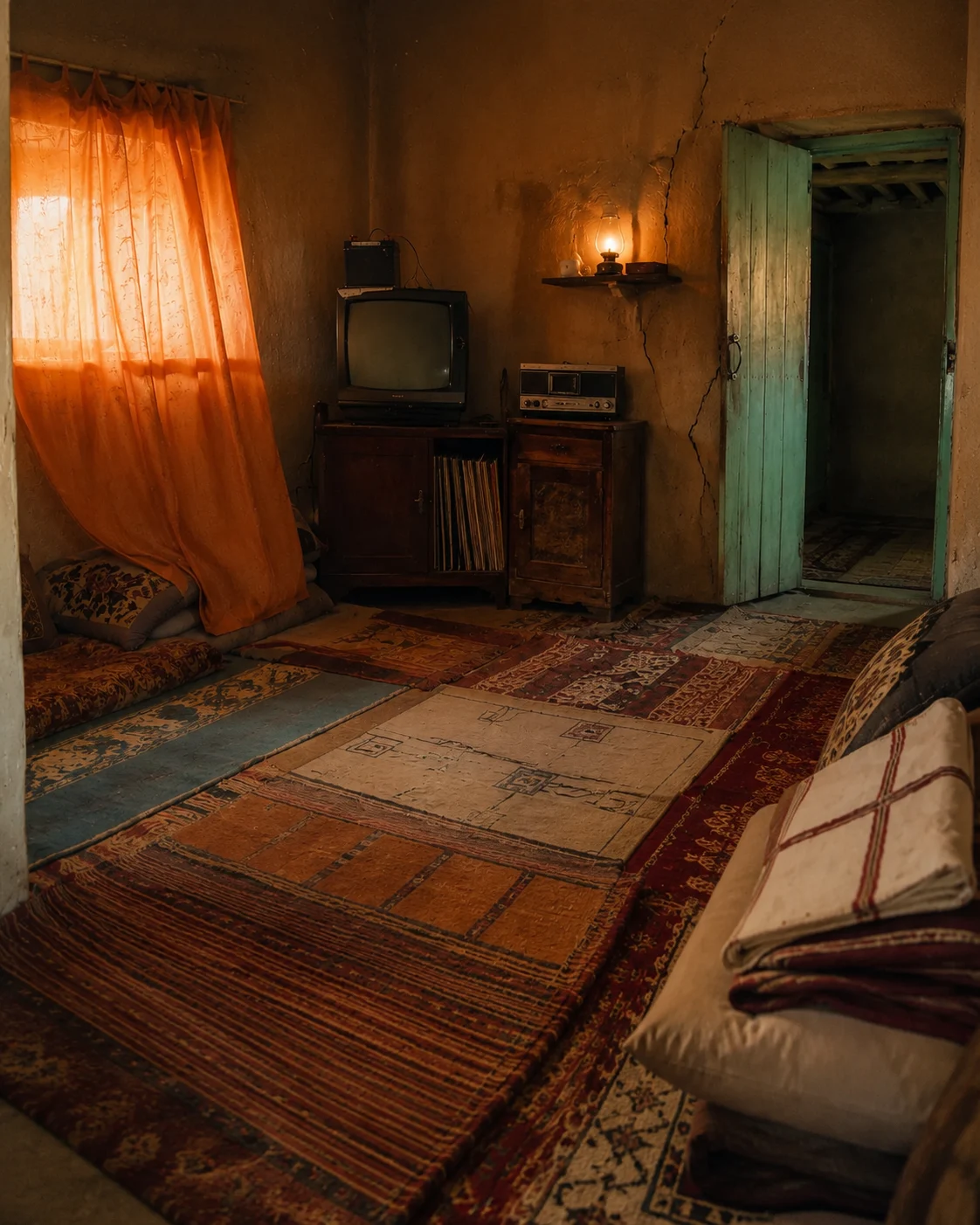 Visual reconstruction based on the real family room
The Room Was Still There
The carpets were on the floor. Cushions waited against the walls. The light was modern, but subdued. We still sat directly on the ground, as we had always done there.
This was the room where my grandmother received the family. We had watched television there, eaten breakfast and dinner there, and passed ordinary hours without knowing they would one day become precious.
Her absence was the only change that altered everything. The walls had kept their place. The person who once made everyone belong to the same place was no longer among them.
Tea Gave Us Time
to Become a Family Again
Tea was served before the meal. People settled into the room, some speaking in small groups, others joining a conversation that briefly belonged to everyone.
We did not spend the evening telling old stories. Most of the talk concerned the present. Yet the way we sat, the glasses passing from hand to hand, and the closeness of the room made the past appear without being named.
When Everyone Was Seated
That was the moment I had wanted. Uncles, aunts, cousins, children: several generations gathered on the same floor.
For a little while, the small salon seemed untouched by time. The room looked as it had looked before. The voices rose and fell. One conversation divided into several, then returned to the whole group.
I was happy. I had succeeded in bringing people together. But happiness did not arrive alone. Something uneasy sat beside it.
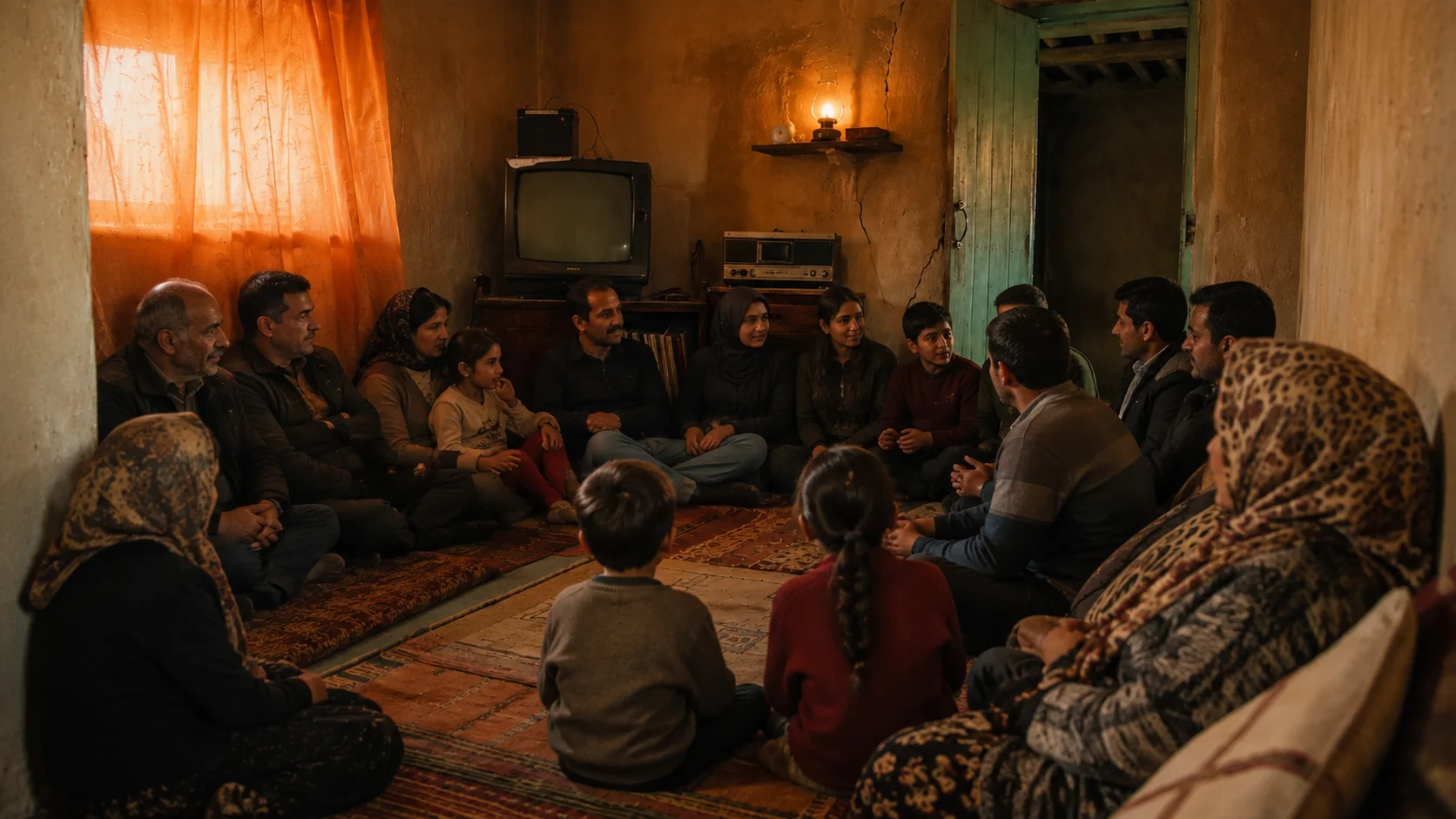 Visual reconstruction based on a lived family gathering
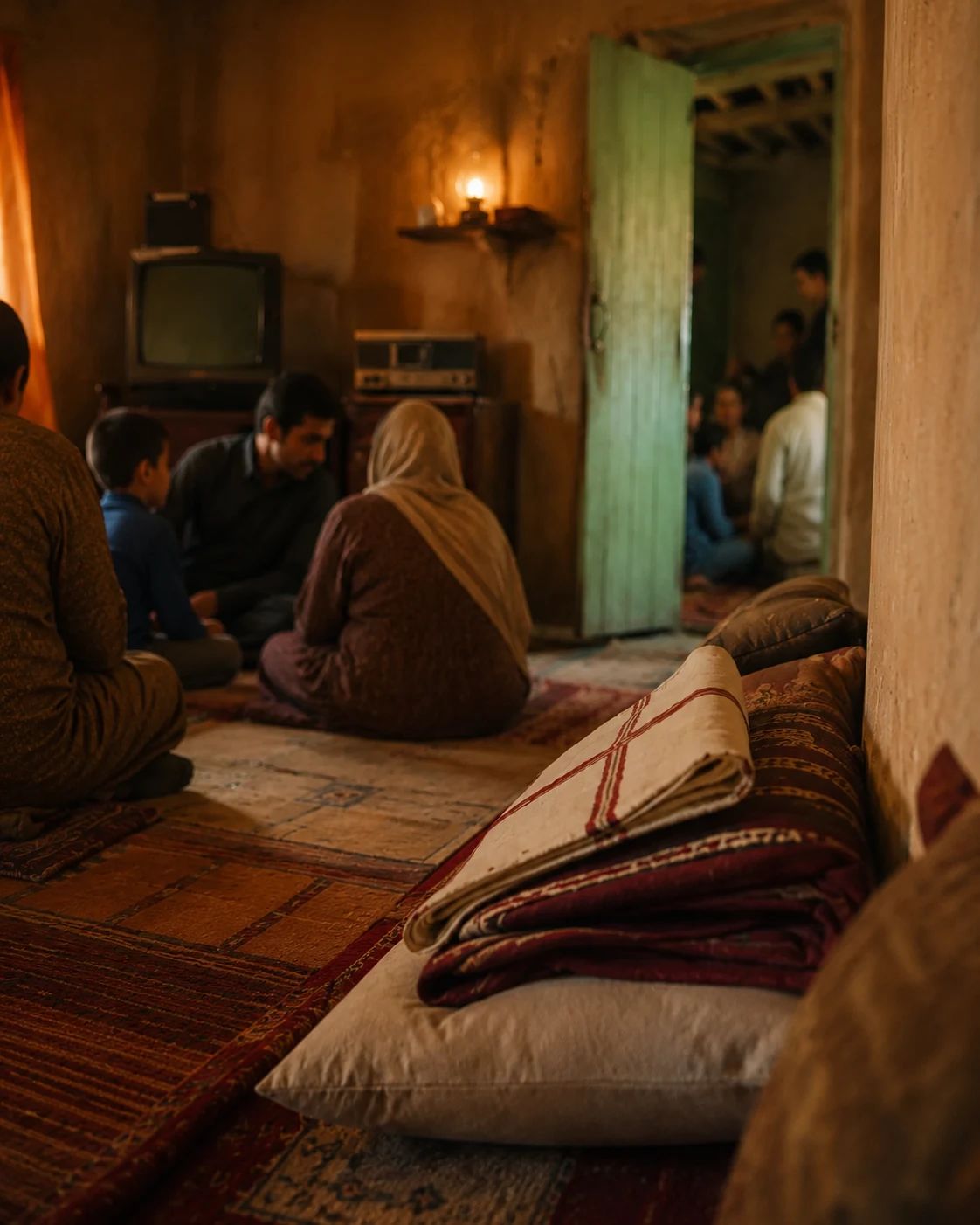 Remembered space
Douez in the Middle
The women of my uncles’ families and their daughters prepared the meal. At its centre was the douez, one large Moroccan dish, with homemade bread and everyone eating from the same plate.
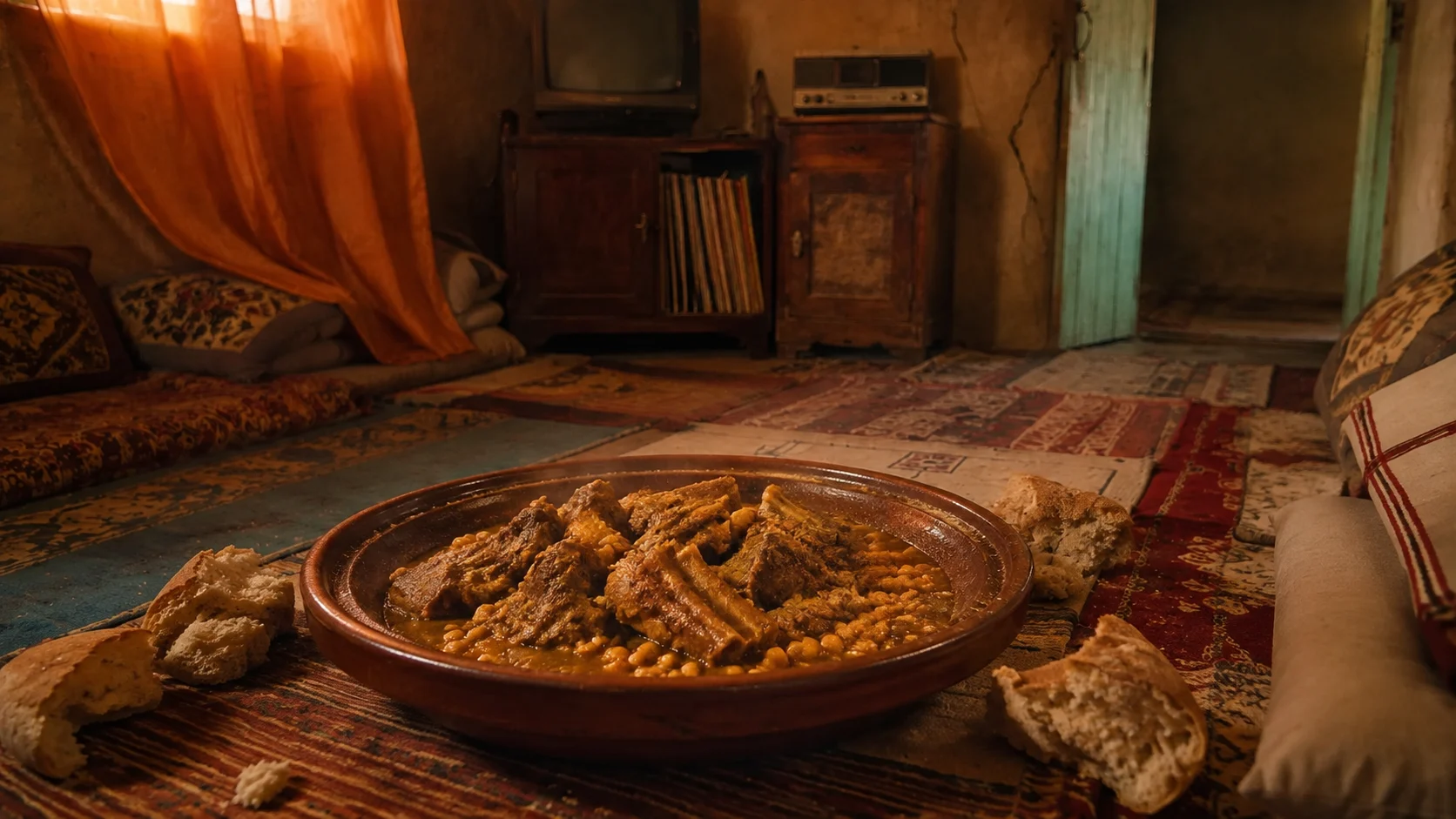 Food reconstruction · exact ingredients not specified
We Ate with Our Hands
The bread was homemade, as it had always been in that house. We broke it by hand and ate together from the common dish.
Nothing about the gesture was reconstructed for a photograph. This was still how we ate there. The hand moved toward the centre, returned, and made room for another hand.
I found something of childhood in the taste and in the position of our bodies around the plate. Yet even then, I felt that something essential was missing.
Many Hands.
One Dish.
A Family for a Few Hours.
The Feeling I Could Not Ignore
I do not want to accuse anyone. I cannot know everything that each person carried into the room. I can only tell the truth of what I felt.
Some seemed uncomfortable. Some gave the impression that they had come because I insisted, not because they truly wished to remain. A few negative attitudes hurt me precisely because the evening mattered so much.
I had wanted to recover the warmth of the old family meals. Instead, I began to understand the difference between sharing the same room and sharing the same desire to be there.
We sometimes met in small conversations, sometimes as one group. From outside, the evening could have looked complete. Inside me, joy and sadness were already sitting together.
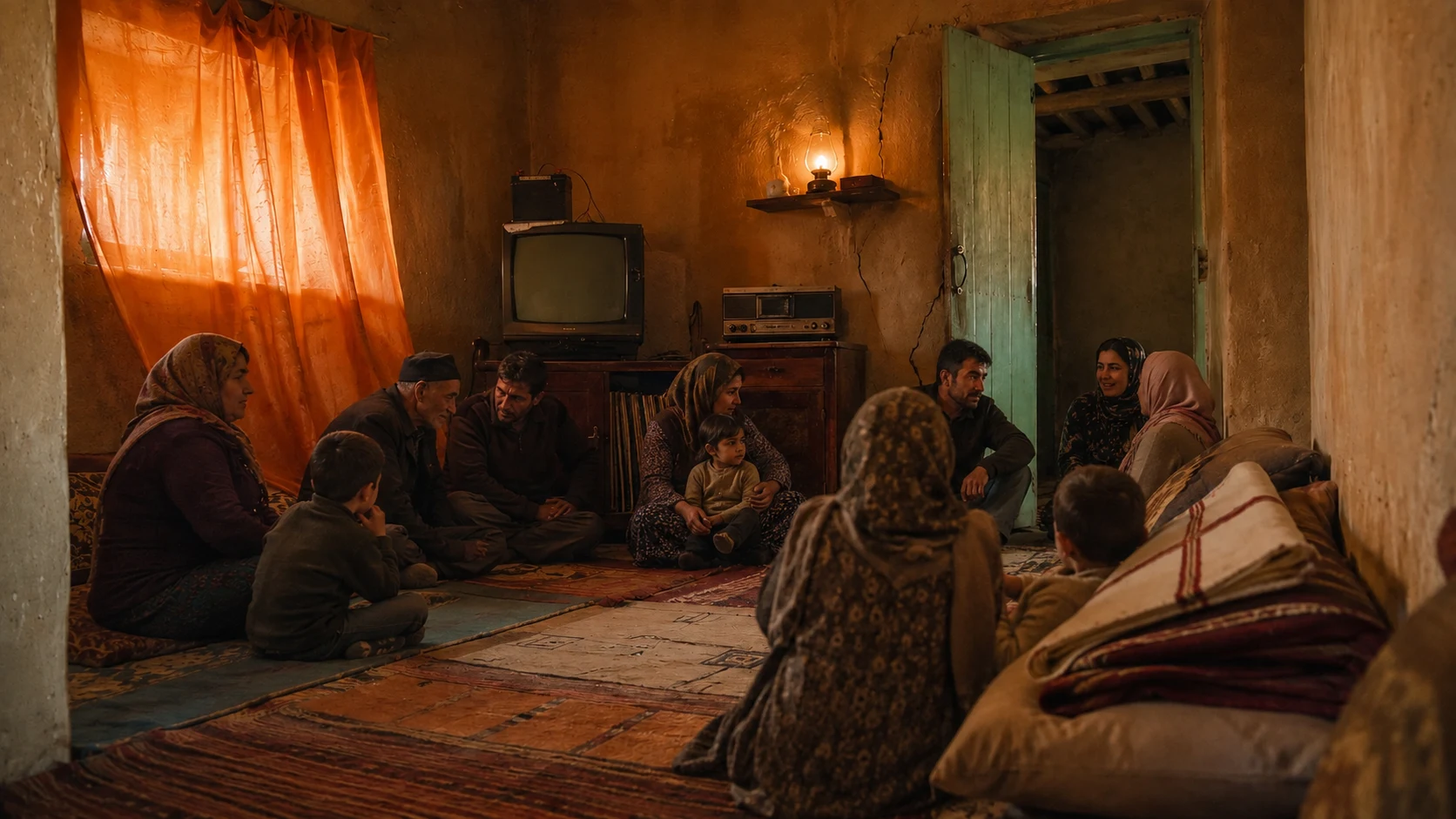 Visual reconstruction based on the narrator’s experience
The Image Had Returned.
The Ease Had Not.
In my childhood, no one had to explain why the family was there. The gathering belonged to life itself.
That evening, I had arranged the hour, called the people, gone to collect some of them, and watched the old image form around me.
It was beautiful. It was also fragile. I knew that if I stopped holding it together, it would come apart quickly.
After My Grandmother
Since my grandmother’s death, bringing everyone together has become more difficult. Family meals still exist, but they do not carry the same atmosphere. They are not held by the same house, the same room or the same presence.
Each person has taken a road. Homes have become more separate. Invitations can feel formal, almost as though relatives must now cross a distance that did not exist when we were children.
The small salon had once made closeness ordinary. Six years ago, I learned that a room can preserve its walls without preserving the relationships that once filled them.
They Left Quickly
The evening did not continue for long. People stood, gathered their children, exchanged the last words, and returned to their homes.
The room emptied faster than I had imagined it would. The effort that had taken calls, persuasion and journeys to bring people in disappeared in a few departures.
No argument ended the dinner. No dramatic sentence was spoken. The truth arrived quietly, through the speed with which ordinary life reclaimed everyone.
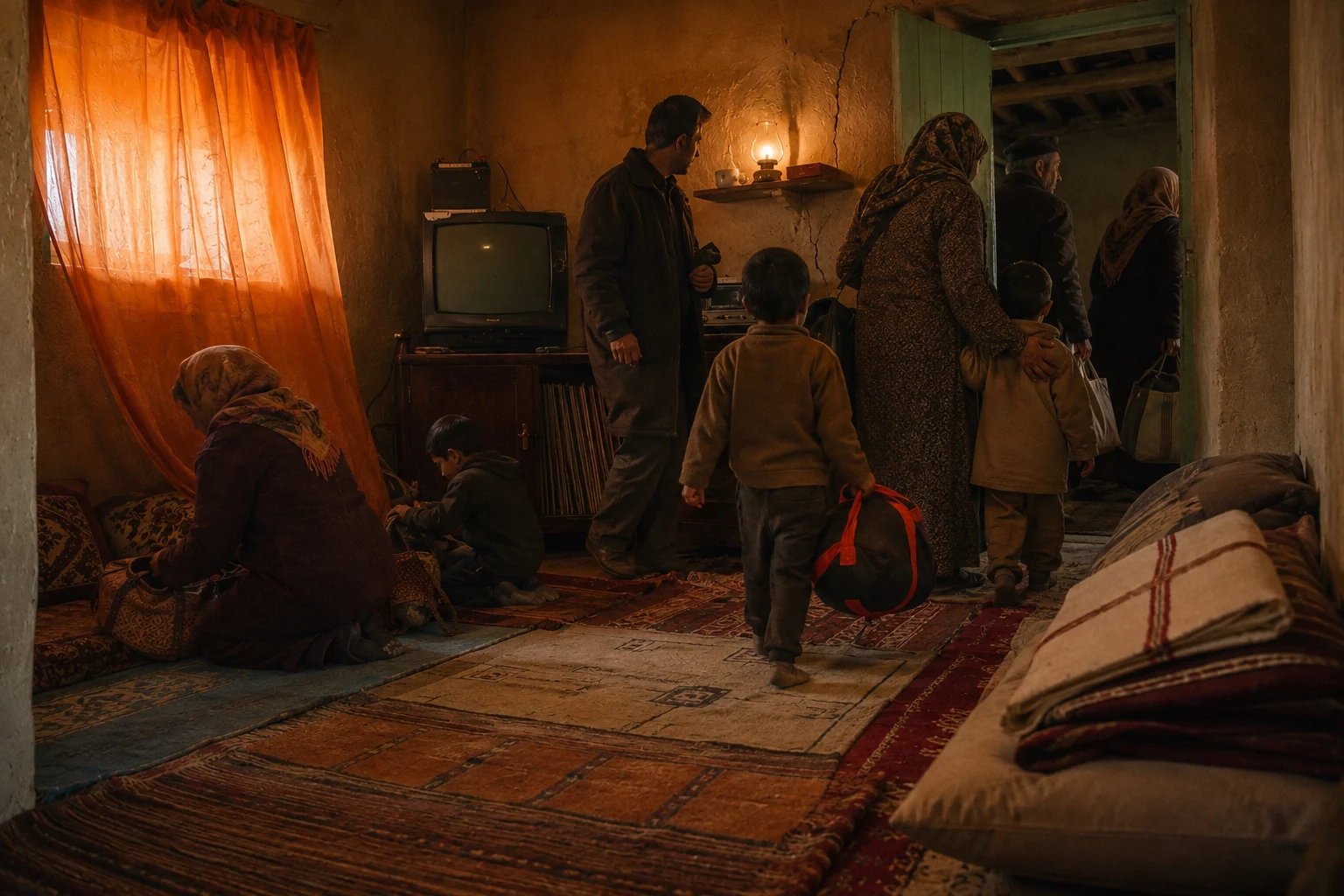 Visual reconstruction based on lived memory
I Stayed in the Room
After the others left, I remained for a while. The cushions were still there. The traces of the meal had not entirely disappeared. But the room had returned to silence.
That was when I knew. This had been the last dinner.
Not the last time anyone would eat in the house. Not the last family meal in Meski. The last time I would try to rebuild that former world by placing everyone inside the same room.
The Regret
I regretted having forced the gathering. I regretted going to bring people who may not have wanted to come. I regretted asking the room to perform a task it could no longer accomplish.
But regret is not the whole truth.
I am still proud that I tried. For one evening, thirteen or fourteen members of the family sat together on the floor, drank tea, broke homemade bread, and ate douez from the same dish.
It was not the return I had imagined. It was still real. Even now, I think of that dinner often.
I would not try to recreate that evening again. Some worlds end before the rooms that held them disappear.
Yet I am glad that, once, I asked everyone to return. The dinner did not restore the past. It allowed me to see clearly that the past had become memory.
I left the small salon sad, but no longer waiting for it to become what it had been.