The son’s village · The father’s horizon
I was born
after the crossing.
By the time I opened my eyes, the new Ksar no longer felt new. Its walls had begun to hold habit, its lanes had learned our footsteps, and the old fortress across the valley had already become the place from which my father remembered.
My father was born beneath roofs that touched.
I was born where the sky was wider, the doors opened onto sloping lanes, and the well stood before our house.
His Ksar enclosed the village. Mine allowed it to spill outward: toward the well, the neighbours, the animals, the mosque, the oasis, and the children who seemed to belong everywhere at once.
One Village Carried Through Time
- 01 The Living Fortress My father’s Ksar beneath the roofs
- 02 The Mosque and the Derb Learning, neighbours and daily life
- 03 The Valley Between Floods, distance and accumulated hardship
- 04 Building Again The Jmaâ, labour and new homes
- 05 My Ksar The new village through a child’s eyes
- 06 What Remains A different rhythm, the same name
The first world outside our house was the well. Beyond it lay the descent toward the oasis, and beyond the palms, the old Ksar held its place against the horizon. To me, this was not a carefully composed landscape. It was simply what stood before the door.
I still think it was the most beautiful view. Not because it was untouched, and not because I understood its history, but because everything that mattered seemed to pass through it: neighbours coming for water, children stopping, voices crossing, donkeys moving along the lane, and the valley opening toward the places where our days continued.
My father had crossed that valley as part of a generation rebuilding its life. I knew it only as part of home.
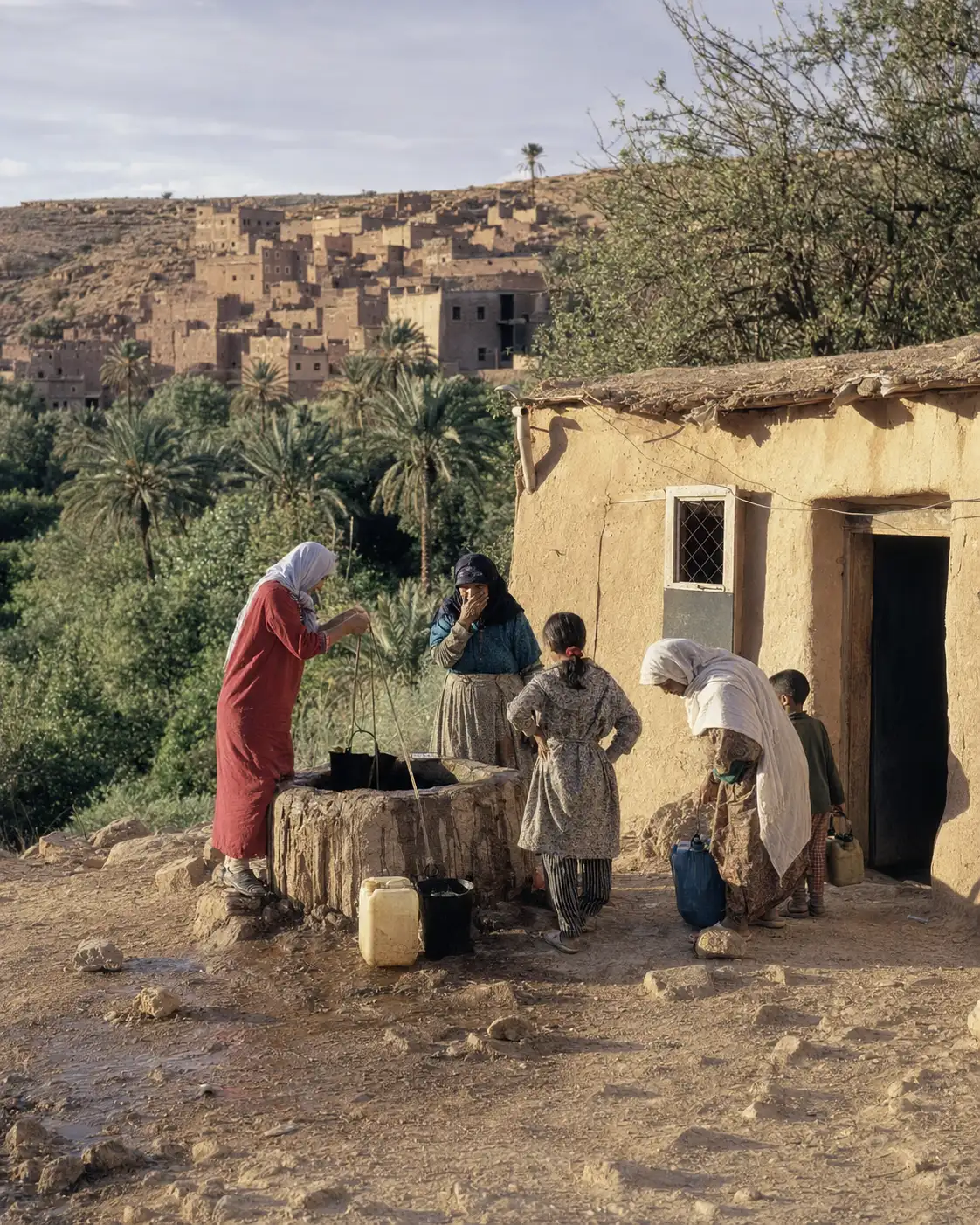 Historical visual reconstruction based on family memory
The Well Was Never Silent
People came to draw water, but they also came carrying news, questions, greetings, laughter and the unhurried conversations of a village where no arrival remained anonymous for long.
The rope moved. The bucket struck the sides. Water rose from darkness into daylight. Behind the well, what overflowed found its way down the rocky slope.
The Dlo
We pulled the dlo, the bucket, with the seriousness children give to work when they know laughter will soon interrupt it.
We drank. We washed. Then one of us poured water over another, and the task became a game. The heat made the cold water feel greater than it was. A few splashes were enough to turn the space before the house into our own small celebration.
Adults came and went around us. No one needed to organize the scene. The well belonged to necessity, conversation, childhood and the ordinary generosity of water used in full view of everyone.
We Went to Wash.
We Stayed to Play.
A bucket rose. A child shouted. Water crossed from one body to another, and the whole village seemed briefly made for summer.
Doors Open to the Day
During the day, many doors remained open. A child did not always announce a visit as though crossing into another world. We entered the homes of relatives, neighbours and people whose place in the village was already known to us.
We moved from house to house, drank tea, listened to adults, looked at animals, found other children, and continued on. A doorway was not merely an entrance. It was part of the route through the Ksar.
This freedom did not mean that no one watched us. It meant that everyone did, in the quiet collective way of a village where a child could be recognized before he had explained where he belonged.
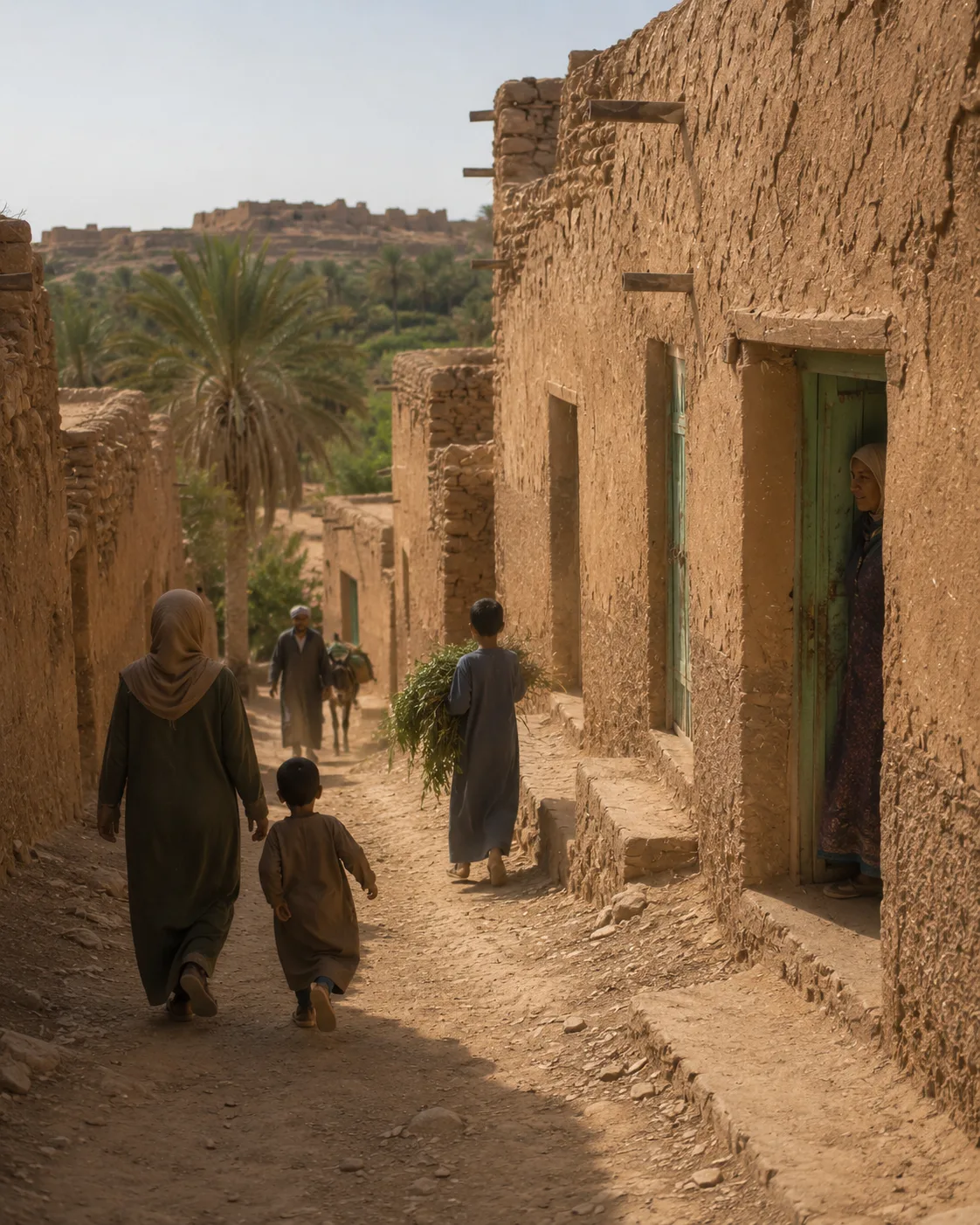 Historical visual reconstruction
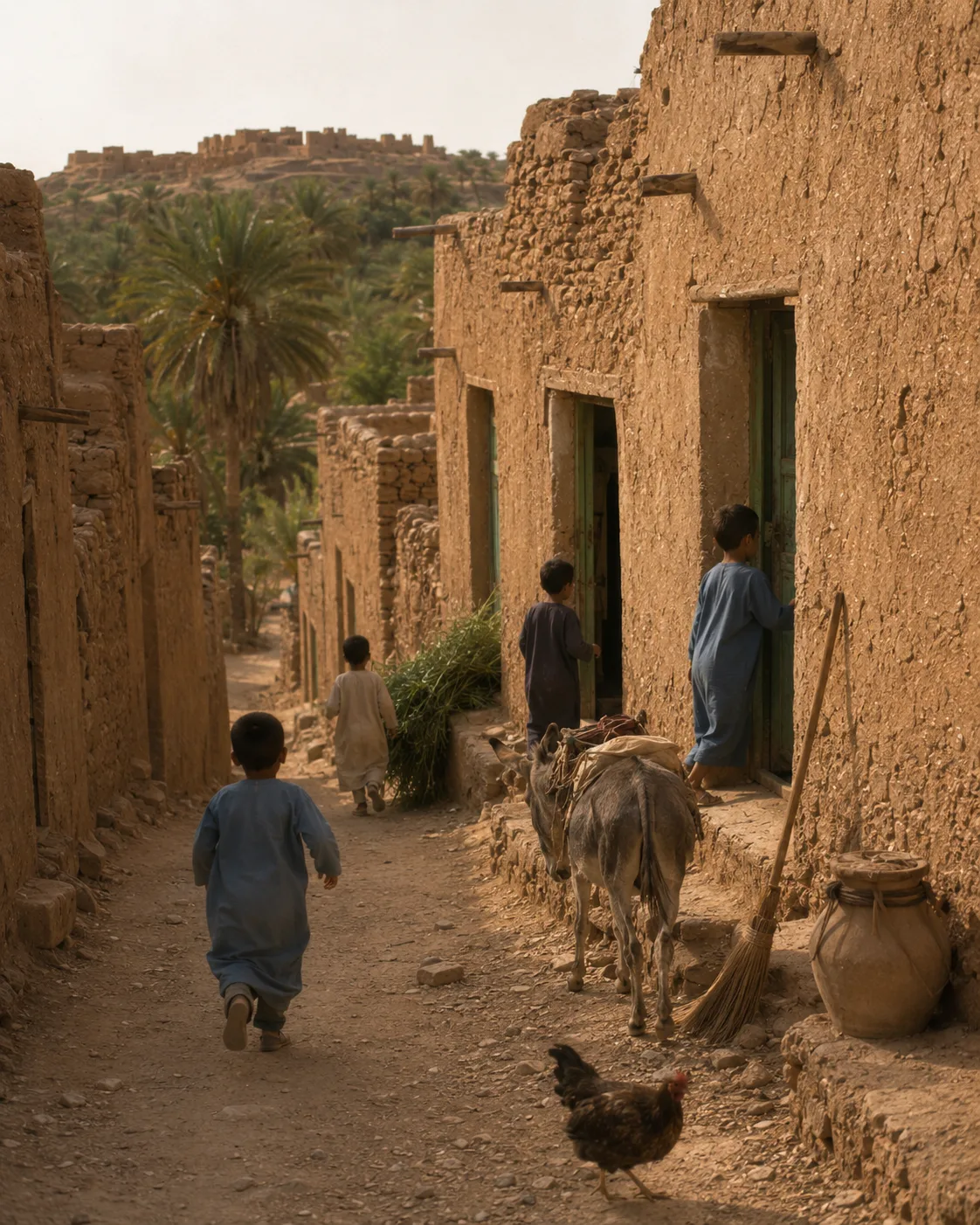 Historical visual reconstruction
The Taste of Fresh Leben
In a neighbouring house, an older woman would offer us fresh leben. It arrived without performance, as naturally as shade or water.
I have tasted leben elsewhere. I have never found the same taste. Perhaps memory changes food. Perhaps the difference was the milk, the skin in which it was prepared, the hands, the heat, or the fact that we drank it in a house whose door we did not need to fear.
Some flavours do not survive through recipes. They survive through the place that once gave them meaning.
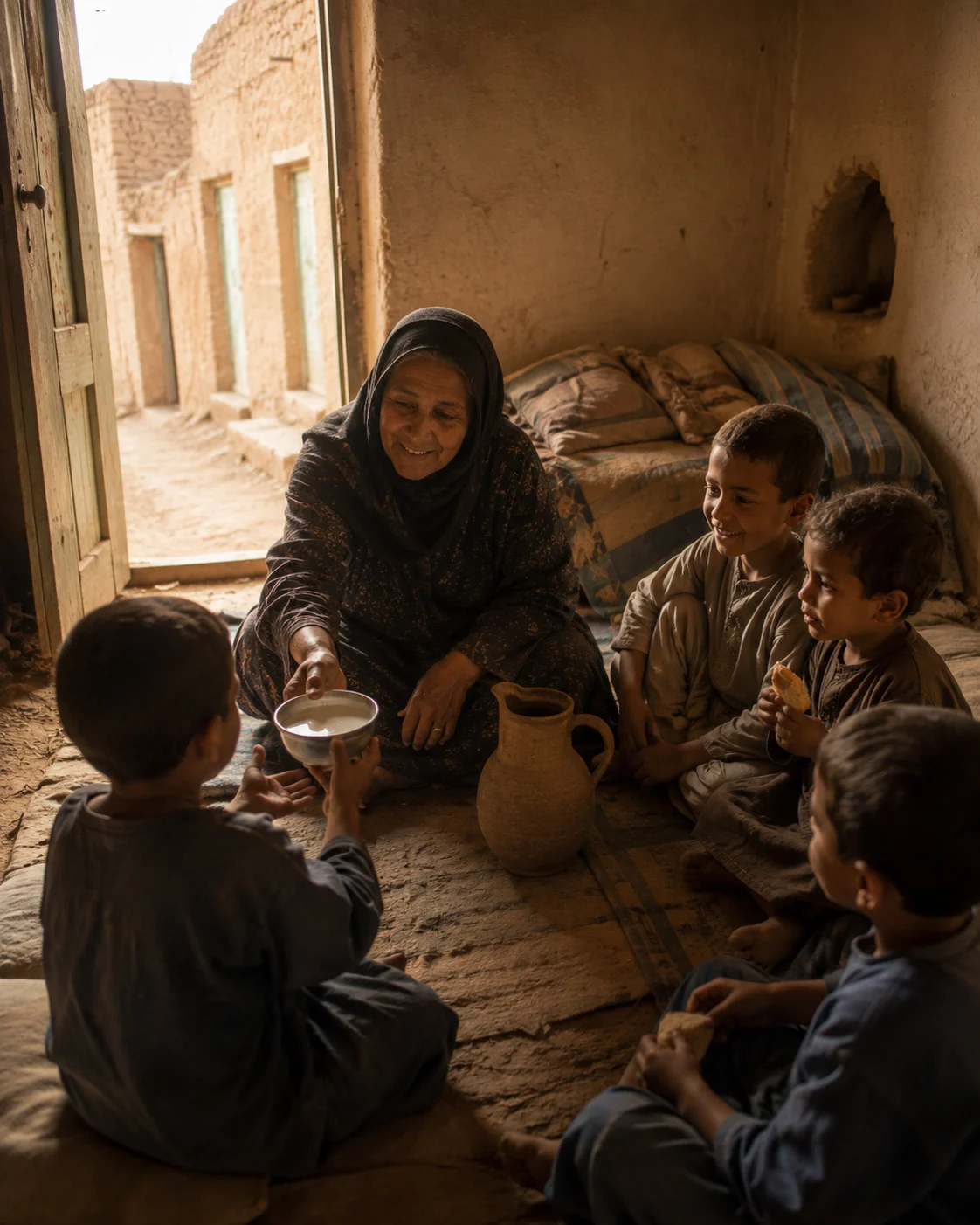 Historical visual reconstruction
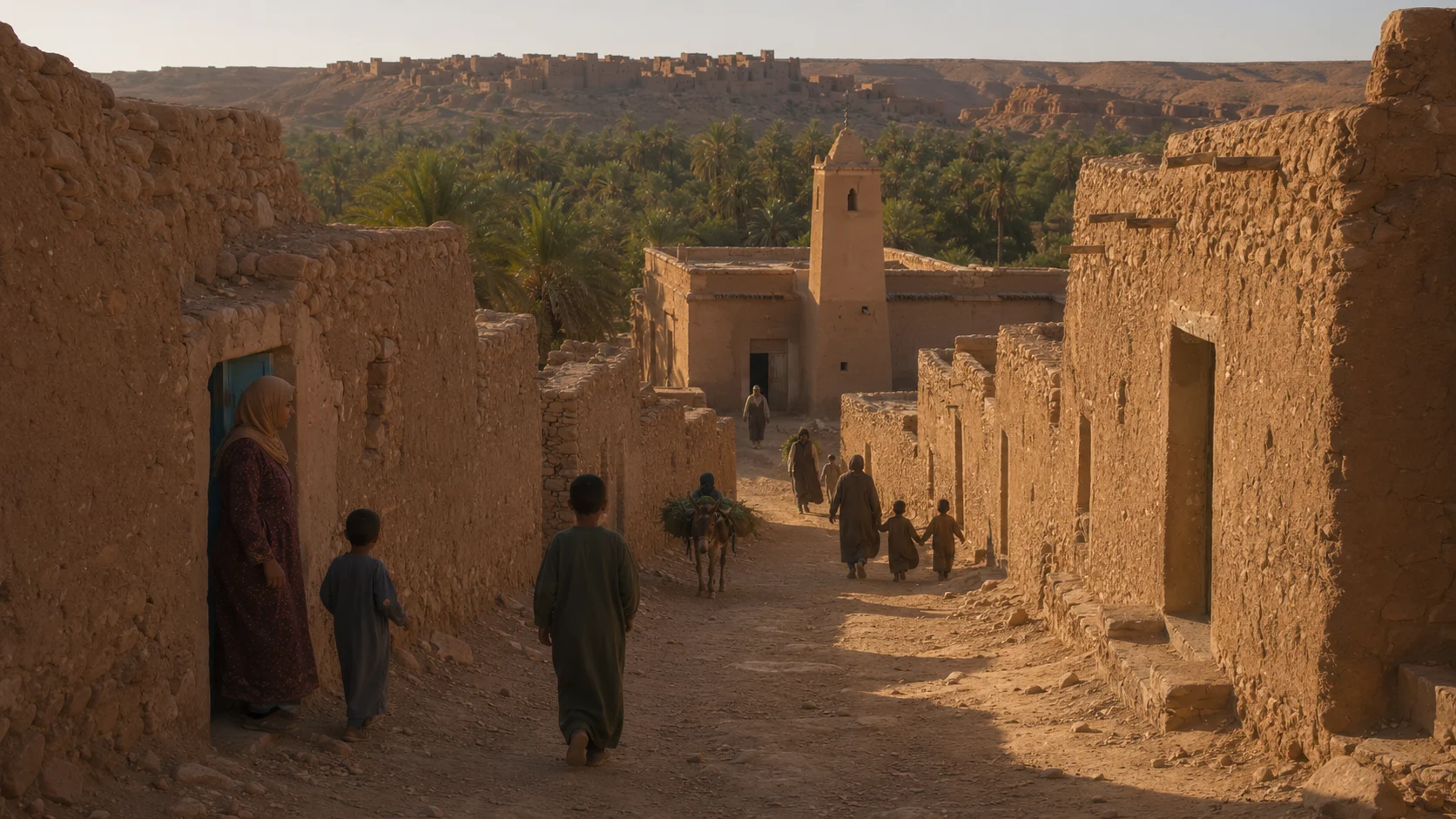 Historical visual reconstruction
The Lane Toward the Mosque
The new Ksar was not flat. Its lanes rose and fell, and the way toward the mosque became part of the measure of our walking.
We climbed, descended, stopped at doors, turned toward another house, then returned by a route that only children and villagers could consider perfectly obvious.
Back to the Small Salon
After the well, after the lane, after whatever small errand had taken us outside, there was the familiar return to the small salon.
My grandmother sat in the same place. Tea or spiced coffee would appear. To this day, I struggle to find coffee that resembles hers. It was not served as something rare. Its rarity came later, when the same taste could no longer be reached.
She also sent us to collect rkem. The word belongs to our local memory. It was a date fruit that fell while still green and turned brown, without following the ordinary passage from green to yellow and then to a ripe date.
We carried baskets. Sometimes we obeyed immediately. Sometimes childhood found reasons to resist. The task waited, as grandmothers know tasks will, until play had exhausted its arguments.
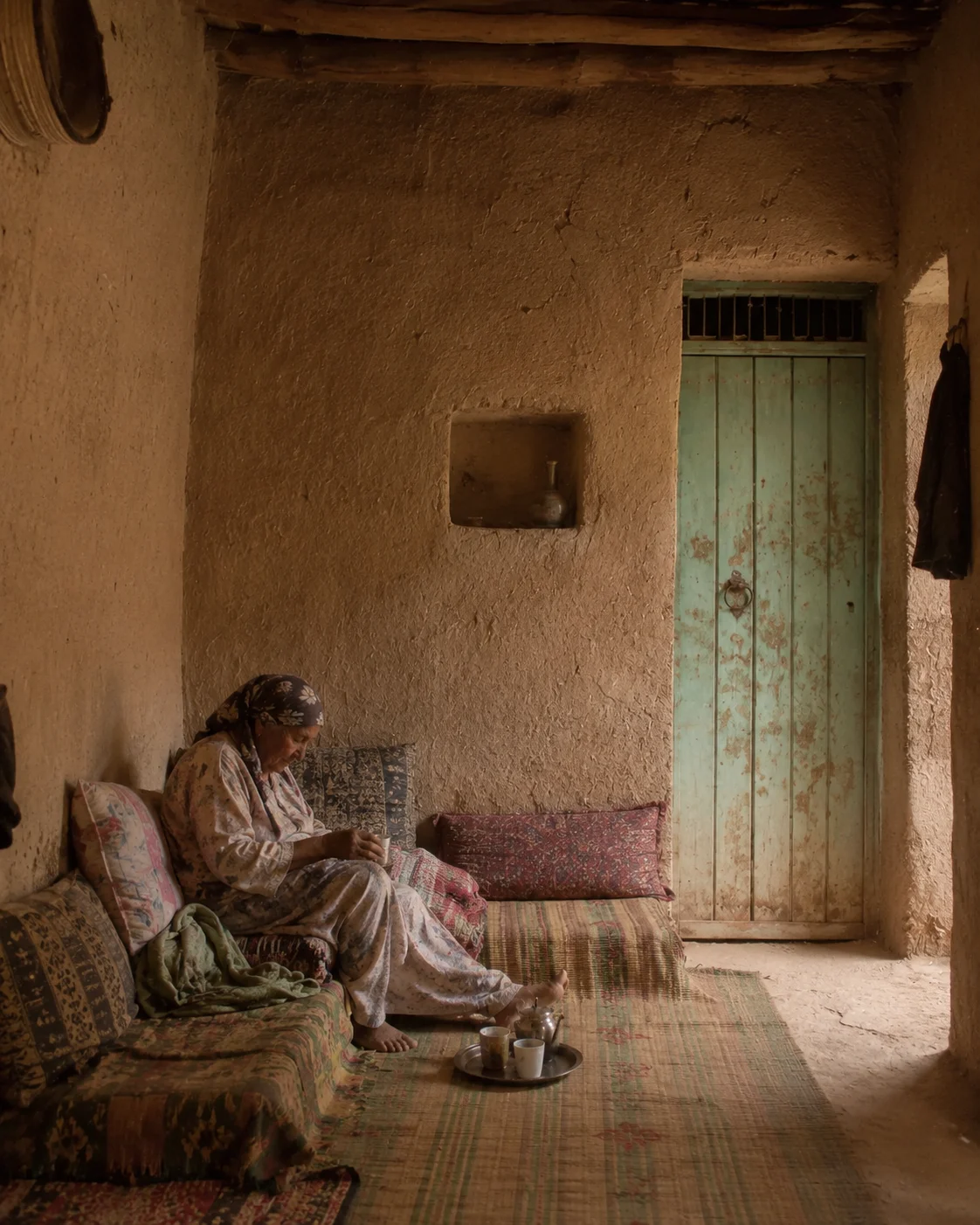 Historical visual reconstruction
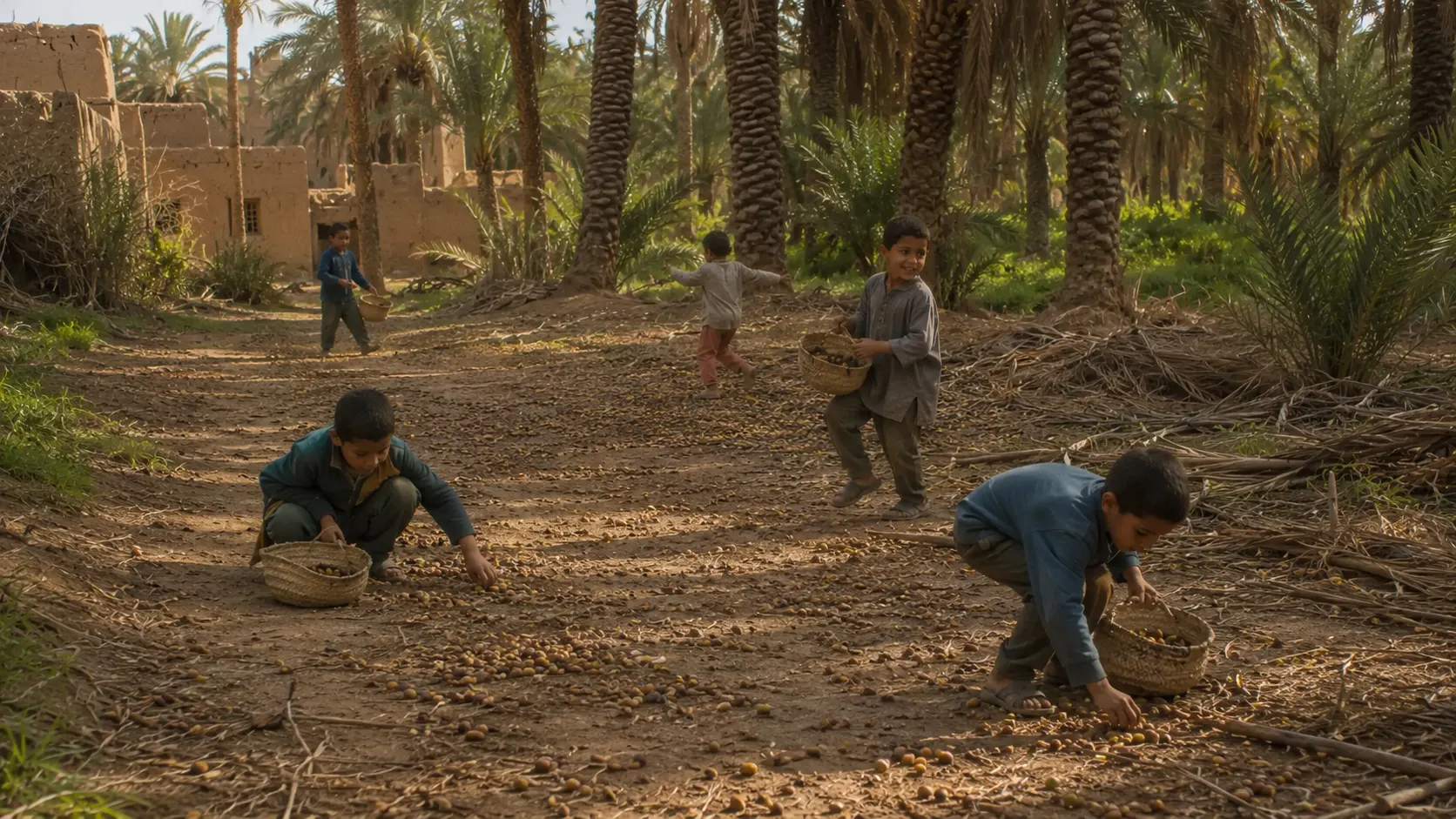 Historical visual reconstruction
We Knew Who Lived Behind the Doors
Most people were known by first name, family name, or by the nickname through which the village had chosen to remember them.
A nickname could preserve a story, a temperament, an old joke, or something understood by everyone and explained to no one. Those stories deserve Memories of their own.
The Village Knew Its Children
Children of different ages moved through the lanes: three years old, four, ten, older cousins, younger brothers, groups that formed and dissolved according to the game, the errand or the hour.
Adults did not live in constant fear that a child would disappear unnoticed. The village knew whose child had passed, who had been seen near the well, who had gone toward the oasis, and who was expected back before the light changed.
This did not make childhood free of danger. There were animals, water, rocks, heights, stories of spirits, and all the risks children approach before understanding why adults worry. But fear did not organize every movement. Belonging did.
We Were Never Only
Our Parents’ Children
The Ksar watched, corrected, welcomed, warned, and let us continue.
My Father’s Ksar Was Always in View
The old Ksar stood beyond the oasis, close enough to command the horizon and far enough to require a journey.
As a child, I knew it first as a silhouette, then as a destination, then as a silence that felt different from the living village behind me.
I did not yet understand that the broken rooms I entered had once held my father’s entire world. That understanding came later. Childhood saw ruins. Memory learned to see a home.
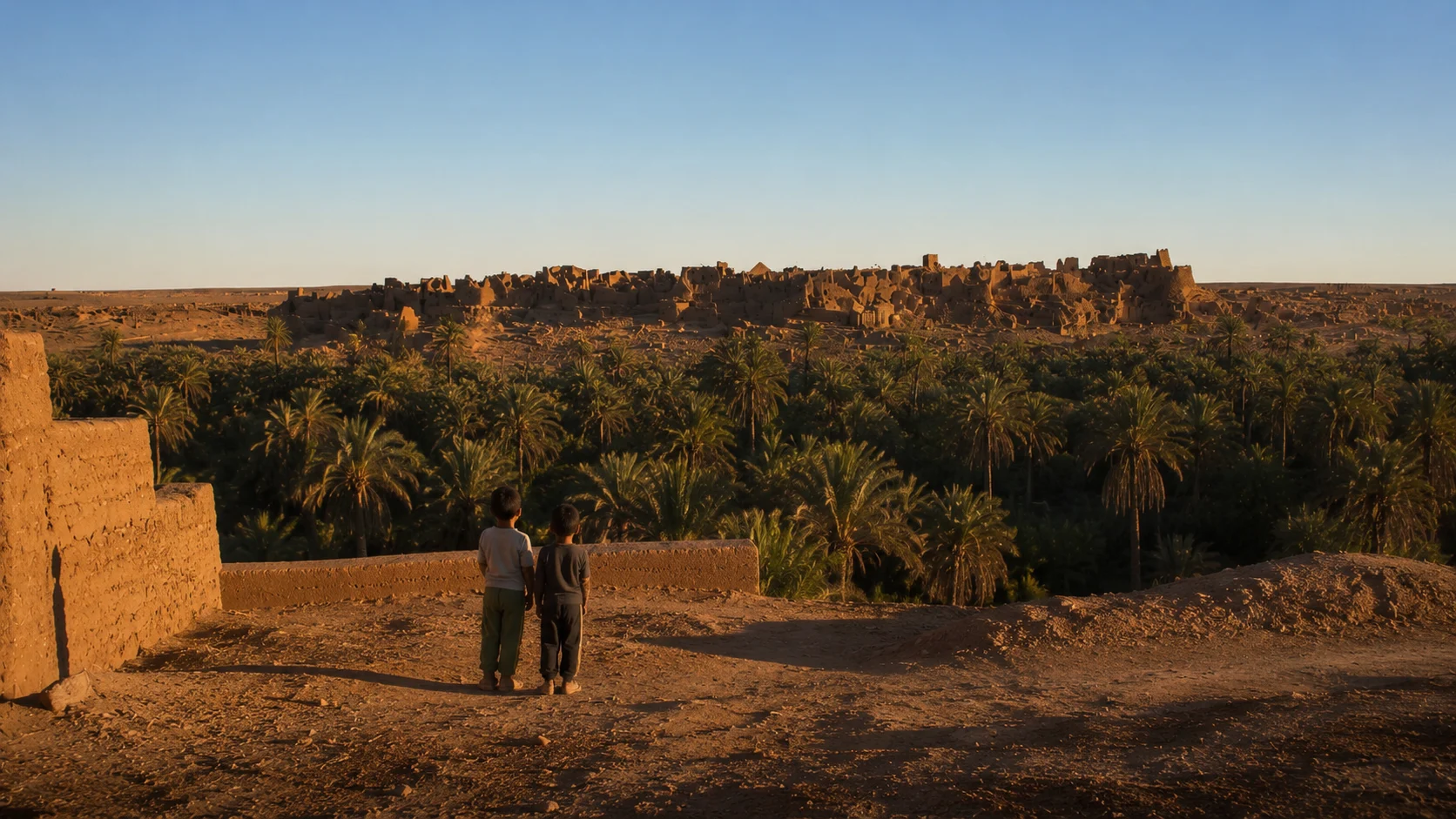 Historical visual reconstruction
Paths That Led Beyond the Houses
The new Ksar did not contain all of childhood within its lanes. Paths descended toward the oasis, continued toward the Blue Spring, crossed cultivated land, and opened toward the old Ksar.
We went often to the spring. Its water was cold enough to enter the body as a shock. We returned because children return to the places that frighten and delight them in equal measure.
Those journeys belong to other chapters. Here, they matter because every departure began from the same village and every return ended among the same doors.
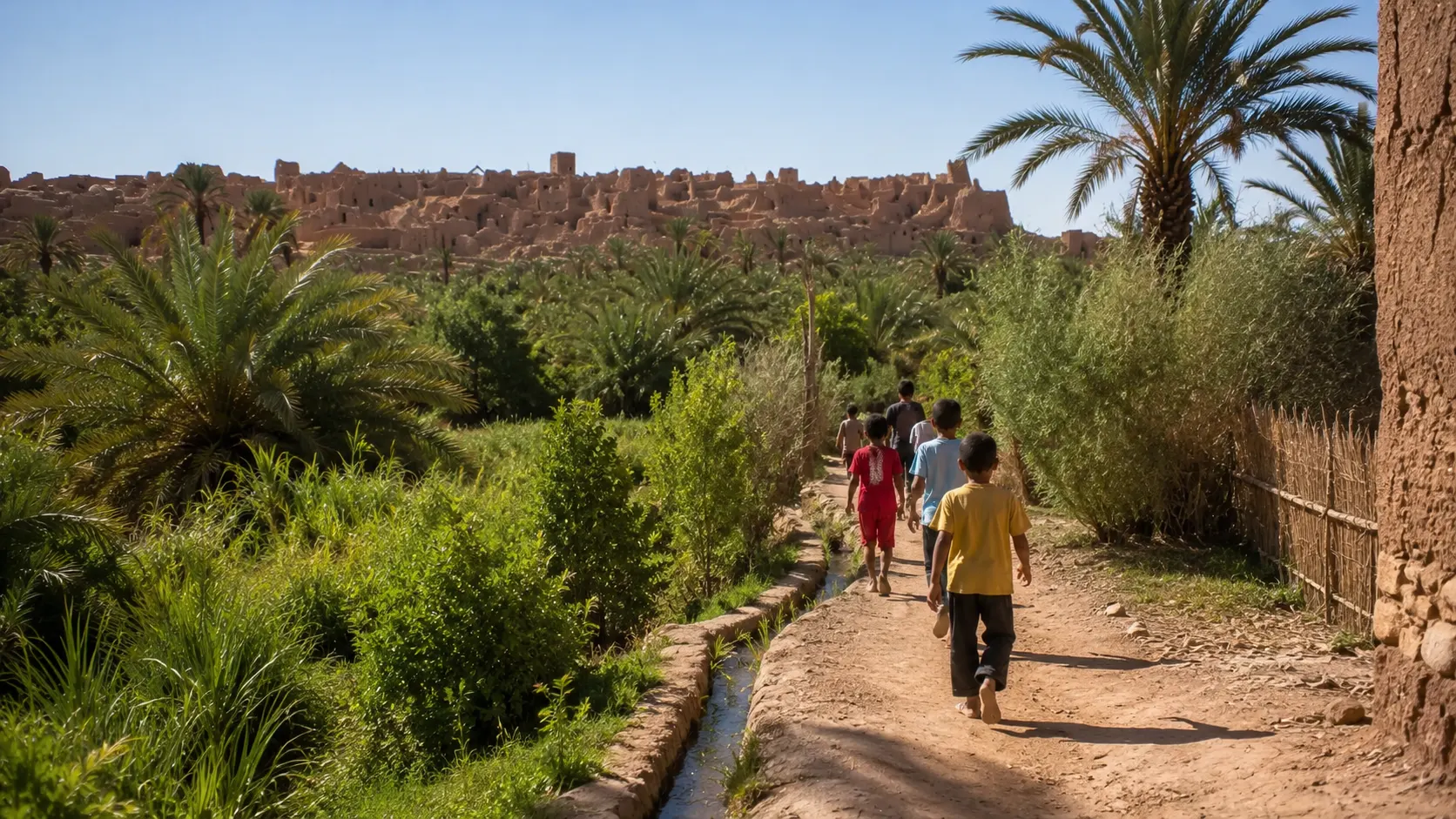 Historical visual reconstruction
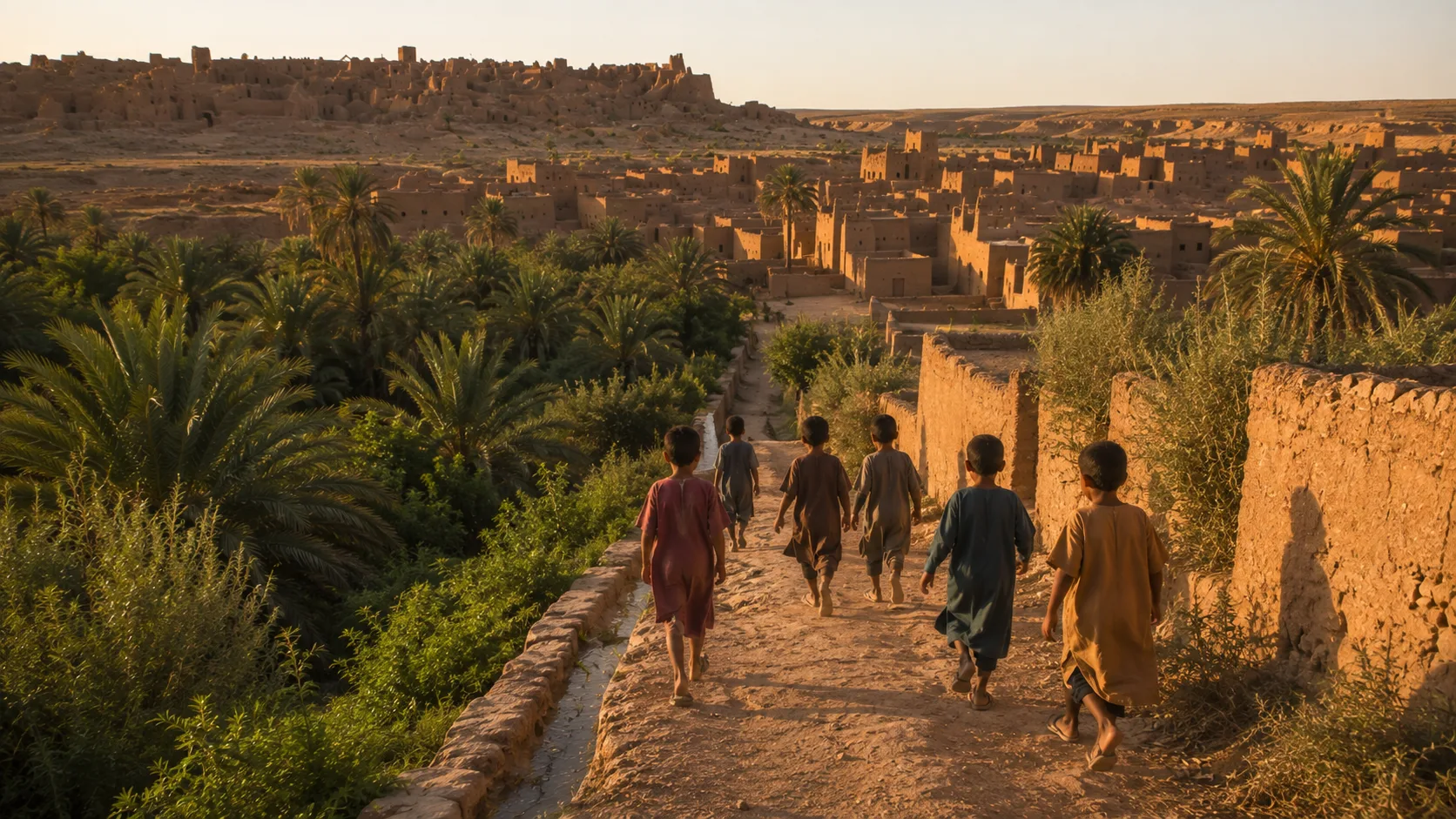 Historical visual reconstruction
Happiness did not arrive as abundance.
It was the well before the house.
A door left open.
A bowl of leben.
My grandmother’s coffee.
A name called across the lane.
The knowledge that wherever we wandered, the village knew the way back to us.
The Ksar Was the Hero
I was not the centre of this world. No child was. The Ksar was.
It held the house, the well, the mosque, the neighbours, the animals, the paths, the oasis, and the old fortress across the valley. It gave each of us room to believe that childhood belonged naturally to the place.
This is not the story of how one boy became important. It is the story of a village that made ordinary life feel complete.
covered derb,
joined roofs,
the house beside the mosque.
the well,
open doors,
and the valley before our house.
Two births. Two forms of the same village. One memory crossing between them.
My father was born in the old Ksar. I was born in the new. Between us stood a valley, and around us lived the same village.
One generation remembered the fortress from within. The next grew beneath the horizon it left behind. Ksar Meski belonged to both.
Return to all chapters →