One village · Two inhabited horizons
For a while,
Meski woke twice.
Smoke still rose from the roofs of the old Ksar while unfinished walls waited for doors on the other side. One morning began in inherited rooms. Another began among earth, stone and work.
There was no single departure.
No bell announced that an age had ended. No entire village closed its doors and walked away together.
Ksar Meski moved in the only way such a place could move: household by household, while yesterday was still being lived and tomorrow was not yet ready to receive everyone.
One Village Carried Through Time
- 01 The Living Fortress My father’s Ksar beneath the roofs
- 02 The Mosque and the Derb Learning, neighbours and daily life
- 03 The Valley Between Floods, distance and accumulated hardship
- 04 Building Again The Jmaâ, labour and new homes
- 05 My Ksar The new village through a child’s eyes
- 06 What Remains A different rhythm, the same name
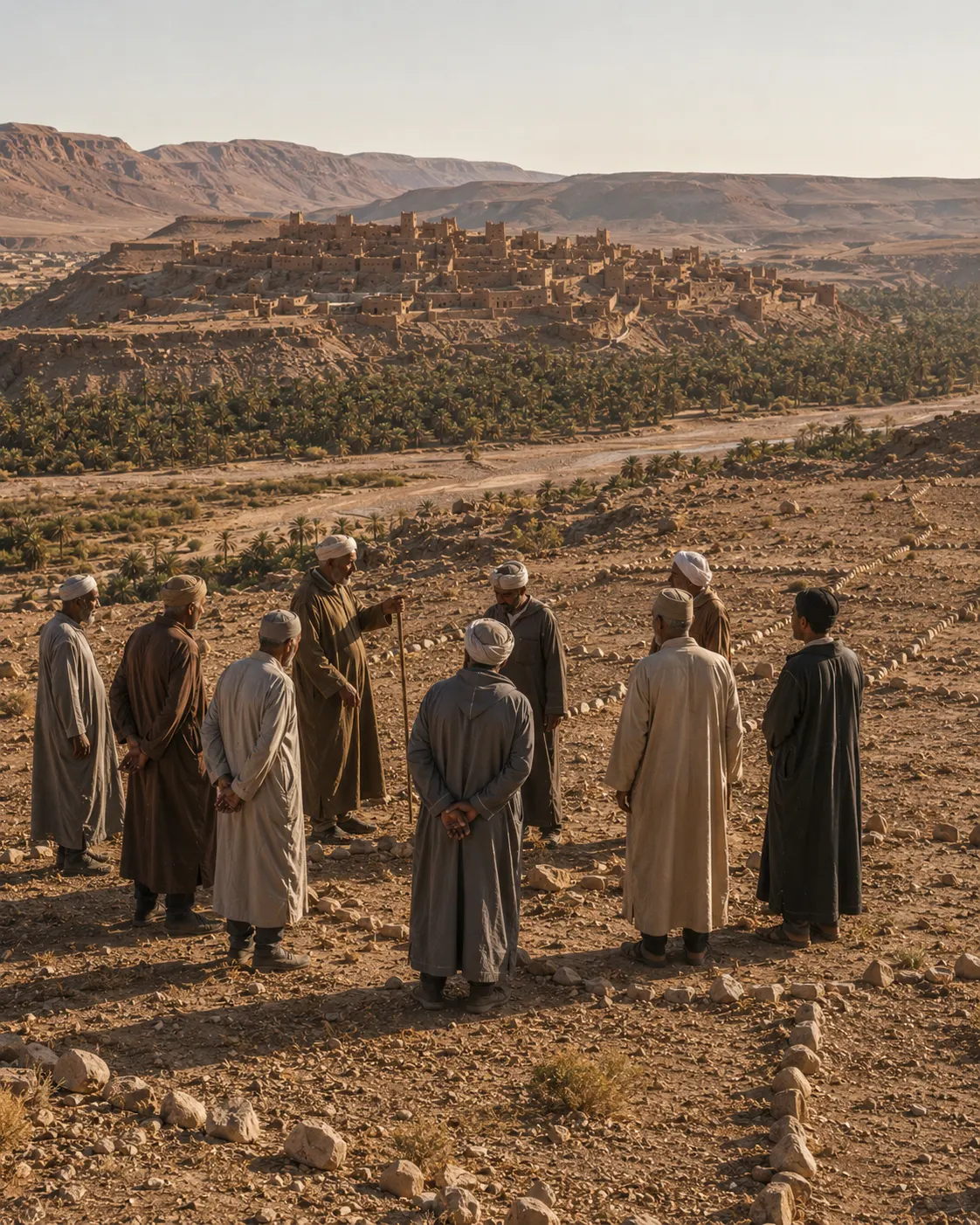
The move began before the old Ksar had ended. That is the first truth this part must keep. The fortress did not empty in one morning, and the new village did not rise complete from the ground. For several months, the two Ksars shared the same present: one still held the weight of habit, the other the uncertainty of beginnings.
The reasons for leaving had gathered slowly. The road remained far. The oued could rise and make the valley impassable. Isolation, once accepted as part of life, became harder to bear as the world beyond the oasis changed.
But necessity did not erase affection. My father could understand why another site was needed and still prefer the covered passages of the place where he was born. The village did not move because its people had ceased to love it. It moved because love could not shorten the road or hold back the water.
 Historical visual reconstruction based on oral testimony
A Place for Every Family
The Jmaâ and those responsible for village affairs allocated places for the new homes. The decision belonged to the community. The burden that followed returned to each household.
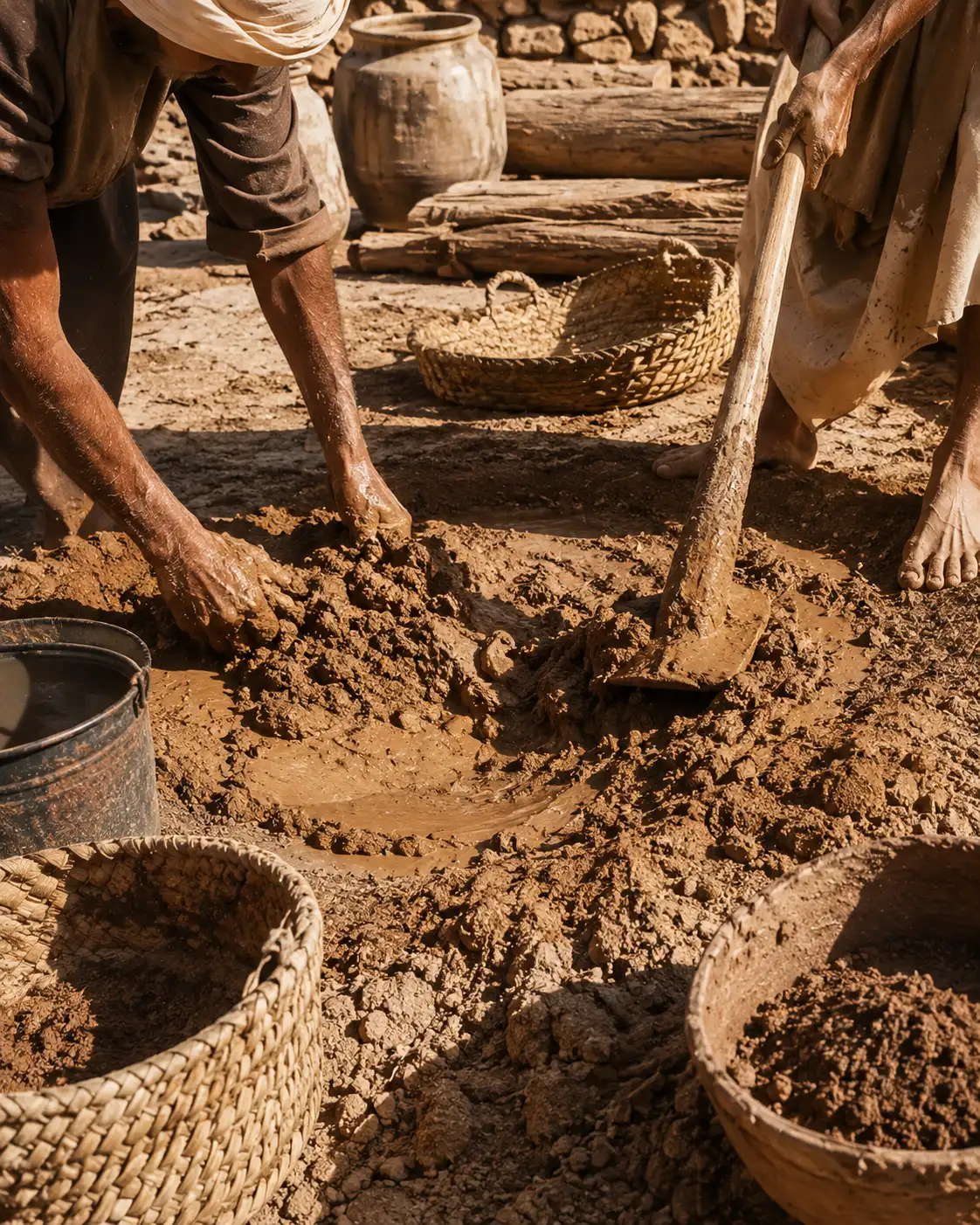
A family could receive ground, but ground was not yet shelter. It still required walls, a roof, materials, time, and the slow conversion of intention into rooms.
Some families had more means than others. Some advanced more quickly. Help passed between neighbours when it could, but every house also carried the private measure of what its family could afford and accomplish.
The Village Rose at Different Speeds
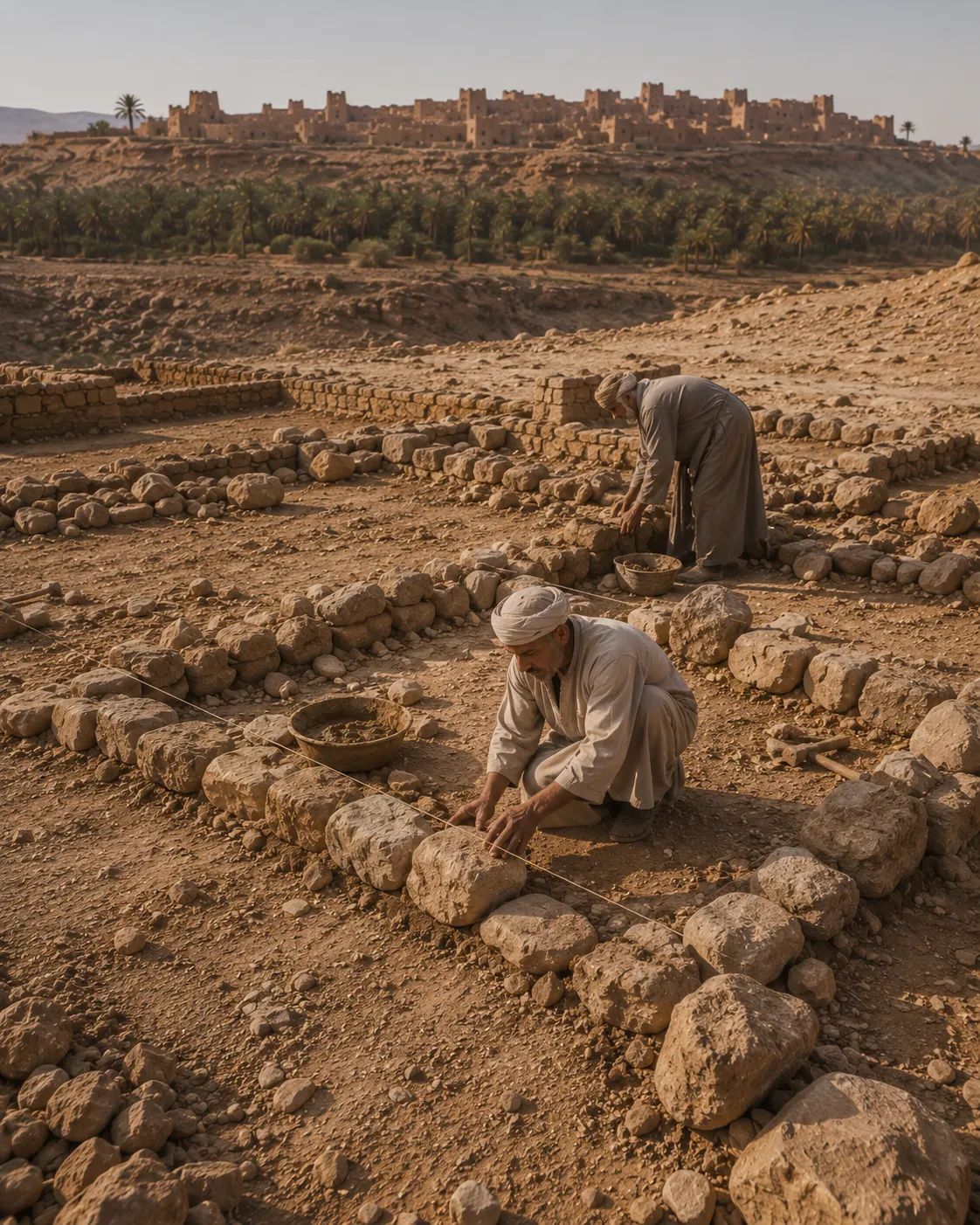
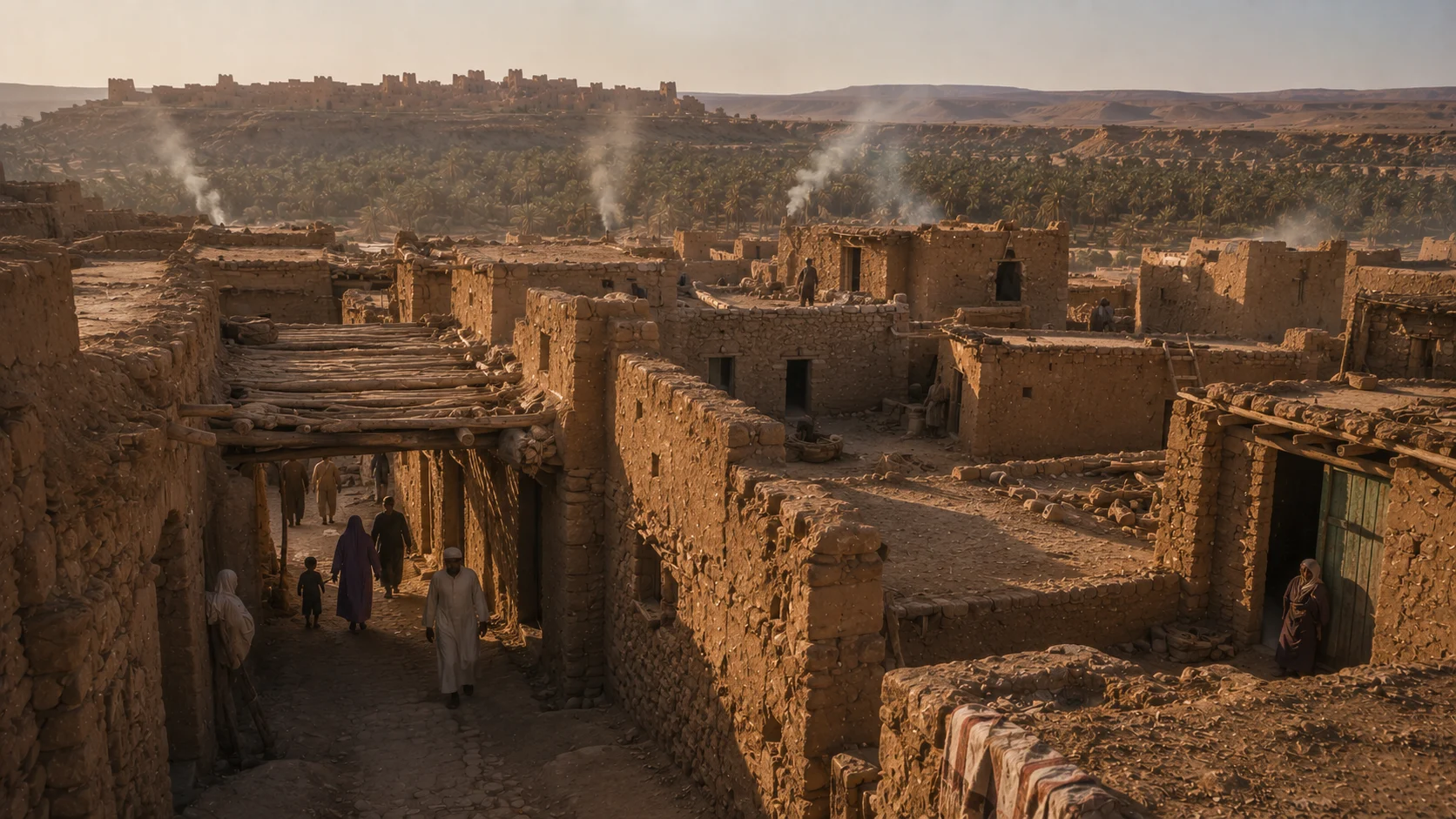
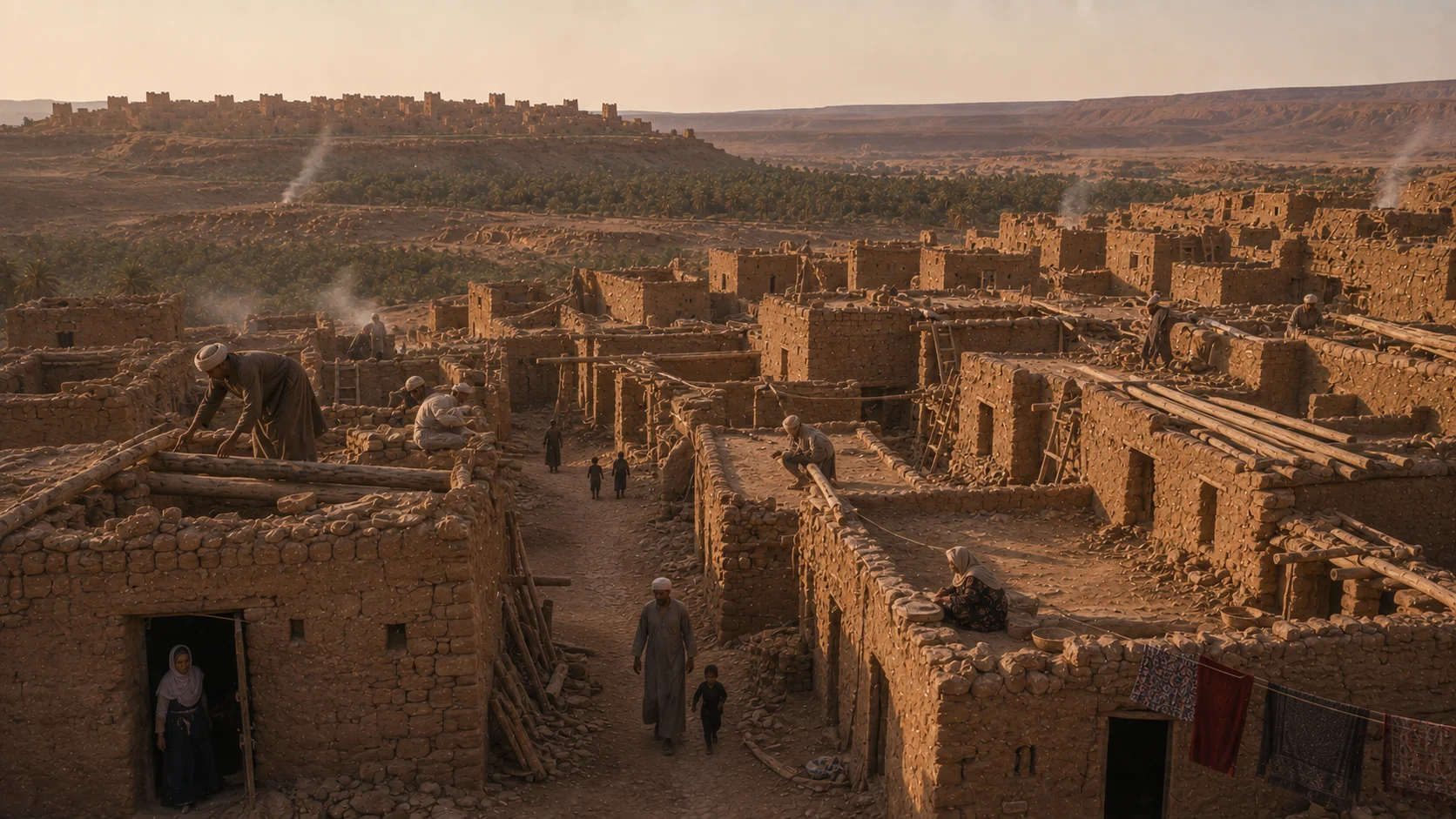
One wall was already high while another family had scarcely marked its foundation. A finished roof stood beside rooms still open to the sun. The new Ksar was incomplete, but life had already begun to enter it.
History Prefers a Date. Memory Remembers the Waiting.
A record might say that Ksar Meski moved from one side of the valley to the other. Family memory refuses such neatness. It remembers the months between.
It remembers people still sleeping beneath the old roofs while relatives worked on new walls. It remembers journeys back and forth, materials gathered, help offered, and the evening when a building began to feel less like a task and more like the place to which one would return.
No one needed to name this period. They lived it. The valley was crossed so often that it had not yet become the boundary between memory and life.
 Historical visual reconstruction
What the land could give
 Historical visual reconstruction
What had to endure below
 Historical visual reconstruction
What the old Ksar could still carry
What Crossed the Valley
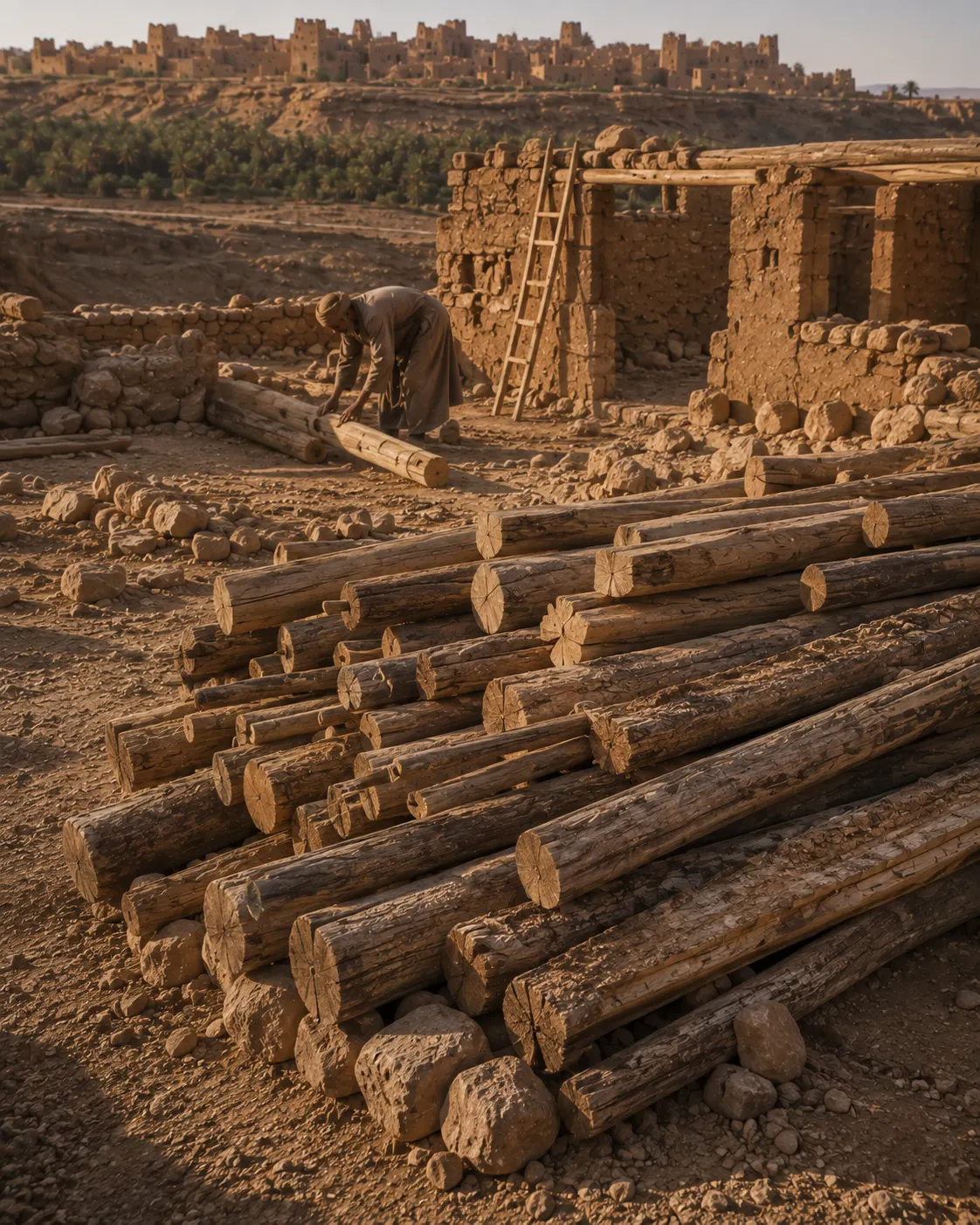
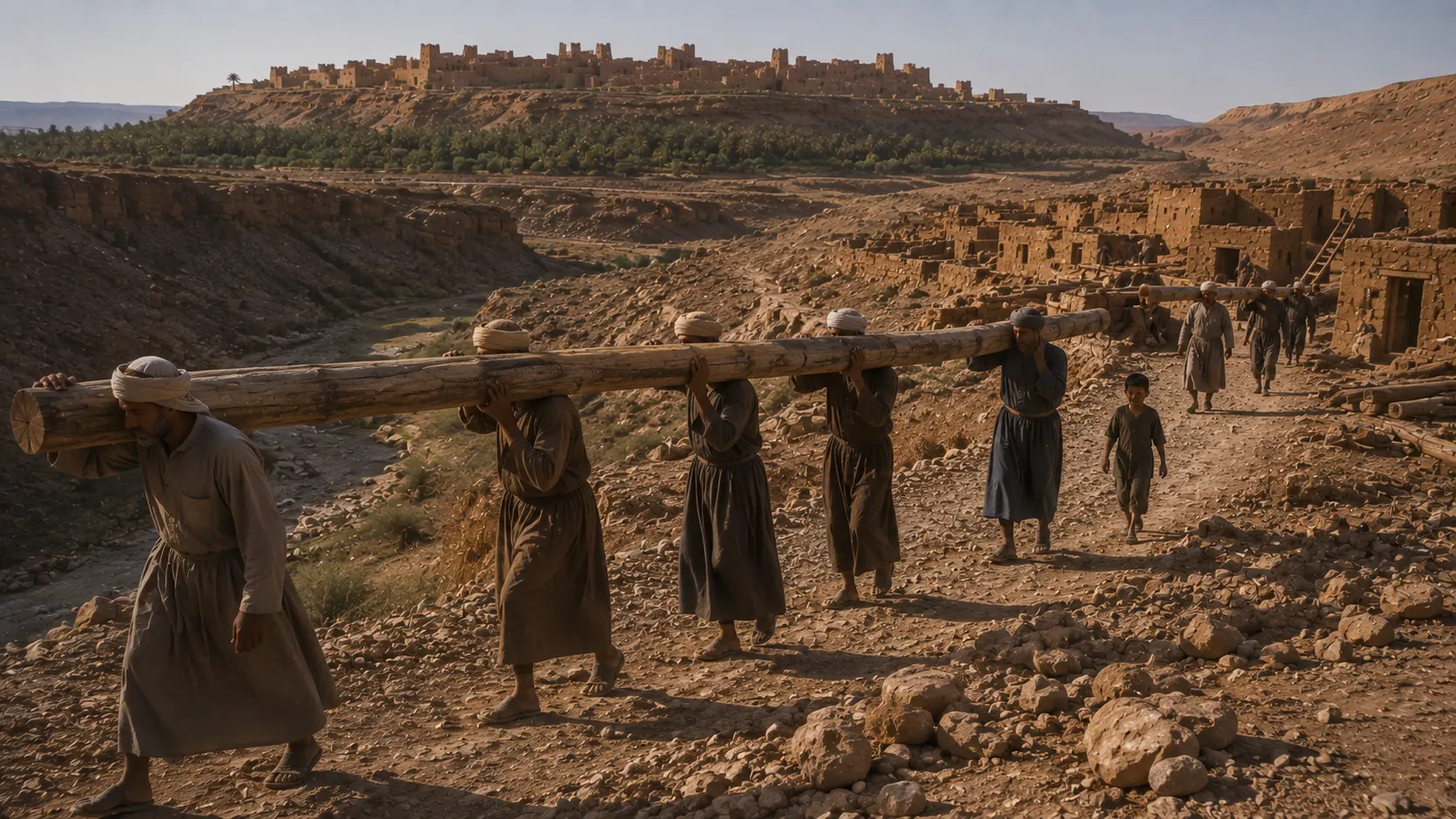
Some families had little, and timber was too valuable to leave behind. Beams were removed from old roofs, carried across the valley, and placed above new rooms.
No one was handling an artefact. A family was trying to close a roof before another season passed. What may look like destruction from the distance of the present was, at the time, an answer to need.
Yet need also changed the fate of the old Ksar. Its houses had supported one another. When timber disappeared, adjoining walls lost part of the protection of the whole. Weather entered. Time found openings. The fortress weakened as the village rebuilt itself elsewhere.
A Beam Carried Away Was Still a Roof to Come
The old house lost something. The new house gained the beginning of shelter.
Memory must be wide enough to hold both truths without accusing those who had to choose between preserving an empty roof and completing the one beneath which their children would sleep.
 Historical visual reconstruction
 Historical visual reconstruction
 Historical visual reconstruction
For a Time, Meski Had Two Presents
We now arrange the story into a simple order: old, then new. The people who crossed the valley lived something less tidy.
The old Ksar still held parents, familiar doors, prayer, voices, and rooms already understood. The new one held effort, uncertainty, and houses whose meaning had not yet been tested by years.
Both were real at once. This may be the quietest truth in the entire chapter: Ksar Meski existed twice before either version of it stood alone.
 Historical visual reconstruction based on family testimony
Aouli, Briefly Remembered
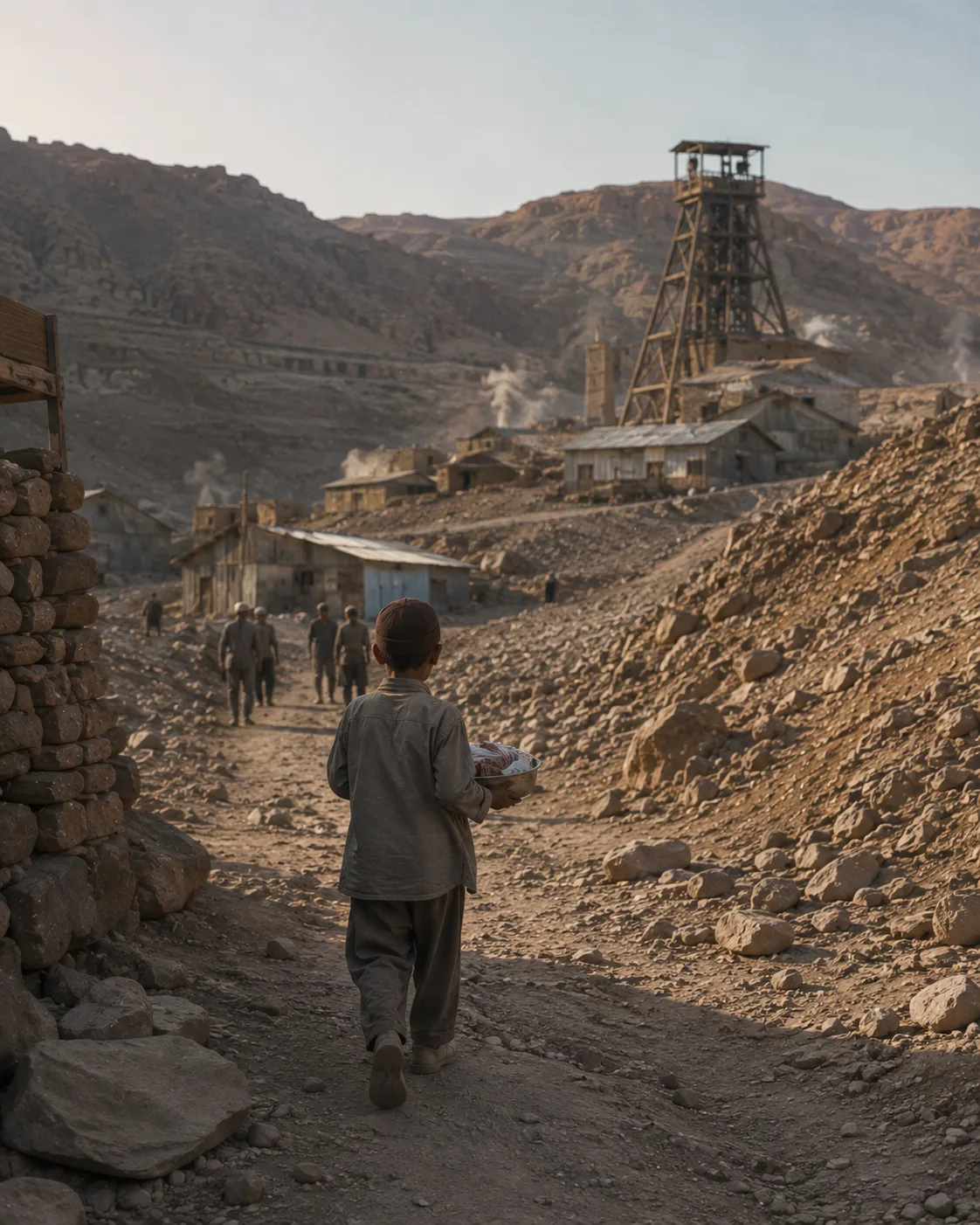
My grandfather worked in the mines of Aouli and cultivated his land at Meski. My father stayed with him there for a time as a boy, carried meals to the mine, briefly knew school, and helped in a bakery.
At another time, he brought water to the men digging the seguias. These memories belong to the years before his adult life in the new Ksar. This chapter keeps them only in passing.
A boy carried a meal. Later, a young man would help build houses.
Building and Repairing
He was still very young when work began to shape his place in the new village. He helped build houses and, at the same time, kept a small hanout where he repaired bicycles.
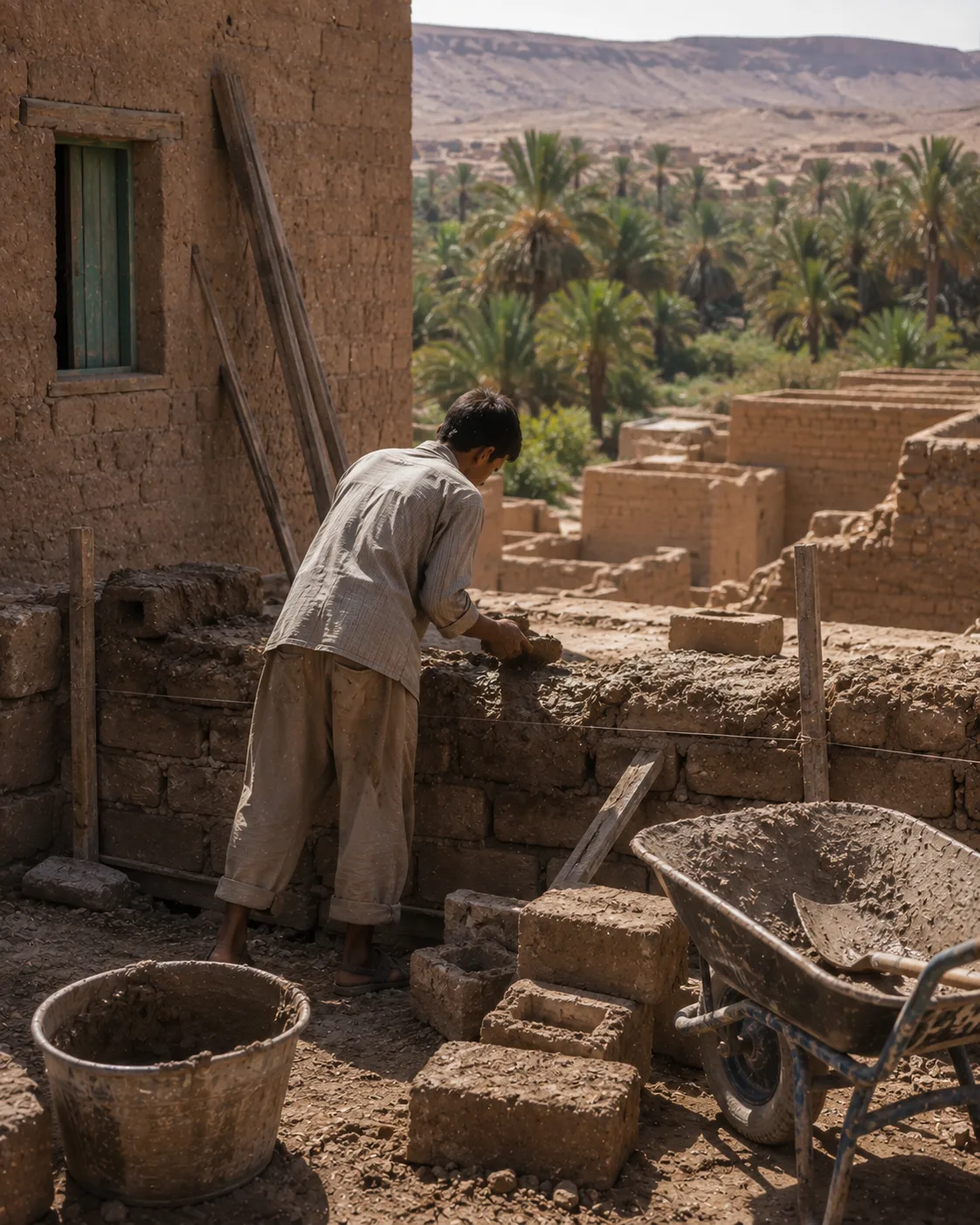 Historical visual reconstruction
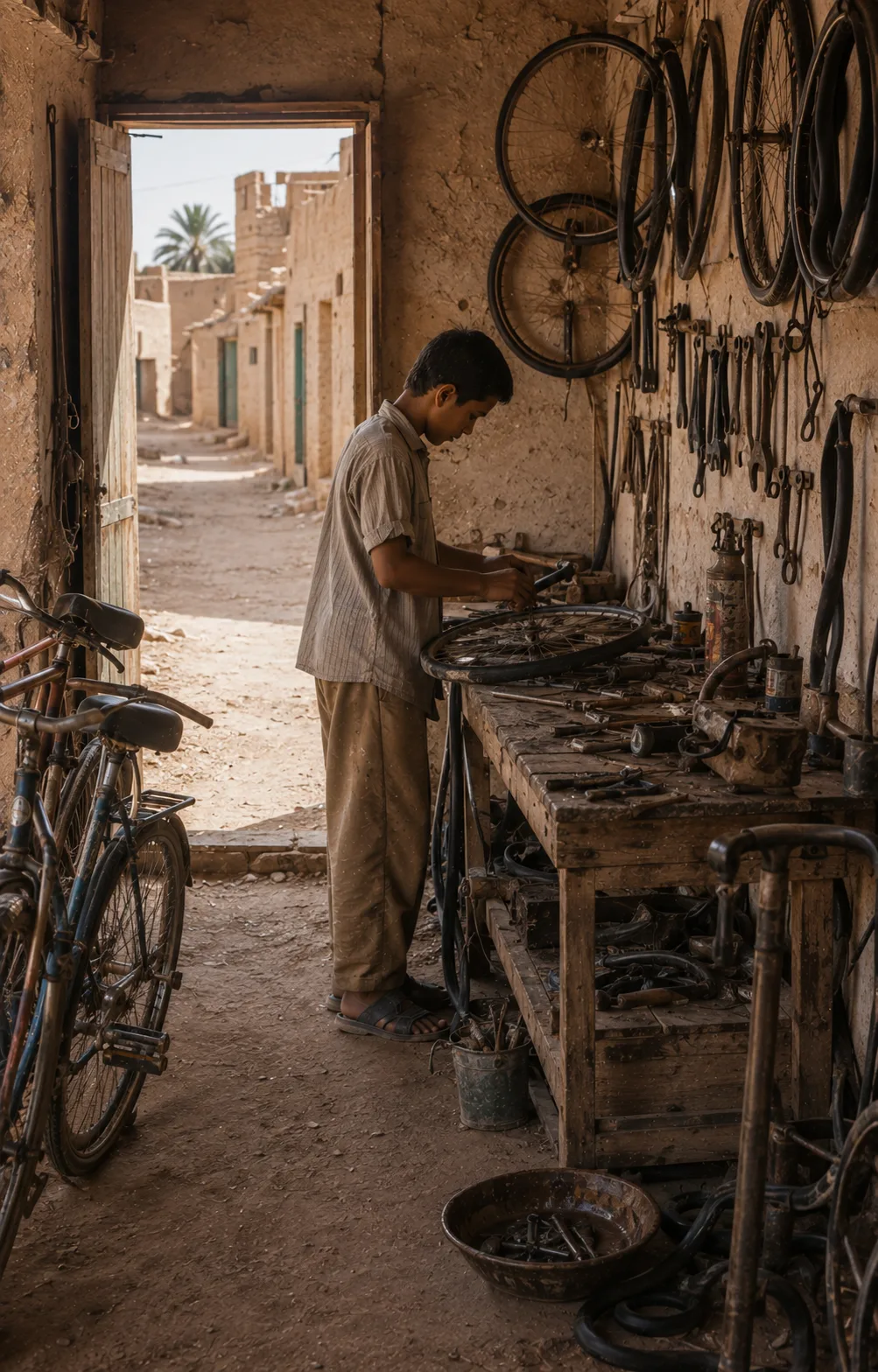 Historical visual reconstruction
The Work of Those Years
He did not speak of these occupations as separate chapters of his life. Construction, repair, and the smaller tasks that had come before them belonged to the same habit: work accepted where it could be found, usefulness offered where it was needed.
A wall completed. A bicycle returned to the road. A day’s earnings carried home. None of it required a grand name.
His life in the new Ksar took shape through such work: one hand helping to raise what was new, the other returning movement to what had worn down.
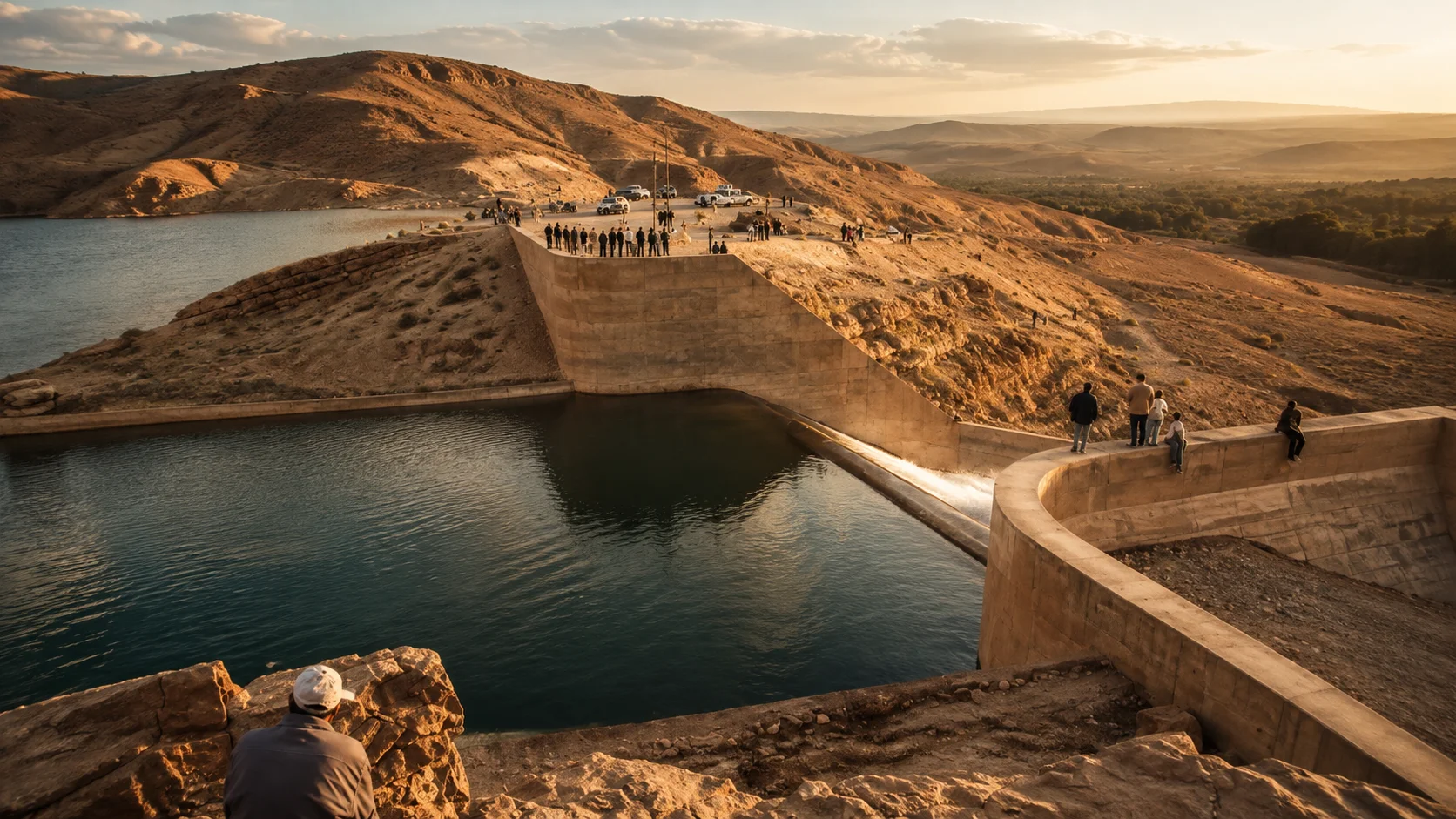 Documentary view
A New Landmark for the Region
The Hassan Addakhil Dam became one of the great works built to protect a region long shaped by the force and uncertainty of water.
My father was present when it was inaugurated by the King in 1971. This chapter keeps only that brief memory: a young man from Meski standing among those who witnessed a new landmark enter the history of the region.
My father was born beneath the joined roofs of the old Ksar. I was born in the village that rose across the valley.
The next part begins where inherited history becomes my own memory: with the house, the neighbours, the leben, the rkem, the open doors, and the sounds of the new Ksar as I knew it as a child.
Part III · My Ksar